

Sundance 2026
In this episode of The Table Podcast, Darrell Bock sits down with Neil Coulter, Brian Chan, and Windrider’s Ryann Heim to reflect on the final Sundance Film Festival in Park City, UT and its upcoming move to Boulder, CO. Join the conversation as we explore standout indie films from Sundance 2026 and discuss how the intersection of theology and film can turn movies into powerful machines for empathy, love, and cultural engagement.

The Table is a weekly podcast on topics related to God, Christianity, and cultural engagement brought to you by The Hendricks Center at Dallas Theological Seminary. The show features a variety of expert guests and is hosted by Dr. Darrell Bock, Bill Hendricks, Dr. Kymberli Cook, Kasey Olander, and Milyce Pipkin.
Timecodes
- 00:00
- Introduction
- 02:42
- The Last Sundance in Park City
- 08:22
- The Value of the Sundance Experience
- 13:39
- Standout Films: Birdie
- 19:12
- Standout Films: If I Go, Will They Miss Me?
- 20:32
- Standout Films: Queen of Chess
- 24:37
- Standout Films: Birds of War & One in a Million
- 26:42
- The Impact on Seminary Students
- 36:15
- Movies as Empathy Machines
- 49:02
- Final Encouragement
Resources
Transcript
Darrell Bock:
Welcome to The Table Podcast, where we discuss issues of God and culture to show the relevance of theology to everyday life. I’m Darrell Bock, one of the hosts on the show, and our topic today is Sundance 2026, the last Sundance in Park City, Utah. So, I was driving to and from, and the weather was warm, there was no snow on the ground; it wasn’t the normal Sundance cold experience, and thinking, this is the last time I’m going to make this drive in this way for this event. So our guests are Ryann Heim, who works with Windrider. Welcome, Ryann.
Ryann Heim:
Thank you.
Darrell Bock:
And then Neil Coulter and Brian Chan, who work with me here at Dallas in a variety of roles. Neil’s associated with the Media program, helps with the marketing part of our operation, and is responsible for the DTS magazine as well. He’s a busy, busy boy. And then we’ve got Brian Chan over here, who not only keeps physically fit by—is it Tai Chi?
Brian Chan:
Kung fu.
Darrell Bock:
Okay, all right, as well as doing Media work for us in the area of movies and that kind of thing. So thank you, gentlemen, for being with us. And let’s just dive in: the last gasp at Park City, Utah. There was something almost nostalgic about seeing the Sundance information come down off of the iconic theater there. I can’t remember the name of the theater...
Neil Coulter
The Egyptian Theatre.
Darrell Bock:
The Egyptian Theatre, yeah. And you know the standard picture, and know that an era has come to an end, but it was a good Sundance. Ryann, in thinking about Sundance this time around, usually from year to year, I can think of a theme that kind of drives Sundance from time to time. But this year, it didn’t seem to have anything that was unifying in that kind of a way. You know, sometimes it’s family or the situation in prisons, it’s always sensitive to caring for the marginalized and that kind of thing. But really, I didn’t see a theme emerging from this one. This seemed more of a hodgepodge than past Sundances.
Ryann Heim:
Yeah, definitely a bit more of a hodgepodge. I think, if anything, kind of the theme that Sundance was proclaiming, it was legacy. Talking about Robert Redford and his passing and really championing the 40-plus years of Sundance in Park City, they really wanted to go out with a bang and set themselves up—like set us all up—to head to Boulder the next year. And so a lot of it, I think, was about legacy and honoring the success, the many years of success at Sundance, and through partnerships, sponsors, legacy screenings, and then just all the normal players that have been featured in films and directing films for ages at the festival.
Darrell Bock:
So in thinking about this, the move to Boulder, did Sundance outgrow Park City? What would you say was the catalyst for making a move?
Ryann Heim:
Yeah, I think so in some ways. The Park City and all that it had to offer the community is very much just contained. And so with theaters going out of business, venue spaces were lacking. And so I think a move to Boulder, a larger metro area, a college town, definitely provides a handful more of venue options that are already running, that are already in operation without Sundance there. With Sundance there, they can bring their contingent, bring some business into the city, but also have just a place to go. I think, with Park City, just with it being such a small mountain town, even their attempts to go out into Salt Lake City were tricky, because that might be a 30 to 45-minute drive, but it wasn’t quite as simple as that. You were driving through a canyon, whereas here—or not here, but in Boulder—I think they’ll be able to kind of spread out, divide and conquer in some ways.
Darrell Bock:
Now I take it you’ve had a little bit of time in Boulder to kind of get a preview of what’s coming. What encourages you about that move?
Ryann Heim:
Yeah, that’s a good question. I think, as someone who is not really, like, film industry—I’m not in the hub; I live in Boise, Idaho, not Hollywood or New York—I think it’s so much more accessible. A flight to Denver is pretty much a connection everybody has made before. There’s a lot of housing around Boulder and a larger metro area. And then I’m just excited for a fresh take on Sundance. I think it’ll be fun to explore the Boulder area, to see new theaters, to kind of see Sundance make a new name for itself and what they’re programming, their themes. And then for Windrider, it gives us an opportunity to expand, because we’ve kind of maxed out our space, even in Park City. And so now we get to dream bigger and think of all the—there’s a ton of Christian organizations in Boulder and in Colorado, I should say. And so getting to invite them in, getting to invite even more students from nationwide, all across colleges, ministries, and seminaries. I think it’s exciting. I like that it’s a central meeting point.
Darrell Bock:
So it was pretty crowded at the Windrider event this time; I felt like there weren’t too many more chairs you could fit in that room. About how many people were at the Windrider part of Sundance this year?
Ryann Heim:
Sure. At our opening night event, we had 500, which I was a little bit nervous about. We had moved into a smaller venue, or sort of a smaller venue, for that opening night, and I was a little nervous we were going to have to turn people away. But luckily, everyone found a seat, and we had about 500. Then throughout the week, at our summit sessions, we had probably 450 on the first day, down to maybe 300 by the end of the week.
Darrell Bock:
Okay, so that’s quite a ministry. I mean, I think about where Windrider started with this, and to get up to 500 people, that’s amazing over the many years that you’re at Park City.
Ryann Heim:
Yeah, it’s pretty cool. Actually, there’s a pastor that pastors a church in Boulder on Pearl Street, and he called us up and was like, “Windrider, y’all are coming to Boulder? Like, surely we can host you. I attended in the first year when it was 50 people, like, we’ve got you.” I said, “Oh no, no, no, add a zero to the end! We’ve grown. We’re at 500 now.” We’ve come from humble beginnings, but we continue to grow. And it’s pretty exciting.
Darrell Bock:
He should have called the Boulder City Convention Center instead.
Ryann Heim:
Yeah, exactly. We’ll find ways to partner. We’re a big, big community, but that’s for sure, we’ll find a way.
Darrell Bock:
So, Neil, tell us what you find special about Sundance? Why do you enjoy going year after year? I mean, obviously we host a class together, the three of us, but what drives you to Sundance on an annual basis?
Neil Coulter:
Yeah. Well, Darrell, you and I have been going for maybe five years now, and the first year I went, it just transformed the way I see movies. I’ve loved movies and film my whole life. And going to Sundance, really any film festival, but Sundance as one of the premieres, you watch the movie, but then after the film, suddenly the director stands up, maybe the cast and the crew, and they go to the front of the theater, and you have a half an hour or two to ask them questions, to hear their vision. And what it does for me every year, and I think for our students, is it changes the movie from a product that you just go in and see—and you like it, or you don’t, and then you leave—it changes it from that to an expression of somebody’s deepest heart and desire to communicate something. And so a movie that, who knows how I would have felt about it just seeing it on its own, I see it as something being offered to me by a creator, by a filmmaker, and that always makes it more special. It adds a dimension to the film storytelling, and it makes film something based in a community and social relationships more than just an artistic product that’s put out there.
Darrell Bock:
Yeah, one of the things I find interesting about Sundance is you go and you’re sitting next to someone who you’ve never met before, you share a love of movies, and in the midst of it, you end up in conversations, and it goes to really significant places pretty quickly, oftentimes, simply because of what the movies themselves evoke in terms of thinking about the human condition.
Neil Coulter:
Yeah, sure. The movies we’re seeing are these very heart-rending, oftentimes stories of real people all over the world, and you spend that week with tens of thousands of people at the film festival, going from theater to theater, watching and having your heart broken again and again. And in that kind of context, I really find that conversation and going deep into a gospel-centered conversation is easier than any other context I’ve been in. I’ve been in missions, I’ve been in Christian work my whole life. And Sundance is the place where I can just walk up to a stranger and say, “What are you thinking about? What did you just see? What does that mean to you?” And really quickly, two or three questions later, we’re talking about the deepest questions of life.
Darrell Bock:
And Brian, what about you? What makes Sundance work for you?
Brian Chan:
Well, I jumped into this with you guys about three years ago, and I would say first is the shared experience with the students. And I want to add that the Sundance experience is including the Windrider Summit. I think that the experience we have wouldn’t be the same without the Windrider Summit, and I think all of our students say that too. So thank you to you guys, Ryann, for what you do. And the shared experience with the students are the conversations that these films will spark, you know, things that students wouldn’t normally talk about or think about until they’ve watched a film. So I think it’s expanding their thinking, expanding my thinking, and deepening our thinking. And then what goes along with that? The second part is that we’re watching films that are not solely driven by sales and money. In a lot of the film industry, there’s so much money that drives what gets put on the big screen. But here you have indie filmmakers that are making films, telling stories about what they’re passionate about, what they’re concerned about, and then we’ll see if somebody picks it up. So we’re getting a little bit more of the artist’s voice, if you will. And there’s a purity in that that sparks those kinds of conversations that I think are very deep about our world and society.
Darrell Bock:
Yeah, that’s what drives me back to go back on an annual basis. I tell people, we have our students go to listen to people wrestling with the challenges of life. Most people don’t realize Sundance is about films, so there are some feature films that will end up being feature films, but a lot of them are documentaries, special topics that the creators have said, “This is an important part of my life.” I can’t imagine ever going to a film theater to see, say, a special on sailboats in the lake and that kind of thing, which I think was one of the films last year. And you go, and you’re into spaces that you aren’t used to. I know Neil and I resonated a couple of years ago with the story of the couple that chased volcanoes, and that story, and it’s just scenarios that you never see. You’re put in the middle of life situations that otherwise you might never find yourself exposed to. And so in that sense, it’s a very, very helpful thing for our students. Every student who goes, almost without exception, says this is one of the best things I did in seminary. Yeah, and I do think Windrider helps to contribute to that by what you all do for us in the mornings; you prime the pump before we go to see the film, and we’re all ready to roll by the time we get there. So let me ask each of you to highlight one film from this year that you saw that you think we should talk about. And Ryann, you get to see a lot of these films before they actually hit the festival itself. So do you have one film that jumped out at you this last year?
Ryann Heim:
Yeah, I’ll say I don’t normally get to see a ton of Sundance films, just because we’re planning the Summit, we’re in the midst of that event. But I did get to see a short film at Sundance called Birdie ahead of us screening it on Wednesday morning. We were kind of scrambling, we had a Sundance filmmaker who was supposed to come back to hang out with us and talk to us about their film—a beautiful film—but they had to cancel. They got sick from all the festivities of Sundance, and they couldn’t join us. And so last minute, I had received a screener link to a film that was playing at the festival, and the filmmaker was eager to join us, or someone knew the filmmaker. It happened to be this short film called Birdie, about two Nigerian refugee sisters and their mother. It just is a really quiet, observant narrative short film that lets you just watch their lives unfold as they stay in this Catholic Hospitality House. They’re praying and singing worship, really advocating to the Lord that they find their father who they’ve left behind in Nigeria, and they don’t know what his fate has been. And it’s about this young girl watching her sister grow up and her mother grapple with things. It just was this really slow, cathartic kind of story. At first, I was not super sure how it was going to fit into Windrider. Obviously, themes of prayer and worship were really strong, but I’m not great with the slow film. Ironically, I’m a director of programming, and I can sometimes be impatient, but it just had enough that we had this kind of shared spirit as a team that, “Yeah, we need to bring this film.” And I was prepping for the Q&A at midnight that night because my boss, John Priddy, told me, “You’re moderating the Q&A. If she comes, you’re moderating it.” And so at midnight the night before, I sent an email saying, “Hey, could you come at 10 am?” and then I start writing questions, because I’m gonna have to moderate a Q&A for this film. Within like 15 minutes, she emailed back and said, “Yep, I’ll be there.” And so I just go to bed that night saying, “Okay, Lord, whatever you have for this Q&A, for me, for this filmmaker, let it be,” and go to sleep. Slept more peacefully than I did all the rest of the summit. And at the summit the next day, we screened the film, and I just was blown away. Sometimes that second watch is more impactful than the first, for me at least, and I was blown away by the way that prayer was used, the way that they sang “the cross before me, the world behind me,” and just the relationship between the two sisters. And so I was very excited to moderate the Q&A with the filmmaker, Praise Odigie. And she was just fabulous. She shared so much of her heart with us. She talked about how this was really her first time making a film that encompassed all of who she was as someone who migrated from Nigeria and been welcomed by the Catholic nuns who play a role in the film. She’s said these prayers, she’s worshiped in these ways, she has a sister who she’s grappled with and fought with and loved. Getting to talk to her and watch her kind of break open was really exciting. It was cool to see just God’s faithfulness in all of it. And then we had a couple of young women in the audience who were Nigerian who asked her questions, and it just was the best. I just love that film. It’s so beautiful. And the filmmaker, Praise,, P makes it even more dynamic because she is incredible. So that’s my favorite Sundance, sort of Windrider film that I got to see and be a part of this year.
Darrell Bock:
Yeah, they do. You know, Sundance does a really good job with documentaries and particularly cross-cultural experiences. I find that that’s one of the most effective things they consistently deliver on year after year. Neil, do you have a favorite from last year?
Neil Coulter:
Oh, I always have favorites. How much time do we have?
Darrell Bock:
I know I cut off the ‘s’ on the end of that. Okay, so I’m gonna ask you to do one, but we will save for honorable mention down the road.
Neil Coulter:
Yeah, the one I’d like to mention is a film called If I Go, Will They Miss Me? It’s from the US. Its focus is on a broken family who live in the projects neighborhood in Los Angeles. You see in the beginning that the father in the family, when he was a teenager, did something dumb, kind of on a dare from his friends; he did something that hurt somebody and ends up in prison. Stays in and out of prison for much of his life into adulthood. So we pick up with the family as he has a couple of kids and a wife, and he’s just gotten out of prison, and he comes back with all this resolve to be the dad that he needs to be, but also all the baggage of his development being cut off, of his life being in prison, and his shame at his failure to his family. So we see him, then we focus primarily on his son, a young teenage boy who is at that age where a boy still wants to idolize his dad. The boy in school is reading Greek myths, writing, and drawing, and he’s imagining his dad as one of the Greek gods, and he just so desperately wants his father to be that everything for him.
Darrell Bock:
That hero.
Neil Coulter:
And his dad comes back and is not comfortable with that. His dad doesn’t want to be the hero because he knows he’s not. And so the film is that tension of people who want to do the right thing, but make some bad choices, and it’s heartbreaking. So you get to the end, and I won’t spoil it, but there’s more encouragement than you might expect. It’s a rough watch, but it’s beautiful just to get into the everyday life of a family that is struggling with a lot of big problems.
Darrell Bock:
Now, you know, it’s interesting, because what that shows is one of the reasons why I also like Sundance, and that is there’s an honesty in the filmmaking that comes, that’s honest about how flawed human beings are. Film after film after film exposes this, sometimes with tenderness and sometimes with a real rebuke, and to see that coming from people who don’t necessarily have a faith walk—they’re just observing what’s going on in life. I think that’s one of the things that is actually eye-opening for our students, is to have them see this transparency and honesty so vividly and powerfully displayed in what’s going on.
Brian, what’s yours?
Brian Chan:
I have to say mine would be Queen of Chess. First of all, I was really impressed with how it was artistically done. They applied a good storytelling method, and you didn’t feel like it was just information being reported on.
Darrell Bock:
So what was it about?
Brian Chan:
It was about a historic woman who became this recognized World Champion, the first female to be the world champion of chess. I didn’t realize how big chess was. That’s a big international thing that countries take a lot of pride in, and it was formerly viewed as a male-dominated sport. The view was that women were not as intelligent, that was the basic premise was that women were not as intelligent. So women were in their women’s league, and men were in the men’s league, and how could a woman cross over into a men’s league and defeat men when they’re not as smart as men? That was the premise behind it. Well, she proved them all wrong, long story short there. It took you through the whole journey, and it was just done really well with original footages. It told a real balanced story, too. A lot of times with film documentaries like those, I really appreciate when they tell a real balanced story. You had the protagonist, I believe her name was Judith. And then there was the antagonist, and there were interviews with him too, so you got to hear from both sides and both stories. It was just overall a story of resilience, a story that went against odds. You know, it’s like your Frodo-taking-the-ring-to-Mount-Doom kind of story; how can someone who is so unlikely in a world, in a context where everything else is working against her, be able to succeed? It also started with something a little bit controversial, because it was the father’s dream for his kids to become world champion chess players. It was considered an experiment on his part, if he were to devote his children to just chess training, an exorbitant amount of chess training for hours and hours a day for their entire childhood. Would he be able to turn them into geniuses? So that was the whole premise of the story. So there was a bit of controversy in that as well, too. So yeah, kind of all the good stuff in it. Call to adventure, tension, rising tension, climax, turning point, and a great resolution in the end.
Darrell Bock:
So mine was Birds of War, which was about a journalist in London working for the BBC, a female, and a male cinematographer who was filming the civil war in Syria. It documented their communication with each other, how initially it was just a photographer sending his stories to a reporter and correspondent in the UK, trying to keep people up with what was going on in Syria. Eventually, they fall in love as they communicate back and forth with one another, and it really tracks their journey. Then there’s another one that comes with it, because these kind of sometimes come in pairs, and I couldn’t remember the title of it now for the life of me, but it’s about a young girl who gets documented as she moves from, I think it’s also from Syria...
Neil Coulter:
One in a Million.
Darrell Bock:
One in a Million! There you go. Thanks. She moves to the UK, and her father making the move says, “I’m gambling with my kids in making this move.” The story is about how they come to Germany, and how they get to Germany is amazing. I mean, they’ve got to trek there by boat, they land in Greece, they walk their way into Germany, they come into German life, and culturally assimilate—both the mother and the daughter—to the regret of the father. And the story is about the family dynamics that emerge in this cross-cultural situation that you get to have a really up-close look at, and it’s just a really powerful film. In fact, I think it’s one of the best films I’ve seen in the five years that I’ve gone to Sundance, but it delivers what Sundance delivers, which is this human story up close in an environment that you wouldn’t normally see. It gives you a feel for what a cross-cultural experience is like, the tensions of it, what it means to literally bring nothing to a new place you’re going to live and try and make life happen. Really, really important kind of story. So let’s talk about our students for a second, and I’m going to start with Windrider. You host these 500 people, right? And some of them are profs who have brought their sacrificial lambs to your event, to see what you can do with them. What are you trying to do for the students who come to the Windrider experience at Sundance?
Ryann Heim:
Yeah, that’s a good question. Definitely not make them sacrificial lambs. So we bring undergrad Christian university students, typically, sometimes those are film students, seminarians like Dallas Theological Seminary, and then ministry leaders. We’ve got a bunch of Young Life area directors who attend, and then filmmakers and our own patrons. So really, it’s this cool mix of people, a very intergenerational conversation that we host, and multidisciplinary, I’d say. The hope is that we can first of all provide access to an experience that is fairly inaccessible, like going to the Sundance Film Festival. Creating that opportunity for our contingency is pretty exciting. We get to send them out to go watch Sundance films, but what we’ve said is that a lot of them break your heart. A lot of them take you to places you’ve never been, introduce you to people you’ve never met, and can often showcase the brokenness of the world that we maybe see in our day-to-day life, but probably not to the extent that some of these documentaries and narrative films are showcasing. I remember I attended Windrider as a student, and I was out attending Sundance films, and I remember praying, “God, what am I doing here? Like, this is hard. Can I have some relief?” Like, some of these Sundance films are destroying me, they’re tearing me apart. And it was the space that Windrider provided that helped to piece me back together. Windrider is really hoping to create a space and give language so that the students that are attending, anyone who’s attending, can process the brokenness they’re seeing. They can process the ways God is meeting even the most unlikely people in their journey. It gives us a chance as believers to come together and point out the things we’re not seeing, our blind spots, or give us a way to move forward. Like, what do we do with this now that we’ve seen all this brokenness? How does the gospel respond? How has God met us in that brokenness? What kind of beauty is he creating out of ashes, and how, as His people, can we move forward proclaiming that, declaring those truths? Windrider is just a space for the spirit to move. That’s what we’re doing, riding the wind. And so it’s a pretty cool environment. Although it’s a very ecumenical community, people from all kinds of Christian traditions are in the room, I think we have this shared spirit that says, “Okay, we know that story is powerful.” We’re at Sundance watching movies, short films, documentaries, feature films, episodics that go way outside of our comfort zone. They never would have been our pick on our Netflix feed, but we’re sitting here watching these together, having a shared experience. How are we going to move forward after this? Recognizing that power of story and the way that it sparks thoughtful conversation is really what Windrider is about, and then encouraging, training, and equipping our people to go and do that in their own context, to use story to spark thoughtful conversation that can often lead us back to our faith.
Darrell Bock:
And you do that so successfully. I mean, it is amazing how that happens. And I think about the impact on our students, and that’s what it is. They walk in, they see these stories up close. Some of them have talked about crying at a movie, and it’s not an unusual thing to be happening, because it’s done so powerfully. Brian, as you think about what you’ve seen from students as they go, because I think the most natural question someone might ask is, particularly of this episode, what is a seminary student doing at a place like Sundance? I won’t tell you the story about when I did my first pastoral internship as a student back in 1976 in Greensboro, North Carolina, and I had the College and Career group, and I had to get permission from the elders to take my college and career group to a Disney movie.
Brian Chan:
Was it Snow White?
Darrell Bock:
It was Hawmps! Classic, right? Just to create an event for them in the group. So Sundance is a long way from that, let’s just say it that way. What is it that you feel students gain out of the experience that you’ve seen in the three years that you’ve gone with us?
Brian Chan:
I think what I’ve seen, especially in this last one, it became very apparent, most of our students grow up in a certain contained cultural environment, and then Sundance exposes them to everything else. It challenges them, but it expands them, and it forces them to become somewhat uncomfortable with the kind of frame of thinking that they have grown up with. But what is good about it is it deepens their belief in the gospel, because they see how does the gospel integrate and apply to all contexts and cultures, not just within the one that they grew up with. So I think that was very valuable for them, and then on a personal level, for many of them, I think it created a lot of pastoral shepherding moments. It just opened them up to talk about themselves, they think about their own lives, as they reflect on what’s happening in the world or in someone else’s life, they start thinking about themselves, and it leads to other conversations that are very transformative for them. And it’s wonderful that all three of us are there because they get access to us and are able to process on those drives from the mountain, I don’t know if we’ll have drives in the mountain anymore in Boulder—
Neil Coulter:
We can make it happen!
Brian Chan:
We’ll just go in circles! But those drives end up, you know, that’s just an invaluable time that you can’t script in the classroom. It is immersive, it’s out in the field. It’s engaging and doing theology as Windrider intended for us, out there in the world, we take our students under our wing with them.
Darrell Bock:
And they watch people who are not, as I said, who don’t necessarily have a faith connection, who are very honest about what goes on in the world, the shortcomings of the world. They get to see a fallen world up close, if I can say it that way, not theoretical. They put faces and names on it, situations. What do you feel like our students get, Neil?
Neil Coulter:
You know, I think film has risen to become maybe the primary or dominant mode of storytelling and even information gathering about other people in our culture. I mean, we still have books—I’m thankful—we have TV, freedom of the press. There’s all sorts of ways we can learn about people, but film has kind of become our common language that we all speak. And our students going through the Sundance experience, and then the course materials that we go through with them after the festival, they learn to look at film, and storytelling through film, in a deeper and closer way. Just this week, we’re reading and talking about documentary filmmaking and genres, and types of documentaries, and one of the students wrote in their paper, “I had always thought that documentaries were just true stories, and now I’m seeing there’s no true story—there’s a story, and there’s a filmmaker who is giving us this story from a certain point of view and from different perspectives.” That’s opening our students up to see that a film is not just good or bad, good or evil, right or wrong, but a film is a very complicated way of expression and sharing stories. That opens them up to thinking more deeply about stories, and, I hope, to being more compassionate and tender towards the storytellers and the subjects of the films.
Darrell Bock:
Now the compassion and tender part, Ryann, I think about one of the definitions that comes out of Windrider about movies is they’re “empathy machines.” I think about the way in which empathy in some Christian circles today is under challenge, because it’s seen to be non-moral—there’s discussion about “untethered empathy,” where you just enter in to be empathetic and you’re not interested in the moral background of what’s involved; a book known as The Sin of Empathy is making the rounds, and I find myself reacting to that negatively, that for one, even though they’re talking about untethered empathy, for most of the book they talk about empathy without putting the adjective on it. One of the things that I think is valuable about Sundance is it lets you see people in the struggle and in the environment that they have, and they recognize that they’re struggling. They aren’t inherently rebellious about where they find themselves; they’ve made choices, they’ve made bad choices, they know they’ve made bad choices, and in many cases, they’re trying to recover, and the recovery is hard because of the bad choice that’s been made. Talk a little bit about movies as empathy machines.
Ryann Heim:
Yeah, that’s an interesting reflection of how the Christian world is tackling the subject. Roger Ebert coined that movies are like empathy machines. We definitely carry that; we see them as sometimes a mirror to your own experience, or sometimes they introduce you to environments that you’ve never been privy to before. They put you in another person’s shoes. In my mind, I go back to love, I think more than empathy—empathy is good and serves an incredible purpose and I think film can help us put ourselves into other people’s shoes—but really, I think one thing is it’s about love, seeing someone as human and loving as Jesus has loved us. And I think understanding someone’s story, understanding the context that they come from, which I’d say is empathy, is one of the biggest steps to get to loving them, to seeing them as you would yourself almost. Like, well, Jesus had it in his heart to love me, has died on the cross for me, he’s done the same for this person. While I don’t relate to every aspect of their story, in seeing more of their story, I get more understanding for the context that they come from, why they are the way that they are, and how I can enter in and love them in the midst of that.
Darrell Bock:
It’s an example of what I call “loving despite.” Loving despite what the person has done, but actually loving to try and reach out towards them. Christianity is a restorative religion, it believes in restoring people who have who have fallen. How do you create a value that is willing to walk into that space and not just be rejecting and condemning, but actually try and be restorative in terms of what people are doing, moving towards reconciliation and reversing the negative decisions that people make and the consequences that come from them? It seems to me that films can help us go into that space with a sensitivity that otherwise we might not have.
Ryann Heim:
Absolutely, and one example I’ll even share is at the Windrider Summit, we were talking about the film Union County, which was a narrative film directed by Adam Meeks, who attended the summit and came and had a Q&A. One of our students—apologies again, my phone is going off despite Do Not Disturb.
Darrell Bock:
We can’t hear it, so you’re fine.
Ryann Heim:
One of our students raised his hand to share that in watching people go through drug rehabilitation and court-mandated rehabilitation, he grew in empathy for a loved one he has who has dealt with addiction, who has grappled with addiction, and is maybe come out on the other side of it, but it’s still a day-to-day reality that they live with. For him, it stirred this response to reach out to this family member to say, “I’m sorry, I didn’t realize the day-to-day battle that addiction is, and I haven’t seen you in the midst of that or understood you in the midst of that.” Empathy created a response to love and to connect with a family member who he had been estranged from in some ways. That’s the power of film, the power of story: to introduce us to a day-to-day reality that many people have some sort of connection to, whether they’re in the midst of it or have family and friends in the midst of it, and then that kind of, and Windrider creates that atmosphere for people to process and respond. And that’s where real power is, that they’re going and loving and connecting with others.
Darrell Bock:
So I think about Sundance and what it does. And now I’m going to talk about films, you know, six months after Sundance, all of a sudden, they start popping up in the public. And I’m going to mention a film that has just recently come out that I saw at Sundance that now is in the theaters. It’s a film called AI, which is interesting, because it’s about the challenge of AI, and it’s put together by the director who formerly, I think, won an Oscar for Navalny, the story of one of Putin’s enemies. The story is set—it’s about AI, but it’s set in a context in which they’ve just had their first child, and he’s asking the question, “Will AI make the world for my child better or not?” In fact, he asks it very baldly, “Is it a good thing that I’ve had a child with AI around the corner?” And the argument is, they interview first the people who think that AI is terrible and has problems, then they interview the people who think AI is the greatest thing since sliced bread, and then they interview the five CEOs who are in charge of the race to get and develop AI on the premise that the first one who gets there is going to own the space, and all the tension that that creates, because there are issues with AI that are not being faced as everyone races to be the first. And this is now a Focus film, it’s now in the movie theaters. It’s going to be streamed afterwards. Apple TV, I think, has bought it, and Fandango is also going to run it after it’s all done in the theaters. And most people who don’t know very much about AI, other than everybody’s talking about it, really interesting film in terms of laying out the pro and the con, which I think is Sundance is so good at in laying that out, I don’t know if any of you all also saw this film, but you didn’t get to see it. Oh, well, it’s worth it. So that’s a recommendation and, and that’s an example of one. Anyone know of any other films that have made it to the movie theater or that have been purchased to get to the movie theater?
Neil Coulter:
Queen of Chess that you mentioned is on Netflix right now.
Darrell Bock:
Oh, really. So people who haven’t had the Sundance experience can get an experience of some of these films. I smile because one time I was in my summer travels traveling from Australia back to the US—that’s 18 hours on a plane, there aren’t enough good films—and so, you know, you’re strapped in that chair, and you’re not going anywhere. And I hit the thing, and all of a sudden, this documentary on the Chopin concerto competition shows up, Pianoforte from a couple of years ago. And I thought, you know, this is so good, I’ll watch it again. And that kind of thing, I hit another one where I was headed with Wheaton to an Indian reservation, the Lakota tribe. And lo and behold, there’s a special on the history of the Lakota tribe in the US that’s also online, that also was at Sundance. And so hit the documentary section of the films when you’re on a long plane flight, you might find some surprises of things that have been at Sundance. So one final go around here, one final thought about Sundance, and going. I take it you’re going next year, right Neil?
Neil Coulter:
I hope to.
Darrell Bock:
And we’re all looking forward to the Boulder experience. Brian, you’re going to go back?
Brian Chan:
I think so.
Darrell Bock:
We promote this class for students, and we get overwhelmed with the number of students who want to go, even though it costs them an arm and a leg to go, because the experience is that great. Ryann, I’m assuming you will be at Sundance next year.
Ryann Heim:
I will be there! Yes, of course.
Darrell Bock:
It will be a new experience in Boulder, and we’re looking forward to it, but hopefully the things that keep Sundance rolling will be a part of it: I like the word “mirror”—putting a mirror to the world, creating an experience for someone who hasn’t gone through that experience so that they have an awareness of what’s going on with them, and a sense of connectedness to another human being for their experience in life. And in the background, the question of how do I, as a Christian, walk into this space in a way that is redemptive and restorative, and can help someone who might be in that kind of situation, who I know, like the person portrayed in the film? It’s a powerful pastoral opportunity that we give to students, and we thank Windrider for the way in which they enhance that experience. We’re all deeply appreciative of what of what Windrider does.
Ryann Heim:
Amazing, well, and I have to plug always Windrider Studios. If you don’t have the chance to attend the Windrider Summit and the Sundance Film Festival experience but want to be privy to these kinds of conversations, Windrider Studios has the short films that we screen, the conversations, and is available free of charge to anyone to plug into your own context, whether that’s a DTS chapel or a Bible study curriculum outreach events, we curate a pretty fantastic list of short documentary, narrative, animated films that can plug right in to spark these thoughtful conversations that like the ones we’ve had today.
Darrell Bock:
Oh, Ryann, I thank you for mentioning that, because one of the things that we say to our students is, imagine a small group in which you can take a 10 or 15 minutes short, present it to someone, you can open up your house to anyone to come see it, and then have a conversation around it about what it means. I mean, it’s a different way to think about small group work, but it can be a powerful way to generate conversations in your neighborhood. So thank you for mentioning that, I would have not done so otherwise. So once again, you’ve come through. Neil, Brian, any final words?
Brian Chan:
I don’t know, I think we covered a lot of ground.
Darrell Bock:
We did.
Neil Coulter:
I would just encourage anybody who’s watching or listening to this, whether you’re going to a film festival or not, you’re probably going to watch a movie in the next few months. So as you watch a movie, I just encourage you when it’s done, take a breath before you say whether you liked it or not, take a pause. Think about something good in it, something challenging, something you’ve learned, and then if you didn’t like it, it’s fine, but take that moment just to let it be more than just a hour-and-a-half or two-hour experience the way you you’re not thinking about it. Ask God what he would like to show you through that film.
Darrell Bock:
Yeah, rather than using entertainment as an escape, use it for an opportunity for reflection about what’s going on in life. Thank you all for being with us. Thank you, Ryann, for helping us through another year at Sundance. We look forward to seeing you in a new location in Boulder next year, and hopefully we’ll do this again in about a year’s time. And I want to thank you for listening. If you like our show, please leave a rating or review on your favorite podcast app. It’s a great way to support the show and help other people discover it. I hope you’ll join us again next time at The Table, where we discuss issues of God and culture to show the relevance of theology to everyday life.
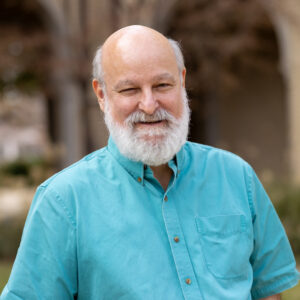
Dr. Bock has earned recognition as a Humboldt Scholar (Tübingen University in Germany), is the author or editor of over 45 books, including well-regarded commentaries on Luke and Acts and studies of the historical Jesus, and works in cultural engagement as host of the seminary’s Table Podcast. He was president of the Evangelical Theological Society (ETS) from 2000–2001, has served as a consulting editor for Christianity Today, and serves on the boards of Wheaton College, Chosen People Ministries, the Hope Center, Christians in Public Service, and the Institute for Global Engagement. His articles appear in leading publications, and he often is an expert for the media on NT issues. Dr. Bock has been a New York Times best-selling author in nonfiction; serves as a staff consultant for Bent Tree Fellowship Church in Carrollton, TX; and is elder emeritus at Trinity Fellowship Church in Dallas. When traveling overseas, he will tune into the current game involving his favorite teams from Houston—live—even in the wee hours of the morning. Married for 49 years to Sally, he is a proud father of two daughters and a son and is also a grandfather of five.
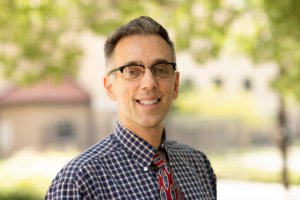 Darrell L. Bock Neil R. Coulter