

Transposing Earthly Riches Into the Treasures of Heaven
How can business be used as an economic engine for God’s kingdom? In this episode, Bill Hendricks sits down with Raymond Harris, a highly successful architect turned “venture capitalist in God's kingdom,” to discuss the biblical theology of wealth and stewardship.

The Table is a weekly podcast on topics related to God, Christianity, and cultural engagement brought to you by The Hendricks Center at Dallas Theological Seminary. The show features a variety of expert guests and is hosted by Dr. Darrell Bock, Bill Hendricks, Dr. Kymberli Cook, Kasey Olander, and Milyce Pipkin.
Timecodes
- 1:14
- Raymond’s Background
- 6:53
- Raymond’s Theology of Money and Stewardship
- 11:57
- The Purpose of Business
- 16:05
- What Does it Mean to Take Care of the Poor?
- 19:57
- Investing in the Kingdom
- 28:19
- Helping Others Develop an Economic Engine
- 36:00
- Exchange your Earthly Wealth for Heavenly Wealth
- 38:18
- The Role of an Entrepreneur
- 41:04
- Satisfaction from Investing in People
- 43:09
- Who is The Most Generous Person?
Resources
Raymond Harris, Enduring Wealth: Being Rich in This World and the Next
Transcript
Bill Hendricks: Well, welcome to the Table podcast. I'm Bill Hendricks, the Executive Director for Christian Leadership. And I'm so excited you've joined us today. In the Sermon on the Mount, Jesus said very clearly, lay not up for yourselves treasures on earth where rust and moth destroy, and thieves break in and steal, but lay up for yourselves treasures in heaven where those things don't happen. That's so noble-sounding. And then the question becomes, okay, so how do we do that? I could not be more excited to have a good friend of mine, Raymond Harris, with us today to discuss that very topic. It's something I know Raymond personally, and I've known him for a number of years, and I know that he has spent the better part of a lifetime trying to answer that question. So, Raymond, welcome to the Table podcast.
Raymond Harris: Thanks, Bill. I appreciate you inviting me. This will be fun.
Bill Hendricks: Well, I've been looking forward to this for a long time. And just a little background on Raymond: Raymond had a long career in a world-class architectural firm that he founded, and he can say more about that if he wants, but through that, I think we would say in Christian circles, God blessed your work, and the next thing you know—it didn't happen overnight, but you end up by the time you—I don't want to say retired—moved to a different line of work, you ended up with quite a bit of wealth out of that.
Raymond Harris: Yes, that's true. God allowed me to build what I call an economic engine through my architectural firm. And I was originally encouraged to go into the ministry. I don't know if I ever told you that. Out of college, I was supposed to go either on staff or come to Dallas Theological Seminary and go to seminary, and I actually didn't want to do that. I wanted to be an architect.
Bill Hendricks: Maybe the seminary's loss was the kingdom's gain.
Raymond Harris: Well, nonetheless, I decided I really wanted to be an architect. But I will tell you this: I had to look through my rearview mirror many times, wondering, "Did I miss the turn?" And the Lord seemed to tell me later on, probably 20 years into my architectural career, "No, drive through the windshield, don't look through the rearview mirror." What that was for me was, "No, I created you to be a steward of my kingdom." And so the architectural firm was simply an engine that would allow me to become a steward. I was not created to be an architect; I was created to be a steward of the kingdom. Architecture was just a vehicle, a means to do that.
Bill Hendricks: Yeah.
Raymond Harris: So, that's kind of how I started out. I loved architecture. We did really well. I developed it into a large firm. We began doing work for large clients. We ended up doing work for the world's largest client, which everyone on the podcast has been in a building we've designed: Walmart or Sam's. So we became one of their primary architects for 37 years.
Bill Hendricks: So you've seen the insides of a lot of Walmarts.
Raymond Harris: Yes. I've been in a lot of Walmarts. I'm like Johnny Cash: I've been everywhere, man.
Bill Hendricks: And other projects way beyond that, schools and civic buildings and so forth.
Raymond Harris: Well we didn't do as many civics, but we did, I did quite a few churches and initially some houses, every young architect has to do a house 'cause that's how they make a living. We specialized in assisted living centers for older people and surgery centers. So we did a lot of medical work as well. But a lot of work for AT&T and Walmart gave us more and more work and just crowded out our other clients to finally where we focused primarily on Walmart and corporate clients. So that turned out, as EF Hutton once said, put all your eggs in one basket and then just watch the basket.
Bill Hendricks: Good advice. So as you're listening to this, I guess I want to point out, you know, Raymond didn't start out with just a whole lot of wealth. In fact, quite the opposite.
Raymond Harris: No, Marydale and I were married the week we graduated from undergraduate at the University of Oklahoma, and I had a whopping $600 in my checking account. We went on our honeymoon with $400 of that. So we were fine, we were still cash flow positive at $200 and jobs. We started out very, very small, and we were given a large wedding gift, but we felt compelled by the Lord to give that to our church. And so we really had to trust the Lord in the first couple of years we were married. When we graduated from the University of Oklahoma two years later with a graduate degree, we actually had $3,000 in our pocket. We worked really hard and saved our money, came to Dallas, and started working and started our family. So, yeah, not a lot of money, but, you know, it's just how everyone starts out, it seems.
Bill Hendricks: Well, and so you've told us kind of where it ended up, but as I understand those early days, you had to pay your dues, right?
Raymond Harris: Oh, absolutely. Yeah. I worked for really good firms for the first four years I was out of school, and I made a typical architect's salary. And I don't know of any architects that get rich. I really don't. It's just a poor man's profession, a very noble profession. It's kind of like being an artist: you just work really hard. And so, in time, I really wanted to be either an owner of a firm or start a firm, and I went to the senior partners in the firm I was with and asked them if I could be considered to be a junior partner. And they said, "No, you're too young." So I left without any work and started my own firm, and very shortly thereafter began to accumulate work. And as my stepdad said, you have a Me, Myself, and I company. So I worked really hard for a couple of years by myself, started out in the back bedroom of our home, and eventually had an office, and then an employee, and then a couple of employees. At the peak, we were up to about 70 architects.
Bill Hendricks: So as you're starting to make a go of it and you're making some money, where did money fit in your categories? Was it just like, this is just what you do because that's what people do—they go to work and they make money? Or did you always have a high sense of, "No, money's a resource that God's given us"? How did that come about?
Raymond Harris: Well, I think stewardship is a journey for sure. It's not something you just all of a sudden get. I was fortunate in that when I was in college, I became a Christian as a young boy, but I didn't follow Christ till I was in college—I was discipled with some good men. I had some good teaching. I came out of college with a good theological background, but not a good theology of money. And I read books by Larry Burkett and Howard Dayton, and they really helped me understand how to handle money. And what I learned was, don't take possession of your money. It's basically God's money; you're entrusted with it. And so even though I didn't have a lot of money, we took good care of it. We managed it well and we became generous. And my thought is, if you're not generous when you're poor, you're not going to be generous when you're rich. And so we lived on less than we made, saved what we could, and became as generous as we possibly could. I think God's blessing was not because of what we did. God's blessing was in spite of what we did, but He was very kind and generous to us. I was able to start a firm only four years out of college, which was very unusual for architects. I asked God for two things, and I said, "Don't make me rich and don't make me famous. I can't handle either one." And He granted that for the most part, He's finally entrusted more wealth to me as I got older, but I'm still not famous. My wife has said I'm infamous. But not famous.
Bill Hendricks: Well, who knows? Now that you're on the Table Podcast, maybe you're famous.
Raymond Harris: This is a highlight, brother, this is a highlight.
Bill Hendricks: Well, I mean, it's just a fact that the rich people of the world don't have a great track record when it comes to money.
Raymond Harris: Well, if you have the right theology of money, I think it helps. And that is that God is the owner of all things. He grants us money and wisdom to use that money. For what purpose? It's for His purpose. I think that He gives men their money so that you can become the hands and feet of Christ on this earth to take care of those that can't take care of themselves, to basically take care of the kingdom on earth. So if everything belongs to God and He entrusted it to us, then we, by definition, are not owners; we're stewards. We're just caretakers of that. I learned that early, not because I'm smart; I learned it because I read some very wise men's books, and then I read the Bible. Believe it or not, the Bible tells you all this stuff. And so we just have to understand it and apply it. It doesn't happen overnight. For me, it's been a 47-year process.
Bill Hendricks: Right. Well, speaking of the Bible, you're right. As my colleague, Dr. Bock, likes to say, it's not that it's true because the Bible says it, but rather the Bible is reality. It's revelation. It tells us what reality is, and so it's in the Bible because it's true, and it's God's revelation to us. Right there at the beginning you have Genesis 1:28, what we call the creation mandate, which is really God's marching orders to these new human creatures that He's just created. And the very first words He speaks to them are, "Be fruitful, multiply, fill the earth and rule over it." In other words, cause the world and its people to flourish, and flourishing means many things, but it certainly includes the creation of wealth and the use of what we now call money.
Raymond Harris: Well, God created wealth.
Bill Hendricks: Exactly.
Raymond Harris: You know, gold and silver–which has just spiked lately–it's all His. He created it.
Bill Hendricks: He put it there in the first place
Raymond Harris: Wealth is good because God gives men their wealth, and if God gives men their wealth, it's a good gift. It has to be by definition. So men that are made wealthy are given that wealth by God, and it can be good.
Bill Hendricks: But as you said, it's a stewardship
Raymond Harris: It's a stewardship issue, response issue, it's what men do with it is what makes the difference. Sometimes we're taught that it's not necessarily good to be wealthy because there are pitfalls, struggles, and temptations, but if man uses wealth for its intended purpose, it's a very good thing.
Bill Hendricks: Well, speaking of purpose, you alluded to it a minute ago, but in light of all this, what would you describe as the purpose of business?
Raymond Harris: Well, the purpose of business, in my opinion, is to be an economic engine, and I believe–and it's my conviction that–that all business is there to take care of the poor. Now, let me go back and explain this. First of all, you build a business because you want to be sustainable, so what do you do with money you make in business? So you have to make more money than you spend to stay in business. Let's just assume that we make more money than we spend. What do you do with the profit? The first thing you do is take care of yourself and your family because you can't be sustainable otherwise; you put your own oxygen mask on first. Then what do you do with the profit? Are you supposed to take it all home to yourself or splurge on yourself and use it only for you? No, we know that's not true. So what do you do with the wealth once you take some home? My opinion is you take care of the people that help you create the wealth, meaning your employees or your vendors, and you take good care of them.
Bill Hendricks: Meaning like with fair wages and stuff?
Raymond Harris: Yeah, fair wages, bonuses, benefits. If they're making you profit, then in my firm, I would share the profit. In our company, over the whole period of almost 40 years, a third of the profit went to me, a third went to my partners, and a third went to employees. The reason a third went to me is I owned the company for 25 years without partners. But even over that long period of time, it was still a third, third, third. So you take care of the employees, and then you have to take care of the mechanism or the engine that you've created to create the wealth, meaning the business.
Bill Hendricks: Talk more about that engine.
Raymond Harris: You reinvest into the company. In our company, we had very low overhead because we wanted to take more money home than we left at the office. But we did buy the best computers possible so that we could create great service for our clients. We didn't skimp on the important things, but we didn't live in luxurious offices. I didn't drive a brand new car. I didn't give everybody these luxury things that a lot of businesses do. We kept it frugal so we could take more money home. So you take care of your family, you take care of your employee family, and then you take care of the engine that's creating that. What do you do with the rest? Do you give all the rest to yourself and take it home? That doesn't make sense. You've already taken care of your family. The only place I could find to put that is what Jesus told a rich young man one day. He says, "If you want to store your treasures in heaven, give to the poor and then come follow me." So I said, "Well, Lord, it seems to me then that the highest and best use of business profit, once you take care of yourself, your employees, your partners and the business, what do you do with it? Well, to me, the only logical thing is to take care of the poor." Now the poor are more than the financially poor. It might be the spiritually poor or those that are entrapped in slavery or what have you. But it's still those that can't take care of themselves. Why in the world would Jesus entrust us His wealth if it wasn't to take care of His kingdom?
Bill Hendricks: So right there in the middle of it is a generosity of spirit.
Raymond Harris: Yeah, and it's not just being generous, it's being a steward. The stewards that Jesus talked about in the Parable of the Talents were not donors; they were investors of the Master's money. So He entrusted money to be used to invest in His kingdom. And in my opinion, one of the best investments is just taking care of those that can't take care of themselves. Because who's going to pay you back? The Lord is going to pay you back. He says that, "Give to my poor and you lend to the Lord; I will repay."
Bill Hendricks: Well, I think a lot of us hearing that immediately think, "Oh, then we should start writing checks." And you've certainly done plenty of that. But you've done a lot more than that, right? Talk about that. When you say take care of the poor...
Raymond Harris: You can take care of the poor, and the poor can be defined in a broad spectrum. It's really those that can't take care of themselves. So even the unborn are poor because they can't take care of themselves. If you lose your wallet and passport in France, you're a poor man.
Bill Hendricks: so someone will have to help you get home. It's not a cut-and-dry financial poverty.
Raymond Harris: But if you look at what Jesus told us in Matthew 25, He said, you know, there's going to be sheep and goats, and I want you to be a sheep because who are the sheep? They're the ones that feed the hungry, visit the prisoners, rescue those that need to be rescued. And He says, "You'll do it for me." For me, when I stand before the Lord and give an accounting of my life, I want to be rewarded as a good steward because of what He's given us. Back to your point of why do you do this in business: well, if we actually believe that we are eternal beings–I mean, we actually believe that we all give intellectual assent, but–let's say we believe we're eternal beings, and oh, by the way, we're actually in eternity. By definition, we're already there. If you're going to live forever, forever's already started. If you're already in eternity, Bill, why would you do things that don't count for eternity? You don't buy a yacht an hour before you die; it just doesn't make sense. You don't buy another vacation home when you've got cancer and are getting ready to die. If you're already living in eternity, then you need to look at all the things that you do with your money in light of eternity. It doesn't mean that you give it all away—that actually would not be wise. But what do you do with it? You're going to be accountable to the Lord for what He's entrusted to you. I find that it's a combination of investing and giving. In the Lord's view of everything, it's all His. There's not a sacred and a secular part of money, it’s all His. So I invest in for-profit things, I invest in not-for-profit things, and I also just give money away. It's what I call mashed potatoes, peas, and carrots all mixed up.
Bill Hendricks: I should mention for you listeners, if your curiosity is piqued and your mind is provoked by some of the things that Raymond shared here, he's put all his thinking in a book called Enduring Wealth: Being Rich in This World and the Next by Raymond Harris. I would heartily encourage you to pick up a copy of this book and read it through because it's got a lot of basic theology in it: theology of work, theology of money, theology of stewardship, as well as a lot of practical principles and lots of stories of what you've done. When you described your bio on the back cover, you mentioned the architecture, and then you said you've been a venture capitalist in God's kingdom. So that investing thing has carried over. Maybe not so much investing in your own business, but now in other people's ventures. Talk to us about that.
Raymond Harris: As I said a minute ago, God gave me the ability to create a large company that generated large profits, and we were selected as the number two retail design firm in America for three years in a row. It's kind of unusual for architects to make a lot of money, and we were able to do that. You've got to do something with it. I realized that it was just an economic engine for God's kingdom. I don't want to sound holy about that; I didn't realize that for a while. I was still driving by looking in the rearview mirror. I wasn't driving through the windshield. But I realized I've got to do something with the money. I learned early, when I didn't have money, that you don't take possession of your money. Marydale and I were able to save a lot of money; we lived frugally. We didn't live in poverty, but we didn't live at the level we could. We lived frugally, not because of holiness, it was just our attitude; we felt more comfortable being prudent in how we lived. So we stockpiled some money. It wasn't hoarding, it was storing, which is a big difference. We just said, "Lord, it's available at some point." Now, I'm not that holy of a guy. I mean, I'm not like, you know, going, you know, I'm thinking of the truth, but I just didn't know what to do with the money and so I saved it, and once things became evident to me—and it was through the prompting of the Holy Spirit. I cannot say that I am really smart and know how to invest. I have to just be quiet and listen to the promptings of the Holy Spirit. We've invested in things in Africa: agriculture, medical things like that. A jewelry company in China, in the movie business, in all different types of things. I would not have set out with a strategic plan and said, "Oh, I'm going to invest in all these industries to diversify." I'm not smart enough; I can't figure that out. But once you meet people and the Holy Spirit pricks you, then you decide, "Oh, maybe I could partner with them in what they do or ignite them." We find ourselves to be igniters of younger people to build the kingdom. That's what I think our calling has been, and we didn't realize it for a long time. It's not like we had a strategic plan.
Bill Hendricks: It does attract this sort of very common philanthropic thing where we hive off a whole foundation of money and say, "We're going to give to these categories, and now we go out and do all this research of who's doing that the best..."
Raymond Harris: Well, we actually do have a private foundation that we started over 20 years ago. As we would make money, I said, "It's getting difficult to be generous at the end of the year. You make your money and then all of a sudden, oh, we've got to give it away at the end of the year. What do you do?" We established a foundation so that we'd have a little more time to give away money that we felt the Lord was calling us to give. But we set it up as a conduit foundation. A conduit foundation basically means money in and money out the same year. So if you put money in the foundation, it's to be distributed within a year. And that kept us from hoarding. I talked a little bit about the difference between storing and hoarding. Sometimes we store because we don't know what to do with it yet. But if we can figure out how to deploy it by the end of the year, then I think it's storing, not hoarding. There's no tax benefit in all that; it's just a mechanism to give us a little more time to deploy what we feel like the Lord's called us to. The Lord gives us the heart's desires of what to be involved in. So we invest in things that pull at us. We invest in poverty for the most part. We invested so many years in evangelism, discipleship, and church planting, which is noble. But then the Lord seemed to tell us later, "But what about my poor?" We had ignored the poor because we were too busy building evangelism and discipleship. Well, a little girl in Chennai is not interested in the gospel until you get her out of her sexual slavery condition, right? And then you can tell her about Jesus. When someone is starving, do they want to hear about Jesus or do they want to eat? Jesus seemed to meet their needs first, and then they came to Him. So my thought was, we should focus more on the poor, sharing the gospel with them, because they'll be rich in faith. We began to focus more and more on the poor, not avoiding discipleship church planting, but–
Bill Hendricks: Discipleship and church planting among the poor.
Raymond Harris: Among the poor, yeah. And then, you know, the most valuable thing besides wisdom is God's word. God's word is alive, and people don't have it. How can they come to the abundant life without His word? We really felt like getting God's word in the hands of everyone in the world was important, so we started doing that.
Bill Hendricks: Well, it sounds like you've been a little more strategic than you're giving yourself credit for.
Raymond Harris: I have to give the credit to the Holy Spirit to nudge us because I don't know when and where to do it and how much. Marydale is a gift to me from the Lord; we work well together as partners. She has wisdom that I don't have, and I have an aggressive nature. She tells me, "Hey, slow down, cowboy. Let's think about this a little bit." She's been a great balance and through listening to her and, and us working together, we don't give and we don't invest without each other's enthusiasm in what we're doing, or we just don't do it.
Bill Hendricks: I was going to ask what advice you had for folks where they're married and they need to get their spouse in on it.
Raymond Harris: Well, you better, because I think our spouse completes us. We all have blind spots; we have a blindness about us that our spouse, who knows us well and loves us, can help us get over. In our relationship, we're very complementary. I tend to want to go a little too fast, and her attitude is, "Let's do fewer things better," which has really helped me slow down a little bit. I would rather do a hundred things at once and see what works, and, so she's, she's been very complimentary, in how we, invest together. I tend to want to invest more in the business side of things; she's not a business person, but she has really good business acumen, so I have to rely on her. I remember one particular story. We were approached by a ministry that was desperately in need of money—it was going to be disastrous if they didn't have this money within a couple of days. The first thing I wanted to do was take out the checkbook and help them out. And Marydale said, "Let's wait because, you know, we've already given to them, and let's just see what the Lord will do." I was just rolling my eyes, and sure enough, a new donor came along and offered them the exact amount of money they needed to the dollar. Had we jumped in, we would've circumvented that. It was just such wisdom from Marydale to say, "Let's just wait and see what the Lord will do." So, if you have a spouse, you need to use their wisdom, even if they don't know much about what you think you know. They know a lot of what they know.
Bill Hendricks: You have some wonderful stories in the book. Going back to your work with the poor, it goes beyond just writing checks. Like many of these folks, you've helped them develop an engine. I love that. It's the old saying, give a fish to a person, feed them for a day, but if you teach them to fish, they live a lifetime. Tell us one of those stories where that person has themself become a giver and an investor to others.
Raymond Harris: Well, I have two favorite stories. One is a story from when I was in China speaking at a business seminar in 2010. We were actually able to go in and speak; we didn't talk about Jesus as much as God, but we were giving biblical principles. And so we had a pretty big seminar, and one of the ladies, after this, after I, I did this, talk, came up and sat down next to me and said, could I share with you about a, a business we have? It's very unusual." And I said, “sure, I'll be glad to listen to you.” In a way, you're a little bit tired from speaking, and you think, "Okay, what am I going to hear now?" She said, "My business partner and I have a business; we make jewelry." She showed me a brochure, and I looked at it and said, "This is phenomenal. This is like the highest quality costume jewelry you could make." I asked, "Who designed the brochure?" She said, "Jenny did." "Who designed the jewelry?" "Jenny did." "Who makes this jewelry?" "Well, some ladies." Then she told me the backstory: the ladies that make the jewelry are coming out of the brothels. I went over and met Jenny the next day at her house, and there were six ladies sitting around a dining room table making jewelry. And that's how Starfish Project got started. Jenny is an American who was over there as a missionary; she wanted to do something for these girls but didn't know what, and the Lord gave her the idea to make something with them to bring them out of their situation.
Bill Hendricks: Aand they need an economic engine.
Raymond Harris: They needed an economic system in order to survive–
Bill Hendricks: And not go back into the brothels.
Raymond Harris: They needed a job because most of these women had been trafficked. They didn't have a place to live, and they needed medical care and counseling. Jenny brought them out and provided all those things, but how are you going to do that in a not-for-profit world? You can’t. So they started making jewelry, and now they're one of the best jewelry companies around; Macy's and Kohl's have them in their stores. Even Ellen DeGeneres bought 50,000 units and handed them out to her audience because it was such high quality. Now, Jenny has brought out over 250 women out of the brothels, and they're not rescued—they come out on their own, but they have a place to go, and so even some of the madams have come out and, so it's a beautiful story, wonderful jewelry; The Chosen uses it in their gifts; If you buy anything from the chosen, you'll be buying starfish jewelry. So that's one of my favorites.
Another one is helping a guy named John Enright who I met in 2008. I went to Africa on a mission trip and I met this crazy guy waving his hands, telling about the abundant life, and he was a pastor. He said, "American missionaries are pretty ineffective over here. But you know, I'm building businesses so that we can share the gospel among the poor and give the poor employment." I was enthralled by that and got involved. Marydale and I began to fund him, not just with donations, but we actually capitalized his company. We started about 11 businesses, of which about nine failed—not falling flat on your face, they just didn't produce a lot of profit. And as I said before, if you don't have profit, you can't stay in business. But the two that worked really worked: one was honey, and one was goats. Now we're one of the largest honey companies in Africa, employing about 15,000 people, and the goat business employs about 500 people, providing honey all over the continent of Africa. This allows us to share the gospel while we do this. And it's self-sustaining. I don't put any money in it at all. Now the bees do all the work.
Bill Hendricks: See, I love that story. I can tell people—I don't use your name—but I know a man who built more Walmarts than anybody else in the world. And people are like, "Wow, what's he doing now?" You know, is he a senator? Is he an ambassador? Is he a business titan? No, now he's invested in goats and honey.
Raymond Harris: Yeah. He is a goat and an unemployed architect.
Bill Hendricks: That's right. He's an unemployed architect. But it goes back to how God has created people. His intention was that they thrive and flourish and cause the world to flourish in a fallen, broken world we now have, and it sometimes seems like it gets worse by the day, but we have a vast majority of people who are in the poverty zone, which basically means they have gifts that God's given them to contribute to the world, but they don't have opportunity. What you're doing is coming in and seeing the people and what they could do, and if they had an engine to work with, something could actually happen.
Raymond Harris: Yeah, a statement that I heard—I cannot take credit for it—was, "Everyone in Africa wants a job." It's not like they're lazy, sitting around. They want a job; there are just not many opportunities. If you want to bring the abundant life on this earth in God's kingdom, then I think employment is really critical, and anything we can do to provide jobs is good. I look at a lot of businesses I invest in, and some things all they did was provide jobs. I think, "Okay, I didn't make a profit, but I provided jobs. So when I stand before the Lord, He will repay." That's a pretty good investment.
Bill Hendricks: When you say you didn't make money, you didn't make money for you, but you set up a situation for them to make money. Money was made!
Raymond Harris: Yeah, that's exactly right. Both my mother and my stepmother passed away in the last couple of years, and I was the executor of both of their estates. I realized that when we die, all our stuff goes out on the curb or in the dumpster. I went, "Oh my gosh," I had never thought of that. We're not going to take anything with us, and all the things that we think are so valuable, all these collectibles, all this stuff we accumulate, will eventually go out on the curb. I think it's important to have that in mind when we're building engines. Why are you building engines just for income, and what are you going to do with the income? To buy more stuff for the curb? I talk to older guys that have built estates and ask, "What are you going to do with the money?" They say they don't know. You're either going to give it to your relatives or you're going to give it to the government; it's going to go to one of those two places for the most part. It's like getting on the plane to go to heaven. If you line your pockets full of twenties, when you get off the plane, they won't spend. You have to go to a currency exchange counter on earth to get the right currency before you get on the plane to heaven. Otherwise, you're not going to be able to spend it. So if we leave all this money on Earth that God has entrusted us to steward, it's not spendable in heaven. I think it's a real shame, and we'll be held accountable for that. We're told that.
Bill Hendricks: I love that image of a currency exchange. That's a good way to put it. Exchanging the riches of the earth for the riches of the kingdom.
Raymond Harris: If we've traveled overseas, we all know that. The first thing I do when I go overseas is go to the currency exchange counter and get a couple hundred dollars worth of the local currency so I can buy a Coke or a cup of coffee. I've always brought home currency off of a trip; I stick it in a little deal to remind me that I can't use it at Walmart. So what am I gonna do with it?
Bill Hendricks: I'm just curious what advice you might have. I know we've got a lot of entrepreneurs that listen in, trying to figure out how they're going to make ends meet. As somebody who's been in that entrepreneurial role and now is getting behind innovators and entrepreneurs, what thoughts do you have about how they should look at what they're doing?
Raymond Harris: The first principle that I learned in the Book of Proverbs is you have to work hard. There's no getting around working hard. As I was told by my first boss, “I want you to come in early to make up for staying late." So, you know, working hard's not gonna kill us. Everybody wants to have a well-balanced life and family time; books are written on that. I never found that balance. My balance was when I bounced between two walls and the ball hit in the middle—that was a nanosecond of balance. But working hard is critical, and you have to realize that God gives us our wealth. He really does. I can work really hard, the, the men in Africa that I meet work really hard and some of 'em are very poor. They work so hard just because you work hard it, so wealth is actually a gift. It's how we use it on earth that's so critical on Earth. And so if God's a grantor of wealth, then what we do with it is what's so critical. And so I would recommend that men and women– women, particularly listening to this podcast probably in America–ask God to give them wisdom in how to use their wealth, and then ask God, if He so desires, to give them wealth. But we should never chase wealth because it leads to so many problems. I would seek after working really hard and asking God to give you the work of your hands. That's what Moses says: "Give me the work of my hands.” so I would, I would work really hard no matter what the task is, and if the Lord gives you wealth, great. If He doesn't, it doesn't matter because in God's kingdom, the amount of money is never the issue. Just think of the poor widow in the temple. She gave two small coins, but we still talk about her today about how faithful she was. No one could have given more; no one could have been a better steward. When I go to heaven, I want to sit at her dinner table and ask her how she did that, because I don't think I had that kind of faith. Amount of money is never the issue.
Bill Hendricks: It's evident to me—I mentioned generosity earlier—you enjoy investing in people. What is the satisfaction you gain from that?
Raymond Harris: Generosity in and of itself is good, and generosity in and of itself is not so good. There are a lot of generous people out there that are philanthropists that don't build God's kingdom. So generosity, you know, the generosity movement's good, but if it's only about loosening the pocketbook of people, then it's not necessarily good. You've got to have a purpose behind your wealth. So what was your other question? You, you asked some, well,
Bill Hendricks: what's satisfying to you–
Raymond Harris: Oh, satisfying to me. I think, I like investing, I call giving money away investing, even though it might be a donation. My philosophy is, if you can spend my money better than I can in what you do, then I'd be a fool not to give it to you. But if I can spend my money and invest it better than you can, then I'd be a fool to give it to you. I look for guys that are stewards inside whatever they do. If it's a ministry, I look at the ministry leader: is he a steward of that ministry, and can he handle money or handle resources? If he can, I'd be glad to give it to him. Between Marydale and I, we give away as much as we invest. My preference is to build economic engines so that you can recycle the money. But simply feeding people or rescuing little girls—that's some of the best money you could spend. That's the best investment because the Lord will pay me later. We'll stand before an audience of one and give an accounting. Do you want your reward now and get 10x or 5x, or do you want 100x when you stand before the Lord?
Who is the most generous person?
Bill Hendricks: Here's a trick question: who's the most generous person you've ever known in your life? And they may or may not be a wealthy person.
Raymond Harris: If the Word is alive, then it's the lady that went into the temple. I just admire her. The other one I admire is the one that sat at Jesus' feet and wiped His feet with her tears. I mean, that was generous; that was giving of your essence. I have good friends that are very generous, but their generosity is based on the volume of money they have.
Bill Hendricks: And maybe the tax code to some
Raymond Harris: Does it represent the faithfulness? I think faithfulness is more important than the amount of money. Now, I do have good friends that give away a lot of money, and I am so happy and proud of them because they're using the resource to build the kingdom. There are certain men and women out there that God has called to do phenomenal things like Bible translation, or even The Chosen in the movies. We've been involved in the movie business, and it has a huge impact on a lot of people. But the amount of money is never the issue; it's the faithfulness behind it.
Bill Hendricks: Well, Raymond, our time is up, but I just can't thank you enough for coming to share what God's shown you over these years.
Raymond Harris: Well Tank you Bill, you’re a dear friend.
Bill Hendricks: This helps all of us, all of our listeners. It certainly helps me. And again, if you want more on this topic, pick up a copy of Raymond's book, Enduring Wealth: Being Rich in This World, and the Next, with “rich” broadly defined.
Raymond Harris: If someone wants the book and doesn't want to buy it, contact Bill and they can get a free copy through the seminary. Dadgum it, the poor author, he's got books in the, in the basement and in his garage he needs to get rid of. So I'd be glad to get rid of them.
Bill Hendricks: Needs to lower the inventory.
Raymond Harris: Absolutely. You know that being an author, brother.
Bill Hendricks: Well, I will be more than happy to pass those along. I want to thank you for joining us today. This has been a great conversation with Raymond Harris. If you've enjoyed today, we would encourage you to leave a comment on the podcast service so that other people can find out about the Table Podcast, where we discuss issues of God and culture. We'll see you next time.
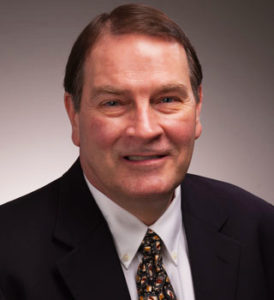
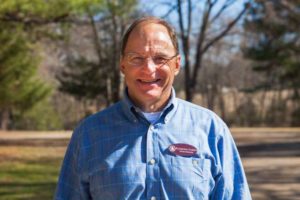 Bill Hendricks Raymond Harris