

Spiritual Growth
Does your spiritual life feel like a bed of cold ashes? Join Dr. Mark Yarbrough, Bill Hendricks, and Dr. Darrell Bock as they discuss how to navigate the mundane struggles of daily life and apply six spiritual essentials to rekindle your heart for God.

The Table is a weekly podcast on topics related to God, Christianity, and cultural engagement brought to you by The Hendricks Center at Dallas Theological Seminary. The show features a variety of expert guests and is hosted by Dr. Darrell Bock, Bill Hendricks, Dr. Kymberli Cook, Kasey Olander, and Milyce Pipkin.
Timecodes
- 3:50
- The Rekindled Heart
- 8:11
- Faith in the Mundane Life
- 11:25
- Knowledge vs. Transformation: The Goal of Bible Study
- 17:20
- Rekindled Devotion and Bold Trust in God's Word
- 24:53
- Trust in the Lord With All Your Heart
- 30:44
- Rekindled Love: Authentic Compassion for Others
- 41:33
- Rekindled Holiness
- 46:01
- Rekindled Servanthood
- 49:41
- Rekindled Zeal: A Burden for the World
Resources
The Rekindled Heart: 6 Essentials for Reviving Your Faith by Mark Yarbrough
*As an Amazon Associate, Dallas Theological Seminary earns from qualifying purchases.
Transcript
Bill Hendricks:
Hello, there. I'm Bill Hendricks, co-host of The Table podcast, and we are very glad you have joined us for today's special edition of The Table podcast, where we discuss issues of God and culture to show the relevance of theology to everyday life. I'm joined by my co-host, Dr. Darrell Bock, who is the executive director for Christian Leadership at The Hendricks Center as well as research professor in New Testament studies.
What makes this a special edition? Well, let me begin by just referencing a verse in the New Testament, where Galatians 6:9, "Paul says to the Galatians, so we must not grow weary in doing good." If you've been a believer for any length of time, you have experienced what Paul's talking about, where you've put in work and effort to grow in Christ and to follow Christ and to do the things that the Lord has asked you to do. And then somewhere along the way, it's like the fizz goes out of the soda, it's a bit flat, and you're wondering, "What's wrong with me?" Well, it's a special podcast because we are joined today by the sixth president of Dallas Seminary, Dr. Mark Yarbrough, who is also a professor of Bible Exposition.
Mark, you have done really a lifetime of study to put together a book on this very topic. I'm going to give the name of the book, The Rekindled Heart: 6 Essentials for Reviving Your Faith. Churches talk a lot about revival. You're talking about a personal revival, I take it?
Mark Yarbrough:
Correct. Exactly, yeah. It's about the spiritual life of a believer. We all need rekindling.
Bill Hendricks:
Rekindling.
Mark Yarbrough:
That's right, indeed.
Darrell Bock:
So how did a guy like you get into a gig like this?
Mark Yarbrough:
And the question comes.
Darrell Bock:
Exactly right.
Mark Yarbrough:
That is right. Well, in terms of a gig like this, if we're talking about writing this book, and you guys are authors, I think that, to me, the word that always strikes me is convergence. It's kind of like what the Lord's been chipping away at in your own heart, your own life, and maybe, at times, your own needs, your own interests, and it's a convergence. I've had a lot of discussions with individuals. There are things that have been going on at the seminary, and I'll bring that into this in terms of our core values that actually led to this book. There was a convergence, Dr. Bock, if you're asking, "How did you get into something like this?" Well, I'm going to say it was a convergence of some moments that the Lord was leading, that kind of led to, "Hey, I want to put this in a book." There you go.
Darrell Bock:
The challenge of walking in the faith and staying in the faith, 6:10 of Galatians goes on to say, "... and do good to all people, especially those of the faith." This theme, it's actually the closest. I tell people it's a close of a good evangelical sermon. You have your theology, which is about loving your neighbor as yourself, and then you get the application, little bitty application at the end-
Mark Yarbrough:
That's right.
Darrell Bock:
... verses 9 and 10, actually the therefore is in verse 10. It's a laying out of what it means to do good and have the strength and the ability and, above all, the enablement to do good. So when you got motivated to write about The Rekindled Heart, obviously there's the heart and then there's the rekindled heart, so let's talk about that distinction.
Mark Yarbrough:
There you go. Well, I'll tell you a little bit of a story, kind of how it started, and then it'll get into that topic. You guys know I love to fish. I was on a fishing trip this last summer. Kind of the rule of camp is that the person that gets up early in the morning has to be the one to start the fire. I was like, "Okay, that's a good rule." It's cold. We are in Wyoming. It's still cold in June. It's cold, cold. What I've always found fascinating, and that's kind of where this metaphor comes from, which we'll get back into your question here, so be patient with me, is that I got up early in the morning, I was usually the first one up, and we'd had the fire from the night before, late in the evening, and we've all been out there, what a fire does, it dies out and the ashes cover it up. The coals are still present.
Darrell Bock:
The embers.
Mark Yarbrough:
The embers are present. So it was the next morning. I sat down at the fire and was getting ready to get up, and another gentleman that was on this trip sat down beside me. I kind of grabbed a stick and kind of poked it a little bit and you could see the embers, and there it was. I was getting ready to get up, go get some fresh wood, get the fire going. He took a deep breath and he said, "That's my faith," he said, "used to be a blaze like last night's fire. But right now, it's just kind of covered up by the ash. Oh, yeah, the coals are present, but that's it." Well, that got me moving into this, and I wrestled with that honestly. I thought, "Whoa, what a great moment."
Bill Hendricks:
You didn't know you're going to start the day in a confessional.
Mark Yarbrough:
No, I didn't.
Bill Hendricks:
The guy is confessing to you.
Mark Yarbrough:
That's exactly right. We ended up having this great talk. Obviously, it's customized towards where he was in that moment, but I kind of wrestled with it myself because I realize our hearts have a problem and, at the same time, we've all had, for Christians, these moments of faith. Man, we could do a whole podcast just on moments where it's like we saw the Lord work, move, enlighten us. Maybe it was a moment with a relative, a mentor, sitting in a class, being part of something. Maybe it's just us walking with the Lord and reading in His word and, all of a sudden, it's just that moment. I kind of played with that. I realized that, in that metaphor, we all need rekindling because we live in a broken, fallen world. At the same time, we all have these other moments of these, huge moments of just the grandeur of the flame.
Darrell Bock:
The blowtorch heart.
Mark Yarbrough:
Man, it's going, right. Yeah. It is just like, "Look out for the scorch that's going to come." It's like we all either need to be stoking the fire. So if you find yourself, and I'd say this to anybody that's watching or listening this, it's like, "Hey, praise the Lord. Found yourself on a mountaintop moment? Keep stoking." We need to do that, and I think that's one of the things the Lord led me to and why I wanted to put this in print, in particular for that individual that finds himself going, "That's my faith. It's just kind of covered up with ashes right now," and the ebb and flow of life, and we all know that.
I was talking with you guys before I walked in here and started recording. That's life. We've got a lot of things that are going on and none of us control the river out there. We live in a broken, fallen Genesis 3 world. Sometimes we create our own messes, sometimes the mess is created for us, and sometimes we just step back and go, "Okay, Lord, I'm going to trust you through the darkness here because it's a broken, messy, ugly world." So that's kind of what led to this rekindle. Rekindle, it can be both for, "Hey, let's keep the fire going," and it's like, "Let's get that flame started." It acknowledges the brokenness of our hearts, the mess that we live in, and how desperately we need the Lord every step of the way.
Bill Hendricks:
Well, and I had somebody point out to me the other day, it's also true that the vast majority of life is, if I can use the term, mundane. The vast majority of life is not the mountaintops. And yeah, there's hard things, but most of us it's like, "Yeah, we got to do the dishes, got to make the bed."
Mark Yarbrough:
That's right.
Bill Hendricks:
"Got to drive to work, got to do the paperwork, got to fill out the form," and a lot of it is just seemingly meaningless. Just to calibrate expectations, sometimes I think we can convey, we always want that flame to just be roaring.
Mark Yarbrough:
Sure, that's right.
Bill Hendricks:
But is that really how life is lived? We certainly don't want it to be a dead bunch of ashes, but it seems like there's a certain... It's like a burner on a stove. You want it to burn, but not too hot, not too cold. You want it to cook the food. Right?
Mark Yarbrough:
Right.
Bill Hendricks:
I think what I'm hearing you talk about is like, "How do we keep this going, certainly through the difficult times and the times when, 'Where is God?' but also just the dailiness of life?"
Mark Yarbrough:
There you go. I think that's a really good way to put it. Every metaphor breaks down, we all know that. But playing with the fire, image of what... We know when we don't want it, and we will find ourselves there. It just happens. And again, like I said, sometimes we create our own mess, sometimes it just happens and you find yourself in this lethargic moment of faith, but we want that flame to stay consistent and steady because, to play with your image of it, that's where the best cooking happens. You don't want to scorch it, but you don't want it undercooked either. That's part of the Christian walk is that we want to walk with the Lord in those dry moments and when it's painful. You don't live at all those mountaintop moments. Praise the Lord He gives us those because I think that's the grace of God, gives us these good moments of like, "Hey, now, you keep the journey going, but it's-"
Bill Hendricks:
And it's something to remember in the hard times.
Mark Yarbrough:
That's right. That's exactly what it is. The faithfulness of God in the past is always going to give us motivation for the future in those moments where all is not in that vibrancy of the faith. So, that's realist of what I'm really kind of trying to talk about in this book, but it does hit the practical, the mundane, and that's where God's at His best if we let Him be.
Bill Hendricks:
Yeah.
Darrell Bock:
I'm going to play with your metaphor a little bit because you got a fire going, and you got ashes and you got embers and the heat is low. But it isn't just about the flame in us, it's also about the wind that God supplies to fuel the flame. One of the challenges I think we get in our spiritual life is we can think, "Well, it's just me having to drum up what's going on inside of me," when in fact there's this relational element with God, this walk with God, this talk with God, this wind that blows the indwelling spirit within us that really we have to stay in touch with in order to have our faith be vibrant.
Mark Yarbrough:
That's right. In many ways, when I move from the metaphor which will always break down into these six essentials, I make it very clear in this that this is not a to-do book. It's not a, "Do these things, take the magic pill, and everything's going to be fine." But I do think that there are things that we can, it sounds like I'm speaking out of two sides of my mouth, things that we can do to allow the spirit to work in a greater way within us. Right?
Darrell Bock:
Mm-hmm.
Mark Yarbrough:
And it also reminds us along the way of how to think about God. Part of that in the midst of these down moments or moments that we think are just mundane, sometimes we do need to reframe our thinking about who God is and what He wants from us in the day-to-day functioning of life. I make it clear that this is not an exhaustive list just for marketing. When you say six essentials, I do think these are things for us to think about that will get us there with what you're talking about.
Darrell Bock:
Mm-hmm.
Mark Yarbrough:
Now, in full transparency, a lot of these come from what we established at Dallas Seminary. I spent a lot of time working on our core values, these things that are important to us. But as I started wrestling through these, I realized these are not just Dallas Seminary's core values. These topics, these what I'm calling six essentials from the book standpoint, these are things that are good for all believers. They have motivated me in my walk with the Lord, which is why I was like, "Man, I want to get this out," because I started talking with a lot of people and they're going, "It helped me reframe my thinking." Some of it was I needed to do something in order to draw out of me what God was already wanting to do, that I needed to let Him work. And then there are other things that are very, "Hey, reframe your thinking here." So there's a little bit of both in these.
Darrell Bock:
The core values/ideas are important because I tell people that what I think what part of what makes Dallas Seminary a little bit of a unique place as an educational institution is we're not just focused on the content that we teach.
Mark Yarbrough:
Yeah, that's right.
Darrell Bock:
We are very, very focused on the kind of person that's being shaped while they are preparing for ministry and the kind of shaping that God is doing. Those core values are something that we're built into the work of the center from the very beginning, and talking about the character of the person and the way in which God shapes people. So we're not only thinking about what we believe, we're thinking about how we go about delivering on what we believe and how we model what it is before us relationship to God. So those core values are actually, they're the juice that runs the classroom, if I can say it that way. The pursuit of those and the reliance upon God on those ideas.
Mark Yarbrough:
And how critical is that for us at Dallas Seminary? I say this every semester for new students walking in, I'm like, "If you are here to get a piece of paper to put it on a wall and lord it over others, please do yourself, me, every professor here a favor," and I would say the body of Christ, "go down to the registrar and withdraw. That's not why we're doing this." Yeah, we want to learn facts and figures... I know how many people sit at this table and quote your dad, Bill, but it's like, I can hear him, "The Bible was not written to satisfy your curiosity. We all know that it was written to change your life."
Darrell Bock:
Mm-hmm.
Mark Yarbrough:
What he was saying there, which we get-
Bill Hendricks:
We want to change lives.
Mark Yarbrough:
... it's about the formational process here. Of course, we want to grow in knowledge and we want to grow with a greater understanding of God's word. And that's some of these six essentials are going to deal with that. But if it's not transformative, if it's not formational, which is the heartbeat of the center, then we're missing out.
Darrell Bock:
The knowledge without love is, as far as the Scriptures are concerned, pretty meaningless. In fact, it's dangerous.
Mark Yarbrough:
Yeah.
Darrell Bock:
So this is an important theme to think about, what it means to walk with God, to be able to converse with God in the midst of the mundane and to have your sense of being in touch with Him as you go through this thing for the 2565th time-
Bill Hendricks:
Yeah, that's right.
Mark Yarbrough:
That's right.
Darrell Bock:
... and ask, "Why is God asking me to do this again?" Well, there is probably something formational that's going on that's important to the development of either where God has you or what he's asking you to do that's important to be in touch with as you go through it-
Mark Yarbrough:
Right.
Darrell Bock:
... again.
Bill Hendricks:
Well, I want you to go through the six essentials, but not to belabor the point. But you're not saying the essentials is all there is-
Mark Yarbrough:
Correct.
Bill Hendricks:
... you're just saying, "Look, if you're needing to rekindle your faith, have you tried this? Have you tried that?"
Mark Yarbrough:
Yeah.
Bill Hendricks:
In Christian circles, we talk about the means of grace. God's given us means of grace. It's all by grace. But He gives us means to appropriate, to make that grace effective and active in our lives. I liken it, not to change the metaphor, but it fits here with this idea of wind and blowing and... It's like being in a sailboat and you put the sail up to catch the wind. And these six essentials are like different kinds of sails that you can put up spiritually speaking to catch the winds of grace, the winds of the spirit to get your life kind of going again.
Mark Yarbrough:
Exactly. Yeah, that's a good picture. That'll be my next book. So that's-
Darrell Bock:
The fuel of grace. This is the fuel of grace.
Mark Yarbrough:
That's right. Well, the first one that I jump into, which is so us at Dallas Seminary, but it really should be for every believer I put, it's rekindled devotion and bold trust in God's word. I can't tell you how many individuals in terms of my, like you guys, counseling moments, moments of encouragement where I kind of go back and go, "Let's start back at the beginning here." In the book, I kind of talk about returning to that first fire. I've relived some moments in my own life of we've all had it, and I've had it when I'm preaching and teaching. I remember, I was preaching at a church and I just could see this guy that was just... I could literally watch him change. And it was not me, I promise you that. We've all had those moments where you're watching him and the Lord was at work in his life, and it was that particular passage on that particular day and that particular moment where God did something very unique in his life.
Afterwards, he even came up to me and he said, "Has somebody talked to you? Do you know my story?" I'm like, "Brother, I have never seen you in my life. I have no idea who you are. I assure you I didn't get some secret message before we all came here today. I have no idea what's going on in your background," and he said it was too precise. He was a surgeon and he started using all these pictures and metaphors in spirit of what we're talking about here today, and he's like, "You took a scalpel." And I said, "No, let's change the wording here," I said, "I didn't take anything. This is God at work and it was God's word." I want to state that over and over again, because I know you guys very well. And when we get to do a lot of life together, we take very seriously.
This is not just a Dallas Seminary thing. This is us as believers. We really do believe that all Scripture is God-breathed, that this thing that we call the Bible really is the word of God. You go to that 2 Timothy 3:16, I love that language of theopneustos (θεόπνευστος) it is the very breath of God. It's God's exhale. And when we stop in the midst of our challenges, whether the flame's going or whether it's a little covered up, it's a good place for us. The rekindling, a good spot to start is to remember. We really do believe this is God's word. God has spoken. So when we step into that and think back of the Lord igniting our faith and when we came to faith, this is a good practice for every believer to say, "This is God's word."
A lot of times when I'm talking with individuals, I'll just flat out ask them, I'm going, "How much time are you spending in God's word?" I don't mean that from a to-do check it off your list. I'm saying, "You can go through that in a very pragmatic way that is like, 'Okay, I did it and I checked it off,' versus coming to the text and saying, 'Lord, speak to me.'" That is giving the Lord an opportunity. We can thwart Him, oh yeah, but it's giving the Lord an opportunity to say, "Let me have my way with you. Let me speak. Let me go after your heart. Let me encourage you. Let me correct you," all of those things. So that's the first kind of essential that I hit.
Bill Hendricks:
Your surgeon friend actually picked a great metaphor, saying the word was like a scalpel.
Mark Yarbrough:
Oh, yes.
Bill Hendricks:
Hebrews actually says that, uses the term sword. But it's the same idea, it cuts. I've seen that in my own life. I had the benefit of growing up... I like to say, I've been going to church since nine months before I was born-
Mark Yarbrough:
That's right. Me, too.
Bill Hendricks:
I grew up in a Sunday school and elsewhere where we did a lot of Bible memory. What I discovered decades later, 30s, 40s, 50s, is how these little snatches of Scripture would waft up into my mind, and of course, the Holy Spirit's bringing them to mind. Only I'd see them in ways I'd never seen them before. I'd go, "Oh, that's what that means," because I'm now experiencing life in some way that God's speaking to that or I'm seeing it in new and different ways than I'd seen it before. And that's just what you're talking about.
Mark Yarbrough:
Oh, yeah.
Bill Hendricks:
When you have that word in your heart, you're giving the Holy Spirit an opportunity to speak to you.
Mark Yarbrough:
Yes.
Darrell Bock:
I think it's interesting that when we think about opening up the word and studying it, that we're in one mode. But when we talk about God speaking to us, which turns us into a listener, that's not the same thing. So if I'm reading the word just to get my "a verse a day keeps the devil away," that's one thing. But if I'm actually listening and contemplating engaging with what it is that God is saying to me through His word or what He wants me to see, that's important.
Mark Yarbrough:
That's right. And that's why I use that language of "it's bold trust in God's Word." Right?
Darrell Bock:
Mm-hmm.
Mark Yarbrough:
So this isn't just a superficial issue. This is saying, "Lord, you have spoken." And my trusting is being that listener, to pausing in the midst of a busy, loud world.
Bill Hendricks:
How often did the Lord, when He was here with the disciples-
Mark Yarbrough:
Step away, yes.
Bill Hendricks:
... Yes. But with the disciples and with the Pharisees and others, He come to a climactic moment and He would say, "Have you never read?" And he'd quote Moses or Jeremiah or whoever, the Psalms, and you're like, "Huh, maybe I haven't read that."
Darrell Bock:
Well, they read it, but they hadn't heard.
Bill Hendricks:
Well, that's the problem.
Mark Yarbrough:
Yeah. I'm just saying-
Bill Hendricks:
They didn't trust it.
Darrell Bock:
Exactly.
Mark Yarbrough:
I know these sound like very basic things, but-
Bill Hendricks:
It starts there.
Mark Yarbrough:
Yeah, this is a good one. It is essential in the midst of a world that is full of words. And I'm not meaning all bad words, that's not what I'm trying to say. I'm saying that if there is not a rhythm in our lives to listen, to trust and say, "God has spoken," that's a good position for us to be in.
Darrell Bock:
And which voice should I be listening to?
Bill Hendricks:
Yes.
Darrell Bock:
I mean, the word has got so many voices to us in many different ways from many different angles it's overwhelming.
Mark Yarbrough:
Yeah.
Darrell Bock:
The crowd is screaming, but there's one voice we're supposed to be hearing.
Mark Yarbrough:
That's exactly right. So I try to direct it there and I say, "Look, this is an essential." I debated on what to use on the subtitle and essential, but I'm saying, "Yeah, these are essentials. Of course, we need to be there." And whether you find yourself in the stoking role, I want to keep this going. I have to keep asking myself in the midst of a high-paced schedule and living in airplanes and all that kind of stuff of saying, "Okay, Mark, pause and listen. See what the Lord has said. Trust Him all over again, like you're hearing it for the very first time." That's a great position to be in. The second one, can I move on to the second one?
Darrell Bock:
Yeah, sure.
Bill Hendricks:
Yeah.
Mark Yarbrough:
It is a real... speaking of positional. I went to Proverbs and pulled out the T-shirt version, Proverbs 3:5-6, because it kind of follows a little theme here of, "Trust in the Lord with all your heart." I love that, and so I use this... It's rekindled dependence. It's total God reliance. That is a positional, push. Does that make sense? A positional of saying, the picture that I use in the book, "Don't judge me here and don't call a service." But one of the things I did with my kids when they were little is I had a tendency to put them up on the refrigerator. And you're like, "What in the world?" I taught my kids when they were little weeble-wobbles, their head's bigger than the rest of their body, and they're sitting up there and they can barely sit up... But one of the things that I tried to teach them was I'd get right in front of them, and you guys know where I'm going here, and I'd teach them to jump to me.
Darrell Bock:
Mm-hmm.
Bill Hendricks:
Mm-hmm.
Mark Yarbrough:
I wanted them to trust me, right?
Bill Hendricks:
Right.
Mark Yarbrough:
As they got bigger, they grew and they would jump, and I never once dropped them. But I wanted them to trust me so that when they hit those moments in life and life gets dicey, I wanted them to know, "Hey, I'm here. As long as the Lord's giving me breath, I'm going to be here for you." But as I jumped into that, we fight against this. We, broken human beings, fight against trusting the Lord. There's some great promises in that passage, there really are. The author of Proverbs hits that in so many ways, right? "Trust in the Lord with all your heart." Don't lean on your own understanding. Let me tell you what it is, what it's not. Acknowledge Him and He's going to lead you in the direction that you should go, but you've got to put yourself in the position of trusting in the Lord.
So if somebody finds themselves in that moment where their faith needs to be rekindled, that's a good spot to start in. It's Jesus's words, "Without me, you can do nothing." Don't forget that you need to hit that button and say, "Okay, where am I? I need to be in a position of total dependence."
Darrell Bock:
The other passage that leaps to mind from Proverbs, for me, is a passage that comes at the beginning of chapter two where it says, "You're supposed to pursue wisdom-"
Mark Yarbrough:
There you go.
Darrell Bock:
"... like people pursue money." I think that's a pretty good metaphor because a lot of people-
Mark Yarbrough:
Because it knows where we are on the other ones.
Darrell Bock:
Exactly.
Mark Yarbrough:
That's right, exactly.
Darrell Bock:
Exactly right.
Mark Yarbrough:
Oh, yeah.
Darrell Bock:
How much time and effort we give to the pursuit of the needs of everyday life, that's how you're supposed to pursue wisdom. If you want to know what dependence looks like, it looks at going outside myself and realizing that, "If I'm going to receive it, I've got to receive it from the one who can give it. And I've got to pursue that with as much intentionality as I pursue the other endeavors of life, some of which are pretty preoccupying."
Mark Yarbrough:
That's exactly right. And that's kind of what I'm trying to hit, it really is. That's why I wanted to grab... I've grabbed a bunch of passages out of Proverbs, but I'm saying, "Look, this is a major theme throughout the Scripture of..." Part of that is it's remembering our brokenness. It's remembering what God has done for us, but this life is meant to be lived with Him. Not, "I've got these plans of mine, and God gives me a list of do's and don'ts," but it's making a journey with Him. But that great spot, that position starts by saying, "He's God and we're not."
Bill Hendricks:
Well, it dovetails so perfectly with your first one, of devotion and bold trust in God's word. We're not so much putting our trust in a text. The text comes from a person-
Mark Yarbrough:
A person, that's right.
Bill Hendricks:
... And it's the person and what He said, but it's getting into the heart of that person. He's for us.
Mark Yarbrough:
Right.
Bill Hendricks:
He's for us, and His word is for us. So we trust His word in the sense that we trust Him, that He's for our highest good and He has the power to bring that about.
Darrell Bock:
Because the gospel is about enablement. The gospel is about power.
Bill Hendricks:
Exactly, power.
Darrell Bock:
In Romans 1, we get, "For I'm not ashamed of the gospel, for it is the power of God." I tell people, "If you want to know what the meaning of power is, it's the word enablement." You are now enabled to do something that at the start of Romans, when he walks through what the gospel is all about, you were totally unable to do, "You were dead in your trespasses and sins." Okay, there's not much enablement of death-
Mark Yarbrough:
That's pretty dead.
Darrell Bock:
That's exactly right. But by the time you get to chapters 6 to 8, and we're talking about we are now enabled and able to walk in the way God designed us to live, we tend to sell the Gospel short. We tend to talk about the Gospel changing our position. But in changing our position, it's actually changing our person.
Mark Yarbrough:
Correct.
Darrell Bock:
And in changing our-
Mark Yarbrough:
It's both hands-
Darrell Bock:
Exactly right.
Mark Yarbrough:
That's right.
Darrell Bock:
Well, the position.
Mark Yarbrough:
Sure.
Darrell Bock:
But now, I'm connected. I'm connected to the wind, I'm connected to the enablement, I'm connected to the fuel. And the rekindling requires being in touch with the enablement.
Mark Yarbrough:
That is exactly right. Those are a lot of the themes that we hit in that particular chapter. But again, I think you're starting to see that these are not... it's not an exhaustive list. I'm going back to that again.
Darrell Bock:
It's an overlapping list in some ways.
Mark Yarbrough:
Well, it is.
Darrell Bock:
Yeah.
Mark Yarbrough:
It is, and that even happens on the next one, too.
Darrell Bock:
Mm-hmm.
Mark Yarbrough:
So the third thing that I deal with in this book, I call it rekindled love, authentic compassion for others. Now, this is near and dear to all of our hearts-
Darrell Bock:
Oh, don't get me started.
Mark Yarbrough:
I want you started on this one. That's what draws us together because we can't have a disconnect. But one of the things, guys, that I have seen in my own life and frequently when I'm challenging others is when you do find yourself in the spiritual funk, just call it what it is and whatever led to that, again, it can be our own sin, it can be the sin of others, it can be circumstances that happen in a fallen broken world, whatever it is, it can be honestly the beat down of the mundane of life. I love that language. It can just before you know it. I mean, living life is hard. It just is. I can remember days when our kids were little just getting out the door, and... I made it to church with four kids, I was not in a spiritual frame of mind.
Look, we've all been there, things happen. But one of the things that God seems to drive us to, in that having compassion for others, is remembering God's compassion for us and us modeling that out for others. And I'm telling you, one of the greatest ways for God to shock your system is to say, "You get out there and work with other people, love on other people... what he's done for you." I said this, "If God's grace has been extended on me, I'm called to be a grace giver."
Darrell Bock:
Mm-hmm.
Mark Yarbrough:
When you get your hands dirty and you get out of your little cocoon that we can all build, it's one of God's great tutors to help us remember His love for us, but to care and concern and to be attached in our walk with the spirit to love others. That's what I try to do. So part of this is a little bit of a to-do list on this one where I'm like, "Hey, you want to get out of your funk? You go serve some other people, and remember how much God loves you-"
Darrell Bock:
And the challenge is twofold because, one, we tend to be focused on what's going on with us. We tend not to be outward.
Mark Yarbrough:
Yes, correct.
Darrell Bock:
The other thing that's going on is we're living in a society in which compassion, empathy, and sensitivity are being criticized.
Mark Yarbrough:
Yes.
Darrell Bock:
And I'm sitting here going, "We are criticizing one of the most important virtues that God extended towards us, that has us where we are by God's grace."
Mark Yarbrough:
That's right.
Darrell Bock:
And to undercut that, to me, is one of the most dangerous things that the church is having to deal with today in our world.
Mark Yarbrough:
I agree.
Darrell Bock:
We've created a harsh world. We've created a hardened world. Sin does that. And if you don't overcome that with grace and with compassion and kindness, and an extent to get out of the cul-de-sac that puts us in, we're stuck.
Mark Yarbrough:
Yeah. Well, I agree. You and I were talking... I was going to say the other day. It was probably longer than I realized. But we were talking about, when you look back... And I don't know where we lost this-
Darrell Bock:
Mm-hmm.
Mark Yarbrough:
When you look back in the founding of almost every hospital in the United States, who they were almost established by, almost every one of them?
Darrell Bock:
Churches.
Bill Hendricks:
Churches.
Mark Yarbrough:
By churches-
Bill Hendricks:
Yeah.
Mark Yarbrough:
... of Christians that said, "One of the greatest ways that we can let the gospel be lived out." Now, look, you guys know this. I am not going down a social gospel train here, so that's not what I'm saying. But it was a bunch of believers coming together saying, "How can we love humanity well?" That is one of the greatest expressions of the gospel.
Darrell Bock:
It's actually The Great Commandment.
Mark Yarbrough:
It is. That's exactly what it is.
Darrell Bock:
Yeah.
Mark Yarbrough:
I understand it can be distorted and to say, "Oh, that is the gospel." I understand the dialogue.
Darrell Bock:
Mm-hmm.
Mark Yarbrough:
But one of the ways I'm trying to challenge if somebody finds themself again in a spiritual depleted state... But I would also say this to the person that's going, "Hey, my flame's burning good," I'm saying, "Compassion, keep loving others. Let that be part of the fruit of your life. What does that look like?" So in the book, I challenge a lot of that of going, "If somebody was to do an audit," I'm into audits, we have to do a lot of audits around, "what does that mean?" It means you're going to evaluate, you're going to look. You're going to have somebody on the outside come in and take a black and white, "We're going to put the data out there for you to see." And I think that's a good thing for us to think about as Christians to say, "Hey, man, we talk about this grace that's been extended to us. But if somebody did an audit of your life of compassion and gentleness, kindness, love for your fellow-"
Darrell Bock:
It's freedom of the spirit.
Mark Yarbrough:
That's exactly where I'm going here.
Darrell Bock:
Yeah.
Mark Yarbrough:
Yeah. But it's like, "What would the audit show?" I think I use this as an opportunity on this third one to say, "Take a look at your life," because it will trigger some things. If you make a cognitive decision to say, "I'm going to get out and I need to remember God's love and compassion for me," I need to go show that and display it.
Darrell Bock:
Well, if we're supposed to be like Christ, and I always think of this passage when this conversation comes up. It's the passage where it says, "He looked on the crowd and He had compassion on them for they were like sheep without a shepherd."
Mark Yarbrough:
Yes. That very visceral word-
Darrell Bock:
Exactly right. It very comes right-
Mark Yarbrough:
Oh, my god.
Darrell Bock:
So if you ask, what motivated the mission of Christ? That passage is telling you what motivated the mission of Christ. And I'm supposed to imitate Christ? I'm probably supposed to imitate some of those very virtues that drove God to say, "I know your back is turned to me, but I care about you anyway, and I'm going to reach out and try and touch you."
Mark Yarbrough:
That's right.
Darrell Bock:
That's what motivated the Gospel, that's what motivated the cross, and that's what motivates the gift of the spirit. So, boom, we're in the middle of what God is doing and the actual opportunity to emulate the character of God by how we interact with others.
Mark Yarbrough:
That is correct. Years ago, I was doing a podcast and I was the token Christian on this particular one. I don't mean that in a bad sense. I don't have a problem doing that at all.
Darrell Bock:
Mm-hmm.
Mark Yarbrough:
And this atheist that was beside me was just poking it, and I just own it. They were like, "Do you guys really believe in a virgin birth?", and I said, "Yeah, and we're just getting warmed up. I mean, you want to talk about from your vantage point? I'll tell you a whole bunch of crazy things that we Christians do believe, and we've got reasons for it. We go back to a text..." and so I just own it. I just said, "Yeah, I get it from your vantage point." I said, "Yeah, we really believe somebody got up from the dead." I wasn't defensive in the dialogue at all. I just say, "Man, I appreciate it." This was she, okay?
Darrell Bock:
Yeah.
Mark Yarbrough:
I'm not going to tell you where and when and all that kind of stuff. And it was great. She was a neat person. I really enjoyed her as a human being.
Bill Hendricks:
Right.
Darrell Bock:
Mm-hmm.
Mark Yarbrough:
Well, after the podcast was over with, man, we got to talking about life and she had a bad, painful situation. I just said, "Hey, I'm so sorry. I just say that as a human being that cares for you and loves you." Man, she just broke down right there, and I'm going, "See, we're not that much different. We may have different convictions," and I said, "I'd be happy to tell you about what gives me great joy. He has a name." She said, "I know you're going to tell me His name is Jesus," and I said, "Yeah, I really do believe that." And I said, "But here we are. See, we've got some connection together." So that's not... I've got a hundred moments where I didn't take advantage of that. I wasn't who I needed to be. Does that make sense?
Bill Hendricks:
Mm-hmm.
Darrell Bock:
Yeah.
Mark Yarbrough:
I've got a billion of those, too. But it just reminds me of this care and concern for other people. It's okay, don't get bent out of shape when they disagree with you, when they bark at you, when they make fun of you. That's okay, just keep loving people. Let's keep loving people in the way that God loves us-
Darrell Bock:
Loves us. That's right.
Mark Yarbrough:
... I always go back to that one again. Last time I checked, it says, "Well, we were yet sinners-"
Darrell Bock:
"Never forget where you came from."
Mark Yarbrough:
... He didn't want us to clean up our mess, and then I'll see you. It was like, "You're our train wreck," and it's like, "and I still love you." That's how I met the Lord.
Bill Hendricks:
John puts a finer point on it that even than that, he says, "Yeah, I realize you can't see God, but you're supposed to love somebody you can't see." That's a tough thing to do. Well, how about this person over here and this person over here? You can see them and they're made in God's image. Can you start by loving them?
Mark Yarbrough:
There you go.
Bill Hendricks:
Don't say you love God and then you don't love people that are made by Him.
Mark Yarbrough:
That is exactly right, and He asks us to. To me, that's one of the great mysteries. Right? Because they don't know Him, but He asks us to show Him to them in how we care for another.
Bill Hendricks:
I mean, it's a haunting thing. I've heard people say this all the time is, "I may be the only picture of Jesus that somebody sees."
Mark Yarbrough:
That's right.
Darrell Bock:
There's an interesting passage in Luke 3. This is with John the Baptist, but it's important because John the Baptist is preaching a baptism of repentance. And I tell people, "If you think about the term repentance, what relationship does that deal with?" My relationship with God is the natural answer. But when the crowd asks, "What is it we need to do?" Because He says, "Make fruit worthy of repentance." So the crowd asks in three different groupings, "What is it we're supposed to do?" And in every case, the answer never mentions God. It mentions how we're treating someone else and reacting to someone else, showing that there's a triangle. The way in which I relate to God is designed to make me relate to others better.
Mark Yarbrough:
There you go.
Darrell Bock:
And boom, you're in the middle of what is the ethical core of the Bible. That's why you get The Great Commandment. That's why the loving God and loving your neighbor-
Mark Yarbrough:
It is vertical to horizontal.
Darrell Bock:
Exactly right.
Mark Yarbrough:
That's right.
Darrell Bock:
They're inseparable, the two belong together, and we're never supposed to break that link.
Mark Yarbrough:
Yeah, Amen.
Bill Hendricks:
Like good theologians, we've got six points and we spent 80% of our time on the first three.
Darrell Bock:
Yeah.
Mark Yarbrough:
That's right. Okay, number four, I talk about... I call it rekindled holiness. I played with words a little bit on this one. I gave some definitions, and I know some of the struggles in it. But I've talked about excellence in character, of this transformation that is happening within us of... "How do we show that to the world?" Because I do think there's a connection in all of these and our care for others, but I want to do that well. I want to pursue in how I live my life in front of the world. It ties into that statement, Bill, that you just said, of us demonstrating and showing.
I don't think there's anything worse than a sloppy Christian. It gives a horrible testimony to the world. Heaven knows, we've seen that in the media... a big-name Christian and then, all of a sudden, it's vitriol that comes out. And I'm going, "Man, we need to display our character. We can disagree with people in a good way. There's ways to do it and to not. I want to go into tough situations and I want that character of Christ to come forth." So bottom line, that's kind of what I went after. I call it rekindled holiness, excellence in character, how we demonstrate Him to the world.
Darrell Bock:
And the challenge of that one is that we're under construction.
Mark Yarbrough:
That's right. And we'll never do it perfectly because we are-
Darrell Bock:
Exactly right.
Mark Yarbrough:
... That's a great phrase though.
Darrell Bock:
Yeah.
Mark Yarbrough:
I mean, we are. We're broken, we're going to mess up, but it is still a challenge to us.
Darrell Bock:
And how you deal with the mess-ups are as important as dealing with the successes.
Mark Yarbrough:
Okay, I agree with you. Let's talk about that.
Darrell Bock:
Yeah.
Mark Yarbrough:
Let's talk about that. Unpack that a little bit.
Darrell Bock:
I think it is, it is the point of we're under construction. We are not perfect. We need to rely on God because God is working on us.
Mark Yarbrough:
That's right.
Darrell Bock:
And we're willing to communicate our successes and willing to be honest about our failures.
Mark Yarbrough:
Okay, there you go. I want you to say that because I think that... See, when we say an excellence in character, I think the good old American interpretation even when you hear that phrase is like, "Okay, great. God's done a good thing. I'm going to do everything perfectly." That's not what I'm talking about here. I think excellence in character is also acknowledging where God's working in your life. He's growing you. Raise your hand if you've had a wrong perspective, "Okay. Come on, guys, raise your hand." Right? We've had a wrong perspective. It's acknowledging my wrongs. It's owning when we've not... That's the history of the church. My goodness, we've had our moments where we didn't handle things right. We've got moments at Dallas Seminary. We didn't handle it right, and we want to learn from our past. We want to grow. That part is the continuing work and development of the spirit in our lives. And that should be true of a local church, of a parachurch ministry. We want to be more like Christ today than we were yesterday.
Darrell Bock:
So that means that underneath holiness, there is a humility-
Mark Yarbrough:
That's right.
Darrell Bock:
... that runs deep.
Mark Yarbrough:
I would argue that undergirding holiness is a position of humility.
Darrell Bock:
Mm-hmm, that's right.
Mark Yarbrough:
The Lord Jesus showed that.
Darrell Bock:
Yeah.
Mark Yarbrough:
So, Darrell.
Darrell Bock:
And He wasn't quite as under construction as we are.
Mark Yarbrough:
That is correct.
Darrell Bock:
Yeah.
Mark Yarbrough:
Yet, interestingly enough, and we'll save this Christological debate, He grew, didn't he-
Darrell Bock:
Exactly.
Mark Yarbrough:
... in faith, in stature and obedience. Yeah, that's an interesting one in and of itself. That's worthy of a whole podcast right there.
Bill Hendricks:
Well, I take my stand with Paul there in Romans 7. I can see the ideals I want to live up to. And then I look at myself and I go, "Man, I'm a wretch. I'm wretched. Who will set me free from this?" Well-
Mark Yarbrough:
That's right.
Bill Hendricks:
Thank God for Jesus.
Darrell Bock:
I'm glad chapter 8 is in Romans.
Bill Hendricks:
And you get to Philippians 3, and Paul says it in another way. He just says, "Look, I've strived toward where I want to be, but I'm not there yet." So every day I wake up and I take another step toward it, and I forget, "Yeah, I failed yesterday. Thank God, He's dealt with that. Today, I move on-"
Darrell Bock:
Turn the page-
Mark Yarbrough:
That's right.
Bill Hendricks:
"... and I turn the page. And by His grace, I take another step."
Mark Yarbrough:
Amen. Well, that really moves us to number five, I call it rekindled servanthood. All of these touch on one another. You can't have one without the other, to some degrees. Rekindled servanthood, it is genuine humility. So out of this excellence in character, how we portray ourselves, is this call to humility. I would argue that it's one of the golden thread that weaves together the stories of men and women who humbly obeyed God, and our Lord and Savior Jesus modeled that. It's right at Philippians, too.
Darrell Bock:
So if I have compassion, I'm moving towards someone. If I'm moving towards someone, I'm moving towards serving them. It's the natural landing place for how those attitudes and virtues express themselves, how those core values show themselves.
Mark Yarbrough:
That is right, exactly. And part of that is back... I hit these same themes over and over again. This is positional. Right?
Darrell Bock:
Mm-hmm.
Mark Yarbrough:
This is remembering who we are and the tone of our walk in our life. If everything's been done for us, we can claim nothing in and of ourselves. The baseline for our faith is that we're nothing without what the Lord has done for us. And that should coat how we carry ourselves, the demeanor. I mean, come on, we're talking about the very model of the incarnation.
Darrell Bock:
And the gratitude that that's supposed to engender, which produces this action of moving towards someone because God has moved towards us.
Mark Yarbrough:
That's exactly right. I was leading a Bible study this morning, and that was actually our big theme. If you keep going back to that-
Darrell Bock:
Mm-hmm.
Mark Yarbrough:
... It's like, "Start here and you kind of go back to the beginning." It's like, "You've got to get there," and, "Now go ahead and run your life for today and then start there, and then get back." Get stuck in that purposeful hamster wheel to remind us this is where we got to be.
Bill Hendricks:
Well, I do have to point out how counter-cultural this one is because everything in our culture, and particularly for high performers and people that are trying to... they're in a corporate ladder system and that sort of thing, everything out there is telling us to take the attitude, "I'm kind of a big deal. You do understand that-"
Mark Yarbrough:
Right.
Bill Hendricks:
"... and we're self-promoting. You go online and on social media and people are like, "Look at me, look at how great I am," and this is going in the opposite direction.
Mark Yarbrough:
It is. In the book, we kind of unpack that and deal with it. I've got a lot of... In most of my books, they're very relationally written. I confess a lot of just going, "Hey, man, here's what I've been rustling with," and, "I've not always done well here and I want to continue to grow here." So it's kind of, in many ways, inviting a reader to make a journey with me. We're making a journey together, and it is counter-cultural to the world, Bill. It is, especially in the US and a lot of Western culture that's driven from, "Pull yourself up by the bootstraps," and, "Our nation was founded on that." Maybe in a small certain way, that's not a bad thing. Hard work is a good thing. But I'm telling you what, coming back to that issue of servanthood is a... that's transformative. That is transformative. Okay, let me move to the next one. This is the last one. Okay?
Darrell Bock:
Mm-hmm.
Mark Yarbrough:
I put "rekindled zeal, a burden for the world." Man, I tell you what, this is a-
Darrell Bock:
Back at compassion.
Mark Yarbrough:
There we are again.
Darrell Bock:
We're back.
Mark Yarbrough:
That's right.
Darrell Bock:
You keep taking us in the same circle.
Mark Yarbrough:
I know, it is. Well, trust me, every one of these they touch, and I'll go back and hit other things and the chapters along the way. But part of this one is just, "Hey, look what God's doing and His care as love for the nations." We're going to spend a lot of time in Psalm 67, which is such a powerful... "Hey, we've been blessed in order to bless others," and, "God has a heartbeat for the world." And it's Matthew 28, and it's care and concern. So part of that is one of our great ways of... if we need to rekindle our faith, it is to see God's love for the nations. You guys know, that's been a huge theme of ours at Dallas Seminary, and I think it's done something to us. I'd argue, it's always been there. But in these recent days, because of what God is doing in some amazing ways on planet Earth-
Darrell Bock:
Because the gospel is bigger than me and my God.
Mark Yarbrough:
That's right. When you get out of the "me and my God" world and we step out into the God and His world, world, it does something to you. It's like, "Lift your head up, look above the clouds, get out of your cocoon," any metaphor that we want to use and that does something to a believer. So we kind of revel in that a little bit of... to take a look at what's... I hit some stats in there and just try to look at what God is doing. I'm just a big believer. I appreciated, years ago, when Blackaby made that argument of saying, "It's so easy for us, even in Christian circles, to say, 'Well, Lord, this is what I'm going to do. Please bless it,' versus saying, 'God's saying no, this is what I'm doing,' and our response should be, 'Okay, God, if this is what you're doing, let me ride your wave.'"
Darrell Bock:
Mm-hmm.
Bill Hendricks:
Well, one practical strategy I've seen for people to get out of that funk, they didn't go into it with that goal in mind. Somehow, they went on a trip to some place in the world with an agency that's doing work there and see what God's doing in a whole different culture, and the gospel is showing up and lives are being changed. It's no longer just kind of an announcement in church, it's like, "Oh, my gosh, this is for real." I can't tell you how many folks have come back from a trip like that saying, "Something happened to me on that trip. I got to change the way I'm doing this." And suddenly, you can see the flames coming up.
Mark Yarbrough:
Yes. Get out of your own little world and step into God's big grand world, and it'll rock your world. I mean, it just will-
Darrell Bock:
Because He's busy, all over the place.
Mark Yarbrough:
Oh, my goodness.
Darrell Bock:
I think a genuine cross-cultural experience, even if it's a little dip, is huge-
Mark Yarbrough:
Yeah, I agree.
Darrell Bock:
... because it pulls you out of your own zone, and you get to see how others are living and how they put life together. You almost walk in as an observer in which you're there, but you're not a participant in the same way, and it shifts your perspective. And in shifting your perspective, you see things that are going on. And then sometimes you recognize, "You know what? I see God at work here. Now, I think about my own life, I see God at work there too." It ends up being a refractory experience that ends up really motivating someone, and it also makes you aware that the world is a much bigger place. It's why we spend a lot of time talking about what God is doing in different countries around the world, and we do these one at a time.
Mark Yarbrough:
That's right.
Darrell Bock:
And the reason we're doing it is to say, "God's busy. He's not just dealing with me, he's dealing with a whole lot of mes."
Mark Yarbrough:
I so appreciate that. I love that. Some of the people I know that are sitting here at The Table, and we're so privileged here at DTS because we have the countries of the world right here in our midst. And it reminds you to step out of your own little perspective in your own little frame with the boundaries of Scripture.
Darrell Bock:
Right.
Mark Yarbrough:
I'm running from that, none of us are, but that's just a great place for us to be in. It'll move you.
Darrell Bock:
I always tell students when I get asked... We have the greeting of students when they first come and they have the professors say one thing about, "What do you do with your years here?" And I always say, "Get to know someone who's come from a completely different place and see what their Christianity is like."
Mark Yarbrough:
That's right. I always say, "Get to know somebody that's not like you."
Darrell Bock:
Exactly right. And in the midst of that, you expand your appreciation for what God is doing in the different ways He works in different parts of the world doing the same thing.
Mark Yarbrough:
Yeah, that's exactly right. That's right. Well, there it is. It's a book, but back to your original question, in one sense, it's always a convergence. Right? It's what the Lord's been working on in me to some degree. It's what the Lord's been working on us as a school. But it's way beyond that too, because these are things that are for any believer. Whether your faith is on fire or whether it's that moment where the coals are present and it's covered up with some ashes, but let's let the wind of the Holy Spirit move it to get that flame going again.
One of the ways I ended the book was to in essence say, "Hey, maybe somebody's reading it where they're saying, 'Yeah, Mark, but you don't know what I've done.'" We spent some time walking through that great restoration story with Peter and I said, "Guys, don't you ever forget our Savior is in the restoration business." So wherever we are on that trajectory of our walk of faith, I think there's something in this. I'm not just trying to sell books, I'm trying to stir in the heart of a believer. I need it myself, we all need it. And by God's grace, we'll keep the flame going as what the Lord calls us to do in this messy broken world. Thanks for the talk, guys.
Darrell Bock:
I'm glad to do it. When your gig is God, it's a good gig.
Mark Yarbrough:
It is. Well, on that note, then let's be about his gig. Right?
Darrell Bock:
Exactly right. I want to thank you all for listening today and being a part of the conversation. Hopefully, we've encouraged you in your own walk and to reflect on what it is that God's doing in your life. If you like our show, please leave a rating or review on your favorite podcast app. It's a great way to support the show and help others discover the conversations that we have here at The Table. We thank you for being a part of discussing issues of God and culture to show the relevance of theology to everyday life. And we trust that you have just a good, healthy walk with God that made the flame just burn.
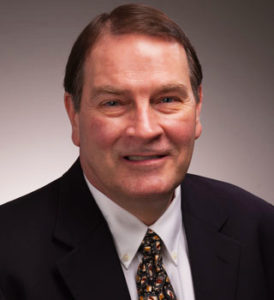
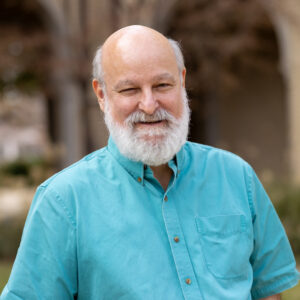
Dr. Bock has earned recognition as a Humboldt Scholar (Tübingen University in Germany), is the author or editor of over 45 books, including well-regarded commentaries on Luke and Acts and studies of the historical Jesus, and works in cultural engagement as host of the seminary’s Table Podcast. He was president of the Evangelical Theological Society (ETS) from 2000–2001, has served as a consulting editor for Christianity Today, and serves on the boards of Wheaton College, Chosen People Ministries, the Hope Center, Christians in Public Service, and the Institute for Global Engagement. His articles appear in leading publications, and he often is an expert for the media on NT issues. Dr. Bock has been a New York Times best-selling author in nonfiction; serves as a staff consultant for Bent Tree Fellowship Church in Carrollton, TX; and is elder emeritus at Trinity Fellowship Church in Dallas. When traveling overseas, he will tune into the current game involving his favorite teams from Houston—live—even in the wee hours of the morning. Married for 49 years to Sally, he is a proud father of two daughters and a son and is also a grandfather of five.
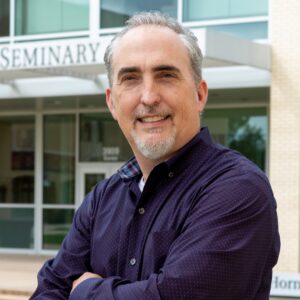 Bill Hendricks Darrell L. Bock Mark M. Yarbrough