

On the Role of the Prophet
Join Kymberli Cook, Amy Peeler, and Mike Balbier as they explore the role of prophets in Scripture and discuss how Christians today can wisely navigate modern prophecy in the church.

The Table is a weekly podcast on topics related to God, Christianity, and cultural engagement brought to you by The Hendricks Center at Dallas Theological Seminary. The show features a variety of expert guests and is hosted by Dr. Darrell Bock, Bill Hendricks, Dr. Kymberli Cook, Kasey Olander, and Milyce Pipkin.
Timecodes
- 5:54
- What is a Prophet?
- 12:15
- Guidelines Around Prophets
- 17:53
- Old Testament Prophets
- 22:26
- New Testament Prophets
- 24:57
- The Difference Between New and Old Testament Prophets
- 27:26
- The role of the Holy Spirit in Prophecy
- 30:23
- How Different Church Traditions Handle Prophecy
- 39:11
- How Can Christians Today Navigate Modern Prophecy?
Transcript
Kymberli Cook:
Welcome to the Table Podcast where we discuss issues of God and culture to show the relevance of theology to everyday life. My name is Kymberli Cook, and I'm the assistant director here at the Hendricks Center. And I am so thrilled that you have joined us today as we talk about the role of the prophet in scripture. So this is actually the first in a series of podcasts we'll be doing on different offices or authoritative roles that we see people occupying in the Bible. And I'm not sure that there could be a better place to start as the prophet is one of the oldest offices that we find. So we are joined by two very qualified scholars who've dedicated their lives to scripture, Drs. Amy Peeler. Amy, it's lovely to have you here.
Amy Peeler:
So wonderful to be with you all.
Kymberli Cook:
And we're also joined by Dr. Mike Balbier, and it's great to have you here. Thank you for joining us.
Mike Balbier:
Thank you. Yeah, this is amazing.
Kymberli Cook:
And we want to thank you who are listening and taking time to sit down at the table with us today. So let's get you to know our guests a little bit better. Could you tell us, Amy, let's start with you, could you just tell us a little bit about yourself and how you ended up dedicating your life to studying the text of the Bible?
Amy Peeler:
Absolutely. So I was a kid that had the privilege of growing up in church. I loved my youth group. And then I went to a Christian college. I went to Oklahoma Baptist University, and there I discovered that you could study the biblical text as an academic. And I love school, and I love the Bible. And I'm like, "Oh, my goodness. You can put these things together, sign me up." So after taking a few electives in biblical studies, I changed my major and got on this pathway. And I'm so thankful that God has been faithful to open doors so that I can contribute to the lives of students the way that I was shaped and formed by my professors in college. So I teach at Wheaton College. I've been here, this is my 13th school year. We just have about a week left, and I love the chance to walk through the scriptures with these students really every day.
Kymberli Cook:
And so, what's your favorite thing that you teach at Wheaton?
Amy Peeler:
Oh, my goodness. It would really be hard to pick one. I always like to teach New Testament intro because I love having a variety of majors and having them make the discoveries of the connections. Probably my favorite elective is a course that I teach on Mary, the mother of Jesus, and I co-teach that with an art historian friend. So, he does all the art of the church and the theology. We did our MDivs together, and then I do the exegesis and the theology. And it is, we like to say, it's a party every day in that class. So, it is really fun.
Kymberli Cook:
Well, that sounds fun. Awesome. Well, very cool. And we're so excited to have you here and digging into, like you said, the text and what you got so excited that you were able to combine. Mike, what about you?
Mike Balbier:
Yeah, somewhat similar track, but somewhat not. So I grew up just kind of not knowing about Jesus, and my parents never went to church. My mom knew the gospel and gave me the gospel probably on a regular basis at some point, probably during middle school is when that kind of starts picking up. But she gave my brother and I a Bible in September 24th, 1984. And for some reason, I just kept reading and reading and reading. My brother did not, but that's not to say anything about him. It's just, that's kind of what I picked up on. And one day I just knew that in order to get to heaven is through Jesus Christ, and I placed my faith and trust in him and didn't know what that meant.
So I just kind of lived a secular life going through high school. And then, my buddy who I did lots of stuff with in high school, he said, "You know what? I'm a Christian, and I've been going to church for a very long time. I want to go to Bible college." And so, I'm like, "Hey, that sounds fun. I want to know more about Jesus." And it became, Bible college experience was more of discipleship 101 for me. And from there, I think the Lord just moved me in directions very slowly. And then I got the DTS here, ThM in 2000 and just started to blossom a lot and received a lot of encouragement from our wonderful professors. And one thing led to another to the PhD program in the Bible department, and that's where I just flourished. It just became so amazing and awesome, the whole experience.
Even though it lasted longer than I wanted to, I just learned so much. And it's just, my passion and love just increased tenfold. And so, now I have the privilege to, on a part-time basis, lead students here at DTS, going through all the books of the Bible, obviously not all at one time. And my favorite elective is Kingdom and Covenants. And so, Dr. Dwight Pentecost taught that class for years, and him and I became close friends basically from day one. In 2000, he just had lost his wife. And so, the Lord put us together, and probably to his chagrin, we became friends. And then, yeah, 2014 is when he moved on to Glory, but just that whole experience and everything was just leading up to where it is today. So it's been amazing.
Kymberli Cook:
Awesome, awesome. We're glad to have you here.
Mike Balbier:
Yeah, thank you.
Kymberli Cook:
Mike is very much one of the people on campus. He's one of the deans of the distance education. He is the dean. He's one of the deans, but he's the dean of distance education here. But he's never actually been on the podcast. So we're excited to have you here.
Mike Balbier:
Never been. Thank you for having me.
Kymberli Cook:
So let's turn to the matter at hand, the prophets in the Bible. I think, maybe let's start with a little bit of an overview, and then we will hop into both talking about prophecy in the Old Testament and the New Testament. But just in general, what would you guys say, what does the Bible say about a prophet? Who is a prophet generally in the Bible? Mike, let's start with you, and then we'll hear from Amy.
Mike Balbier:
Yeah, I love the question. So I immediately go to Genesis 49 with Jacob, and he is making prophetic utterances of what's going to happen to his children, one of which is Judah, where the scepter will not depart from him. But we don't see in the text that he has an official office as a prophet, but he is making claims of the future that is obviously from the Lord. And so, that's one piece that I see. But when I see Moses in Samuel, it's a little bit more direct and specific. You have a calling, and the Lord calls. And then you have content to give, thus saith the Lord is the obvious utterance that they do.
And then, you're commissioned, and you're commissioned to a people to bring the message of the Lord primarily to Israel when they're messing up their covenantal agreement with Yahweh. And here we go. When the prophet comes up sometimes, a lot of times that's not necessarily a good thing, but I like to see those categories. And the content can vary from what they've done in the past, Israel, or what they're doing in the present or what's going to happen in the future. So it really kind of spans three different pieces for me. I used to think as a prophet, as somebody who just made prophetic utterances of the future. Oh, that's of the future. That I might see that, but it's a little bit more complex than that.
Kymberli Cook:
Amy, what would you add?
Amy Peeler:
Oh, I think that's a great overview. A short statement that is helpful for me is that prophets speak God's truth. And so, I think that's encompassing that call aspect, that they really are passing along the word of the Lord. And in speaking truth, as Mike has just said so well, that can be directed as what has God done in the past that's true, that we need to remember, what is God saying about our actions in the present. So often the prophets are calling Israel back to faithfulness, that they've strayed from their first love of the Lord and their care for one another, and then can also be what's on the horizon, that in line with God's character God will bring about. So a person who is trustworthy, and then that gets a little bit into the New Testament of, you've got to discern because some may say that they're prophets, and it may not be God's truth. And so, there's a responsibility to really weigh the words of a prophet.
Kymberli Cook:
Is there a difference when we see, again, we're still talking real generally, so New Testament and Old Testament, is there a difference between an office of or a ministry of a prophet versus one-off prophecies? Is somebody who prophesies, are they considered a prophet? Is there a distinction there? Does that make sense?
Mike Balbier:
Yeah.
Kymberli Cook:
I really don't know the answer to that. I'm not trying to lead you one way or another.
Mike Balbier:
That's right. That's right. That's right. Amy, do you want to go first?
Amy Peeler:
I think the answer is, well, as we get into the New Testament, Paul especially names are you prophets and God may give the gift of prophecy. So it does seem something distinct, but that doesn't mean that in some instances people could be inspired to speak God's truth. So I think it'd be a little bit of both, but Mike, I'd be intrigued to hear your position on that.
Mike Balbier:
Yeah, kind of going back to the example of Jacob, from what I can tell, we don't know he's a prophet. He's not called that. And a lot of times, even Moses, until you get to Deuteronomy 18 where like, oh, I'm going to raise up a prophet like you. And I'm like, oh, so Moses. So it could span, I think from the general to I think what we're seeing when we get to Samuel, and again Moses as well, but Samuel in particular, in First Samuel chapter three where Samuel is called, and then he is given content to say, and then he's commissioned to an audience.
And so, I think it becomes more particularized as we get through Old Testament. And then you get into the major prophets, obviously, and of course, they're prophets because called such. So I think it becomes developed. But then you have in Samuel, you have a group of prophets who are prophesying, who are talking about Saul has killed his 1,000s, and David his 10,000s. And you're like, "Well, what role do they play as prophets?" So it seems to me that they're bringing forward what has been done, what God has done with both these men, but not necessarily saying anything about their futures. So that's where I would see maybe a New Testament parallel in the apostolic period where you have people forth telling but not for foretelling God's word.
Kymberli Cook:
That's helpful
Mike Balbier:
And so you're explaining, and I think we see a bit of that in Acts 11 where the prophets and apostles are put together, and they're teaching and edifying the church.
Kymberli Cook:
Interesting. Okay. So I'm hearing potentially a little bit that there's a distinction. There can be somebody who is prophesying but might not necessarily have the ministry of a prophet. Is that-
Mike Balbier:
Yeah, or the title.
Kymberli Cook:
The title, okay.
Mike Balbier:
Or the office.
Kymberli Cook:
Okay.
Mike Balbier:
So when you say title and office, I think we identify that when scripture says that these people are as such, but Jacob, he's talking about what's going to come to pass in his 12 sons. But we're not told that he's a prophet, but he's making prophetic utterances.
Kymberli Cook:
Okay.
Mike Balbier:
Again, I think it becomes more technical as we progress.
Kymberli Cook:
Yeah. And Amy, you alluded to this a little bit already with the New Testament. Were there any safeguards or guidelines set down around prophets in Scripture?
Amy Peeler:
One of the ones that comes to mind first for me, and it's right in the middle of Paul's discussion of spiritual gifts, is the test of love. So I think that is a fundamental, if these proclamations are made in some ways to aggrandize the person or to disparage others, then if it is not done in love, that is a key test. Now, love itself is complicated, but I think we are guided by so much of Scripture that we really can discern love oriented toward the glory of God and the neighbor love of one another. So I think that is a key test. And we also have in the New Testament discernment of statements that are made in alignment with the revelation of Christ, primarily that Jesus is in fact the Son of God, and that he is fully human. I'm thinking a little bit here of especially the Johannine epistles, the test of what is true and what is not. Does it align with what's revealed about Jesus Christ? That's central.
Kymberli Cook:
I love that. And I love... Love, ha. There's a joke. I think that that's really interesting that you say that because then, and I even appreciated that you were saying that love is complicated, but we also think of the love that Jesus demonstrates. And I even think of Philippians 2, and the humble love and the kind of self-sacrificial love. And it's saying, "Okay, is that what's happening here? Because if not, then maybe there should be some suspicion." Because if they're speaking for God, that is who God is. And so if that's not there, then we might need to be thinking carefully. What would you add Mike?
Mike Balbier:
Yeah, I mean, going back to the Old Testament, if you're found to be a false prophet, what's the result?
Kymberli Cook:
It's Deuteronomy 18, right?
Mike Balbier:
Yeah. Deuteronomy 18 is when, yeah, basically the context is, "Hey, stay away from those guys, and I'm going to bring one in like with you, Moses." And so, that's one of my favorites. But if you are found of a false prophet, I mean, you get stoned. That's what happens. And that doesn't happen. And so, when you get to Ahab, and Ahab and Jehoshaphat are talking in First Kings 22, Ahab has his own prophets, and they're just tickling his ears. And then Jehoshaphat, I think, identifies that, I think they're just kind of feeding you a line here. And so, Jehoshaphat says, "Isn't there a prophet of the Lord?" And it's Micaiah, and Micaiah speaks the truth. And I love the King James version when Ahab gets mad and says, "See, he doesn't like me." But Ahab then continues to say, "Put him in prison and feed him bread of affliction and water of affliction." So false prophets in the Old Testament were, you needed to be stoned, and it didn't happen all that often, I think.
But also, I'm also thinking a part of prophecy that we see in various places, and I would say this is Exodus 18, Numbers 11, especially when Moses in Numbers 11 is commissioning 70 elders, the spirit of the Lord comes upon them, and they begin to prophesy. And it is such a commotion. Joshua gets upset, and Moses says, "Are you a little jealous about this, that they're prophesying?" So I think a piece to this that parallels to what Amy said is that they're spirit-led, spirit-filled. I think we're seeing a pattern of that in Old Testament that we lead to New Testament.
Kymberli Cook:
Interesting. Okay. So I have to say, when I was laughing while you were talking about people being stoned, it was only because of false prophets. It was because I was remembering in seminary when the professor, we were talking literally about this, about prophets in scripture, and he was emphasizing Deuteronomy 18 and saying, "This is how serious God takes it, that people who claim to speak for God, if they are doing so in a way that is ungodly or unrighteous or false in any way, be warned, he takes it this seriously."
Mike Balbier:
That's right.
Kymberli Cook:
I'm actually very terrible at remembering Bible passages, but that's why I was chuckling is because I was like, oh, it's Deuteronomy 18 because it scared the daylights out of me.
Mike Balbier:
That's right. That's right.
Kymberli Cook:
When this professor was making just how serious it was, and I'll never forget that lesson because he was saying also from an Old Testament perspective, the Old Testament followers of God, when they heard somebody prophesying, this is the filter they were putting it through. They took it this seriously. So when you're not only just in your own life, and be careful if you speak for God because he takes it this seriously, but when you're reading the Old Testament, especially recognize that this is how intensely they understood this. And like you said, sometimes they didn't really do it as much as they probably should have.
Mike Balbier:
Yeah. Yeah. Yeah.
Kymberli Cook:
Sorry, I just wanted to make it clear why I was laughing. I wasn't laughing at somebody being stoned.
Mike Balbier:
Kymberli Cook:
But that takes us into the Old Testament. So Old Testament prophets in particular, was there something distinctive about their place in the people of God? Talk to me about Old Testament prophets. Is there anything particular about them that we should know?
Mike Balbier:
Yeah. Amy, do you want to lead out on that one?
Amy Peeler:
No. No. I'd rather you do. So, yes.
Mike Balbier:
Okay. No, I felt like I was talking too much there, so okay.
Amy Peeler:
No, no, I get the sense you're the Old Testament expert.
Mike Balbier:
Yeah. There's always, in Old Testament, there's always a reverence for prophets. They seem to carry a unique office and role, and people recognize that. When Saul was commissioned as the new king, he was supposed to kind of be with the prophets. And I think their prophets are fortifying the message of what just happened. And so, I think there is a unique role and responsibility there. And so, you have the former prophets, and then you have the latter prophets in Old Testament. And the former prophets, the big ones would be Elijah and Elisha, and they had such an amazing ministry to the kings of Israel primarily. And in the juxtaposition there in their ministry is the kings rarely obeyed them, but then when their ministries, Elijah and Elisha, would carry on to common folk, which is very unusual in the Ancient near east, by the way, to go to common folk.
They usually had ministry with women. And I tell my students, watch out for the women in Old Testament, because usually they're in juxtaposition with an Israelite king or an Israelite who's supposed to know better, and they don't. And so, these women play a significant role in faith, even a small kernel of faith in the message that Elijah and Elisha give, just blessed them. And that is a mini microcosm of what was supposed to happen for Israel that didn't. So yeah, I think they do carry a very unique place. One of my dear friends, Dr. Brammer, he would always say, "The prophets in the Old Testament are covenant enforcers," and so they're enforcing covenant.
So that kind of goes back to the content. The content should be known to the Israelite king because, as I say to my students and myself, most of the book of Proverbs is a handbook on how to be a king, and you're supposed to iterate the law once a year and then go to the tabernacle in Temple three times a year. And those are big things that I think stop happening throughout Israel's history that it just led into a decay and ignoring the prophets. Yeah, and one of my favorite ones is Jeremiah. His whole book is just replete with... Jeremiah, I think is the illustration of the message in a lot of ways.
Kymberli Cook:
Amy, first, is there anything you want to add on Old Testament, or we can hop right into what you would say about distinctives of New Testament prophets?
Amy Peeler:
No. I've been spending just a little bit of time in Jeremiah and struck... You asked, I think one of your first questions is, what kind of distinguished the prophets of the Old Testament? And I am impressed by the weight that they carried, how counter-cultural they were, not only to the surrounding nations, but their own people. That this was not a flashy job of one, right? It bore this great burden of consistently speaking a truthful message. And so, I always walk away from reading those prophets so impressed by their endurance and their faithfulness. And this really does have to be a call that at times Jeremiah is like, I wish I didn't have to do this, right? But a call of like, no, God has called me to this hard thing, and God will empower me. So their faithfulness is something that is deeply impressive about their consistent ministries.
Kymberli Cook:
So I feel like I'm hearing for the Old Testament, especially, we see this really clear office, this really clear authoritative role that the people of Israel are recognizing. Even the kings who don't want to hear what they have to say, they still recognize their particular place and role. Would that be a fair-
Mike Balbier:
Oh, I think that-
Kymberli Cook:
Okay.
Mike Balbier:
Yeah. Yeah.
Kymberli Cook:
Okay. So for the Old Testament. Okay. But for the New Testament, is that the same? Is there this very clear... Amy's already shaking her head no. I don't think so. Amy, how do you feel that strong to be like, nope?
Amy Peeler:
Sure. Mike, if you have a different position, that'd be fun to hear it.
Mike Balbier:
Yeah. Yeah.
Amy Peeler:
But I mean, this is one statement about New Testament and this office in particular is that we really don't know who these people are or what they're doing. I mean, your listeners will be probably well aware, there's a lot of literature of trying to decide even what is the act of prophecy in a New Testament church. It's very hard to know. It's mentioned in the gifts. It's discussed in places like First Corinthians 11 and 12 through 14. But the content of it, we don't get the kind of definition, I don't think. And I think that's exactly right, because then we wouldn't have, I think, such a variety of expressions in church history and different denominations if it was as clearly defined in the New Testament church as it is in the old. Would you agree with that, Mike?
Mike Balbier:
Oh, I think that's so well said, because I've heard it before. If I'd have had an answer for that, I would've written a book and made a lot of money off of it.
Amy Peeler:
Right, right.
Mike Balbier:
So if we have an answer for some of these things, I think it would be a moot point today. But there are questions there. But for me, I'm looking at the apostles and prophets, and they're the foundation of the church in Ephesians chapter two. And so I think they play a very distinctive role with the foundation. But what's built on top of the foundation obviously are the living stones, which is us. And so, I see more of the giftedness of Romans 12, First Corinthians 12, to be in play as we equip one another to do the work of the ministry. I tell students all the time, it's really about sharing the gospel and loving one another. If we can't do those two things, but we need each other to encourage one another, to love one another, but love is transformative, not exclusive. So those are some really important pieces. But for me, I see the apostles and prophets to be more foundational and not necessarily carrying the same weight or same function or same message as Old Testament prophets as well.
Amy Peeler:
Right.
Kymberli Cook:
So what do you all think was the difference? What happened that there is this distinction between the Old Testament and the New Testament prophet?
Amy Peeler:
I was struck in preparation for our conversation that of course in the New Testament, all of the different instances in which you get prophecy or prophet or to prophesy, the vast majority are quoting from or alluding to the prophets in Israel's scriptures. And I think that is a beautiful reality that the church is really coming out of and is birthed in and rooted in what God has done with the people of Israel and through the prophets to Israel. So I wonder if there is a respect for God's word has been given, we're going to continue to quote them prolifically to draw from them. And so, maybe that could be one reason that you don't see as robust an example of clear instances because there's still such dependence upon the word that had been given from God through the prophets of the past.
Mike Balbier:
Yeah, I love that, Amy. I think that's really well said. The content, again, we always, in our minds, I used to do this, I have to kind of curtail myself oftentimes and remind myself, prophecy isn't just about the future. It entails what God expects, who God is. Torah is all about the person, not the laws. We are doing this as an expression of our love and devotion for Yahweh. And when we run amok, if the king is not doing what he's supposed to be doing in ancient Israel, so follow the people, so follow the priests. And I think 1 Chronicles 36 makes that point. So yeah, I think the content is looking back and fortifying what has been said. And so for me, when we have closed the canon with Revelation, seems to me the things that we're supposed to be doing are things that are said. I mean, Hebrews 1 talks about, in former times he did this. In latter times, today, it's through Jesus Christ. And I think that's so comforting for me, and that's how I begin to discern what is true, what is false.
Kymberli Cook:
I also have to wonder, and I think it flows, it definitely dovetails with what you're saying too, Amy, I wonder about the role of the Holy Spirit with the coming of the Holy Spirit at Pentecost. And that's just a different thing that happens amongst the people of God. And so, perhaps there's not this office necessarily needed to specifically hear from the word of God because now God, this Holy Spirit is dwelling within each one of the believers. And then, this is where I think it dovetails with what you were saying, Amy, that now when they look back at the Old Testament prophets, they understand it even in a different way.
Amy Peeler:
Yes.
Kymberli Cook:
And they say, "Oh, my goodness. Not only is that true, this is true about this too." And I wonder if it's because of the Holy Spirit. I would genuinely love to hear y'all's thoughts on that.
Amy Peeler:
Well, that's beautiful. It strikes me as such a powerful moment in the road to Emmaus where Jesus reveals, opens their eyes to, let's read the law and the prophets together and how they speak of me. I think the time between the resurrection and the ascension, I think the apostles, the early followers are getting biblical instruction. And then the gift of the Holy Spirit, as Jesus promises in the Gospel of John, will continue to lead them into truth. And so, they can read with that vision, that lens of Christological truth of who Jesus is, and hear those prophecies anew. And then the Holy Spirit is given to all, right? The Spirit falls upon prophets at times in Israel's scriptures. You have this role to do. You're this person. We are all given the gift of the spirit. Not to say that we all have the same gifts, but that we have within us God's own spirit to help us discern and speak truth to one another.
Mike Balbier:
Yeah. And going back to Old Testament, again, Numbers 11 where the spirit proceeds to prophecy in the prophetic utterances of the 70, but then you flip the page to Numbers 12, and it becomes even more interesting because the Lord says to Moses, he says, "To these other prophets, I speak to them in visions and dreams and kind of almost with ambiguity." I'm thinking in my mind. It doesn't say this in a text, so don't write in. Yahweh turns to Moses and says, "But to you, I speak face-to-face, as a friend." And so, kind of bringing that to New Testament where God so loved the world he gave his son, and we're valued. We're children, and in a way he's speaking to us through the Holy Spirit, not audibly, but just through confirmation and all that Amy has said.
Kymberli Cook:
So we've talked about Old Testament. We talked about New Testament. So that then takes us, we are all believers of Jesus Christ that stand on the shoulders of these New Testament believers, and so, there have been a variety of different approaches to prophecy amongst the Christian traditions. And so, I'd love to hear from you all, what do you all see as either a spectrum or the different types of approaches that Christians have taken? I mean, we can go all through church history if you really want to, or even just current traditions.
Mike Balbier:
Amy, you're up.
Kymberli Cook:
Yeah, Amy, here you go. But how do different traditions approach prophecy today, especially?
Amy Peeler:
I grew up in a church tradition where this wasn't a term that was used regularly, but then I had actually my first teaching experience with a different tradition. And this was very common for them. And so, on the day that we got to First Corinthians, I said, "You know, you all seem to know and talk more about prophecy. Why don't you teach me this part because I've not experienced this in my church." And it was really beautiful to see how, in that church tradition, they really followed along the lines of Paul's directions in First Corinthians 14, that whenever someone felt that they were being given a word, that would be offered, but then it would be discerned. It would be done orderly. There would be a humility of, I think this is what God is saying, but I could be wrong. Let's test it against scripture.
And that community was open to speaking these truths to one another under the label of the word prophecy, but in a way that was orderly and checked against the revelation of scripture. As I heard them describe this, I thought, oh, that's kind of how maybe my tradition would talk about encouragement. We would say, "I've been praying for you, and I really feel like the Lord laid it on my heart to write you a card and write this scripture and share this word." And I would call that encouragement. And it sounded like to me they were calling that prophecy. So it struck me, and this was my first year of teaching, I wonder if we practice similar things, and we simply apply different words to them. But as long as we are seeking to put ourselves under the authority of the clear instructions of parts of scripture that we're thinking about, these can be healthy expressions. So that's the first example that comes to mind for me, engaging with a tradition that was different than my own.
Kymberli Cook:
So that there are definitely traditions who really don't engage prophecy, whatsoever might be a really strong term, but really don't engage prophecy in the Christian life. And then, I'm hearing you introduce another type of approach, which would also be those who it is even perhaps a regular part of the church, but with pretty strict regulation. There are, again we talked about safeguards, there are safeguards in place to make sure that it's being evaluated according to scripture and that kind of thing. What other approaches are there?
Mike Balbier:
Yeah, I think it goes down to the individual. I spiritually grew up in a very conservative tradition in church and continue to practice that. But within the church that's very conservative that would not hold to a prophetic office today, there are individuals who will say, "I've heard from the Lord, or I'm given a gift of prophecy." And so, when I hear that, my antennas go up, and I'm going, "Okay, let's hear this out." And usually it's what Amy said. It's another way of saying the Lord's laid it on my heart to encourage this person or myself, but sometimes it's like, "No, I saw it in a vision. I saw in a dream last night. I am to do this. I am going to be a missionary. That's what God wants me to do."
And I am like, "Okay, but let's test that. Let's come back to the community and find out if this is from the Lord or not." But I don't see a whole lot of people who say these things want to come back to the community of believers and say, "You know what? I think the Lord has spoken to me and has laid, in a vision, the Macedonian call where I'm supposed to go across seas and do X, Y, and Z." I don't see a whole lot of that. I see a lot of strongheadedness of, "Oh, this is what the Lord wants me to do, and I'm to do it." Well, that's happened to me a couple times with some friends over a period of time, and I'm like, I'm supposed to... especially in Bible college, you're supposed to... I see a woman, and I am to marry her in Bible college.
Kymberli Cook:
The Spirit tells you to marry somebody.
Mike Balbier:
That's right. But they don't. But they don't.
Kymberli Cook:
I got a couple of those here at seminary.
Mike Balbier:
And it doesn't happen. And I'm like, okay, guys, let's come back. I thought this was from the Lord. And so, there's a lack of testing.
Kymberli Cook:
Okay.
Amy Peeler:
I feel like that introduces such important criteria for discernment that we talked about earlier, that everything in scripture we are meant to do in community. And so, if someone is being quite individualistic and headstrong, I mean really, you can just sit down and read First Corinthians, and Paul's like, "Nope, has to be for the building up of the community. You can't go rogue." I mean, our relationship with God is one-on-one. We meet face-to-face, Mike, as you said so beautifully.
But if someone kind of gets an idea and then they are, "I'm going to do this because God told me to," and they don't have that accountability and support, this is an instance, it seems to me, where if prophecy in the New Testament is challenging because we don't have a lot of clear examples, well, we have very clear statements throughout scripture that you are accountable to one another. You are meant to discern together. And so, that would balance out any kind of feeling of, I'm just going to do what God told me in the dream last night. No, that has to be checked with the people that God has given you to journey alongside on this race of faith.
Kymberli Cook:
So we've talked a lot about the iffy gray territory of people saying, "Okay, I'm using this term." It may mean what we see, especially all of what we were talking about with the Old Testament and the New Testament with a prophet. They may be using that term nowadays with that in mind, or they may be meaning more encouragement like I heard, again, because we talked about the role of the Holy Spirit in each individual and that kind of thing. So we talked a lot about that gray territory. What about those who would just straight up say, "No. Prophecy is not a part of the Christian tradition today." Why would they take that position?
Mike Balbier:
Yeah, I think it goes back to what we said earlier. In the latter days, the Lord has spoken to us through his son, and since the writing of New Testament has, in my mind closed, I would see that tradition going, okay, at the close of the canon, we don't see some of these giftedness to be... They've already laid the foundation essentially. And so, it has run its course in a sense, but it doesn't mean that we can't talk about God's word as the prophets did, where the content is the same. But there's no more direct revelation coming to that person to speak something other than what the Book of Revelation, going to the 67th book.
So I think we have our safeguards in place for that tradition with the canon and with Hebrews one talking about, today he's spoken to us through his son, and we have what his son has said and the apostles. So I think that's where they're going to land with this and say, "Yeah, definitely this is not for today." But for sure people are being sent out, but they're not called apostles. They're missionaries. We're probably a little bit more comfortable with that name than Apostles.
Kymberli Cook:
I just think it's helpful for us to actually say, "Okay, this is not just what people believe, but why." This is why they would be holding... This is how they're interpreting those particular passages compared to others who would be interpreting that and saying, "Oh, well, I'll participate in that, and I'm going to offer you a word," that kind of thing. So for both of you, this is kind of our final question, as we think about the role of prophets, particularly with the guidance we see in scripture, what wisdom would you offer our listener if they find themselves trying to navigate claims of prophecy in today's church? We've kind of stepped around it and talked about it a little bit, but if somebody says, "Somebody's saying this in my church, how do I navigate that statement?"
Amy Peeler:
The number one test, as Mike has just said, is to benchmark whatever is being said against the scriptures given to us, Old Testament and New Testament. And so, if there is anything in opposition to God's revealed word that has been tested for generations now and borne fruit, and we trust God's provision in giving these books to us, then that's clear. Unfortunately, much of life is not that clear. So even as I say that, you're like, okay, test it against scripture. But of course, all of us have devoted our lives to the study of the complication and the depth of scripture.
So my second admonition, my encouragement would be to get with a friend, someone that you trust who has borne fruit in their life, who has a wisdom about scripture and say, "Hey, I'm hearing these claims. I'm not sure if they line up with scripture again or not." And to have a friend or a community that help you test those out, because usually the way of deception is not just a black and white, it's awful. Usually it sounds good. It sounds true. And so, you really do need prayerfully the leading of the spirit and the support of the community to see does this line up with scripture or not? And that is the ultimate test.
Mike Balbier:
Yeah. Yeah. And I think I would add to that, obviously the church tradition to go to is really going to inform the answer, but even in conservative churches, that wouldn't hold this to be, for the believer today, prophecy, prophetic office. It needs to come from the pulpit and from the leaders and the elders. We can't have community groups within the church that do their own thing, because the pastor hasn't really talked about this, so I think we can say this. I think it really needs, as group leaders, go back to who's the overseer of those community groups, and the leader should go back and say, "Hey, we've had a lot of discussion about prophecy. Where does the church stand with it?" I don't want to give the impression that, oh, yeah, in your community group at a nice conservative church, you can have an open dialogue about it. It really goes back to what church tradition you're in. Why are you there? What do they say about it? So I want to also add in the elders and leaders and pastors. I think the community group should know where they stand, but not always.
Kymberli Cook:
I love that. I love both of what you're saying because both of what you're saying is undergirded by the second half of our podcast of saying the community and the faith in the indwelling of the Holy Spirit in each of the community members, that is what guides us as we navigate our way through. Amy, when you were shaking your head and saying, "No, it's not as clear in the New Testament as it was in the Old," and that we are in the period after the New Testament. But we find ourselves thinking, okay, what is the same, what might be different than it was for New Testament believers? And that Holy Spirit guidance and in the midst of the leaders who have been, hopefully if it's been done correctly, that it's been passed on and ordained by other believers, and that the truth has been maintained throughout all of history. And that's what we're relying on. We're relying on that with our friends and trusted people where we can see the fruit of the spirit in their lives and also those who have that authority given to them.
Mike Balbier:
Yeah. Yes.
Kymberli Cook:
And that's where we should be grounding ourselves in the midst of hearing about some of these things.
Mike Balbier:
Right. And as a burgeoning theologian, Kym, I mean, you would agree theology is not done in vacuum.
Kymberli Cook:
Absolutely. It shouldn't be. You're in trouble if it is. Well, our time is up, and I want to thank you, Amy and Mike, for joining us today. And we want to thank you, our listener, for being with us. If you like our show, leave a rating or review on the podcast app so that others can discover us. We hope that you'll join us next time when we discuss issues of God and culture to show the relevance of theology to everyday life.

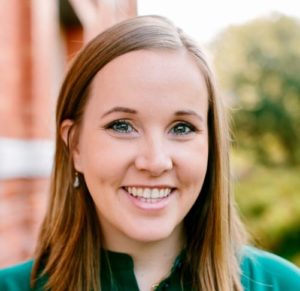
 Amy Peeler Kymberli M. Cook Mike Balbier