

The Church in Changing Times
How does the church stay relevant in a world defined by artificial intelligence, extreme polarization, and a global loneliness epidemic? Join Darrell Bock and Jurie Kriel as they explore the unprecedented cultural shifts redefining human identity and unpack why returning to the “irreducible minimum” of authentic community is the ultimate key to reaching the next generation.

The Table is a weekly podcast on topics related to God, Christianity, and cultural engagement brought to you by The Hendricks Center at Dallas Theological Seminary. The show features a variety of expert guests and is hosted by Dr. Darrell Bock, Bill Hendricks, Dr. Kymberli Cook, Kasey Olander, and Milyce Pipkin.
Timecodes
- 01:23
- What Does Church Relevance Mean Today?
- 02:04
- Lessons on Truth and Trust from South Africa
- 10:33
- Navigating Rapid Cultural Change
- 15:19
- The 6 Shifts Shaping the Future
- 17:01
- AI and the Global Human Identity Crisis
- 24:15
- The Paradox of Digital Connection and Loneliness
- 28:30
- The “Irreducible Minimum” of the Church
- 34:49
- Surviving the Echo Chamber and Cultural Polarization
- 43:32
- How Technology is Forcing a Return to True Belonging
Resources
Transcript
Darrell Bock
Welcome to The Table, where we discuss issues of God and culture to show the relevance of theology to everyday life. I'm Darrell Bock, Executive Director for Cultural Engagement at the Hendricks Center, and our topic today is the younger generation, but it's not the younger generation that you think. It's not, you know, we're not talking about Gen Z or Alpha. You know, we've gone through the alphabet once, and we're going back through it a second time. Now, we're using Greek, but we're thinking about the generation that isn't here yet, but that's on the way. So maybe we're talking about Beta. We're talking about the future. We're going to think about what the church is and what the church has been, and what we kind of need to be prepared for, given where we're going. And for that, I have my wonderful guest here, whose accent you will recognize does not come from the south of Texas, but from South Africa, Jurie Kriel, who has given his life to this. So my standard question for someone who is new to The Table is, what's a nice guy like you doing in a gig like this? How did you get onto this topic?
Jurie Kriel
Well, I guess I got onto this topic the way everybody gets on a good topic all the time. It's by trial and error, right? So there's so many topics, and at some point in time, you've got to boil it down to the irreducible minimum. And I guess the irreducible minimum for me, became, what does relevance mean for the church? and how do we stay relevant in a time where there's a lot of irrelevance in the gospel presentation?
Darrell Bock
And a lot of chaos and a lot of reshaping of the way things have been done, all kinds of stuff that's going on, fair. And your background for this, what's your background that drew you into this area?
Jurie Kriel
So, I was born in South Africa, okay, I was actually born into apartheid South Africa. So I was issued a white certificate when I was born. So interesting story, I was in apartheid South Africa, if you don't know it's, it was institutionalized racism, so I got institutionalized privilege as a matter of certificates before I was born, and that means I could vote, I had access to health care, I could stay where I wanted to stay, and I was an actual full citizen of the country. Now, praise God for Nelson Mandela and incredible leaders that brought down the apartheid regime, and around the age of 14, I experienced that process. But a little bit of inside information is that I later would do a 23andMe DNA test, and I'm not white, which is a little funny. So, but the reality was I grew up within that context, and unfortunately, the church that was part of that regime was very much, very relevant for its time and for a small minority in the country, but very quickly became very irrelevant in my lifetime, to the majority of the country. So I guess part of that influenced it, and then planting church and spending my life reaching out to the majority of Africans really impacted me in a big way. Had a stint in theology and next generation ministry, Bible college, leading and planting more churches. And throughout, I think, just seeing how irrelevance is causing people to step away from the faith and even moving to the US, from South Africa and in the midst of a generation that was, you know, two out of every three individuals that left the home, left the church, not too long ago in the US. And I guess seeing all of that, and seeing that happen around the world, has gotten me onto the topic of what is, how does Jesus following accelerate into the future?
Darrell Bock
So what is it that you're doing now? Have you moved to the US?
Jurie Kriel
I do. I live in Austin, Texas. I was pastor of preaching there for a significant church in the city for some time, and planted a church and merged and still part of a local church there to this day, where I'm grateful to get to minister and be a part of, but then also very much part of a global church scene where I founded and lead the Next Move Community with my wife and some other incredible leaders from around the world, which is a community of leaders that's spread across the world that kind of makes up a bit of a Clapham Sect. If you've ever known what the Clapham Sect was for William Wilberforce, it's kind of that same idea that no revival, reformation, awakening happens in isolation, but it's these relationships we built with one another that becomes the sails that God can blow into for his next move. And that's the organization that I lead is this interesting network of relationships.
Darrell Bock
You don't know this, but I went go to South Africa regularly for a month to six weeks at a time. Did it several, several every other year in the summer, and so been in and out of South Africa. Haven't been since covid, but we did it several times before then, and became familiar with the with the culture, and I thought it had a lot to teach us about really dealing with diversity and culture.
Jurie Kriel
100 % Yeah. You know, it's interesting that you mentioned that Darrell for me one of the big surprises about moving to the States, you know? And I guess you have perceptions of what things are like, right? And my perception of the States, the United States, was a great ally of the fall of apartheid, right? So the United States opposed this regime that was keeping people captive and isolated. So you move to the states and you think, you know, I'm moving away from any form of racism. And it was such a surprise for me to see that culturally, yeah, racism was more rife in the in parts of the US culture, than what it was in the South African culture that, you know, I came out of, and it actually caused me to think about that very deeply, is, what are those factors that's causing racism to persist in a country that is so, you know, freed from a lot of those things.
Darrell Bock
And wedded to the concept of freedom and human rights and all those kinds of concerns.
Jurie Kriel
It's the land of the free, and I'm not presenting myself as an expert on this field, but I'll tell you something that has been a personal conviction for me, is I realized that a lot of what happened in South Africa was the Truth and Reconciliation Commission led by Desmond Tutu and others, where the amnesty was offered in exchange for truth, right? So it was said that if you were to tell your story truthfully, then you would be forgiven, and there would be amnesty for you, even legal amnesty, right? And so apartheid happens, apartheid falls, and for multiple years, the country of South Africa goes through this process of public, televised truth telling, confession, catharsis, and crying together and mothers forgiving the people that killed their children, yeah, and hugging them, yeah, after they told these horrendous stories, and I realized that what that and other things in the culture caused is it caused the reality of truth upon which trust could be built in the US context, what I've found, and again, I'm generalizing grossly, so I hope you don't get any emails, but the reality is that there's a lot of political correctness in American culture, which means we're not speaking truth out of a fear that I might offend, and in the process of not speaking the truth, there's no premise for trust, see, because I can only hate what I don't know right. I can disagree with what I know, but I can only hate that which I don't know. If I truly know where you come from. There's no way that I can hate you. I can still disagree with you and I want to change you, but hatred flourishes in the lack of truth.
Darrell Bock
And lack of connection.
Jurie Kriel
and lack of connection. And so that person, that political correctness actually causes people to withdraw from one another, whereas in the South African context, there's just no choice, right?
Darrell Bock
You get what you pay for, which is called polarization. So, yeah, no, it's a challenge. So that theoretically, okay, so the world that you've just painted is the world that the next generation is coming into, and theoretically, the church is supposed to be a force, a positive force, in helping people cope with what they may be facing. So let's talk about the concerns that you have and the work that you do, try and do for the church, that asked the question-I just, I just came back from Sundance, yeah, and there was a movie there called Why AI, and it was discussing the people who were really pro AI and the greatest thing from sliced bread to the people who were negative AI, and said, Oh, no, this is going to, you know, lead to all kinds of destruction. And then they interviewed the five CEOs who were in control of AI, and ask him, What do you do with this? And you know, and he portrays himself as someone who's really perplexed, but the question that he framed everything in is, is it a good time to have a child? And with what AI offers and what may be coming, good or bad, is a good time to have a child? And so I think that's the way I want to walk into this, is it a good time to have a child? And if, and if in assuming that it is, how can the church be a good force in the world for what? What is coming?
Jurie Kriel
Well, you know, whenever somebody stumps me with a difficult question, I'll borrow some words from somebody wiser than myself. So I'll borrow from Winston Churchill in this case, and he said there's no greater investment a nation can make than putting milk into babies. So it's a great time to have a child. It's a great time for a next generation to arise. And it's not because of AI, but it's because of the hope we have in Christ. It's because of the truth of the Bible. So, and I'll qualify a little bit, right? So for me, I recently published a book called Hitting the Ball You Cannot See, and in this book was the culmination of four years of work. Started with a now conversation, Not on Our Watch, leaders from, you know, 11 regions from the world coming together to discuss how to reach the next generation. Then I had a future of the gospel forum that I led for the world evangelical-the WEA the world event, the World Evangelical Alliance. And then I was part of a process with the Lausanne Movement, where I helped with the fourth Congress. Part of the, a big part of the fourth Congress was this process around the State of the Great Commission report that we came out with. So all of these things show trends and where things were going. But the problem was that the world is changing quicker than ever before, right? I mean, I don't, I don't even need to qualify that we know that the fact that we're sitting here, and we're broadcasting this the way we're broadcasting, and people are listening to it the way they're listening to it asynchronously, tells us that the world is changing quicker than ever before, right? So the reality is that the world's changing quicker, but it's hard to understand how, right? So it's drinking from a faucet. It's trying to drink from a stream, right-
Darrell Bock
it's from a fire hose
Jurie Kriel
From a fire but if you want to drink from something, if you've ever tried to drink from a fire hose or drink from a stream, , without a container, it's really hard, so container gives you the ability to manage the water. And I believe that words are to life like containers are to water, and so what the Hitting the Ball You Cannot See book was about was, was trying to distill all of this information from all of these conversations. One of these conversations was with, I said, with Michael Ortiz from, yeah, where we, where we spoke about the future of theological education, right? And we distilled all of these information, and we came up with six shifts that the world's going through and how the church should respond. So you're asking me if it's a good time to have children. I think it's a great time to have children, because as we dug deeper into these six shifts, it was fascinating to see how the Bible had an answer for every one of these shifts. Church is the answer for every one of these.
Darrell Bock
So you've set up the six shifts, which I'm sure we're just going to work through. But before we get there, I have to ask you somewhat facetious question, but that is, was that a baseball metaphor or cricket metaphor? Hitting a ball you can't see it's true for both.
Jurie Kriel
It is true for both. And then the book, I try and use both. But somebody just wrote a review that came out today that said, you know, they loved the book, but it was a little American, which I thought was a little funny, because I was trying really hard to incorporate baseball in the into the book as well, and not just make it cricket.
Darrell Bock
You must have been successful anyway. So let's talk about the six shifts. But before we do that, something that I say, in fact, it's how I begin all my talks on culture engagement, is I say, We're in an interesting time that's changed in my lifetime, and that is because of the communication revolution, where there are more of us, but more tightly connected than we've ever been. We have access to information coming at us in a volume and in a rate and from a variety of perspectives that represent a challenge to be able to digest, and some people are overwhelmed by it. And in fact, I say, when you ask the question, what is our culture like, you're actually obscuring the nature of what we face, because the issue is not culture, it's cultures and the way in which they rub against each other, like plate tectonics. And I say, if you took your geology class and you remember that, and it'd be uncomfortable, because you're thinking about when you were in junior high, you know. When the pressure builds up, what do you get? You get an earthquake. So, dealing with the variety that we not just are surrounded by, but in some cases, may even be overwhelmed by, is one of the challenges. So let's go through these six areas start us off. Where do you want to start?
Jurie Kriel
Well, they're in three categories, okay, groups. So it's so it makes it a little easier to understand. So the first one is the way we live, okay, right? That's changed. There's two ways in which the way we lived has changed, okay, the one is the human experience has changed, and we can chat a little bit about that. But then there's also our digital experience, there's the human experience and the digital.
Darrell Bock
So you're separating the two of them, even though the two worlds are actually quite interconnected?
Jurie Kriel
All of these shifts are interconnected. It's the hardest, you know, to think of them as separate blocks is not the right way. They're intersecting sections, essentially, so that the second grouping is the way the world works, and this is the shift with regards to trust and the shifts in organization. Again, you could see how these things are overlapping, but slightly different, and then the last two that comes together is exactly what you just refer to; and that's the paradox of separation and connection. Right? Which is the one and then the other one, which is the new definition of what it means to belong. So our belonging, our philosophy of belonging, is changing. And that gives you the six shifts.
Darrell Bock
That's interesting, because the last one deals with identity, which is important to every conversation a person has. So, okay, so you've given, kind of given us the overview. So the first two were human experience and the digital experience. And I'm interested now in what the human experience is that you're talking about. And then we'll bring the digital into it, although, I think the digital for many people, is already sitting there.
Jurie Kriel
So, so humanity is about to go through the greatest identity shift that it's undergone in the history of humanity. It's not only happening quicker than ever before, it's also happening in a deeper level than ever before.
Darrell Bock
With more depth and intensity than
Jurie Kriel
100% so there's this identity crisis, if you think of what people based identity on, right through the ages, right? Then there was a I survived, therefore I am, yeah, identity and humanity, right? And then it became, I make, therefore I am, identity and humanity. And that then became, I think, therefore I am. So it's not what I can make, it's what I can think, right? And then we went through an interesting phase in the, you know, let's call it the 60s. That was, I feel, therefore I am, and real men can cry and all that. And the I feel, therefore I am revolution, then actually, very recently, came together. And what you can see, do you see how these identities build upon one another, and now suddenly the most recent one, if you ask young people today, what do they want to become? They don't want to be president. They want to be an influencer, right? Who's the most famous people on the planet? Not politicians, not even business people, but artists, right? So it went from I feel, therefore I am to I create, therefore I am interesting, right? So all of these layers of identity is what makes up our identities as individuals. And this is culturally neutral. It's in all cultures expressed differently, but same things. The problem is that AI, to your point, has now come and gradually taken over each of these, and is now in reverse with embodiment of AI, which is the next way, right? So we've had with that intellectual AI, right? And now we're kind of seeing creative AI, movies and pictures and songs being made. And now it's going back to I create, I make, I survive.
Darrell Bock
AI create, right?
Jurie Kriel
So there we go. So now what happens is, what do we do? If AI does these things and does these things better than us? So there's this, this global identity crisis that's emerging, and the question is, how do we respond?
Darrell Bock
And obviously, how should I see how do and should I see myself as a result? Because, again, another thing when we talk about this week, I talk about the fact that if you don't have a sense of your identity, of being made in the image of God, you're wonderfully suspended in mid air. I mean, how do you make sense out of what's going on around you? The default position is, I think if I don't know why I'm here and what I'm about, I will make my world. And that's what everybody does.
Jurie Kriel
And the self made man worships, he's great, right?
Darrell Bock
And we're in the book of Judges. Everybody does what's right in their own eyes. So you have kind of chaos. It's like trying to drive a car in India. You know, you have lanes, but nobody pays attention to the lanes, yeah, and so they just try and figure out how to survive, exactly, right. Well, our joke in India, when we drive in India is, is that the lines are there just for aesthetic
Jurie Kriel
If you can see them between all the people,
Darrell Bock
Exactly right. So, but so that's the challenge, is how to be how to be human, not only how to be human just on its own terms, but how to be human in a world in which there are other things that are encroaching on what the world is like.
Jurie Kriel
100% but you touched on it is, I think there's two things we need to lean in on. The one thing is our Christ identity. So we were, we were found in Christ before we were lost in Adam. We're of the God kind. We're not just physical beings, with a physical existence, a spiritual being, that's having a physical experience.
Darrell Bock
So you tie us back to Genesis 1
Jurie Kriel
100%, so we've got to go back to Genesis 1, and I think, I think that that's what excites me, is in the in the midst of this identity confusion, you know, we, we lived through a time when gender confusion, or gender identity was a big discussion point in the church. I don't think the discussion point is going to be, which gender are you and how do you define gender? It's going to be, how do you define human? That's going to be the issue. So one of the people that I interviewed for this book is based in China, and his feedback was that one of the biggest issues in China right now is AI boyfriends and AI girlfriends, because they'll call you, they'll speak with you, they'll argue with you, they'll text you, they'll engage with you, and they'll adapt 100% to you in everything that they do, and it's causing a lot of people to say, I don't need human companionship because my AI companionship is a better companion for me that meets all my needs, right? So we're heading into a time when that identity is going to be- but if, if all my life is is physical needs on this planet, then an AI can probably do it as well as a human being.
Darrell Bock
maybe even better.
Jurie Kriel
But if I'm more than that, yeah, if I'm, if there's a divine nature that is deposited in me and I've I'm an eternal Being, and I think so the first thing we need to lean in is Christ identity. I think the second thing we need to lean into is we need to lean into the mystical now. So is Christianity rational, or is it mystical? It's both, right? All truth lives in tension, right? And if you try and dissolve that tension, you're going to end up with a sect, right? It's a tension to be lived with, it's not a tension to be solved. But we have to lean in as a global church, into the mystical. It'll take me an eternity not to figure God outside, of this, and because we have been leaning so much into the rational side. And the problem is the rational side and this identity crisis, if it's only this, we can't apologetics this one away.
Darrell Bock
And the danger also of leaning on the rational side is, is that it can encroach on the relational.
Jurie Kriel
There we go. We lose the relational.
Darrell Bock
Yeah, and so and everything about spiritual development in its core isn't just rational. There's a heavy relational component. The fruit of the Spirit is all about relational. So the great commandment is all about relational.
Jurie Kriel
all about relational. Love, I could argue, is all about relational.
Darrell Bock
Just maybe, yeah. Fair enough. So that's interesting, because I thought, when you're talking about the human experience, that one of the things that you might raise isn't just the identity of who it was, what it is to be a human, but the society that we live in. We used to be able to live in our own kind of in our own bubbled, monocultural existence. If we were rural, our life could be lived in a five-year radius, a five-mile radius, sorry, five-mile radius. Everything's become more urban that changes the amount of people I'm interacting with, the amount of cultures I'm interacting with, etc., which can be confusing if you don't know who you are.
Jurie Kriel
Absolutely and this is, again, how these different shifts are playing into one another, right? So the paradox of connection, is that we're more connected than ever, but lonelier than ever. We're skipping now, that's later in the book. But there's this uncomfortable truth in the global church that the closer people are to one another, the further they feel from one another. So the closer people live to one another, the less effective the gospel is, at least the way we've presented it, because the greater loneliness and isolation set in. So people that live miles apart in rural areas are more likely to know their neighbors than people that live feet apart in apartment buildings.
Darrell Bock
You know, it's interesting. I just, I just was weeks away from speaking to a group of pastors in central Nebraska, okay, which isn't intensely urban, it is very flat, and what I said to them is, because you live in rural communities where everybody knows everybody and everyone's life is so intertwined that everyone knows, in some sense, everybody's business. You're in a position to have more influence on your communities than the largest church in cities. And it's that sense of connection that's important because what happens in the in the pace of urban life is we don't actually stop and get to know one another.
Jurie Kriel
100% and then the number one cause of death, and under 25 is loneliness. It's the number one.
Darrell Bock
It's what drives suicide. Is that what you're saying?
Jurie Kriel
Well, it's suicide, or it's other illnesses brought on by- its a recent study, and it's a Western, it's a developed world study
Darrell Bock
Problem
Jurie Kriel
But the reality, I mean, there's other leading causes of death in 25 developing countries, but in the developed world, that's true. But I think that's the that's the thing is this community, this sense of communal is missing, right? Because we're the first generation in history that can work, earn money, socialize, have fun, shop, eat, never interact with a human being. I don't have to have any human interaction to do all those things.
Darrell Bock
I can isolate all those activities.
Jurie Kriel
And the more urban you are, the easier it is to isolate those activities. And the problem is the we self-medicate the real need of community process. And again, you know, so, so thebook is hopeful, by the way, yeah, but the hope is we can hit the ball we can't see, because the reality is that the Bible has the answer. It's this, this novel, new idea called the church. You know, which God established in his building, and he's bringing about and but the problem is, we've done church in a way that maybe isn't what church is supposed to be, right? So we've taken community out of church, and now, therefore church isn't helping. But if we do church in circles and not just in rows, like it's intended to be, yeah, you know, we get to create the community that this world is longing for.
Darrell Bock
So, let me add one element to the mix of this category, and that is, of course, in the West, what we're known for is we have become highly individualized in how we see life. Everyone we already alluded to it, everyone gets to do what's right in their own eyes, and because we lack, maybe the word is, our corporate sense has atrophied. Building community becomes a challenge. We don't prioritize it for one thing and we fill our lives that keep us busy in a way that works against it. So I'm hearing underneath a plea for if we're going to have the church be effective and relevant, we have to think about how we do church differently. Okay, so what's that blank look like?
Jurie Kriel
Well, it's a larger conversation than what we can have in a few minutes. Yeah, but I will put in this. This part is I think we need to get back to what church was intended to be, and not what church has become, because I think a lot of that, what we've imported in church gave us short term success, but it's going to give us long term failure, you know? And the reality is that success tests you, and why failure never will, because success causes you to copy, paste, repeat, whereas failure causes you to ask questions. And the reality is that I think a lot of church in the West is seeing success not based on the truth of the Bible, but based on modern cultural aspects that was imported into church life, right? And I'm not saying wrong or right. I'm the last person to tell you how to do church in the community that God has placed you in. My encouragement is simply this, make sure that you reduce church down to its irreducible minimum, and then you place the mission above the method, because when we place the method higher than the mission, then the mission gets lost. But the irreducible minimum of church will always be relevant, and it will always be amazing, but we're not equally strong in those three irreducible aspects of the church.
Darrell Bock
So when we think about what the church ought to be, or is called to be, and you're reaching for that, what are you reaching for?
Jurie Kriel
So if you, if you imagine, have you ever had a reduction in a source or in a recipe, you boil out all the water, and what's left is irreducible, right? It's the irreducible minimum. The irreducible minimum of church is three things, which you find in the book of Acts, right? So you find the house-to-house component in the book of Acts, right? So there's a relational component to church. You find the marketplace aspect in the book of Acts. So there's a missional component to church, and then you find the temple courts component in the book of Acts, which is the, which is the, you've got the relational, you've got the missional, and then you've got the experiential part of church, right? The part where we get to experience God together, right? So the Sunday experience would largely fall in the experiential, right? But the reality is that church, at least in New Testament contexts, is as house-to-house as it is temple courts.
Darrell Bock
That Monday is as important as Sunday.
Jurie Kriel
There we go, and it's as missional. Everybody's on the mission, nobody came to them the program of the church, they were the program of the church, right?
Darrell Bock
So the church looks outward. It isn't just thinking about what's happening within its four walls.
Jurie Kriel
100% you know? So, Dietrich Bonhoeffer is one of the people I quote quite extensively in the book, because if you have a look at how the world's organizing at the moment, you'll see a lot of similarity with what happened in the run up to the Second World War and if you then think about it, then Dietrich Bonhoeffer, who was a theologian in the midst of Nazi Germany. I mean, he makes the statement. He says the church is only the church when it exists for its non-members. And I think there's something of that that needs to be rediscovered. Because the reason why we're not creating community for our community is because we're existing for our members. We're more concerned about those we want to keep than those we want to reach.
Darrell Bock
So we're more interested in being a refuge in an oasis, than we are in being engaged in outreach.
Jurie Kriel
100% and we're more interested in people coming to our program than what we're interested in: mobilizing people to be the program. So our method, our way, our subculture within our church, is of higher value than understanding the culture of our world. Them coming. I'm a pastor. I preach. I want people to come listen to me. I like it when they come. Listen to me, right? I like it when they show up.
Darrell Bock
Yeah, you want visitors in the church, but you also want the church to be going to the visitors that you want in your church and engaging with them in the life that they are in the midst of.
Jurie Kriel
But the question is, is it more important that they bring the people to me, or more important than they reach the people that they're amongst?
Darrell Bock
And I'm assuming that you want the latter and not the former.
Jurie Kriel
You want the latter. We need to, we need to rediscover the mission and the purpose of the church. I mean, it's Ephesians 4, right? Yeah. So when Jesus ascended on high, He gave gifts to men, right, apostles, prophets, teachers, evangelists and pastors, right? He goes through the list, and we end there. Read the rest for the equipping of the saints for the work of ministry. Who does the work of ministry? The Saints does the work of ministry. And then New Living Translation, I love how it parses out the Greek here it says, for the building of the church and to do His work. So what are we equipping them for? Yes, to build the church. Yes to serving the church, but to do His work.
Darrell Bock
and he already talked about what the work is, because in Ephesians 2, when it talks about our salvation, it says, We are God's workmanship created in Christ Jesus, for good works, which God prepared beforehand that we should walk in them. And then when we ask, what's the first good work? God is in the business of taking a strange people and pulling them together. And so if we aren't going there, we actually aren't doing the work of the church. So if evangelism is, and evangelism in in in a most comprehensive way, is not a part of the eyesight and the heartbeat of the church. It's missing. It's missing its heart.
Jurie Kriel
100%, that's exactly it. And the answer, if you look at this, the shifts happening in our world, I would argue that every one of the shifts happening in our world is there's a clear biblical church, God's plan on Earth, answer for that. But the problem is that we've diluted our presentation of it, and we haven't translated our presentation of it to a way that's relevant to the shifts that's happening.
Darrell Bock
Okay, so we talked about the first two shifts. Let's go to the second pairing in the middle- the third way the world works.
Jurie Kriel
Okay, so there's two there, yeah. The one is trust, the way what we trust has shifted and is shifting. And the other one is. Is the way we organize right? So organizations and how they how they come together, the essence of that conversation is basically this idea of the inverse bell curve that we live amongst. So, for as long as there's been time in humanity, there's been a bell curve of opinion, right? So if you think of the bell the bell curve, the peak is in the middle, and the reason for that is, but that we're communal beings, so we'll be drawn towards the middle, with few people being on the edges of any idea, any opinion. You'll have people, some people in the margins, but the bulk will be in the middle, because we love one another. We want to connect with one another, so we pull to the middle. Now enter in a society that is digitally engaged, whose media is, you know, is being algorithm driven, right? So what happens is,
Darrell Bock
And it's being partitioned.
Jurie Kriel
It's being partitioned, yeah, and, you know, 30 years ago, we all watched the same television program at the same time, because it was released, and whether you, you know, recorded it and watched it later, if you were real fancy, or you watched it live, It was released at that moment, everybody watched it at that moment. There was a limited option of news in the moment. And then you came together, and you stood around the water cooler, and you had a diverse group of people discussing the same thing at the same time. So a family's biggest challenge was to move from the dinner table and say, we're going to we're going to not sit in front of the television and watch something together. Today, families would wish to watch something together, because if I'm interested in a particular thing, I have millions of hours of watching the particular thing that I'm involved in, my news, your news, it's different, because the algorithm knows what I like and it shows me what I like. So this common hearth fireplace that we sat around and discussed our world has disappeared. So now I look at my world through my lens, which is curated by my lens, and it becomes this little echo chamber into which I believe what I believe to be right, because everybody I speak to believes the same thing. And what happened is this bell curve of society that kept humanity together for years and years and years inverted, and suddenly nobody's in the middle, everybody's on the edges. We see this in politics, yeah. We see this in the way we live. We see this in, you know, two people can't have a families, can't have a political conversation, because they can't believe when they suddenly engage with somebody that isn't filtered by the algorithm, they can't believe how they could believe what they believe. And the reality is just, we've seen this entire split in the way the world organizes.
Darrell Bock
So that's really good. You are saying something that I say this way, that we all have lenses, and actually, when we're in a conversation of significance, there's the topic we talk about, there's the lenses that we have, and there's a way our identity is tied to that conversation. Those are the three levels. And the bottom two levels are actually the conversation, not the top level. So what we think we're talking about and what we're actually talking about two very different things, and that's what I say about lenses. I say lenses cause you to focus on certain things, but at the same time, because you're focused on those things, it causes you not to focus on other things. So if someone's social location is here and their purview is like this, and I'm dealing with someone next to me whose social location is here, and their lens is like this, and a third person is in this location, their lens is like this. There are some overlaps, but there are also some things that each group person is seeing, that the other person is not seeing. And if we isolate ourselves, we never know that. Maybe that's the ball we miss, okay, and part of what engagement requires is the ability to recognize that that dynamic is going on and to understand I need the conversation with the person next to me who's not like me.
Jurie Kriel
Well, 20 years ago, you did because you couldn't shop, or you couldn't work, you couldn't engage if you didn't, right? So, I mean, I don't want to take this somewhere you don't want to go, no, but we're having a generation that isn't having sex, right? Yeah, the reason they're not having sex is because they're having sex without having sex. And so now there's no desire to have sex. So now there's no reason to get along with somebody, right, because I can cheaply substitute for an inferior substitute, that activity in every facet of life. So I no longer need to learn the skill of seeing that my truth lives in tension with the other truths.
Darrell Bock
So now I'm a push, because I think you're right, and that is what that means, is that everyone you get what you pay for, everyone's living an individualized life in an isolated world that they have built around themselves. And then they ask, Why am I lonely?
Jurie Kriel
Yeah, 100% I mean, it's exactly it, yeah. So it's not just that it is. It has momentum. It's not just that it moves in a direction, right, cyclical, and it builds momentum the one. And you'll see this for all six of these shifts, the one builds momentum into the other one. And our role as the church, what gives me hope is the fact that we get to turn around that cycle, we get to build a positive momentum. We, the church, at its best, will fix a lot of these ills.
Darrell Bock
So we call people to connect, and to connect in such a way that they are moving, I can say this way, outside themselves, towards someone else, and that is not an encounter to be frightened of or nervous about, but to be engaged in with the expectation that in the exchange something will be gained
Jurie Kriel
Exactly so. But here's the choice, right? So you have leaders listening to this call. They leading a church. They can take the inverse bell curve, and they can say, Well, if the people are on one of the two extremes, let me pick an extreme. I'll preach that extreme.
Darrell Bock
I'll be tribal about this.
Jurie Kriel
I'll reinforce them, and I'll build a tribe, people will come, around the side that I'm picking right, and I'm going to build my church based on this. But the problem is, I'm not helping the cycle. I'm reinforcing right. One of the factors in the cycle that's breaking society. Or I can say I'm going to do the hard work of the ministry of reconciliation, which has been given to me by Jesus. And I'm going to bring the different sides. I'm going to put the truth back in tension. I'm going to try and build a community within a fractured community. I'm going to build a united community that sees one, sees the other sees the opposition.
Darrell Bock
And tries hard to listen.
Jurie Kriel
And pay the price of all sides probably being mad at you, in the beginning, but building the community, because now we're going to truly solve loneliness, because we're not just going to reinforce people's lenses, to use your word, we're not just going to reinforce that isolation, we're actually going to start creating true belonging. We're actually going to start creating true mission.
Darrell Bock
We're aware the result of which, in part, is because I recognize the way my lens works, I know I may need something that you have to offer.
Jurie Kriel
100% so we we re establish those fundamental human skills which the Bible is actually full of. It's that there's nothing new under the sun, so Paul was writing to churches that were suffering with the same things we were suffering with, and there's answers in there. The problem is just it's not all comfortable answers. You said we get what we pay for? The reality is, the world is changing. It's changing quicker than ever before. Yes, there's shifts. We can identify these shifts, responding to these shifts, and turning the momentum into positive momentum does come at a cost, but if we're willing to pay that price, I am incredibly hopeful. What an incredible time to have a kid.
Darrell Bock
So, we're down, we're good. Our time is absolutely evaporating. But let's go to the last grouping, real quick, the third pair.
Jurie Kriel
So, you start with a way we experience life. Then you speak about the way we organize, the way the world works. And then the last little bit is about the way we connect. It's about relationship. Because what you'll see is it starts with the individual, then it goes to the organizational, but then it goes to the interaction between human beings. And I think this is one of the things that actually relates back to the digital you see, the digital world isn't becoming less human, it's becoming more human. There's this great story about Wimbledon. And I don't know if you've ever watched tennis, but there's if you hit the net when you serve, it's a let. So Wimbledon in the late 90s, early 2000s, they get a machine, and that ball touches the net, it goes beep. Absolute outrage. You've broken Wimbledon. You brought in technology. There's a person that's supposed to have their hand on the net. You know, it's a whole thing. So fast forward to 2024; 2024 they decide to get rid of the lineman and replace it with a digital system. Only this time they have the technology that, rather making it a beep, they record the groundsmen’s voices saying out in different voices. Most people don't even notice that the linemen were removed and replaced, because the technology became more human. So there's a human factor. So if you look at these different shifts, humanity is actually returning back to I want to have real, authentic human relationships. I want to truly belong, right?
Darrell Bock
So, there's a longing for the space that the church can provide.
Jurie Kriel
It's ready, it's ready. There's a, there's an opportunity in all of this, where the church, being the church, can, can restore that true human connection, and can actually bring people back into a flourishing humanity, which is the actual result that God is after right? That's the kingdom of God coming; is humanity flourishing in its fullness and being truly alive? And I think, I think we have a great opportunity to do that in our generation.
Darrell Bock
Interesting. So the emphasis on community, and the emphasis on these relational dimensions, the empathy, the emphasis on not being afraid of the right kind of diversity, but actually embracing it and searching for it and listening for it and stepping into it and towards it, as opposed to being afraid of it. All those things are at work. And if you and if you don't make those moves, and you operate out of fear or isolation, you get more of what you've, what we have.
Jurie Kriel
100% and we become a force. The church is in danger of becoming a force that's reinforcing the process, right? So technology is neutral. It's like money. It isn't evil or good, yeah, it's what you do with it, right? So technology makes it great servant but a terrible master, same as money. And it's what we do with it that matters. So my encouragement is that we've got to understand that relevance is what happened if this, if the rate of change outside of an individual or organization exceeds the rate of change inside of that organization or individual, then irrelevance follows. Right? So what we need to re-embrace in our time is putting the mission above our method, and re-embracing innovation within the context of the church, to translate the church at its best, into this day and age, because that's what we're called to do.
Darrell Bock
And so the church needs to be a community where the relationships matter, where the pursuit of someone next to me, who I might be inclined not to want to get to know, is actually someone I pursue to get to know,
Jurie Kriel
where relationship with God matters more than what we know about God.
Darrell Bock
And that relationship becomes the basis, a key basis for our connection to one another, and protects us from the things that might divide us, etc.
Jurie Kriel
It's that half, that bad job Jesus did, you know Jesus did a bad job once? He did a good job most of the time. There was once where he did half a job. He prayed for a guy that was blind, and he said, Do you see? And he said, I don't I see men like trees. I think the problem is we see men like trees. And then Jesus prays for him again, and then he says, I can see clearly now. And I guess the whole point is that I think we've taken what Jesus has done for us and we've applied it halfway, and now we see the bad, but if we allow the progressive revelation to go all the way, I think we can truly see one another, and the church could have a bright future.
Darrell Bock
We draw people into a community that otherwise they don't experience, and as a result, they are drawn towards what it is that God provides, because it's God who gives us the connection.
Jurie Kriel
All these shifts is God setting us up for revival, awakening, reformation and a beautiful move of God in our generation. The question is, will we hit the ball that we can't see?
Darrell Bock
Well, I appreciate the time, and thank you for the conversation. And really, thank you very, very much.
Jurie Kriel
It was fun. Darrell, yeah, so grateful for what you guys do. Yeah, grateful to be a part of it.
Darrell Bock
Thanks. And to you, our listener, we thank you for listening, and if you would like our show, please leave a rating or review on your favorite podcast app. It's a great way to support the show and to help others discover us, and we hope you'll join us next time when we discuss issues of God and culture, to show the relevance of theology to everyday life. We thank you for being a part of The Table, and we hope you come back again soon.
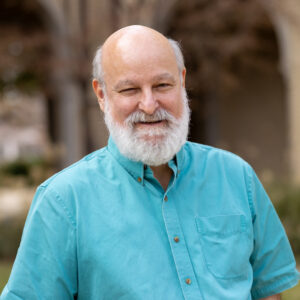
Dr. Bock has earned recognition as a Humboldt Scholar (Tübingen University in Germany), is the author or editor of over 45 books, including well-regarded commentaries on Luke and Acts and studies of the historical Jesus, and works in cultural engagement as host of the seminary’s Table Podcast. He was president of the Evangelical Theological Society (ETS) from 2000–2001, has served as a consulting editor for Christianity Today, and serves on the boards of Wheaton College, Chosen People Ministries, the Hope Center, Christians in Public Service, and the Institute for Global Engagement. His articles appear in leading publications, and he often is an expert for the media on NT issues. Dr. Bock has been a New York Times best-selling author in nonfiction; serves as a staff consultant for Bent Tree Fellowship Church in Carrollton, TX; and is elder emeritus at Trinity Fellowship Church in Dallas. When traveling overseas, he will tune into the current game involving his favorite teams from Houston—live—even in the wee hours of the morning. Married for 49 years to Sally, he is a proud father of two daughters and a son and is also a grandfather of five.
 Darrell L. Bock Jurie Kriel