

Christianity in Ireland
In this episode, Kasey Olander sits down with DTS alumni Ciarán and June Loughran to explore the shifting landscape of Christianity in Ireland. The Loughrans share their journey from working as engineers to planting Living Hope Church, discussing the unique opportunities of leading a highly multicultural congregation in a post-religious society. Listen in for their insights on maintaining cultural flexibility, keeping the gospel central, and building trust through authentic pastoral leadership.

The Table is a weekly podcast on topics related to God, Christianity, and cultural engagement brought to you by The Hendricks Center at Dallas Theological Seminary. The show features a variety of expert guests and is hosted by Dr. Darrell Bock, Bill Hendricks, Dr. Kymberli Cook, Kasey Olander, and Milyce Pipkin.
Timecodes
- 01:53
- Ciarán’s journey
- 05:46
- June’s story
- 08:07
- A leap of faith: Leaving engineering for Dallas Theological Seminary
- 15:20
- The religious history, geography, and demographics of Ireland
- 25:39
- The “New Irish” and pastoring a growing multicultural church
- 34:10
- Navigating cultural expectations, dress, and pastoral titles
- 42:04
- Building trust in a post-religious society through authentic leadership
- 47:18
- Final encouragements
Transcript
Kasey Olander
Welcome to The Table Podcast, where we discuss issues of God and culture to show the relevance of theology to everyday life. I'm Kasey, and I'm one of the hosts on the show, and we're really grateful that you're here with us today. Today, our conversation is going to be about Christianity in Ireland, and we have two esteemed guests with us. They're both DTS alums, and they're husband and wife, so I'm really excited to talk to this couple about the area that the Lord has placed them. First, we have June. Loughran, as I said, they're both DTS alums. So, June, thanks for being on the show today.
June Loughran
Thank you. It's a delight to be here, Kasey.
Kasey Olander
This is going to be super fun. And we also, like I said, have her husband, Ciaran Loughran, Ciaran, thanks for being here.
Ciaran Loughran
Hi, Kasey.
Kasey Olander
Hi. So like I said, they planted a church in the Republic of Ireland in 2007 and this series that we're doing is we think of it as global perspectives, and so this is an opportunity for us to talk to our brothers and sisters around the world. We've covered a number of different countries, and it's always fascinating to see how the Lord is at work, how he has given believers unique callings and unique places and unique giftings and equipped them in order to do a ministry, and yeah, different peoples and nations and so really grateful for this opportunity to highlight yeah the church and The Republic of Ireland. So to start us off, Ciaran, I'll start with you, but help, help us get to know you a little bit. Can you talk about, like, you know, where you're from originally, how you got to DTS, just share a little bit of your story with us.
Ciaran Loughran
Thanks. Kasey, yeah. So I grew up in a Roman Catholic family, like so many in Ireland, the youngest of five children, but we weren't a very practicing Roman Catholic family, so I grew up very nominally Roman Catholic. And by the time I got to college, which is where I met June, we both met in Engineering College in Dublin, I had a bad taste of religion in my mouth. You know, I had this sort of idea that it's just, it's meaningless. There's nothing really there, and one of my sisters had become a Jehovah's Witness, in fact, when I was a young teen. So what I saw there was a sort of a fracture in my family that I had put down to religious differences. And you know, when you jump into religion, it divides your family. And so I had that baggage coming to college. And so I meet June in first year in engineering, and we become good friends. And in our second year of college, she told me that she had become a Christian. And I thought, well, you're already a Christian, you know, you're Roman Catholic. And she told me that she believed Jesus is real, the Bible is true, and she wants to follow Jesus the rest of her life. And of course, it floored me, and I it brought back to my memory all of those sort of feelings that I had when my sister had become a Jehovah Witness, and I thought I'm going to lose my friend to a fairy tale or to some cult or wacky religion, just like I felt like I'd lost my sister. So, long story short, I started trying to argue June out of this, whatever it was, and into sense. And I was losing all my arguments. So I said, Well, if I'm going to win, I'm going to win in her territory, I better start reading the Bible and show her why she can't believe it, and show her all the holes in it. And so I started to read the Bible at 19 years old for the first time, though raised in a Roman Catholic family in Ireland, and I was fascinated, and it took me 18 months, but 18 months later, the Lord just revealed himself to me, and I became a believer, and June can certainly share her side of the story, but it but again, to cut a long story short, we finished college, we married, and we talked about the idea of going to a Bible college. Wouldn't that be amazing? And the Lord opened the door wide through a series of unusual events, but one of the key factors for us to do to come to Dallas was a man who had discipled me named Dan, and he was a graduate of Dallas Seminary, and he had discipled me in my first year as a Christian. And that was significant, because he gave me a prospectus, which, of course, I thumbed through in the years to follow. And I went, I'd love to do that course. I'd love to this course. I'd love to do that course. Wow, they teach this and, and so we eventually came back around to that and became interested. Yeah, so that's sort of a short synopsis of that journey.
Kasey Olander
Yeah, that's awesome. There's so many different things you've highlighted, one, you started off in engineering, you know? And you just had this desire to learn more about Scripture. And then also, I love that it was scripture too, like reading it and encountering God, that you're like, oh, wait, maybe it's, you know, not about the rules that I follow, or maybe it's not just about my, you know, nominal identification or something, but that there's, yeah, something different and true about this. Yeah, June, what about? Oh, sorry, go ahead.
Ciaran Loughran
No, I was just going to say that. You know, so many people in in Ireland, though, maybe even more devout, would not have read the Bible, or much of the Bible. It's, it is really a kind of a closed book or, or a family heirloom, or an ornament and so it was so new to me to read the Bible at 19 years old.
Kasey Olander
Yeah, June, what about what about you? What about your perspective?
June Loughran
So I came from quite a religious Roman Catholic background, very faithful, prayed the rosary at night. Would have gone to mass and youth camps, and was always a good girl, I suppose, and a in our my first year university, when I met Cieran, I fell ill and ended up in hospital for a about two weeks over Easter and it was during that time that I realized I must be missing something about life, because there has to be something more to life than this, because life was very fragile at that moment in time, and I came out of that season hungry, really hungry to figure out what life was about. And about four months later, I met somebody who challenged me to read Scripture and they offered to buy me a Bible, and I said, No, I'd buy my own. So I bought myself a Bible, and I started reading. And during those two years, or that year, I read a lot of other books besides scripture, but I kept coming back, and there was something alive in Scripture. I didn't always know what I was reading. I read a lot of the Old Testament. I read James numerous times. I was fascinated by Jesus, and about a year after I had been in hospital, I think I just cried out very genuinely to the Lord, asking, if you don't exist, I don't think there is anything else, there's nihilism, and if you really do exist, you need to show me who you are. And I would say I became a believer somewhere in the next three months. I know I was talking and praying, but I didn't believe, but somewhere over the next three months, I became a believer. So when I went back to university Ciaran was one of my very good friends at that stage, though himself and another friend I told I had become a believer. And yeah, then he started to challenge me and fight me on numerous issues, and as he says, kept losing. So yeah, he moved the debate over to Scripture. And a about two years after, I became a believer, Ciaran became a believer.
Kasey Olander
That's awesome.
June Loughran
And after that, then a we went our separate ways. I went to work down in a city called cork as an engineer. Ciaran was still in Dublin and but after that, we got together as a couple, and we married, and in our first year of marriage, we both were so hungry to learn more about Scripture and DTS was always in the background, even though I had said, you know, not America, you know, certainly not Texas and but the Lord has a sense of humor, I think with me, because every time I say never, I end up doing exactly what I said I would never do. So yeah, at the end of our first year of marriage, the Lord opened extraordinarily, opened the pathway into DTS, and we thought we were only going to get one year each. We never knew if we were going to get the next year, but we were willing to go for one year. We quit our jobs as engineers, and we went for the first year. And every year the Lord just kept providing, and we were able to go back. So 2007 was a great celebration when we graduated DTS, because one, when we started in 2003 we were told we were going to come back to Ireland and work as engineers. We had no idea that we were going to he was going to put us on a different path. So when we came back in 2007 to church plant, yeah, our lives had been radically altered by our journey through DTS.
Kasey Olander
Wow, I'm really struck by a number of things that you've just shared. One of them is that at such a young age, you know, you have this encounter with sickness. And instead of like, you come on the other side of it, instead of like, brushing it off, like, oh, well, that was a close one. Bummer about that, like, you have this like, depth and profound desire to, like, search for meaning, and, you know, like, and that's how you encounter the Lord. And. Think about, like, Okay, well, what is life really about? Instead of like, moving on as fast as possible, you're like, letting it transform and inform your decisions. And I'm also, yeah, I'm also encouraged how, like, what both of you have shared, interestingly, parallels my husband's testimony a lot that he, like, grew up just nominally Catholic. And, you know, I think it's about the like, you know, his impression was about, it's about following the rules. And then in college, yeah, through reading the Bible, and especially Yeah, through reading James, found out that it's about having a personal, transforming relationship with Christ, and yeah. And so that's sweet to see. Like, in different places that the Lord can, yeah, use similar stories and have us relate to one another in that way. So each of you mentioned this, like, extraordinary coming to DTS. Could you talk a little bit about how did the Lord open those doors? And then, how was it that you were okay, you like, go through this education. I love that you're walking just step by step obedience one year at a time. Who knows what we're going to get after that? And then, what was that process like for you of going from, okay, we're just going to, you know, go to Texas right quick, come back and be engineers again, to, okay, we're planting a church. So Ciaran, I guess we'll go back to you.
Ciaran Loughran
Yeah, we really did just want to learn. We just wanted to understand the Bible. There were so many reasons we chose DTS. We knew nothing about its reputation. We were so green and naive. We just knew what it offered and that's what we wanted. We wanted the languages. We wanted all the Bible that was non-denominational. It ticked so many boxes for us that were important. And when we initially started our seminary journey, the idea was, we're finished, we'll go back to engineering. I think when we were there, we met people who were so ordinary, just like ourselves, and yet these were people who who really felt the Lord's leads to go into pastoral ministry, to be frontier missionaries, to be professors in Bible colleges or all sorts of things and it just struck me that, you know, you don't have to be Apostle Paul people who are seen, you know, floating two feet above the ground with your wings and Halo, is that it's very ordinary people who we realized, I think, the overlap of our hopes and the values that we had for what it is to be a Christian. We wanted other people to believe like us in the Lord. We wanted people's faith to grow. We wanted to contribute to the church in Ireland in some way. We just thought that we would be doing that from the point of view of full-time employment while helping in our spare time in the local church, but when we realized people who are going into full-time ministry are just like us, we realized, well, maybe this is what the Lord has for us. You know that we had such a privileged educational experience and opportunity at Dallas Seminary, the fact that both of us were studying, we realized this was unusual, and unusual for Ireland as well, that we realized maybe, that maybe the Lord has a bigger vision for us than we had had when we started our seminary journey. So that was one of the things that happened, was we realized actually, we're all kind of the same here and there isn't this demarcation of super spiritual Christians and us. We're actually all on the same value spectrum or area. I'm interested in the same things, and that was the first thing that kind of helped us realize maybe there's more to going back to Ireland than what we originally thought.
Kasey Olander
That is encouraging. The okay, we all have different gifts, and we're all just called to serve.
Speaker 1
Yeah, yeah. That's right now at the time, maybe two years in, we met with that man, Dan, who had discipled me in my first year as a Christian, and he, he, he called us up, and he said he's coming down to visit some churches in the Dallas area, and we'd like to meet for coffees. This was in March, 2005 and so we said, Sure, let's meet up. And we had no agendas. We just shared with him the things that I just shared with you that our values had changed, and maybe church planting or full time work is something the Lord has for us. And he had said at the same in the same conversation, that he's at a kind of a juncture in his own life, whether to stay in the states and pastor a church there, which he'd love to do, or go back to a church or to Ireland and plant a church there, but he said that if he was to go back to Ireland. He wouldn't do it as an American with an American family in an Irish context. He said he would only do it working with an Irish couple or family. And we said, well, we would love to do church planting, but we wouldn't do it on our own. We've no experience. We'd only do it with a couple who have experience. And he's looking at us, the Irish couple we were looking at him, who had experience. And we went, Well, maybe, is this what the Lord has for us? That was March, 2005 and end of August, 2005 we had traveled back to Ireland because June was pregnant with our first child. And this couple also came to Ireland, and we started meeting his home. And that was the genesis, if you like, of what is now, Living Hope Church, yeah,
Kasey Olander
Yeah, that's wonderful. So could you talk a little bit? You talked about, like, contributing to the church in Ireland. And could you just talk about, like, Ireland in general, for those of us, for example, maybe me, who have never been and for the initiated, just give us some demographics. How big is it, that kind of thing?
Ciaran Loughran
Yeah. Well, I mean, we're currently, we're what, we're 26 counties in the Republic of Ireland, and six counties in Northern Ireland. And we've, in the Republic of Ireland, been in Roman Catholic for very long time, and the Northern Ireland has been predominantly Protestant, but, we have a long history, of course, in Ireland, of Christianity, with Patrick in the fifth century, a lot of the Irish monastic movement, huge, significant history, and then art and literature, Scripture. We have a great, deep, beautiful history there. But we're deeply Roman Catholic as a nation, and the sort of the peak of Roman Catholicism in recent history was in the 1970s when Pope John Paul the second came to Ireland. 1/3 of our whole population in the Republic of Ireland, which at the time, was about 3.4 million people, 1/3 of our population came to visit the pope in the Phoenix Park in Dublin. Wow, that's just a huge, huge turnout. June, you missed it. In fact, that day, didn't you?
June Loughran
I was left at home by my parents. But for context, I was going to say that Ireland fits into Texas 10 times land mass wise, so that shows you actually how small we are as a land mass, but because we have been a nation of people, there are 70 million people who across the world who chase their descent back to Ireland. And so we are five and a half million south of the border, and the northern counties belong to the United Kingdom. There's probably a million up there, so six and a half million on the island total presently.
Kasey Olander
Yeah, a small island with a far-reaching impact already. Wow. Okay, well, did you experience culture shock in either direction, either coming to DTS, or then after you'd been here in Texas, and you're like, Wow, is this 10 times bigger than I'm used to in my whole country, then going back to Ireland, what was that experience? Did you feel like you were doing, I guess, cross-cultural ministry to some degree? I'll start with you. June.
June Loughran
We hit into Dallas because we wanted to learn the languages and learn scripture. And very quickly, I felt like I was back in a Roman Catholic environment where everybody was Christianized and spoke the Christian language, but may not have a personal relationship with the Lord. Sure, walking into seminary was a very interesting to me, because it felt like what I had grown up with, in part because there was such cultural evangelical heritage on the campus and in Dallas itself and in Texas itself, that it felt very normal, actually to me from a religious background, and yet, how many people how it can be culturally Christian and yet not have a personal relationship with the Lord? That was fascinating to me, and then with the different denominations that were in represented in the student body, to realize I had probably a little bit of baggage coming into Dallas about the Catholic Church, the Roman Catholic Church, and then I realized actually every church denomination has the same baggage. There are believers and unbelievers and people who think they are believers but aren't in every denomination, and that's normal. And so I probably became far more gracious towards the heritage that the Lord had given me and thankful for the tradition that I had grown up with, and it gave me a huge head start in Scripture just because of the formation of the Catholic Church and its rituals. So yeah, my antagonism towards the Roman church that I felt like hadn't taught me Jesus or hadn't told me who he exactly was, lessened in Dallas and softened. Yeah, so cultural heritage, religious heritage in Texas, was a culture shock. It wasn't what I was expecting, and yet it was normal.
Kasey Olander
Right? That's a really helpful comparison, thinking of, you know, the Bible Belt, like anybody might just identify as Christian, and maybe they don't know what that means. Maybe they think I've, you know, I go to church once a year, or my parents identify as Christian. That must make me a Christian. You know, like people have all kinds of different impressions about what it means to use the term Christian, sometimes thinking that that's just in the air we breathe in Dallas, instead of realizing that, you know, salvation by grace alone, through faith alone, and Christ alone and like you said, that's everywhere you know like and that's part of our like calling as believers is whether people know that they're lost or not, is to present them with Christ and the opportunity that they have to have a personal saving relationship with Him by grace and not, not through what they do. And so that's a, yeah, I like that. You drew that comparison because that's, that's fascinating, either the Roman Catholic Church, any you know, different denomination that we think of, you know, people may or may not know where they are spiritually or what it means to follow Jesus. And, yeah, so that's helpful. What about what about you Ciaran?
Ciaran Loughran
In what regard now, Kasey, exactly?
Kasey Olander
You could either speak to, like culture shock coming, like to DTS or from DTS, or anything about the like, cross cultural ministry.
Ciaran Loughran
Yeah, I would say the couple that first took us in, when we got to Dallas, we went to Best Buy to get a computer and equipment for seminary and so on and this couple, she was quite a gregarious lady, and we went up to the counter to purchase, and we were just amazed. We said, there's so many churches here, and there's so many Christians here in and she said, You know what there are. And this lady at the counter was wearing a cross, and she said, watch this. And she went up to the lady and she said, Are you a Christian? And the lady said, I am. Which church you go to? Such and such a church? Wow, we walked away amazed, like we really were amazed. But I think my expectation was that that the people who go to church in the states would be kind of as passionate for Christ would be kind of standing against the culture as the mainstream culture, because the churches in Ireland that we were coming from were small. They were kind of struggling in lots of ways. They were standing against the culture to exist. So we just didn't see that there. It was so easy to be an evangelical Christian in the US culture that that was a shock in itself, and then to find out that many of them, because it's so easy, it breeds nominalism. And that was quite shocking, I would say, in reverse, coming back though, when we graduated, coming back here, I think the thing that we missed was the deep theological conversation, the biblically rich conversation that we were so used to at the seminary. And I mean, you know, you're trying to warn yourself not to get into a bubble and not get into an ivory tower, and you know the dangers of doing that, but you know, you're just in such a rich environment where people are talking about these wonderful things that when you come back to the mission field or back to Ireland, it that was different, that was quite difficult to adjust to. Yeah, that was a shock, yeah.
Kasey Olander
And that's one of the things that is so cool about the fact that you both, like husband and wife, were in seminary together at the same time, and so it's not that one or the other of you had this experience and that you know, like, you're like, having a more one sided conversation, which is great. It's always great when you know anybody gets the chance to go to seminary, because, like you said, it's such a privilege and a rich environment. But I love that the two of you were able to do it together, so that even if you're in this season where you're like, Wow, this is very different from where we were able to have all of these rich theological conversations on such a normative basis that you, like the two of you, are together, husband and wife, in ministry and having these still deep and reflective dialogs, no matter where in the in the world the Lord takes you.
June Loughran
That's a very helpful if you marry, a Christian, marital conflict as normal, but it is, I think both of us were able to keep on, keeping on with the Lord a because of the company of each other and reading, you know, whatever I'd read, I'd speak to Ciaran about whatever he'd read, I'd be reading after him, or he'd be reading after me. So, yeah, that that's a treasure that we have been blessed with by the Lord to do what we do and to do it so well together.
Kasey Olander
Yeah, absolutely, I didn't realize what a rare gift it was that my husband and I also, like, gotten to be students together at the same time. And, yeah, sharing books and having conversations and arguing about whatever we do or don't agree with. And it really, yeah, it really is fun to get the chance to do that together. So I love highlighting husbands and wives who are, yeah, getting to share together in ministry and different ways. So you, I think Ciaran, you alluded to like that the church in Ireland is really standing against the culture. It like people don't usually just go to church, just to go to church, you know, like it costs you something it, you know, means something different to be a regular church attender in Ireland than maybe it does in kind of a South or the Bible Belt here in the States. Are there other things that are distinct about like following Jesus in Ireland, in ya'll's context? Probably they don't say y'all's context where you are.
Ciaran Loughran
That's true. Some of that language is different. Are there other things that are different? I guess it's just, yeah, I think it just looks different. I think one of the things is it's multicultural. The church in the Republic of Ireland is very multicultural, and that's a that's a new phenomenon. So we talk in Ireland about the new Irish. And what the new Irish are is a whole cohort of people who are the children of immigrants, people who've come over to Ireland, settled here, and their children, they or their children are both have become Irish citizens. And so we have this multi ethnic fabric in society now that didn't exist, I would say, even 30, 40, years ago. It's quite recent development. So we are a very multi ethnic and multicultural church, and that's a tremendous opportunity for us in the small town that we exist in to the community around us, because even though that is kind of the changing face of Ireland. And certainly the urban areas have a great show of multi ethnic and multiculturalism. Sometimes our small towns can be still very sort of, sort of narrow-minded in terms of cultures, and quite a quite fearful, maybe a bit xenophobic. And so as a church, we have a great opportunity. It's a challenge to work with people from so many cultures, and yet it's one of our greatest opportunities. And I think that's what we find, is the challenge is often our greatest opportunity, and sometimes our greatest opportunities are our greatest challenges. And so that's, that's, that is one recent historical development that makes a big difference where we are.
June Loughran
It forces Yeah. The multi-ethnic congregation that we have forces us to have long conversations about the true nature of the gospel versus what is culturally imported from all of our different cultures, and so it's a great clarifying process to have those ongoing conversations, and Dallas did very well at teaching us keep the main thing the main thing. And in church planting with such a diverse culture congregation, we are keeping the main thing, the main thing, and the cultural conversation is ongoing, so we flex and change how we do things, not our message, but our methods, changes regularly, because we can it's very fluid, and we hold it fluidly.
Kasey Olander
That is so cool. Yeah, what a good example of a challenge that is also an opportunity to be like, Okay, we have to really focus on just like, what is orthodox doctrine? Because we don't want to say you have to follow Jesus, like we do in Dallas, like we do in Ireland, you know, like you want people to still retain the multicultural dimension of the church. And that's such a beautiful example. I'm, yeah, pleasantly surprised to hear about that, given how small you talked about Ireland being that there are all these different places represented. So talk to us about that. You mentioned a small town. What are kind of the demographics of the small town? And then I'll ask you about your church after that.
June Loughran
So Trim is about twelve and a half thousand people, with maybe another three or four in a catchment farming area around Trim in our church, we probably have about 100 adults and 50 under 18. So 150 of the 100 adults, we have 23 different nations, all first generation from their cultures, not the new Irish that Ciaran was talking about, so a that is reflective of the town we now live in. We live in a town that's close to Dublin. So we have a lot of commuters, a and we and the other thing is we have generational families. So in Ireland, families go back 2000 years. So we have people that have lived in this area that we minister in for, yeah, millennia. And then we have new people coming in that have lived here from different cultures for the last few years. So it's yet you're also seeing history fold in this town. So it's really interesting confluence of events at this moment in time. Very exciting to be in church planting and looking forward to what the Lord is actually going to do. Because as the nations come to us, we hope that some of those will go back to their nations more equipped to reach their own people.
Kasey Olander
Yeah, you're sending missionaries in a sense, you know, like if they, if they do go back, you know, wherever home is, yeah, that they're equipped with the gospel. And again, they have the foundation of, like this is what it means to follow Jesus, and I can contextualize it for anywhere that the Lord calls me in the future.
June Loughran
The formation, I think of is very valuable to us in Living Hope Church, because we don't know if we're going to have people for two, three years, you know, five, ten years. So we concentrate a lot on formation, on Bible studies, the Open Bible Academy we run from our church as well. So, people that are coming in with a Christian background who want to grow, we try to facilitate that as much as we can, because we don't know how long we're going to have them for, and we'd like to send them back to wherever they're going, better equipped.
Ciaran Loughran
If I can add to that, because when we when we started out, you know, you're small, you're church planting, you're thinking of growth all the time. And for me, I was, I was certainly that way. And I remember reading a book early on, not long after we started and it was saying, don't be thinking about, you know, grabbing and retaining everyone you can in your local small church, train them and release them. Whoever comes train them and release them. And I would say, even though we're 150 people now in our you know, since 2007 we've had people come from all over the world, stay for a while and then leave and go back home. Maybe they were studying for a while, au pair for a while, just moved on. Just life circumstances change. And there are hundreds of people who have come through Living Hope Church been part of Living Hope for a while and moved on. So our church is hundreds of people, even though we're looking at, you know, maybe 100 110 faces on Sunday morning. We're far and wide because people have come. We've trained them for the time that they were here, shared live the gospel with them, trying to cycle them and be happy that they're that they're going because they're being sent, you know, to wherever else they're going to be useful in the Lord's hands.
Kasey Olander
Yeah, and praise God for that. That is so cool that you went from okay, we're a couple of families in, you know, Dan's living room, to Okay. Now we have hundreds of people that are gathering every week, but also we have hundreds of people who have been part and now are being sent out. And so what a beautiful example of being open-handed with, Okay, we're going to, we're going to be good stewards of whoever is here in this season, instead of trying to, like you said, retain and hang on.
Ciaran Loughran
And I think a lot of churches in Ireland that are starting out or have been small for a long time, struggle with that. I think there is a sense in which, you know, there's a struggle even to survive sometimes, and there isn't a lot of full time leaders in churches. So, so full time Christian ministry is something that's not normal in many Irish churches. So you haven't, in some cases, maybe an absent, a vacant pastorate, and so it falls to a lot of the members then to do the work that's shared that normally one single minister would do. And so we just visited a Church recently while we were on a short break that was in that situation. So, that is something that's not culturally normal here in the in the Christian context.
Kasey Olander
Another distinction that's especially different from the Bible Belt, where they're, you know, full time ministers, kind of anywhere you go. Are there, since you're having so many different people from so many different cultures, do you find that you're Do you have any misconceptions that you're often battling? Or are there common misconceptions that even you know people from other places, or, you know, people like me who spent a lot of time in Dallas, might have about Christianity in Ireland.
June Loughran
Misconceptions about Ireland. I love the Nigerian culture coming into our church is they think that pastor's wife is the first lady. And I tell them, No, my name is June, and I'm a screwed up sinner the same as you and we're, you know, the pastor is a patient in the same hospital, and the Lord is the only physician. So we do have, I think we have a lot of craic together in our congregation about cultural expectations of how the hierarchy works, or the cultural names, like First Lady for the pastor's wife,
Kasey Olander
You have a lot of craic in your congregation. I said craic being fun or, that's another distinction.
June Loughran
To find your terms. Yes, craic meaning fun. Yes, we have a lot of fun in our congregation with cultural nuances, and they are fun to see how they get represented. I think other people coming in, we Eastern Europeans tend to be a little bit more legalistic, or dress up far more than we do in our congregation, and same with some of the African cultures. So dress is always interesting, too. And yet, I love to see some of the African cultures come in their full garb. It's just so not what I would do. And yet, they're coming to honor the Lord in their way. And that's lovely to see.
Ciaran Loughran
Yeah, I would add to that hopping on to the sort of the terminology of calling the pastor's wife, the First Lady. You know, I struggled with being called pastor, like people coming up to me and calling me a pastor, and when I would say, you know, initially, you know, call me Ciaran, you're on, you know. And sort of blur the lines between the clergy and the laity in my effort to do that and show that we're all on the same level. But there was, there were two cultural clashes there. There was one me challenging them to sort of to sort of bring me down from, you know, wherever they were placing me, whether there was Father, Son, Spirit and Pastor, I don't know whether I was that high up, but in their estimation, but I think in some people, I was that challenged them when I when I urged them, you know, to call me Ciaran, but also it challenged me to be called pastor, because from an Irish male point of view, we're very passive creatures. Irish men, we like to sit back and just wait and see, and don't take up the mantle to lead, or certainly don't be seen to be doing that, because that's putting your head above the parapet ready to be shot at and so, so that challenged me to actually be to accept being called pastor. So there are definitely the mix of cultures, really is a is a challenge. But what it does is it strips us of us, of our cultural things that we cling on to and it challenges us with the gospel. I mean, am I making this more important than the Gospel itself? And it strips us of all of these cultural identities and throws us back onto what's most important, and forces us to create a gospel culture that transcends all these other human, ethnic cultures, which are wonderful, but they're also tainted with, sin, and so no human, ethnic, earthly culture is perfect. And so that's the benefit and the blessing of being challenged in those ways in a Christian community from all over.
Kasey Olander
Yeah, I love that example, because that's like, such a good picture of like, you know, so both parties and, you know, wanting to call you Pastor, or you not wanting to be called pastor, are coming from a good heart. Like, hey, I want to show you respect. Or like, hey, I want to show you that we're both just following Christ the same, you know, like, so those are both, yeah, cool ways of hey, we have this heart that wants to honor the Lord and honor each other. And, you know, like, our cultures just do that differently, and we expect different things. So how are we going to just harmonize as brothers and sisters and yeah, learn from one another. Yeah, in those ways. So are there you can tell me if we've, like, covered this in what we've already talked about, but are there you feel like unique obstacles to doing ministry in Ireland, where you guys are. I'll start with you June.
June Loughran
No, I think old paths are new to us. We might think they are new obstacles to us. But when you read a 15th, 16th, 17th-century pastor, when you read, you see it's the same stuff, just new to us. I'm learning it for the first time but I think, yeah, there's very little new under the sun. Sin. Nature hasn't changed. Our nature hasn't changed. God hasn't changed. Christ hasn't changed. It's just learning and handling it with grace and being in a learning disposition, listening well, watching long and hard, trying to see people's heart, trying to know my own heart, and where I'm deceived and easily deceived, and, yeah, those type of things. I think once you bring it back down to the nature of God and our sin nature, it's all the same. I don't think there's anything unique. I think we are actually at a fantastic crossroads in our culture. I think we have really unique opportunities at this moment to form a great foundation across many church denominations, not just us, in the Baptist Association here in Ireland, but in Presbyterian and Methodist and Catholic and I do think there is an openness to spirituality in Ireland, after the fall of the Catholic Church in the last 30 years, there is a renewed interest in spirituality, and one of those people are open to talking about Christ and Scripture and that we haven't had for the last 20 years. So I think we're at the cusp of a new openness, actually, and I hope that we have the ability and courage just to step in. Of course, we're going to make a mess of some of it, but be willing to go pick up the baton and go and yeah, pray that the Lord walks with us. Yeah, so I think no to your original answer or to your original question, but I'm excited yeah, about what's ahead.
Kasey Olander
Sure you're saying it's not that there aren't obstacles, but there's that there's nothing new under the sun. And so yeah, you're having, I like that. Ciaran, you pointed out that a lot of challenges are opportunities, and so depending on, yeah, the angle that you look at it, maybe some things are like challenging, but also there are opportunities to learn and to grow. And so I am curious, as you mentioned, like this, you know, kind of shift in culture with new opportunity, like new openness to spiritual things. I think that's something that we can be praying for you guys about. How else can we pray for you guys as you're ministering, yeah, with your church plant in Ireland, I don't know if you can call it a church plant after this long, but with your church?
Speaker 1
Yeah, we have wondered, have we crossed that line into an established church? I think we have at this point, you know. But I think one of the things that you know, you could pray for us for and again, it's a challenge, continual challenge, but also an opportunity. And not just in Ireland, but worldwide, wherever humans are, is the challenge, to be honest, and the challenge to be to be addressing our indwelling sin as Christians. So I suppose that's a challenge within the church, because it's often resisted. Because, you know, a lot of people who think, well, sin has been dealt with. It's a one and done. It's kind of in the past. And so I don't have to deal with it anymore. But of course, the reality is, you know, we can't escape our indwelling sin, and it's infused with so much of what we do. So unless we address it, it's going to cause problems and obstacles. And so I think so, I think the continual challenge is to be really honest and authentic in our living our lives as Christians, not to, not to become religious, or, you know, just sort of highbrow and holier than thou. And that image is what Irish people absolutely despise, because they've seen it and with scandals that have come out in the church in the last 30 years, they just want absolutely nothing to do with organized religion. Weekly church attendance has dropped from in the 70s. It was in the high 90% of the population went to Mass weekly, or to church weekly. It's now in the Roman Catholic tradition, down to about 30% a couple of years ago. So, so, so interest trust in established religion has completely eroded, and I think that presents us with an opportunity in the church to build trust by being honest and by being authentic and real with people to say, hey, look, you and I are exactly the same. We each have a deep ache for things to be right. We have a deep ache to be loved and to belong. And you know, we don't find it in this, that or the other, but we only find it in Christ and when we're honest with- so in my teaching and in my preaching, and it's largely due to June's encouragement to do this, because I initially resisted it, but it's to be honest and say, Look, I am. I'm a complete mess in so many areas, you know, but here's me, and my confidence is not in me, it's in my Savior and grace flows downhill to needy people like us who are at the bottom, and so here I am just like one of you. So that's a continual challenge to infuse Bible studies, preaching, and teaching opportunities with that reality, and it builds trust in the listeners. Breaks down that barrier. It's a better way to break down the clergy-laity barrier than don't call me Pastor. Because it's saying, I'm just like you. My heart is just as needy as yours, and here's why. But also with outreach, that's where, when we're talking with non-Christians, and we say, I'm not a holier than thou, I'm just like you, I'm a mess, but because of Christ, I have confidence before God. And so I think that is a continual challenge. That's a continual prayer request for all of us, but it presents also a great opportunity.
Kasey Olander
Yeah, that we're supposed to model holiness and integrity as we follow Jesus and at the same time, just acknowledging when we fall short. It's not that people won't notice if we don't say anything, so we might as well be honest about our shortcomings. And you know, like the fact that we all need Jesus, and you know, like that's something that unifies us as brothers and sisters, is that Jesus is the only one without sin, and we're being sanctified, but we're not yet glorified, and sorry about that. Do you guys? I want to offer each of you a chance to give any closing thoughts to those of us who either haven't been to Ireland or, yeah, ways that your ministry there has been an encouragement to you.
Ciaran Loughran
I would say what we have found really helpful is being honest with life, but also really trusting the scriptures. You know, that's one of the things that we're appreciative of Dallas Seminary, we were told so often, know this book, know the Bible, know the word, because you'll always be coming back to it. You have to have a source of authority, a source of certainty sufficiency, and the Bible does give us that. So when we've had our greatest conflicts in the church, and there have been some woozies, you know, the we've gone back to Scripture to see what does it say? Time and again, we have fallen back onto the Bible for that. And so yeah, I would say our time at Dallas Seminary will forever be, we'll be forever grateful for it, and we're always drawing from it in our time here, in the good times and the bad times.
Kasey Olander
Yeah, praise God for that.
June Loughran
Yeah. For me, I think we love to hand on what we've been given. We did not know what we were going to be given when we went to DTS and the church that we became believers through, Grace Bible Fellowship, definitely grew in me in honesty. Never deny my sin, always bring it to the cross, own it in order to be able to disown it with the Lord and I need Jesus. I'm not a believer because I know scripture. I'm a believer because I need Jesus every day, because I can't be who he is. And I need his love. I need his grace. So I think going forward, it's just to remain honest and equip people to feed themselves from the word for themselves. And we see people beginning to eat the word, morsel by morsel, and then bite by bite, and then they move on to the steak of the word, and it's a joy to watch them flourish even in the midst of very difficult circumstances, a scripture will meet you and the Lord will meet you at your most difficult moment.
Kasey Olander
Yeah. That is Yeah, your Story has been such an encouragement. Today we've seen so many different things highlighted about your you know obedience to make a huge shift from engineering to seminary, but then also from seminary to church planting, which you didn't anticipate, and along the way, I'm so encouraged by your obedience and for your desire for community around you and for it sounds like just being good stewards of whatever the Lord entrusts you with in the moment. You know, whether they're people are from a bunch of different countries, whether they're going back, whether they're staying, you know, like that, you have gotten so much flexibility, by the grace of God, to just follow him and wherever He leads you. And so I'm grateful that you guys shared your story, and for the fact that you're ministering in Ireland, and yeah, for the fact that the Lord has uniquely gifted you and equipped you and given you guys the ministry that you have. So Loughrans, June and Ciaran, thank you so much for being on The Table Podcast today.
June Loughran
Thank you very much for having us, Kasey.
Kasey Olander
It was a delight. And I also want to thank you for listening. If you like our show, go ahead and leave us a rating or review on your favorite podcast app, because it really does help other people to discover us and join us next time when we discuss issues of God and culture, to show the relevance of theology to everyday life.
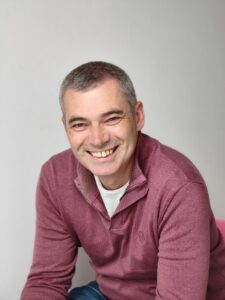
Ciarán Loughran is married to June and together have five children: Saoirse [Seer-sha], Mark, Caleb, Eliana, and Charis.
Ciarán completed his ThM at DTS in 2007 and returned with June together planting Living Hope Church in the small town of Trim, located an hour from Dublin. Living Hope Church joined the Association of Baptist Churches in 2015 and its 150 people represent close to 25 nations.
Ciarán taught in the Irish Bible Institute for 11 years and in 2020 he and June launched the first European branch of an online course of biblical study called The Opened Bible Academy.
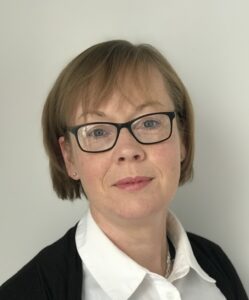
June Loughran is married to Ciarán, and together they have five children, a dog, and a rabbit. After working as an M&E Engineer, June left the industry to complete a MABS at DTS. In 2007, June and Ciarán returned to Ireland to plant Living Hope Church in Trim, County Meath. In 2020, June became the first European Director of the Opened Bible Academy, and Ciarán became its first European Instructor, following their shared desire to create a grassroots Bible study program for ordinary working people who long to study Scripture.
June enjoys reading, people, encouraging the growth of others in the faith, and discerning ways forward.
 Ciarán Loughran June Loughran Kasey Olander