

Tim Keller's Legacy on Cultural Engagement
How should Christians engage a culture that feels increasingly hostile to the gospel? Join Darrell Bock, Collin Hansen, and Josh Chatraw as they unpack the enduring legacy of Tim Keller and his “Third Way” approach to biblical cultural engagement. Together, they explore how Christians can effectively navigate a polarized, secular age by moving beyond the culture wars and grounding apologetics in deep cultural analysis and the gospel.

The Table is a weekly podcast on topics related to God, Christianity, and cultural engagement brought to you by The Hendricks Center at Dallas Theological Seminary. The show features a variety of expert guests and is hosted by Dr. Darrell Bock, Bill Hendricks, Dr. Kymberli Cook, Kasey Olander, and Milyce Pipkin.
Timecodes
- 6:35
- Tim Keller’s Tri-Perspectival Perspective
- 14:04
- The Third Way and Tone
- 20:13
- Challenges and Opportunities in Cultural Engagement
- 23:27
- Tone in the New Testament
- 30:06
- Culture and Lenses
- 38:16
- Meaning, Hope, and Value in a Secular World
- 43:20
- Differentiating the Waves and Currents in Culture
Transcript
Darrell Bock
Welcome to The Table Podcast, where we discuss issues of God and culture to show the relevance of theology to everyday life. I'm Darrell Bock. I'm one of the hosts on The Table, and our topic today is the legacy of Tim Keller and what some people have labeled the Third Way, and in a context in which polarization rules and the left and the right are busy loving each other so wonderfully in our in our context and culture, thinking about how Christians should engage with the world for the sake of the gospel is an important conversation. I have two wonderful guests to be with us. Colin Hansen is with us, and also Josh, and I've worked hard to try and get his last name right, Chatraw is with us. Did I do that? I got a thumbs up from Colin, so I'm in good shape. I was told-
Collin Hansen
It's Josh's name, I've just had to work on it so long myself. Josh, you be the judge.
Josh Chatraw
That was great. Darrell, I mean, I thought we had this right 10 years ago when we wrote a book together, but-
Darrell Bock
yeah, exactly right. Well, you know,
Josh Chatraw
If it was in Greek, you would have pronounced it flawlessly.
Darrell Bock
Well, we did everything by email too, so, you know, once you get face to face, it's a different deal, but I really appreciate it, and why don't you guys tell what you all do rather than my going through it. So Josh, why don't you start off your role today is?
Josh Chatraw
I'm a faculty member at Beeson Divinity School on the campus of Sanford University. I teach evangelism and apologetics, philosophy, courses like that. So that's, that's what I'm up to these days.
Darrell Bock
And you're on research leave, which means you're on sabbatical, which means you're feeling great.
Josh Chatraw
Yeah, yeah. That's, that's a good way to put it.
Darrell Bock
And then Colin, tell us, tell everyone what you do.
Collin Hansen
I've been with the Gospel Coalition since 2010 serve as Vice President for content, also as the editor in chief. And then I have a privilege of working with Josh. I'm the Executive Director of the Keller Center for Cultural Apologetics, which is a ministry of the Gospel Coalition. I'm also the co-chair of the advisory board at Beeson Divinity School. And occasionally, I get to teach in cultural apologetics. And Josh is my office mate. That wall behind me, he's on the other side, normally, but today he fled because it's 80 degrees in the office. Today he fled. He fled.
Darrell Bock
Well, welcome to early March in the Deep South, right? It's either hot or thunderstorming to get ready to be hot, or, you know, I tell people, Dallas has two seasons: summer and getting ready for summer. So that's, that's kind of the way life is. And I've known you guys a long time. This is, this is fun for me, because we've crossed paths on numerous occasions, and this is a topic that obviously is important. And so my normal opening question for someone who comes on The Table is, how did a nice guy like you get into a gig like this? So let's talk about your connections to Tim Keller, how you came across him, and the way in which he ministered in your lives, is kind of a setup and a frame for what we're going to be discussing. And Josh again, I'll let you lead off.
Josh Chatraw
Yeah, I can remember the first time that I- I'm sure I was later than Colin, but the first time I encountered anything by Tim Keller, I was in a bookstore in Louisville, Kentucky, and I had just finished up my MDiv at Southern Seminary, and I was just a Christian bookstore, and there was a The Reason for God had just been released, and hard back cover. And I thought, this seems interesting. I've never heard of this guy. I picked it up, and I pretty immediately thought, I haven't seen anyone quite do what he's doing, how he's how he's doing, his apologetic. So I was, I was pretty intrigued at that point. Began using some of his reasons. I used that book later on, as I was ministering to college students just a year or two later in a ministry context, and really, really was resonating with what he was doing. When I got, after I got my PhD and I was writing, I thought, you know, there's a lot of helpful, apologetic books out there, but there's not, I didn't see one that was integrating in the way that Tim did so well, both pastorally, theologically and then philosophically and practically. And I thought, this is there hasn't really been a textbook that's trying to try to integrate apologetics in the way he's doing it. So in many ways, Apologetics at the Cross, a textbook I wrote to that started writing 2016 with Mark Allen was inspired by Tim in many ways, and then through a mutual friend, we sent it to Tim for an endorsement, like, kind of just a hope and a prayer. And he got right back to us and said, Man, I love what you guys are doing. And that began a relationship through the years, where, you know, when I was in New York, or one time when you had Tim, at the Hendricks Center there, we met up for lunch, just different times, really, where I got to spend some time with Tim and then, right before he got cancer, Tim and I were supposed to work on a, on a on a series together, we were going to edit a series together, and then with him getting cancer that got cut, but that was he was just really kind to give I know a lot of people were trying to get time with Tim and Colin had the privilege to spend much more time than I did, but I really valued his mentorship from afar, and certainly his writings is kind of- I didn't listen to too many Tim Keller sermons through the years. That was maybe a little later. A lot of people first encountered Tim through his sermons. But for me it was, it was through his books.
Darrell Bock
Okay? And Colin talk about your relationship, which obviously is a deep and long one.
Collin Hansen
So just started following Tim's ministry in the years I spent at Christianity Today magazine, 2003 to 2007 as the news editor. Then I was working on my first book at the time, Young, Restless and Reformed, and of course, Tim would come up in that research. And then the last thing I did before heading off to Trinity Evangelical Divinity School for my MDiv was to write about the formation of this new ministry called the Gospel Coalition, that he's sort of the co-founder for, and then the vice president of. And then shortly after that, he and I started editing some books together on cultural engagement, started working at the Gospel Coalition in 2010 and again, for most of that time, he was, he was a vice president, and so just a lot of back and forth over the years, similar to what Josh is talking about there, and then definitely toward the end of his life, because of the challenges with just a lot of things came into focus with his health crisis and impending death, unfortunately. So we collaborated on two different projects there. One was the book Timothy Keller: his Spiritual Intellectual Formation, which was just a close work with him and with his wife Kathy, just talking to their friends and just exploring his the ways that he became Tim Keller, and then who he learned from, and then starting the Keller Center for Cultural Apologetics as a way of carrying on some of the ongoing ministry of apologetic concerns that he was not, by no means the inventor of, but one of the more prominent purveyors of, especially over the last decade or so of his life.
Darrell Bock
Okay, so let's talk about the center a little bit Colin, the Tim Keller Center. The thing that stands out to me when I think about Tim and his ministry and my connections to him, pretty informal, really, but go back to sitting in the church in New York, when I would go to New York and I would go to church and listening to him preach. So I'm, I guess I go through Josh's path sermons first, but it struck me just what little I knew about the congregation, how many people he drew to Christ who did not grow up as Christians, and the ability that he seemed to have to connect with people who were asking questions about life, but didn't necessarily do so through with a religious lens. And when I think of Tim Keller, the thing that I think about in terms of the integration and the way he does it, is there's a tonal piece to what he is, what he was doing, that's very, very important that now today has come in for some criticism. We'll be talking about that in a second, but that's the piece that I he really worked hard to understand who he was talking to. Go ahead, Colin, you look like you were going to say-
Collin Hansen
I think you could look at this, Darrell, from a tri-perspectival perspective, and I think that's one reason why it was just so effective and could reach so many different people, like you said, including people who are not part of the church or didn't grow up that way. You could see the way that he was confident, not boastful, but unswerving in his confession, just normative, biblical, teaching. So we can talk about a lot of things with Tim Keller's apologetics, but really, at the end of the day, it's just this guy's teaching the Bible within a broadly, within a clear, reformed, confessional framework that have been recognizable to anybody within that Neo-Evangelical tradition of the 20th and 21st centuries, let alone going back before that. But then there's the situational component. That's a lot of what we do at the center. That's what a lot of people know of. That's what Josh is talking about, is about, as well with his apologetics and the way that he could speak that timeless truth in relevant ways to a changing, changing world, and especially into this post Christendom world, that's a lot of what we focus on at the center. But there's also the existential, and I think this get over, gets overlooked a lot. Tim would describe himself as somebody who cared just as much about cultural engagement as he did piety and personal piety, that was a huge part of his formation, And so by the effectiveness of his preaching, his evangelism and his apologetics is really the application of biblical counseling, listening to people, learning from people, applying the gospel to their needs. When I worked on my book, and I talked with one of the first people, he led to the Lord when he was a pastor, it was through biblical counseling. It was using resources from CCEF, and a place where he had long partnership with people like David Powlison and where he'd been a fellow elder together in Philadelphia. So, you bring those three elements together, and I think a lot of the rest of us, Darrell, we struggle to do all three. We might be really strong on our doctrine, or really strong on applying it to the changing world, or really feel very strongly about applying things to the heart, but it's hard to bring those all together, because not usually good at all of that, and Tim was better at some of it than others, but when he brought it together, I think that had a particular appeal, not only for Christians, but in many positive ways for non Christians.
Darrell Bock
So Josh, when you think about the issue of tone and the way in which colin has said these three things come together. And you think of Tim Keller, what do you what? What registers with you?
Josh Chatraw
Yeah, I mean, I mean, I would agree with a lot of, I mean, I would agree with everything Colin said he, he, part of his personality was kind of professorial. So you, you get a bit that of that. It's not kind of like the soaring of, you know, a John Piper or something like that. You get this kind of professorial mold, and especially for his context, in New York. I mean, I think, you know, I Colin, you might say this in the book. I mean, there in New York, we often say in ministry, you know somebody doesn't, they don't care unless they know you that that you care. They're not going to listen unless they know you care first. But Tim understood that in New York, people had a certain impression of evangelical Christians, that unless they knew that you, they respected you intellectually, they weren't going to listen to you. But with that, he took the kind of intellectual, but then also a kind of professorial tone that very much works in that context. And I think that was part of his tone as well. And so that they said, Oh, this. This guy actually knows what he's talking about. I can, as Augustine said about Ambrose, you know, I could at least respect this, maybe, maybe I can at least respect this Christianity thing, and then all of a sudden, he starts pulling on your heart. But he realized he had to break down certain walls, certain kind of an impression people had about Christianity before he could kind of reach in and tug at their heart. They had to at least respect it. And part of that in New York City, especially at the time, was overcoming the kind of impression they had of Evangelicals as anti -intellectual, as not very reflective. And so I think those things kind of combined in that context, and then he could go and actually preach to the heart.
Darrell Bock
So, let's, let's think about what this is sometimes being characterized in more recent discussion, is representing a third way and the way the third way gets criticized. Well, it's the mushy middle. There isn't much commit conviction here, and some people will characterize it as being compromising, etc. There's an article, very famous article circulating among Christians that talks about the three eras. And the first era is one that was positive towards Christianity. The second was an era, that was a little more neutral, some challenge, but a little more neutral, into which being seeker friendly was a way to go about it, and, and, and they put Tim Keller in that, in that category, with that context. And then now, supposedly it's supposed to be, we're in a hostile environment. So now we need to push back. That's the argument of this three fold piece. And it strikes me, as I think about that argument, that actually is not a reflection of, at least where the church was in the first century. The church in the first century was in the midst of a context that was wasn't positive towards Christianity, for sure, it wasn't neutral towards Christianity, for sure, it was negative towards Christianity, because Christianity was characterized in the Greco-Roman world as a superstition, and a lot of the values of the first century were seen that way. So that my point being that the themes that come out of the Bible that Tim Keller was playing with, with regard to tone and cultural engagement, because we really don't have a theology of cultural engagement coming out of the church for evangelicals, we need one. And in the midst of that, it lacked, it recognized the world pushes back on Christian in fact, Jesus said that that would happen to disciples. So you have to be prepared for that, on the one hand. But it didn't. It didn't back off on the tone with which you engaged and told the story as you, to use the words of 2 Corinthians 5, pled with people to be reconciled to God. Now I've just tried, in about three minutes to summarize this tonal issue. How have I done?
Collin Hansen
Well, it's very difficult to summarize Darrell, because it's, it's a moving target. You don't know exactly what you're talking about in there. I mean, when you're what you're responding to, because let's take the third way comment as an example there. Everybody does this. There's nobody who's not doing a third way, meaning what I'm saying to you is this, it's not this and not that. And what Josh is explaining about New York is such a good example of the necessity of it. I don't understand then or now. If you have an audience that is very confused about what Christianity teaches of how you could avoid clarifying through that confusion without saying you might think that it's this, and you might think that it's that, but it's this other thing that you probably have not thought of before. There just isn't anybody who avoids that. We are all in a middle somewhere. Now the question is whether that middle is principled. Well, for Tim, there was a strategic element. There was a rhetorical element of that, but there's also a convictional element of that that would come through, especially in his work on the parable of the two sons. Well, that's one of the most is most significant, not necessarily exegetical insights, because it was not one that he invented by any means, but it was one that he popularized. Being able to say that you can run away from God in two ways, not one way, two ways. You can run from God in your licentiousness, but you can run away from God in your legalism. So there's also a theological basis for where he's coming from there. On top of that, when you consider the political dimension of this third way, there simply is no alternative. I mean, you have two alternatives; either Christianity is something that's different from ever changing, non principled political party platforms, or it is identical to one of them. Those are your only options. So I don't really understand if the political party platform has no principled basis. If we've seen anything in the last decade, it's how political parties can change, and that's a constant. They're not oriented towards something that's principled, in the end, they're oriented toward each other. As a result, they will, they will shift. So if you're not going to say Christianity is the same thing as one of those, you're going to have to say it's different from both in some significant ways, and you're going to have to elucidate those. But then I would come back, Darrell and agree with you on the simple normative point, the question about the negative world, or the three worlds, should not be done by vibes and feels, and it certainly shouldn't be done by political polling. It needs to be normed by the Bible above all, and from the Bible, it needs to be normed by Christian experience across cultures and across time. And the thing that we see so clearly, just to take Acts 2, as an example here, is that at the same time that the church is being persecuted in severe ways, we obviously see that in the case of James, we also see that they're enjoying favor with the people, including in that case, in Acts 2 all the people, as we're told. So there's some dynamic here, where wherever we go and wherever the gospel goes before us and the Spirit is at work, we are the aroma of salvation to some, and also the aroma of destruction and judgment to others. That's the normative experience, not some feeling of vibes, again, based on some fairly superficial political dynamics. So again, I agree with you, Josh, you can, you can pick out where we where we've left out.
Josh Chatraw
I think one thing I would add is, I mean, fundamentally, I'm doing my cultural analysis as an evangelist and as an apologist, I'm doing my cultural analysis to better understand my cultural context so that I can persuade, so that I can persuade of the goodness, truth, and beauty of the gospel. And so it's not to say, Oh, we're entering these things are really hard now, therefore I need to change my tone, because things are hard, whereas if things were neutral or, you know, easy or positive, then my tone could change. I think that's the different way to do cultural analysis. My way to do cultural analysis is always looking at, okay, what do I need to challenge? And then what are opportunities? There's always going to be idols culturally that I need to challenge. There's always and so whether it's in Christendom, there was plenty of idols that needed to be challenged within Christendom, as there are today in post-Christendom. So I think part of those sometimes we use analysis, kind of analysis, or some groups are using them to say, therefore, hey, this is a moment of retreat, or this is a moment and instead, what I would say that I'm doing, and we're doing at the Keller Center, is, it's like the Great Commission is just our marching orders. We're normed by the Bible to and in the same way that Darrell, what you said along the lines of what you said, as far as tone and respect what we see in 1 Peter 3:15, throughout the New Testament and then we're studying culture so that we can, we can best engage and witness to the people in front of us and I would just say that the kind of idea, because this is about Tim in particular, certainly there are people and there are people who have adopted maybe a third way that have done that to avoid calling people to repentance or to talk About the judgment of God. That's not what I see Tim Keller doing. And so what I see in Tim Keller's work is him very much leaning into those hard doctrines, but then explaining it to a secular culture. So he's not running from anything in the Bible, and so sometimes people will pull in other people to critique a third way. And as far as at least Tim's concerned, I don't see Tim doing that. There is always contextual considerations, and I'm not sure, I'm sure he wouldn't even say he made all the right judgment calls in the moment, but I see him regularly defending biblical doctrine to a very secular world in the in the late 80s, early 90s, that if we're going to use the negative world label, surely New York in those times was a negative, but I even, as I say that, I'm not sure those labels are the most helpful way to do a kind of careful cultural analysis. And so I think me and Colin would both agree that we think a more nuanced approach to cultural analysis would be better
Darrell Bock
The point that I'm trying to make is, is that you get these tonal pieces in the New Testament in a context that is a negative world, yeah, and so, you know, because the complaint is the tones wrong. We need to be we need to be confrontational. I think we need to be selectively confrontational, if I can make a distinction, in that the gospel has challenge as a part of it, but it also has invitation into a new life, that's a part of it. And if I only do the challenge part, and I never get to the invitation, I actually don't get to the gospel, because the gospel is found not just with dealing with sin, but now that sin has been dealt with, you've been reconnected forever to the living God, and that's the opportunity that forgiveness provides. And so I think this idea that because I'm sensitive to where the other person is coming from, that somehow I don't challenge them. Doesn't work. In fact, I think about a passage like Acts 17, where Paul, having said what he said about that culture in Romans 1, and could not be more confrontational in the way that's described, in fact, my summary is that when you look at Romans 1, the end of Romans 1, that he has one word summary for the culture, and that word is Yuck, and that we all ought to engage in what I call yuck ology, the study of the nature of culture, is yuck. And yet, when he talks to that audience in Acts 17, his lead-off is not there, coming from that place. His lead off is, I see, you're very spiritual in every way. And his invitation is, I see, you're interested in spiritual things, so let's talk about it. And then he does move in a way in which he challenges them, but he challenged them on the basis of where they are and the way they're thinking, and then tries to move towards the gospel through that. So that you get both this open-handed invitation to have a conversation on the one hand, and yet, the idea of when we get into that conversation, there are going to be some things to discuss.
Josh Chatraw
Yeah, there seems to be an insider-outsider motif going through scripture, and Paul seems to be very aware of that. And that's a that's a prime example.
Darrell Bock
So you're talking about when we're on the inside talking to believers, we know and know how to describe the culture, engage with it, and we know the dangers and challenges of what it means to be in a fallen world. But when we're actually talking to people who are in that space and we're trying to invite them into the gospel experience, we have to do so in a way that makes an effort to connect with them and bring them into that conversation. Is that what you Is that what you mean?
Josh Chatraw
And Paul says, aren't we to judge those inside the church? And he's when he's writing to the Corinthians, and he's talking about, there's this different posture towards those outside the church. So he makes that distinction. And then it seems you can map this along the gospels as well, those who thought the way those who thought they were on the inside, the Pharisees, those who thought they were, he very much, has a certain tone often with them, and then for those who feel like they're on the outside, feel like they can't be loved, feel like they're outsiders, looking in, he takes it seems to regularly take a different kind of tone. Again, what we see throughout the Gospels is Jesus being very contextual, He relates to different people in different ways, and but there seems to be a pattern. And I think one of the challenges today, though, is today, everyone's listening always, and so it makes contextualization particularly hard. And if everything's always being recorded, it's like if you're speaking, you know, that makes it hard. It's we have this Paul in Romans 1, and then Paul in Acts 17, as you've given but now if he's giving that address in Acts 17, it's like it's being recorded, and everyone in the world is watching. And you can imagine Christians saying, hang on, but what about Romans 1?
Darrell Bock
Exactly. I mean, there's a lot of eavesdropping going on.
Josh Chatraw
Yeah. That's just the nature of it today. And then there's a YouTube video critiquing that because he didn't say this and this. And it makes actually the kind of contextual nature of evangelism and apologetics that much more challenging, because you recognize, although you might be speaking to a particular audience, other people are looking for you, looking for you to say this and this, even if maybe that's not the best way to contextualize. So I think one thing that happens it's a lot easier for somebody just to pick their group that they're always going to speak to. I'm always going to speak to politically conservative right-wing Christians, or I'm always going to just speak to progressive Christians, or I'm always just going to speak to this group, and you just have one tone, because, you know, they're always listening, and at least you can be loved by that group. And so there's a sociological kind of element going on here at times, because you recognize everyone's always listening, at least, at least someone will love me.
Darrell Bock
You know, it's interesting when I talk about this, I end up, and people end up, because I obviously am a big fan of talking about tone. The question that I inevitably get right have raised is, or question I raise for people is, who did Jesus give the hardest time to? And without fail, doesn't matter whether I'm in a progressive audience or a very conservative audience, a MAGA audience doesn't matter. Everyone always responds the same way the Pharisees. They don't hesitate. They know it. And then I ask the question, why? And I say, the reason Jesus gave the Pharisees such a hard time isn't just because of the way they went about it, but it's also because they claim to be representing God, and they weren't representing God well, and so he had to, he had to try and push them to be self reflective, which everyone knew what was wrong with everybody else, but they weren't very aware of what was wrong with them and so that's a big missing piece today, I think, in the church where we tend to project to the world, if we're not careful that we know what's wrong with everybody else, but we aren't very self reflective about what's what we're struggling with as a community At least that's how I would frame some of this conversation. Colin chime in. What do you think?
Collin Hansen
One of the most important insights that we try to convey to churches and to Christians at the Keller Center is that culture is not something that just happens out there to those people. It is something that affects and changes and challenges all of us, we're all breathing the same air, and a lot of the cultural challenges or assumptions that are the most powerful are the ones that we don't even notice, the ones that we don't even talk about very much, the ones that you only encounter when you cross cultures, whether it be internationally, or you cross race, or you cross class, or something like that. And all of a sudden you see that your way of doing things is a particular way of doing things, not the normal way, just the assumed way that everything happens, the way that Americans often experience because we're so powerful, we're so influential, lot of people have to adjust to us. Then you get into a such situation where you're not in that dominant position, and all of a sudden you start to realize how American you are. That's more akin to what we see of culture. And so you really, in a lot of ways, have to just start there with Christians to help them understand this is not just a problem for other people. This is a challenge of discipleship. So that's why, in apologetics, we're often using this to evangelize, but we're also needing it ourselves to edify, because, again, many ways we're just as tempted.
Darrell Bock
You know, that's a great observation. And the way, way I like to talk about this is, I'll talk about lenses. I say we all wear lenses. Well, two points, one we talk about cultures as if it's singular, but it isn't, it's actually plural. We are cultures, living with differences rubbing against each other, like plate tectonics, and in geology, you get enough tension, you get enough build up. What do you get? You get an earthquake. So we have to figure out how to live together. That's one piece. And then the second part of it is, is that in the midst of these differences, where we've got cultures, people have different social locations and their lenses. I define lenses this way: lenses cause you to see certain things because you're focused on certain things, but that means you're also not focused on other things that other people may be focused on. So, lenses are positive and a negative in one sense, in that they cause me to be drawn to certain sets of concerns, but I may underplay other legitimate sets of concerns as a result, which means that if I meet someone with a different social location whose lens is different than mine, there may be things that they're sensitive to and aware of and engaged with that I'm not so sensitive to and engage with, and I may need their voice in this conversation in order to have a more well rounded way of how to see the space. And I think our polarization causes us to only lock into the social location I occupy, and as a result, I'm not a very good listener.
Collin Hansen
Yeah, couldn't agree more with that. You also what we do hear from the other side is often the worst examples, and so our epistemology is fundamentally negative. We are just reacting. We're not even consciously thinking, actually this is a coping mechanism for the overwhelming nature of media technology today, we simply do not know how to discern the truth. So instead of orienting ourselves toward what is true, good and beautiful, we simply orient ourselves toward tribes and who are the bad guys in this situation, and as long as I always know who the bad guys are, then I always know who I am, because I am defined by who I am against. Who are those bad guys. This is very human instinct, but it's one that Christianity has been explosive in challenging and upending and ending in a lot of different ways, because, of course, that's the beautiful promise of Galatians 3 and all over the place, bringing all these people together under one gospel, one Lord, one battle.
Darrell Bock
Oh, great point, and so I'm sitting here, you know, I'm sitting here thinking about this, which results in a kind of generalization that you bring to that, and a raw binary. I've got this all right, you've got this all wrong. And I never do what I call calling balls and strikes, calling balls and strikes is the ability to discern within the various tribal conversations and cross tribal conversations that take place and say, You know what you're coming from a different place, but the point you're bringing up has merit and needs to be thought about it. We never, we never get to that space in the conversation, and as a result, we end up being dismissive of someone else's position and location, what they may be seeing or experiencing that I don't experience because I'm not in that space and in that location.
Collin Hansen
Darrell, that negative epistemology is the reason people get confused about Keller on the third way, it is because they're conditioned to think negatively and tribally. So I'm just reacting to that other people, whereas Keller's approach was, as Christians, we're, we're calling balls and strikes. We're holding everybody accountable. Because we're, we're pursuing a God of truth, and we don't operate by the world's categories. Certainly, we don't operate by travel categories. So it's precisely because Tim was calling the church to do that, and not only its understanding of epistemology, but also just in its cultural engagement, as Josh is talking about in our evangelism. That's why people confuse him, because he simply did not conform to that basic framework.
Darrell Bock
And if you don't do if you're always operating in a generalization that all people are x or in a raw binary, I have this all right, and you have this all wrong, then all I do is label you. In the midst of labeling you, I dismiss you, and in the process, you rob everyone of the conversation that you actually may need to have.
Collin Hansen
Yeah, for persuasion, exactly. I think Josh got this earlier. As evangelists and apologists, we are very concerned about persuasion, and a desire to maintain that conversation, to, by God's grace, the power of the Spirit, to be able to persuade people. But a primarily tribal or political orientation is not about expanding your base. It's about rallying your base through, again, that negative epistemology. So a lot of what you see here is a disagreement about a culture war posture that is driving toward a certain kind of political and an explicitly partisan aim, versus an evangelistic and apologetic approach that, by its definition, requires persuasion and conversation.
Darrell Bock
In fact, it throws this curve ball at us. I tell people, people who disagree with whose back is turned to God are not the enemy, they're actually the goal. You know that God is in the business of calling us to go into the world talk to people who don't know God, about coming to know God, and if-
Collin Hansen
Do you want to defeat them, Darrell or win them?
Darrell Bock
Exactly. It's the difference between winning an argument and gaining a soul. And so for me, when I think about- and there's and then there's another element to this that complicates it, and that is if I if I'm talking to someone who's in trouble, and they know they're in trouble and they know they need help, then they're looking for my help. But if I'm talking to someone who doesn't even know they're in trouble, okay then and I'm trying to help them, they don't think I need they don't think they need my help. And the world, this is where the satanic element and the spiritual elements come in. Satan works incognito, and a lot of people don't even recognize that he exists and that he's working in the world, and they don't believe in such a thing as darkness and they may not even believe in such things as truth, and so they don't think they need help with what it is that the gospel offers. Well, man, does that put you in a difficult, I mean, it's one thing if I'm if I'm a rescue team, and the person's kidnapped, and they go, man, I need to be helped. I need to have this person who's got me in his clutches. I need to be released from that. But it's a completely different thing. If the person said, hey, you know what, I'm pretty okay. There's nothing wrong here. I don't understand why you're bothering me about this. Josh.
Josh Chatraw
Bring me in at the hard question there. Yeah, I think in some ways, if we want to go back to Keller, I mean, this is what happened from Reason, for God to Making Sense of God. And so he realized, after he wrote Reason for God, that, hey, that worked for somebody who said, Man, I'd really like to believe in God, but I can't, or they're at least kind of open. And then, but in New York, he had just been in this kind of secular environment long enough he knew that there was a lot of people who just weren't even they were apathetic, not interested. This is irrelevant. This is Christianity. Would be oppressive. And so how do you even- they're not interested in taking the medicine that you're offering. And so what, what he did is he said, Well, what are the what are the big features of that people are pursuing, that everyone's pursuing, whether you're a spiritual or you're secular, and he started talking about things like meaning and hope and significance and value that, even if you're not religious, you're going to assign some value. You're going to want some meaning in your life. And then you begin to say, hey, actually a kind of secular account of these things you have this aspiration, but it's not being it's not going to ultimately be fulfilled. And you probably already feel some of the, what Charles Taylor would call a lack of fullness, or kind of hollowness. You already feel the anxiety, and you think that's just psychological, but that's a spiritual lack in your life. That's a Pascal's hole in your heart. There's, there's more than you realize. But you should pay attention to that anxiety. You should pay attention to that depression because. It might just be a sign. It might just be God knocking on the door, but then he would also say, but maybe you're feeling pretty good, but let's trace this out. Let's trace this out. And if you've, if you've built your whole life on creating your own happiness, you know, through your work or through your family, where is that going to end? How fragile is this kind of created meaning? And so existentially, he's making an apologetic case based on what I would call features of personhood. And that's the kind of, to offer a deflationary account of secular narratives. But to do that, and again, to your previous point about tone, you got to engage where they're at, and he's engaging, and it's a, you guys know, I'm going to say this is a very Augustinian move, and to do that, he's got to go underneath. And he's engaging deep creational aspirations, but then showing the doctrine of the fall, how those have been warped, and those come out to idolatry, and how idolatry doesn't work. So there's this confrontation there with sin. He's calling out sin and saying, Now this is actually a better way to live. Have you considered the Christian story? Have you considered the gospel? Have you considered Christ? And so I think again, these intuitions that Tim was having, 2015, 2016, 2017, they were very Augustinian. They were Lewisian. They were Schaeffer. But then he's bringing it to bear. He's integrating that with a kind of pastoral tone in New York City.
Darrell Bock
And I think that what's interesting about that is, is that it takes you back. It's another thing I like to say is that we need a gospel that's as rooted in Genesis 1 as it is in Genesis 3. And the point that I'm trying to make there is, is that if a person doesn't understand that they're made in the image of God, which means that they are not only designed to reflect God, but designed for relationship with God. If they don't understand that kind of eternal connection with which they which has been built into them, then their alternative is to make their own life. I tell people, the way the world goes about this, if they reject God, makes total sense, because it's the next alternative. It's the next logical alternative. I can't make sense of why I'm here, so I'll do the best that I can with what little I have, if I can say it that way. And they go about building their lives on their own way. But the problem that is that's the book of Judges. Everybody's doing what's right in their own eyes, and with the chaos that represents so for me, when I think about the gospel and I think about who we are as human beings, what makes sense of me, and every conversation that matters is always at the end, a conversation about how I see my identity and interests. Everything is designed to get down underneath, down to that level. And that's what I think Keller was doing. He was driving towards that point where you have to force yourself to ask the question, Who am I and why am I here, and what am I supposed to be about? And in asking that question, he's getting down to the deepest layers of how we react to anything that's going on around us.
Josh Chatraw
Yeah, can I maybe try to tie this in? I guess I'm you guys are going to let me run a podcast, I'm asking, but I want to tie that comment in, Darrell, to what's going on around you, to the conversation that we were having earlier about cultural analysis. I think one of the things with this is we're tending to focus. We're not, not we, but generally, Christians are focusing on cultural analysis, on what Andrew Wilson and Colin have given us this great analogy of the ocean, and I can't remember the scholar, Colin, tell me the tell me, as a historian, I'm putting you on the spot.
Collin Hansen
Yeah, I'll figure it out.
Josh Chatraw
But there's a scholar who talks about, talking about
Collin Hansen
Del Braudel, the Mediterranean world.
Josh Chatraw
Okay, it was and he's talking about his he saw my history. But in a similar way we can talk about culture as are we going to look at culture, the waves going on the surface of culture. And that's chaos, yeah. And the kind of media ecology that we live in, it's 24 hour news cycle. Everything is every moment. This is the most important thing ever. And then two weeks later we forget about it.
Darrell Bock
Everything's about the wave at the top, yeah.
Josh Chatraw
And then you have all of these, you know, people are riding these waves, the vibes, and this is where everything's going. And of course, the top of the ocean is all over the place. And so you're looking at one thing. You're looking at one part of the media, one news show, Oh, these are the waves. This is what's going on. This is what's going on here. And we're and then everyone's reacting to those to those waves, to the chaos of the moment. And of course, that's going to make you even more restless and more anxious. And I also don't think it's going to give you a clear vision of what's really going on. And instead, what we're trying to do is look, what are the deeper currents going on. What are the deeper, deeper currents? And I think Tim was trying to do this too, that were there are all being swept away by that we actually have a lot in common, secular or non Christian, because we're dealing with these things that are sweeping us away and we're not even fully aware of those things, like one of them, I'll give you one example. In late modernity, we're all dealing with this quest for control, and we're not very good at it, but the Enlightenment has promised us we can extend our reach and have more control, and we keep doing it, and we keep doing it, and we keep doing it, and we get more anxious and more scared as we do it, and we haven't learned how to cope, because in response to our quest for control, we just fight each other over control and but we haven't really learned what's going on the deeper levels. And I think Tim was driving at that. But once you go to the deeper level, then, as Lewis said in The Great Divorce, then we're all to blame. We've all got our issues at that point because we feel this kind of quest for control, to be our own gods, and how that's not working, and then we all feel cut to the heart, and it's much easier just to say those people are ruining everything out there, and rather than to take the take the plank out of our own eye and deal with our own heart as we're also engaging culture, of course. So, I think one of the things we're trying to do at the Keller Center is not be naive about the waves, but to take people to the deeper currents that are kind of pushing us all along in some pretty bad directions, actually.
Darrell Bock
So, since you've turned us into water divers, okay? And we've we're diving into the ocean and we're going deep. Here's how I say the same thing. I say it a little different way, but it's the same idea. And the idea is, that I wrote an article recently for Christianity Today, and the editor, who I really have high regard, Marvin Olasky wrote me back and said, So what do you do with this issue, this issue, this issue and this issue? And he gave me the list, which I would characterize as the waves that you just talked about. And I wrote him back and I said, This article isn't about that. This article isn't about the waves and where I am in a particular place. This article is a meta conversation in which I'm asking the question, what, how should I walk into any of these spaces? What should be my orientation as I deal with any of these controversies, and how should I what should be the frame that I approach these conversations with, with the idea of listening, the idea of communicating respect, the idea of having my convictions, on the one hand, but thinking about how I project those how I project those convictions, all those kinds of things side by side. And I said the article, when I'm done with it, you should be able to take it and apply it to any one of those spaces, and then begin to think about how I call balls and strikes. That's what I'm talking about. So I think the work that we're doing, we do it here at our Center, I think you're doing it at yours, is to ask people to think, one, think self reflectively about the lenses that they have, and then two, think deeply about the identity that they have. And my illustration is Sundance. We take our students to Sundance every year, and we tell them, here are human beings struggling with the life in a fallen world. They recognize the problems that are there, and they're trying to make sense out of what's going on around them and how to address it. And you just go and be a good listener for what it is that they're seeing and how they're seeing it, and then ask yourself in the back of your mind, how does the gospel speak into what it is that they're seeing and wrestling with? And we find that to be a very good exercise for the students that we take to Sundance, and every student who comes back from that experience says, this is one of the best things I did in seminary.
Collin Hansen
Yeah, I love that. I love that approach. We talk this all, we also talk about cultural narratives in general. Josh has done a great job of being able to identify this. The thing about these cultural narratives, like you said there, Darrell, all of us are reckoning with the same problems, the same big questions about meaning, the same big questions of, how do I even construct this? What you get with Sundance is a direct encounter with people who are truly trying to re-narrate, or at least to navigate and bring coherence, and also to bring correction and a recognition that we are not alone in recognizing the problem, but we do disagree strongly in the nature of that problem and obviously the solution, but being able to engage with those artifacts is a way of being able to initiate the conversation on a level playing field of we're all trying to make sense of a difficult world.
Darrell Bock
And what is very interesting about some of these documentaries, some of these documentaries basically admit I don't have the answer to this. I know what the problem is. I know where the tension points are. I know when I feel uncomfortable, awkward or pressed upon but I don't know what the solution is. And there's almost a throwing up of the hands in the midst of some of these presentations. And you go, they're being very honest.
Collin Hansen
A sense of despair, of like, maybe there is no answer. I think we see a lot more of that today. And so, if anything, this is a really exciting, even thrilling, time for evangelism, apologetics, because it's an open field. Nobody is owning the narrative right now. Nobody has some grand solutions. Everything that's been tried ultimately has failed, and so it's a very destabilizing and potentially discouraging time for Christians, because one of those narratives has been overturned is a basic Christendom one, but so is the Enlightenment narrative been overturned, and that's why, as Josh keeps saying, probably keep going back to Augustine, because he lived in that kind of world where those cultural narratives have been overturned in so many different ways. And he was able to re narrate. What does he do? Is he re-narrative according to Scripture, in a City of God, City of Man, framework that helps to orient the entire development of the Western Church and beyond even until our own day. So hopefully, that's what we'll see in our own day too, and Darrell, that's what you guys are doing with those students, and what we hope we're doing with our students at Beeson and through the people that we we minister to at the Keller Center.
Darrell Bock
Well, I mean, I'm sitting here going, we've used the image of the waves on the top, and there's something going on deep. I feel like, well, we've been on a surfboard riding the waves. I'm not sure how deep we necessarily have gotten, because this is, this is obviously a long and involved conversation, but I appreciate you all helping us with thinking about Tim Keller's legacy. What he was about. Why going deep matters. You know, maybe we're all supposed to be submarines. I don't know but,
Collin Hansen
He said the gospel blimp, Darrell,
Darrell Bock
We're going to change it exactly, change the images, flip the image, but it's been great, an initial conversation. I'm sure we'll have more appreciate what you all do at the Keller Center, what you're working on. We're very much going down a similar path with a similar set of goals. And the hope is, is that people encounter the real God in the midst of it all and understand that what Jesus Christ offers is a comprehensive ability to function in a fallen world until he, until God, totally reclaims what is already His.
Collin Hansen
Amen.
Josh Chatraw
Amen. I love that.
Darrell Bock
So, thank you, Colin, thank you Josh for the time. We really appreciate your being with us and helping us with this, and I want to thank you our listener for listening. And if you like our show, please leave a rating or review on your favorite podcast app. It's a great way to support the show and help other people discover it, and we hope you'll join us again when we return to The Table and discuss issues of God and culture to show the relevance of theology to everyday life, we wish you all the best and hope to hope you get to see us again soon.

Collin Hansen serves as vice president for content and editor in chief of The Gospel Coalition, as well as executive director of The Keller Center for Cultural Apologetics. He hosts the Gospelbound podcast, writes the Unseen Things newsletter, and has written many books, including Timothy Keller: His Spiritual and Intellectual Formation and Rediscover Church: Why the Body of Christ Is Essential. He edited The Gospel After Christendom and The New City Catechism Devotional. He is an adjunct professor at Beeson Divinity School, where he also co-chairs the advisory board. Collin lives with his wife and three children in Birmingham, AL.
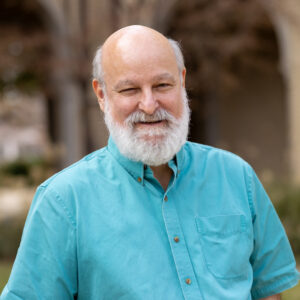
Dr. Bock has earned recognition as a Humboldt Scholar (Tübingen University in Germany), is the author or editor of over 45 books, including well-regarded commentaries on Luke and Acts and studies of the historical Jesus, and works in cultural engagement as host of the seminary’s Table Podcast. He was president of the Evangelical Theological Society (ETS) from 2000–2001, has served as a consulting editor for Christianity Today, and serves on the boards of Wheaton College, Chosen People Ministries, the Hope Center, Christians in Public Service, and the Institute for Global Engagement. His articles appear in leading publications, and he often is an expert for the media on NT issues. Dr. Bock has been a New York Times best-selling author in nonfiction; serves as a staff consultant for Bent Tree Fellowship Church in Carrollton, TX; and is elder emeritus at Trinity Fellowship Church in Dallas. When traveling overseas, he will tune into the current game involving his favorite teams from Houston—live—even in the wee hours of the morning. Married for 49 years to Sally, he is a proud father of two daughters and a son and is also a grandfather of five.
 Collin Hansen Darrell L. Bock Josh Chatraw