

Is Christian Education the Same as Discipleship?
On this episode, Kymberli Cook and Rick Yount explore the crucial difference between the structured programs of Christian education and the life-changing, relational process of discipleship. Listen to discover practical ways church leaders and believers can revitalize ministries and foster genuine spiritual growth through clarity, warmth, and flexibility.

The Table is a weekly podcast on topics related to God, Christianity, and cultural engagement brought to you by The Hendricks Center at Dallas Theological Seminary. The show features a variety of expert guests and is hosted by Dr. Darrell Bock, Bill Hendricks, Dr. Kymberli Cook, Kasey Olander, and Milyce Pipkin.
Timecodes
- 2:49
- What Happens in Christian Education
- 5:54
- When Did Christian Education Arise as a Field
- 10:33
- Key Objectives for Christian Education
- 15:42
- Process vs Program: The Difference between Discipleship and Education
- 26:29
- How to Reignite the Life in Your Organization
- 34:38
- The Three Most Important Things About Teaching
Transcript
Kymberli Cook: Welcome to The Table Podcast, where we discuss issues of God and culture to show the relevance of theology to everyday life. My name is Kymberli Cook, and I'm the assistant director at the Hendricks Center. Today, we are talking about discipleship and the academic arena of Christian education, and we are joined by an immensely qualified scholar who's dedicated his life to training people to pass on the faith. So thank you so much for being here, Dr. Rick Yount.
Rick Yount: Thank you. It's a joy to be here.
Kymberli Cook: I would love to let you get to know Rick a little bit better. So, Rick, would you tell us a little bit about yourself, how you ended up doing so much in the field of Christian education, and just how you ended up dedicating your life to this work?
Rick Yount: Well, Christian education wasn't a field I chose out of many fields. I was drawn to the field through teaching and the joy of watching people learn. My wife and I worked with the deaf for a while, and the joy of teaching the deaf and seeing them learn, going to Southwestern Seminary, and learning more about it... I actually went to the seminary in order to major in counseling. But after I arrived there, the Lord led me into the teaching and learning field, and there's just immense joy in that. So, in developing coursework and working in churches and so forth, I was drawn to the more organized format of Christian education and the larger focus, but the joy is in watching the process of people learn.
Kymberli Cook: So I'm actually the daughter of a school administrator; he was a Christian school administrator, teacher, and principal, like all the different levels for over, I think it was over 50 years when he retired. So I grew up in a home saying exactly like what you said, where there's this joy of learning and watching the light go on.
Rick Yount: Absolutely. Yeah.
Kymberli Cook: Doing things, having a lesson, and then figuring out—like you were even speaking here on campus about how there are all these different types of learners, and how do you make sure that your lesson hits all the different types? Thank you so much for your ministry and for your service. It's been very effective in the kingdom. I think the best way to dig into our actual topic for today is first for you to describe what that field is, and what happens in Christian education. For somebody who's listening who might not really know what we're talking about and thinking, “Are you talking about a Christian private school?”, what are you talking about when you say that?
Rick Yount: Well, the field involves many different avenues. You can talk about Christian education in the context of a Christian college—teaching mathematics, teaching biology, or teaching business, but doing so in a Christian context. That would be one kind of Christian education. A whole other form of Christian education is what is often called religious education. In the old days, old school, it's Christian education in the local church. So you teach children about missions, you teach them the Bible, and you engage young people in spiritual formation and transformation. You engage adults in leader training, Bible study, and the application of Bible study in how to live out the Christian life in their everyday endeavors.
Christian education includes counseling. Counseling in a Christian context is usually put under the umbrella of an educational ministry or Christian education. Educational administration; how do you organize classes, departments, agencies, and ministries to do various kinds of educational procedures in the local church? Someone has to run it; someone has to maintain it.
Kymberli Cook: I was going to say, it's kind of the next level up from the actual learning.
Rick Yount: Like your dad in a school: to administrate the process and to herd the cats in a single direction. That's educational administration; that's part of Christian education. So, as a field, Christian education has to do with all of these kinds of approaches in order to help people grow. Grow cognitively in what they think and how they think, attitudinally, emotionally, behaviorally, and certainly spiritually. It's a field that focuses on that, as opposed to preaching or missions. It is focused on helping people grow.
Kymberli Cook: So when did it really arise as a field? I mean, I know on a certain level Christians have been educating each other from the very beginning. We see in the Bible where it says to Timothy, “Continue in what you learn from your mother and your grandmother,” that kind of thing. So education's been happening, but when did it really arise as a little bit more of an official field?
Rick Yount: Well, how do I respond to that?
Kymberli Cook: If it's a bad question, you can just—
Rick Yount: No, it's a great question. It's just, where does one begin? For most of the history of the church, the idea was you preach the word and the Holy Spirit takes care of the rest. And that's not bad. The Holy Spirit can take care of it and does all around the world. Even today, without any kind of human organization or program of educational endeavor, the word speaks, the spirit moves, and lives are transformed. So you proclaim the word; that's what we're told to do.
But somewhere along the line, and a lot of it happened right at the turn of the 20th century, from the 1800s to the 1900s, there began to be people who were trained in secular institutions—say, trained as lawyers or doctors—who were professional people who were also believers. They began to take a more focused approach to exegeting the word, not just proclaiming it, but engaging people with it by asking questions and posing problems. What came to be known as Sunday school classes (because they were classes that happened on Sunday) were in the beginning not part of the church. Pastors were not all that thrilled, but these educated people, often more educated than the pastors of the churches, would engage the minds and hearts of people in an in-depth way, and it became very popular.
Pastors began to discover that those Sunday school classes became a great way to engage people who might not come to the worship service at the beginning, but would come to a Sunday school class. They would be won to Christ, then come into the church, and there grew a cooperation. So in the early 1900s, there were a number of seminaries that began programs in Christian education, sometimes called religious education, as it was focused within the local church. As a formal academic field of study, it started in the 1900s.
Sadly, it's really waning in the early 2000s because, again, we're beginning to move back towards stadium-type emphases, where many people listen to one person speak. So, we're struggling right now as a field of study. But as a field of study, it has very little to do with what the scripture tells us about discipleship, because that continues to go on. So, how we adjust the formal field of Christian education to meet the needs of people today is very important. And DTS is on the cutting edge of doing that. I just had lunch with Jay Sedwick, who's on sabbatical, but he's the chairman of the Educational Leadership division. All the things that they are doing to reach out to churches and to revitalize this small group approach to Bible study and spiritual formation mean there's good news on the horizon.
Kymberli Cook: Yeah. As you were talking, I was thinking we'd be remiss to not say that with Christian education—at least education within the local church—there was catechesis from the very beginning. From the early church all the way through.
Rick Yount: Yes.
Kymberli Cook: But to your point about what we now know as the field, it was arising then. You did say it is waning right now, but what is the field trying to accomplish right now? What are the key conversations going on, or the key objectives where the field in general is saying, “Hey, these are the really important things that we need in order to continue to move this conversation forward?”
Rick Yount: Culture's changed. When my father and my father-in-law joined the military in World War II, they described the experience as desiring to be part of something bigger than themselves. In our generation now, in contemporary times, there is nothing bigger than myself. Since the 1960s, we as a society have begun to worship the self. The military has changed its advertising to be an “army of one”. So the old mainline battalion, division, company, platoon, and squad still exist, but all you hear about in the news when it comes to military operations are special ops groups. Small groups are trained to do specific things in specific situations, and they train all the time to do that specific thing.
I see the same thing in churches. The church that I serve right now has 40 adult Bible study groups, but they are not a mainline military organization with a Sunday school director and department directors that are all in communication with each other, all marching in the same direction with the same view. They've done that, they've been there, they've burned out. So they are more like groups of people gathered around fires in caves. Well-fed, warmed, they love one another, and they protect each other. They're not really too concerned about the cave across the way or doing the same thing that the cave over there is doing. The struggle that I'm having is getting them to talk to each other because they think, "Why do we need to talk to each other? We're special ops groups. What we are doing is wonderful".
Kymberli Cook: Or tribes, because that's so inculcated in our culture right now too. Why would I need to talk or coordinate with them? I'm over here for the very purpose that I'm not wanting to do over there.
Rick Yount: “They don't see things the way I see them. And they're not doing things the way I do them. And we've tried doing them together, and it was hard work.”
Kymberli Cook: And we had to “people.”
Rick Yount: Yeah, but they love the Lord, and they love the word, and they gather together every Sunday, and they take casseroles when they're sick, and they visit them in the hospital. They're people with people with Jesus in the middle. And so that's the way I'm engaging them: one by one as special ops units. But the truth of the matter is, sooner or later they have to meet together, talk together, and pray together.
Jay was just telling me—I'll be meeting the faculty tomorrow for a Q&A—and he said, “We meet every week, and the first thing we do is we pray together.” That's a wonderful thing. So these people who are gathered around their individual caves, who love what's happening in their particular place, never pray with the cave down the road. It would be good if the people of all the different caves, or every once in a while at least the leadership of those groups, would come together, pray together, and talk about where they're struggling. Because, as you know, if you build a charcoal fire and then you scatter the coals out, it doesn't take long until each individual coal begins to die. But if you gather them up together, the coals reinforce each other. There is something about the social engagement and the social interaction on multiple levels that keeps the fire burning.
And so I know sooner or later these leaders of these individual groups are going to burn out. They're going to get tired. They're going to do all they can, and then they'll have nothing left. And that's not the Lord's work; that's human work. So I'm getting ready to start a process next week to begin...
Kymberli Cook: That's your new task.
Rick Yount: ...gathering those coals together. Let's work together. So that's part of Christian education, but a small part of Christian education.
Kymberli Cook: So the title of this podcast is, “Is Christian Education or Christian Education and Discipleship the Same Thing?” With all of that background on Christian education, and you did say a bit ago to distinguish them a little bit, can you give a little bit of your understanding of discipleship and maybe how the two are perhaps related, but different?
Rick Yount: Yeah. There are a lot of different definitions of discipleship.
Kymberli Cook: I know my husband's a pastor, and all he ever does is talk about definitions of discipleship. It's like, “What is discipleship this year?”
Rick Yount: Right. So is it one-on-one? My view of discipleship is a process as opposed to Christian education, which is a program. You can have a lot of different organizational structures with the process of discipleship going forward in any of them. You can have any kind of organization and not have discipleship going forward. Discipleship is the process of engaging minds, hearts, and behaviors with the word of God and with the Lord Himself, helping people to grow. Paul said, “speaking the truth in love.” So you have the cognitive and the affective: the thinking and the feeling. Speaking the truth in love, we will grow up into Him who is the head, even Christ.
It's not about learning Bible stories, attendance campaigns, or doing the program. It's not about how many classes you have, how many members you have, or how many pins they have for perfect attendance. It's not about hearing the word, it's doing the word. It's becoming Christlike. It's not learning the Bible; it's becoming biblical. It is a process of spiritual transformation in which human beings are made into a new race, where there is no Jew or Gentile, slave or free, male or female, but we are one in Christ and we are becoming like Him. It's a process, and that process can happen with very little organization or it can happen with a lot of organization. As long as we keep our focus on the process of helping people grow, and that spiritual growth is happening, then we are succeeding. Christian education is that program, that framework, that larger context in which discipleship happens.
I talk about Sunday school as being a discipling approach, and it got me– it didn't get me in trouble, in my own convention, the Southern Baptist Convention, where I grew up and did all of my work. I wasn't really in trouble, but it put me at cross-purposes with the stated emphasis of “Sunday morning is Bible study in which we teach the Bible and reach people, and Sunday night is discipleship, and that's where we talk about theology, doctrine, Christian practices, and church history” and those kinds of things. I saw the need for discipleship to be centered in the word so that we help people grow toward the Lord until they accept Him as savior, and then grow in the Lord as believers to be discipled—mathetes, apprentices, trainees—so they become like Christ and can disciple others. That was the mandate that Jesus gave the church. And, as I said in my lectures, it happens best in small groups.
Kymberli Cook: As you're talking, it makes me think of my 9-year-old daughter. Right now, she is truly smart as a whip, and I don't think she's ever met a book she didn't love to read, including the Bible. At some point, we were in a bookstore and there was an action-adventure Bible, a graphic novel Bible, and she really wanted it. It was mildly expensive, but I remember looking down at her and being like, “Am I going to be the mom that's not going to buy the Bible for the kid?” So, anyway, she's read through that whole Bible several times, and now she doesn't want to go to church. She says, “Ah, it's boring because they just tell me all the things that I already know.”
My husband and I have been, and, I mean this is now, it's just kind of, you know, the piece of metal on the anvil that we're just hammering away at where, where we're like “It's okay that you've learned all of the stories and everything, but now welcome to it, like the rest of church. The whole rest of your life is going to be: 'How has that changed me?' Not 'What did I learn new today?' That sometimes happens, and that's really exciting and fun when it does, but more now you're going to church and listening to these things because there's something inside you that needs to hear it and needs to shift because of it.” Is that kind of what you're talking about with the difference between the two? The program versus the process, I guess.
Rick Yount: Right. And one of the things you can do to help her is to begin moving her to a viewpoint of not just being a disciple and learning because she already knows, but becoming a discipler. There are other nine-year-olds in her class who don't know those stories as well, and she can help explain them. If the teacher isn't allowing that to happen—if the teacher's doing all the talking or there's not really time inside the class frame for her to do that—she can always go to those friends after class or before class and say, “Let me tell you something neat that I heard.” She can become a teacher. That not only reinforces what she already knows, but it helps someone who doesn't understand it as well. And by the way, that person who doesn't know would be more willing to hear it from your daughter than from the teacher.
Kymberli Cook: Absolutely. That's beautiful.
Rick Yount: And so she shifts into the next gear of, “I'm not just learning Bible stories, but I'm helping other people understand more about Jesus.” That puts her heart and mind in a place that the Lord can use her even more, and she'll get excitement from that.
Kymberli Cook: Yeah. Absolutely. I'm a hundred percent on board with what you're saying. What we've had in mind is also—and I wonder what your take is on this program and process distinction—do you think the program sometimes creates a materialist consumption habit of Christians who are just in the programs and don't necessarily actually let it shift them? I feel like we've seen this sometimes in the church my husband serves in, where it's like, “Well, I went to church today, but I didn't really get anything out of it.” And it's like, “I'm not sure you went to church with the right posture” because that's not exactly what it's for, though, it partially is. I don't know, what are your thoughts on that?
Rick Yount: Well, yeah. I think you're exactly right that we should go prayerfully and say, “I'm not going to my church to get something out of it, I'm going to my church to join with others to praise God”. I am going to give to Him; if I get something back in return, that's great–and by the way, I always do get far more than I expect when I go–but if I wake up on one of those mornings and I just don't feel like getting out of bed and going to church, I know better, so I just get up and go. Because when it's over and I'm coming home, I'm so glad that I went, that I saw so-and-so, and heard this, and we prayed that, and we sang that, and it has really helped me in a great way.
The problem with the program—which is helpful in organizing processes—is it can continue after the life has been drained out of it. We find ourselves pushing a program, turning the crank on methodology, but we have, as Jesus said to John in the Revelation, lost our first love. You forget why you're here and you're turning the crank on a religious program, and there's no life in that. There's no life on the crank. There's no life in the machine. There's no life in the organization. It's an organism. The organism is alive and growing, and the spirit of God is moving, but you're turning a crank on a dead organization, a dead program. There's nothing wrong with the program, it just has no life. You need to reconnect with the life. And once you reconnect with the life, the program comes alive because it is now being energized by the Spirit of God.
Kymberli Cook: I'm going to interrupt you for a second. Let's say somebody listening says, “Oh my goodness, that's our church,” or “That's my organization”. What would you suggest they do to reconnect with the life?
Rick Yount: Go to the source of life: “Lord, I feel like I'm in a dead organization. What can I do as your follower, as your son, as your daughter, to help reignite the life in (name the organization, the congregation, the Sunday school class, the choir)? How would you use me? I give to you myself. I humble myself under the mighty hand of God. I give myself to you. Use me as you will, show me what to do.” And then watch what happens. And not just pray once, but pray again and again and again. “Lord, show me as I go to worship, show me what I can do. How would you have me sing? How would you have me volunteer? How would you have me give? How would you have me encourage other people around me?” It will be amazing what the Lord can do with one surrendered life. You find another person that responds to that, and now you've got two. Wherever the Lord takes it from there, there's no way of knowing. But God is all about resurrecting dead things. He can resurrect dead churches, dead programs, dead Sunday school classes.
Kymberli Cook: Is there a time where—not to push this metaphor too far—but is there a time where something needs to be buried, or is resurrection more in mind?
Rick Yount: Something in terms of an organization?
Kymberli Cook: I'm guess I’m thinking of a church that maybe has had a particular program or structure in place. Let's say there's even somebody hired full-time to be in charge of that. On a certain level, their job depends on it. It's institutionalized to that point, but it's clear there's very little life here. Exactly like what you're talking about, you crank and crank and, and there's nothing. Is there a time where that person would say, “You know what, I think my job is actually to bury this one, and there's life over there, let's go there,” whether or not I'm involved in that? Are you tracking my question?
Rick Yount: Well, yeah, and it's so situationally specific. For example, another professor and I at Southwestern Seminary were put on a committee to look at one of our degree programs. This degree program, this is a little different than what you're asking, but it was a degree program established 30 years ago because the mission sending organization of our denomination required a specific number of hours beyond the master's degree in education to be commissioned as a missionary. I think it was called the Graduate something degree, it's been so long ago, I've forgotten. But this degree existed for a Master's of Education student to take one more year and earn this degree to get the requisite hours so the Foreign Mission Board would commission them. Well, the rules of the Foreign Mission Board changed, so they could appoint a two-year graduate of the MACE degree. But we still had this graduate degree, and we had had five students in it for 20 years, for why? So they got some extra hours. But its purpose was gone. So in that particular situation, this professor and I decided to recommend the degree be removed, and it went away, and nobody missed it.
I wouldn't put that same evaluation on the Sunday school of a local church. You are hired as a minister of education to come in: Sunday school's dead, people are turning the crank, drinking coffee, telling stories. I would not say, “Let's do away with Sunday school.” I would say that needs resurrection. That means new leadership, helping to engage the leadership that's there. Depending on the situation, that would look like a lot of different things. But the fact that the congregation as a whole is in Bible study in a given hour on Sunday morning from cradle to grave—they're engaged in discipleship. That's an important thing. We're not going to bury that; we're not going to try small groups on Tuesday night to exchange for it, we're going to work toward resurrection of that.
Kymberli Cook: So I hear you saying it depends, and that a key distinguishing question–maybe not the only one, but an important one–would be: “Has the need or the purpose of this been served?” In the instance of the local church, that's going to be a continuing thing.
Rick Yount: Yeah. For another example, a church in Houston began providing Christmas gifts for underprivileged families in the neighborhood. Members would give tens of thousands of dollars, buy all kinds of gifts, and invite people of the community to pick gifts for their children. Everybody loved giving to it and the thought of it. It was very heartwarming and all of that. But a new pastor came in, and after two or three years of watching what was happening, he realized that a lot of the people coming in to get a free bicycle for their child never darkened the church door again. There was nothing evangelistic, nothing discipleship-related about it, There was no building bridges; the church was just giving away free stuff, and they loved doing it. He proposed they do away with that program. He met all kinds of resistance because people felt so good doing it. But it was a waste of the Lord's money; it was not doing what it needed to do, so the church eventually changed, pivoted, and did other things for the community.
Kymberli Cook: Changed how it did that kind of thing; have a little more intention.
Rick Yount: Right. And so that's just evaluation and changing, pivoting to do a more effective job with the resources that we have.
Kymberli Cook: With a little bit of time that we have left—you're retired now, correct?
Rick Yount: Yes. Twice
Kymberli Cook: That sounds about right for our general field. You've written so many books on Christian education and instruction; what are the two to three things that you would say, distilled down, are key things you have learned that you would love to share?
Rick Yount: About discipleship?
Kymberli Cook: Yeah, about discipleship, Christian education, learning.
Rick Yount: The three most important things about teaching in any situation are clarity, warmth, and flexibility. The opposites of those are confusion, coldness, aloofness, and rigidness or dogma. Where you see programs die, you see a confusion of purpose. You see cold relationships, coals that have been scattered. You see rigid adherence to dogma—not truth, but man's interpretation of truth. In order to unlock us from those things that are bringing us down, we do well to embrace clarity: What does the Bible say? What does it mean? How do I put it into practice? Warmth: I love you. I accept you. Welcome to our campfire. And flexibility: I may plan to go one direction, but the Lord moves in another, and I'm able to pivot to meet the needs of the people sitting right in front of me. I've done a lesson plan, but a question is asked that's not related to it, I don't say, “That's the wrong question, let's get back to my lesson.” We forget about our lesson and deal with the person in a flexible way. The Spirit is moving in that person in order for them to feel free enough to ask that question, and I need to honor and dignify them with a clear, warm, and welcoming answer. If we emphasize clarity, warmth, and flexibility, it transforms programs into process. And the process is discipleship; that's the mandate of the Lord for all of our ministries.
Kymberli Cook: Oh, wow. I am teaching a class on Monday, and I'm like, “Oh man, I got to make sure that I hit all this.”
Rick Yount: The Lord bless you.
Kymberli Cook: Thank you. We just want to thank you, Rick, for the time that you've taken to be here. We really appreciate it, and we also appreciate you dedicating your life to teaching and helping people learn. And we want to thank you for listening. If you like our show, leave a rating or review on your podcast app. It's a great way to support the show and help other people discover us. Join us next time when we discuss issues of God and culture to show the relevance of theology to everyday life.
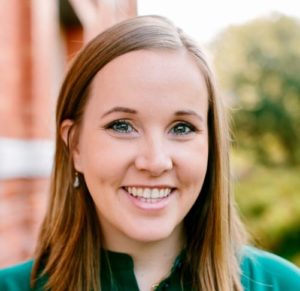
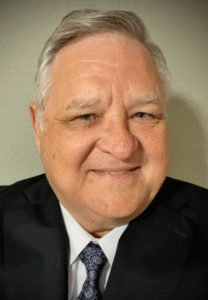 Kymberli M. Cook William Yount