

Christianity in Sudan and South Sudan
Join Darrell Bock and Jake Prochaska as they explore the resilience of the church in Sudan and South Sudan as indigenous leaders navigate persecution and extreme poverty to build self-sustaining communities centered on the gospel.

The Table is a weekly podcast on topics related to God, Christianity, and cultural engagement brought to you by The Hendricks Center at Dallas Theological Seminary. The show features a variety of expert guests and is hosted by Dr. Darrell Bock, Bill Hendricks, Dr. Kymberli Cook, Kasey Olander, and Milyce Pipkin.
Timecodes
- 1:37
- Background to Sudan and South Sudan
- 9:32
- Building a Community with the Church
- 14:54
- The Ripple Effect of Church Planting
- 16:52
- The Importance of Indigenous Leadership and Training
- 23:09
- How Western Christians can Help
Transcript
Darrell Bock:
Welcome to The Table where we discuss issues of God and culture to show the relevance of theology to everyday life. I'm Darrell Bock, Executive Director for Cultural Engagement at the Hendricks Center at Dallas Theological Seminary. I always have to take a very deep breath when I say that. And my guest today is Jake, and I just learned that the proper pronunciation of this is Prohaska. Even though when you read it-
Jake Prochaska:
That's correct.
Darrell Bock:
... it looks like Jake Prochaska, which is probably how it's said in the US. Is that right?
Jake Prochaska:
Yeah, we've Americanized it. It is supposed to be Prohaska, but I go by Prochaska.
Darrell Bock:
Okay. And you said it's a Czech name in the background?
Jake Prochaska:
It is. It's Czech.
Darrell Bock:
Okay. And you work with Empower One. Tell us what you do with Empower One.
Jake Prochaska:
Yeah. So, I get to work with our partners here in the United States, I get to work with people who are either giving financially to help out with the ministry or going on a trip. And so, I get to go all over the US and get to meet with our church partnerships and the individuals who love on the ministry and take part of the great commission by partnering with Empower One.
Darrell Bock:
So, you help with for the short term missions efforts and that kind of thing? Is that part of what's involved in what you do?
Jake Prochaska:
Yeah, yeah. So, on short-term missions, we take about 12 to 15 trips every year. And then I also work with the people who partner with us financially, people who are giving to make the ministry a possibility over in Sudan and South Sudan.
Darrell Bock:
Okay. So, the topic today, which I didn't introduce, probably should have, but the topic that I introduced is the Ministry of Empower One, but in particular, this is one of our, what's going on in the church in a given country podcast. And we're going to talk about South Sudan, which some people might think is Sudan. So, why don't you help us with that distinction?
Jake Prochaska:
So, it used to be Sudan. And in 2011, Sudan in the North and South Sudan became two separate countries in 2011. Before that, it was one country, but there was war going on for 50 or 60 years where the Arab North, who are mostly Muslim in religious background and Arab in ethnicity were really persecuting and killing in a genocide the African South.
Darrell Bock:
I see. So, it's right on the dividing line in Africa where those conflicts are becoming more common.
Jake Prochaska:
Exactly.
Darrell Bock:
Yeah. So, South Sudan, so let's talk about it. I think when we chatted about this a few months ago, that you said that South Sudan is one of, if not the poorest country in the world, it's at the bottom of the heap, if I can say it that way.
Jake Prochaska:
Yeah, we like to say we're at the top of all the wrong radars. And number one, in poorest country in the world, you think of Haiti, you think of DR, you think of these places that are nearby the US that are very poor. South Sudan is the poorest country by GDP in the whole world, and it's the most corrupt country as well.
Darrell Bock:
So, very problematic area. Just to help people when they think about Africa, which is, I'm going to say a shape like this, which I wish I had a graphic, but anyway, where is Sudan in Africa? Where's it located?
Jake Prochaska:
Yeah, so Sudan and South Sudan are in Northeast Africa. Sudan is just under Egypt and South Sudan is just under that. It's actually mentioned in the Bible. Often the Kushites are from that area.
Darrell Bock:
Interesting.
Jake Prochaska:
And so, it's just South of Egypt along the Nile River.
Darrell Bock:
I see. And it's also in the corridor then that comes from the Middle East into Africa, which explains the history of the conflict and the emerging of the conflict.
Jake Prochaska:
Exactly. Yeah. Islam came over North Africa and really took over the northern part of Sudan. The people who look a little bit more Arab gravitated toward Islam and the people in the South who look more African tended to gravitate towards Christianity, but we'll get to that as well a little bit.
Darrell Bock:
Okay. Well, let's talk about the general demographics first. Do you have some idea what the population of South Sudan is?
Jake Prochaska:
Yeah. So, South Sudan is in the millions about 30 or 35 million, but it's always being in flux because people are running for their lives quite often. So, the refugee crisis in South Sudan has been going on for decades. And in Sudan in the North as well, where we're doing work, I think about 12 million people have been displaced-
Darrell Bock:
Oh, wow.
Jake Prochaska:
... over the past two years away from their home, which is about a third of the population.
Darrell Bock:
So, where do they go? I mean, do they go from the north to the south, or do they go outside Sudan to other countries?
Jake Prochaska:
Yeah. So, right now, Sudan being the one that's in the heaviest war zone, they're running either to Egypt or to Chad, Ethiopia, or often into South Sudan. A really cool story is how the Lord uses persecution quite often. I don't love that he does use persecution, but he uses it for his glory. There were Muslim refugees running from Sudan in the north and running for their lives into South Sudan into an area where one of our churches is located. They went to the mosque and there were hundreds or thousands of people. The mosque was overwhelmed. They didn't have food, they didn't have water, they didn't have supplies.
They went to their other imam friends and their other mosques, and they didn't have the supplies needed to take care of these people. So, they went to our church in this area and said, "Do you have food and water to take care of these people?" And our pastor said, "We do, and we'd be happy to take care of these people." So, we went in and took care of the people with food and water. And the imam of that mosque said, "Because you've shared your resources, you can share your message as well." We got to share the gospel in the mosque in that area and lead people to the Lord.
Darrell Bock:
Oh, wow. So, that is quite a story.
Jake Prochaska:
Yeah. So, the displacement is awful and it's happening all the time, but the Lord is using it in ways that he always has.
Darrell Bock:
So, how did the mission organization get connected to pursuing the gospel in South Sudan? Is there a history to that?
Jake Prochaska:
Yeah, great question. So, my boss, Mike Congrove, is the CEO and he's been with the organization for 20 years actually this month. We're celebrating our 20-year anniversary where he met David Kaya, who is our leader in Africa. They were both with E3 ministries at the time.
Darrell Bock:
Sure.
Jake Prochaska:
And the trend in that time was to have rapid reproduction, rapid evangelism, teach these people to go teach these people to go teach these people the gospel. It's really effective, especially in Sub-Saharan Africa. But one of the things was that David Kaya said, "My people just got out of a 20-year war and they're just looking to have life. I haven't planted a hundred or thousand churches like some of these places in Uganda or Kenya. I've planted two." And my boss said, "I want to work with that guy." He's not the big fancy thousand church planter, but he's faithful and he wants to go deep with these guys.
And so, actually Empower One spun out of E3 and started a seminary, which offers a 2-year or 4-year degree program and really trains up people for the work of ministry for the long run.
Darrell Bock:
Okay. So, religiously demographically, the South Sudan, how does it break down?
Jake Prochaska:
So, if you're looking at Wikipedia or the Joshua Project, you're going to see Christianity on there, but if you actually go there and interact with people, they say they're Christian because they have a Christian name and they're not Muslim. There was Anglicanism and then Catholicism that's been there for years, but most people who call themselves Christians are actually animists, which means they're worshiping demons, spirits, and ancestors. And so, instead of actually being Christian, they say they are and so they get counted in that way, but really, it's syncretized with animism.
Darrell Bock:
So, the default is if you're not Muslim, you're labeled as Christian, but actually that may not reflect your religious commitments?
Jake Prochaska:
Absolutely not. You might be labeled as a Christian, but you're still going to the witch doctor for healing. If you get malaria, if you get cholera, you're probably going to go to the witch doctor and try and get healing.
Darrell Bock:
Now, the question I didn't ask earlier, and you may or may not know the answer to this, you say it has the lowest GDP in the world. Do you know what the figure is of what the average person earns in a given year in South Sudan?
Jake Prochaska:
Yeah, and it's in flux. There's not great stats for this, but on average, it'd be about $500.
Darrell Bock:
For a year?
Jake Prochaska:
Mm-hmm.
Darrell Bock:
It's about a little more than a dollar a day.
Jake Prochaska:
Yeah, that's about it.
Darrell Bock:
What can you do on a little more than a dollar a day?
Jake Prochaska:
Yeah, so GDP also measures export. That's one of the big things that you're trying to see is how rich a country is by exports. South Sudan doesn't really have exports because the government corruption, if you got a business that's going up and it's getting big and the government sees that, that's now the government’s and it belongs to them. That happens a lot with oil. And so, there's no incentive for people to scale their businesses. So, mostly it's just local. It's being able to take care of the needs of the communities with farming, agriculture.
Darrell Bock:
So, it's basically subsistence level that you're dealing with?
Jake Prochaska:
Exactly. Exactly.
Darrell Bock:
So, the challenge is how do you build a community out of that kind of a context? And talk a little bit about how you all go into a country and what the program is. You've already mentioned the establishment of the seminary, but I understand there's really a developed strategy in terms of how church planning takes place and what the goal of church planning is.
Jake Prochaska:
Exactly. So, we want to take care of the whole person and the whole community, as well as getting the gospel to the animist in South Sudan and the Muslims in Northern Sudan. And so, the training, like I said, is either two or four years to really establish leadership, get these leaders established in theology and in business because we want them to be able to be well-equipped to run a church and run an education system, healthcare and water as well.
Darrell Bock:
So, they're going to be bi-vocational as they lead the church?
Jake Prochaska:
They will, yeah.
Darrell Bock:
And I take it in part because of their education, among other things, that also puts them in a position where they're seen as community leaders.
Jake Prochaska:
Absolutely, yeah, I think it's only about 14% of people, kids graduate elementary school in South Sudan-
Darrell Bock:
Oh, wow.
Jake Prochaska:
And only 1% of girls graduate-
Darrell Bock:
Oh, wow.
Jake Prochaska:
... elementary school. So, I mean, when you live in a war zone, education is not something that's promoted as, "Yeah, go get your degree." When we have stability like we do in America, you can think about getting further degrees. When you're just worried about eating, education is not the top priority.
Darrell Bock:
So, I take it that another element then of the church isn't just sharing the gospel, preaching the gospel, taking care of the gospel, but also this kind of service in a service ministry in the midst of this kind of lack.
Jake Prochaska:
Exactly. Yeah. So, our north star is reaching the unreached, bringing the gospel through the indigenous leaders to where it's never been before in Sudan and South Sudan, but also, we want to take care of the whole person. So, our vision right now is called a flagship church, and it has five components that are meant to be self-sustaining.
Darrell Bock:
Okay, good. That's where I wanted to go. So, let's go for it.
Jake Prochaska:
Yeah. So, the church itself, we're building enough people could be in there to bring in tithes, about 500 people, so even a dollar per person will be enough to pay the pastors and the missionaries to continue to reach and do the work of ministry. We're going to have either a primary or secondary school based on the needs, and those usually have about 400 students in them, and it's $100. For us, that's nothing. We're going out to eat at $100, but it's $100 for a student to get an education for a whole year, which is impactful. I mean, that's 20% of what people's income is, but we spend that on our kids as well. So, the education is the second component.
Healthcare. We don't want people to go to the witch doctor to deal with malaria and cholera. We want them to come to the pharmacy that we're going to build so that they can be treated and actually take care of these preventable illnesses. I think something like 70% to 75% of children who die, die from treatable illnesses. So, the pharmacy is going to be a big piece and that's self-sustaining as well. We're digging wells and having towers that we're having water in, 10,000 to 20,000 liters of water, fresh, clean water, so that people don't have to go down to the river two to four miles away and get dirty water where animals are using that as their bathroom.
They can come to the church, which is now the hub of the community. They can get fresh water, education, healthcare, and it's all centered around the church as well.
Darrell Bock:
So, the church has a church, they host a school, they host a pharmacy, they host a well, and in that way, you're trying to be, I guess, a civic hub for...
Jake Prochaska:
Exactly.
Darrell Bock:
And of course, part of the message is, is that God chose his care for people, by the way, that what church cares for its community.
Jake Prochaska:
Exactly. And it's making huge impacts. And people coming to the church, seeing this as their community now, the hub of their community, and really investing in this, protecting it. You think of an honor shame culture. I think of Lot. When he was having the angels come into his house and he's like, "You're not touching these guys. These are ours. We're protecting them." The same thing happens with these communities. When they have a church, when they have a building, when they have education, it becomes theirs. And there was a book that really influenced us When Helping Hurts and we want to take care of the people and give them something that can take care of their needs for the next 40, 50 years.
Darrell Bock:
Yeah, we actually did a podcast with the author of that book and discussed the approach, which is you don't just throw money at a situation, you actually try and lead into the development so that they can become self-sustaining.
Jake Prochaska:
Exactly. And that's really what we want to do as well is South Sudan, like we said, GDP-wise is the poorest country in the world, but they have means within their communities where they can then have these vehicles self-sustaining and taking care of the needs of the people all hubbed around the gospel and the church.
Darrell Bock:
So, how many churches are planted and how many do they hope to plan?
Jake Prochaska:
Yeah, great question. So, we're going to do three in Sudan, and we already have our leaders up and running there. One in the Darfur area in the West, one in the central area where the mountains are, the Nuba Mountains, and one in the east along the Nile River. So, we're doing three in Sudan, we're going to do 11 in South Sudan and one in Congo as well. So, there's 15 in total that we're looking to plant. And then each one of these 15 churches trains up the next generation of pastors and missionaries to plant 50 more churches, like the rock that you throw in a pond, that's the flagship church is the rock, and then it ripples out from there to reach 50 more churches all around that one.
Darrell Bock:
So, well you established a seminary, so I'm assuming that's up and running. Am I right about that?
Jake Prochaska:
Yeah, since 2007.
Darrell Bock:
Okay. And I guess the question is, how many graduates have graduated from the school and in a given year, how many people are in the seminary?
Jake Prochaska:
Yeah, so we have about 200 right now. We have a great problem. We don't have enough space. We have 200 people who really want to come to the school and get the education. We've had hundreds graduate since 2007 and each year, about a hundred more are looking to graduate.
Darrell Bock:
And when they graduate, is there assignment to plan a church? Is that basically how that works?
Jake Prochaska:
Yeah. So, we're training them up. Some of these who are really faithful and really good at school, and we see that the Lord has given them a spirit of leadership. We want them to help lead these flagship churches. And other ones are going to go out to these flagship churches in Sudan, in South Sudan, in Congo. And then they're going to be the missionaries who are going to plant other churches and train up the other people. We really do want to establish healthy churches as well, ones that people have been trained and we're sending further trained people to continue the work.
Darrell Bock:
So, explain to people the indigenous goal and why that's important. Why is it important that people are trained are indigenous to the land?
Jake Prochaska:
Yeah, it's huge. So, indigenous is one, I guess that's two questions, the indigenous and the training part. Indigenous is huge because they can do the work so much more effectively than we can.
Darrell Bock:
They understand the culture and the experience of people.
Jake Prochaska:
Absolutely. And in Sudan especially, like you and I probably couldn't go into Sudan without being a target right now and drawing a whole lot of negative attention to the work going on, but our local Sudanese leaders can do that work underground and they're not seen as a target, even though they are so on fire for the Lord. One of our pastors up there, he was going through their TSA and their imam stopped him and said, "Are you a Christian?" He goes, "Yes, I follow Jesus 100%." And they were like, "You weren't supposed to be that bold about it." But he was. He loves the Lord.
And so, they're so much more effective at reaching their people, speaking the language, understanding the culture and being able to communicate to the heart. One example I like to use for South Sudan is they have multiple wives there. So, when you're preaching and you say, Ephesians 5, husbands love your wives as Christ love the church. And then you hear which one? How would you handle that question? But if you've been raised in that culture and you understand, you know how to communicate to something very applicable to them that is not very applicable to us.
So, the indigenous aspect of it is they're just better at reaching their own people, but the training aspect is we want them to be well-educated. Again, starting off with the rapid reproduction of you share the gospel with three people, they share the gospel with three people each, it's effective, but it doesn't go as deep as we are hoping. So, it went really fast, but we came up against a problem, again, with wives. One of these guys who was an effective evangelist would do ministry in one village and another and another where he had a wife and family in each one of those villages. And we realized, we're going really fast and it's effective, but we got to go deep as well.
We want these guys to be ready for the next 20, 30, 40 years of ministry in one of the hardest places. So, that's where the seminary came out of.
Darrell Bock:
Interesting. So, you said there's a 2-year program and a 4-year program.
Jake Prochaska:
Exactly.
Darrell Bock:
What's the difference between those?
Jake Prochaska:
Yeah, it'd be like the difference between an MA at DTS, getting the essentials, getting theology and Bible study methods and everything like that, versus getting a THM at DTS, where you're going a little bit more in depth with the text and then also learning business skills. These pastors have to learn how to run a church.
Darrell Bock:
Yeah, we don't do business skills here at seminary.
Jake Prochaska:
We don't. And most seminaries probably don't. That is an essential part, but you learn that on the job. If you're a pastor and you go into pastoral ministry, you learn you're also a businessman and a manager that you probably didn't get trained for.
Darrell Bock:
Well, I mean, most churches that we have don't have a pharmacy and they don't have a well either. So, I mean, so there's-
Jake Prochaska:
Exactly.
Darrell Bock:
... the nature of the way the church ministers in the community that impacts the way in which you actually do the ministry.
Jake Prochaska:
Exactly. And some of these men and women being trained who we see are effective business people probably will be over the school or over the pharmacy because we see they have that knowledge and ability to be an effective business person versus the lead pastor in the churches.
Darrell Bock:
And so, the plan is to plant these churches and to have them grow and multiply and have people who are qualified to lead them, et cetera, and it's being built up. I think I remember us talking about something that you had a goal, a goal for in the next handful of years. What was that all about?
Jake Prochaska:
Yeah. So, by 2032, we're hoping to have this flagship vision completed where we have these 15 churches with their pharmacies, schools, water towers, and radio stations-
Darrell Bock:
Scattered across the country.
Jake Prochaska:
... all throughout Sudan, South Sudan, and Congo. Again, three in Sudan, 11 in South Sudan and one in Congo. We want to have that completed by 2032. And it's a big goal because each one of these projects is a million dollars to start, but again, it's something that we can gift to the locals to give them something that'll be self-sustaining for decades to come.
Darrell Bock:
Interesting. And I'm assuming that the singular plant in Congo is with the hope and intention eventually that if that goes well to expand the effort and do something similar in the Congo that's going on in South Sudan.
Jake Prochaska:
Exactly.
Darrell Bock:
So, it's a strategy for a whole region of Africa as opposed to just being focused on. South Sudan's the template for the region.
Jake Prochaska:
Exactly. Our main leader is from South Sudan, and so that's why we started there, but we had Sudanese refugees coming to our school. And so, we started moving into Sudan and really having a presence there. And some of the most fearless and effective leaders are in Sudan right now. And now we're branching into Ethiopia as well and getting into Chad. So, this whole region of Northeast Africa is really what we're looking to reach with the gospel and with the healing that the gospel brings. I know you wrote a commentary on Ephesians. That's what we want to see.
These people who have been at war because of differences, whether they're religious or ethnic quite often, we want to see them sit side by side in the seminary, go out and do evangelism together and be united. Just like Jew and Gentile in the first century, were at odds with each other. I mean, the Gentile would look at the Jew and say, "You do what to your body?" And the Jew would look at their plate for dinner and say, "What are you eating for dinner? Pork and all that?" But now Paul's like, "By the way, at the foot of the cross, you are one and you are unified." And that's the mystery that's been hidden for ages.
And so, when Sudanese and South Sudanese come together who have been persecuting each other for years, but go out and do ministry. When male and female, when Dinka, one of the major tribes in Nuer, are going out and doing ministry together, that's the goal.
Darrell Bock:
Interesting. So, what's your own personal experience? You are here in the States and you've already talked about the challenge of being a Westerner, if I can say it that way, ministering that context. So, you're giving organizational support to what's happening there to the locals who are actually on the ground or pursuing ministry. Is that basically the role that you have?
Jake Prochaska:
Exactly. And it is different than what people in seminary are trained to do. You're meant to be in the spotlight. You’re meant to be the pastor or the leader or whatever it is, but for us, we're seeing they're doing the heavy lifting in Sudan and South Sudan. So, we're coming under them, the parachurch. We're coming alongside the church there and saying, "How can we help?" Like what Paul called the churches to do for Jerusalem in the first century, taking up offerings and praying for the saints there and what's going on.
We're doing the same to come behind the church in Sudan and South Sudan and say, "How can we be of help to you and really see what God has done in the US and how he has blessed us beyond what we need. How can then we use our resources to bless what he's doing there?"
Darrell Bock:
So, how would someone who's interested in this get in contact or become aware of what's going on beyond obviously taking the time to listen to what you've shared?
Jake Prochaska:
Yeah. So, our website's probably the best way or to get in touch with me, but empower-one.org is our website and you can just Google Empower One and it will come up. But we love when people get to go over and take trips. Actually, a few professors from DTS have been going over and taking trips. And so, if you have some church training or seminary training, you can go teach a class in the seminary. If you're excited about doing evangelism to un-reach people, we'll take you out to one of these villages.
It is uncomfortable, but it is so fun to get to go out and do this with these people who love the Lord and get to go share the gospel with someone under a mango tree who has never heard. So, we do evangelism, we do equipping, and then we just do encouragement. That's one of the things that everyone can go do. When you go sit with these people, hear their story, get to see how they interact with their family, get to see what they're studying, and you just continue to build into them. It's like in 2 Timothy when Paul says, "Blessed be the household of Onesiphorus who sought me out to refresh me." That refreshing is huge and these people who are doing the work needed.
Darrell Bock:
And you say you take 12 to 15 trips a year, is that right?
Jake Prochaska:
Yeah, about 12 to 15 every year we're going out there. We have a college ministry, we have a women's ministry, and then we just have a generic, we're going out and we're doing evangelism.
Darrell Bock:
And it's all in the South Sudan area? Every trip is already you move around?
Jake Prochaska:
For Westerners, we'll either go to a refugee camp that's in Northern Uganda or we'll go to South Sudan mostly because that's safe enough to take westerners. We'll never take westerners up to Sudan. It is the UN pulled out of Sudan when we were there back in February. It's something that our indigenous leaders are doing the work, but we don't want to put a target for them. So, we will go to Northern South Sudan and work with the churches there, and that's a really hard place to go, but it's so fun. Or throughout the country of South Sudan-
Darrell Bock:
I see.
Jake Prochaska:
... we'll take trips.
Darrell Bock:
I see. And you said Northern Uganda as well. So, there's another work elsewhere in Africa or there works elsewhere in Africa?
Jake Prochaska:
So, that's mainly in the refugee camps. So, the war that's been going on for 60 plus years drove so many people into camps in Uganda and Kenya. And so, there's still many, many South Sudanese and Sudanese living in these refugee camps in Uganda and Kenya. And sometimes if we're not able to go into South Sudan, we'll partner with some of the work that's going on in these refugee camps.
Darrell Bock:
So, that's a diaspora issue, right?
Jake Prochaska:
It is.
Darrell Bock:
Which is not unusual in persecuted areas where you get a major refugee shift and there are lots of people living in refugee enclaves. This enclave in Northern Uganda, I mean, how large is it?
Jake Prochaska:
It's big.
Darrell Bock:
I'm assuming there are a lot of people there.
Jake Prochaska:
Yeah. Over the camps, there's probably millions of people that are living in these refugee camps where they probably have one change of clothes, that's it, and then probably one cup of rice and beans every day, and that's what they have every day for decades.
Darrell Bock:
And since you take a trip there, I'm assuming there's some ministry that takes place there. And is there any kind of strategy of church and community planning that happens in those refugee camps, or how does that work?
Jake Prochaska:
Yeah, great question. So, yes, we want to reach the refugee camps, and there's some great organizations doing that as well. There's another one teaching the vine that actually just works in the refugee camps, and they use BTCP, the Bible training for pastors, and they equip them. And then quite often, we equip them because they're going to go back home. The goal is not to live in a refugee camp your whole life, but to go back to Sudan, go back to South Sudan. And so, these flagship churches that are being established can then be the homes that these people who have been equipped, who have come to know the Lord, they can go back to a church home that is safe and a place where they can grow in the Lord.
Darrell Bock:
So, when you build these churches and you're making them community on the one hand, do they come with, I don't know how else to refer to this, a parish home for the pastor, or is that a part of the complex so that they're on site?
Jake Prochaska:
Great question. No, it's not. We don't have a parish home. Most people live in the community. They're usually from whatever village we're building in. So, they were from, let's say the name of one of the cities is Yay. So, it is.
Darrell Bock:
Sure?
Jake Prochaska:
Yay and Wow are two of the cities. So, the leader in Yay came down to our seminary, Northeast Africa Theological Seminary, NeTS is the acronym. He came to NeTS, the teachers saw this man is gifted and he's going to be a leader. So, they sent him back and that's his home. So, he already has a house there and that's where we're establishing the flagship churches is where we have leaders from the community who already have an established community there.
Darrell Bock:
So, they're already leading in some ways and they happen to have a Christian commitment that they can bring into that that gives them credibility as they plant the church.
Jake Prochaska:
Exactly. And as we continue to see some of these leaders, while we want the churches to be extension sites for the seminary, when we see really well established leaders, then our church leaders send them down to the seminary for those two or four years. Interesting.
Darrell Bock:
Huh. So, you've been at this how long?
Jake Prochaska:
About two years.
Darrell Bock:
Okay. And tell people how they can contact you.
Jake Prochaska:
Yeah. So, my email is [email protected]. I'd be happy to get connected with people. Love, love, love. The people who love Dallas Seminary, because what we're doing there really is a model of what happens here. Actually, my missions professor here, Brian Bain, really was fundamental in starting the seminary in South Sudan.
Darrell Bock:
Interesting.
Jake Prochaska:
So, a lot of what I got here is being taught there still to this day.
Darrell Bock:
Okay. Repeat the contact information again.
Jake Prochaska:
So, my contact is [email protected].
Darrell Bock:
Okay.
Jake Prochaska:
So, yeah, people who love DTS will be right at home with what's going on there.
Darrell Bock:
So, I take it there aren't many Jakes at Empower One.
Jake Prochaska:
There's one. I'm the one.
Darrell Bock:
You're the one.
Jake Prochaska:
Yeah.
Darrell Bock:
Oh, wow. Anything else you want to share with us about the nature of the ministry?
Jake Prochaska:
I'd just say this is joy to get to partner with the Lord in what he's doing there and to be part of the great commission in a unique way. I think most of us think of William Wallace, the Braveheart leader, and that's what we're supposed to do in missions is go out and be that William Wallace. And in some places where the gospel hasn't gotten yet, there is that need. There is that need to pioneer those missions. But in other places, coming behind the indigenous and encouraging them, equipping them and keeping them going to do the work of ministry is so fun. It's different than what you're expecting, but it's so fun to take a backseat role and really encourage them.
Darrell Bock:
What's fascinating to me is the context in which this is represented because this is really challenging ministry because of the challenge of resources, et cetera, and what people are going through at the same time and that combination. And it's interesting the gospel steps into that space and has something to offer people that is profound and that touches as the design of the church's show, all areas of life.
Jake Prochaska:
Exactly, exactly. Yeah. And that also allows more people to get involved from the states. If you're into medical, you want to come help out with the pharmacy and the clinic, please. We would need and welcome that help. If you're a teacher and you love teaching kids, being able to come help us work with the schools is huge. If you're into construction and you love building either churches or wells and water towers, so offering this also equips the saints in America and gives them an opportunity to use their skills and their gifts in ways that are missional in a new context.
Darrell Bock:
And what's exciting about the way you all have thought about this is that the goal is really to create an environment in which the church can be planted and sustained long term and operate in a way in which you're not just throwing money at a location, but that money is actually invested in a way that has a chance to really be fruitful.
Jake Prochaska:
Exactly. And I think you used a great word there, invest. It's that initial capital investment that we're doing that then generates kingdom ministry for 20, 30, 40, 50 years down the road that will continue going long past our own lives.
Darrell Bock:
Yeah. Well, Jake, I want to thank you for coming in and telling us about this and talking about the nature of this ministry. I think it's a unique dimension of ministry that happens in some parts of the world where the needs are so immense. And this is probably the first podcast where we focused on a country that is at the bottom of the list. And it's very, very clear from just hearing you describe what's going on, how there are a unique set of challenges to doing evangelism and in representing the gospel in a context where there is so little resource support as a part of the structure of the society. And I think that's enlightening to all of us. So, I thank you for taking the time to do this with us.
Jake Prochaska:
Thank you, Dr. Bock.
Darrell Bock:
You're very welcome. And we thank you for listening. And if you like our show, please leave a rating or review on your favorite podcast app. It's a great way to support the show and help other people discover us. And we hope you'll join us next time when we discuss issues of God and culture to show the relevance of theology to everyday life. We thank you for being a part of this Table Podcast and hope you'll join us again soon.
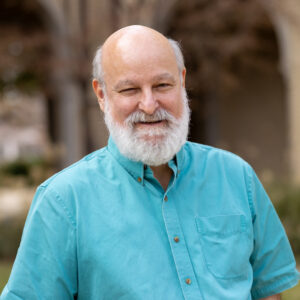
Dr. Bock has earned recognition as a Humboldt Scholar (Tübingen University in Germany), is the author or editor of over 45 books, including well-regarded commentaries on Luke and Acts and studies of the historical Jesus, and works in cultural engagement as host of the seminary’s Table Podcast. He was president of the Evangelical Theological Society (ETS) from 2000–2001, has served as a consulting editor for Christianity Today, and serves on the boards of Wheaton College, Chosen People Ministries, the Hope Center, Christians in Public Service, and the Institute for Global Engagement. His articles appear in leading publications, and he often is an expert for the media on NT issues. Dr. Bock has been a New York Times best-selling author in nonfiction; serves as a staff consultant for Bent Tree Fellowship Church in Carrollton, TX; and is elder emeritus at Trinity Fellowship Church in Dallas. When traveling overseas, he will tune into the current game involving his favorite teams from Houston—live—even in the wee hours of the morning. Married for 49 years to Sally, he is a proud father of two daughters and a son and is also a grandfather of five.
 Darrell L. Bock Jake Prochaska