

Did Jesus Claim to be God?
Join Kasey Olander, Darrell Bock, and Mikel Del Rosario as they explore the historical Jesus—His titles, teachings, works, and what they reveal about His claims to divinity.

The Table is a weekly podcast on topics related to God, Christianity, and cultural engagement brought to you by The Hendricks Center at Dallas Theological Seminary. The show features a variety of expert guests and is hosted by Dr. Darrell Bock, Bill Hendricks, Dr. Kymberli Cook, Kasey Olander, and Milyce Pipkin.
Timecodes
- 6:17
- Jesus as Prophet
- 9:38
- Jesus as Son of Man
- 11:26
- Jesus as Christ
- 14:01
- Christ Authority and Miracles
- 20:20
- The Healing of the Paralytic
- 22:53
- The Other Contemporary Perspectives on Christ
- 26:04
- Where Should Skeptics Start
- 28:52
- Did Jesus Claim to be God?
- 42:00
- Jesus as Lord
Resources
Did Jesus Really Say He Was God?: Making Sense of His Historical Claims by Mikel Del Rosario
Transcript
Kasey Olander:
Welcome to The Table podcast where we discuss issues of God and culture to show the relevance of theology to everyday life. I'm Kasey Olander, I'm the web content specialist here at the Hendricks Center at Dallas Theological Seminary and we thank you for being with us today. This episode is a lot of fun because we are currently with three hosts of The Table podcast. We're not sure if this has happened before but we're going to have a conversation about the historical Jesus and it's going to be a lot of fun.
Darrell Bock:
Thank you, Kasey, for hosting.
Kasey Olander:
Oh, yeah. This is backwards, I know that you're used to seeing Dr. Darrell Bock in the primary driver seat of the conversation but he is here joining us as senior research professor of New Testament studies and executive director for cultural engagement here at the Hendricks Center at DTS. So, Darrell, thank you for being here.
Darrell Bock:
Glad to be here.
Kasey Olander:
I feel like people don't usually thank you for being here when you're hosting.
Darrell Bock:
Yeah, it's true.
Kasey Olander:
We also want to say welcome back to Dr. Mikel Del Rosario. He's currently a professor of Bible at Moody Bible Institute but we all worked together during his time at the Hendricks Center at DTS when he was working on his doctorate. So, Mikel, it's good to see you again.
Mikel DelRosario:
Thank you so much for having me on the show. It's good to see you too.
Kasey Olander:
Yeah. So, this is a topic that the two of you are particularly passionate about, that you're interested in but then, also, that you're extremely qualified to talk to us about. So, I'm going to start off with, Darrell, this is going to feel backwards to you but I'm going to ask your question. How did a nice guy like you get into a gig like this? What about historical Jesus studies?
Darrell Bock:
Well, I got pulled into historical Jesus studies because I was writing on the gospels and, in the midst of writing on the gospels, particularly commentary initially, faith commentaries, actually, on the Gospel of Luke, a beginning one, a middle road one in terms of level and then an advanced one, all kinds of questions about historicity came up in terms of could you trust the text. Is what the text says necessarily what happened? And, of course, in the church, for many people, that's not even a question, they come with faith and they believe the Bible is the word of God but there are a lot of people for whom that's not true.
And so, some of the writing that I did in the commentary was aware of what the New Testament discussion was which tracks down that road as well with a lot of skeptical takes on the Bible, et cetera. So, I was writing to deal with questions that people have, sometimes very, very naturally, about what the Bible has to say and to deal with that.
And so, I ended up, not just writing commentaries on the gospels, but also diving into a particular area of New Testament study entitled the Historical Jesus and, really, I've been there for a long time, almost as long as the school's been alive. And so, been doing that for a long time and then Mikel came in along the side and I'll let you ask that form of the question to him because he's the one who has to fill in the story.
Kasey Olander:
Perfect. Mikel, how did a nice guy like you get into a gig like this?
Mikel DelRosario:
Well, when I was at Dallas Seminary doing the THM, there was one personal situation that highlighted this for me where I was talking to this woman after a church event one day and she wanted to raise the question of where we ever got the idea that Jesus is God and I had my Bible out on the table as we were talking. In the middle of our conversation, she grabs my Bible, she holds it up like a visual aid and she says, "According to this, Jesus never said He was God."
I was stunned because, this woman, she'd been going to church every weekend and yet she was saying some of the same kinds of things as some of our skeptical atheist friends do. And then I started to thinking because she started saying, "Well, okay, we're looking at Bible verses but I'm not asking where in the Bible does Jesus say He's God, I'm asking did Jesus really say He was God historically?"
And so, then I got to thinking, there are a lot of people, like Darrell was saying, who have questions that are not literary questions but are historical questions. And whether it's the problem of evil you're talking about in terms of apologetics or the arguments for God's existence, eventually, we're going to get to who is Jesus and so I wanted to focus in on that. I took a class with Darrell on the historical Jesus, which met at his house, and that's really where I fell in love with historical Jesus studies and thought, you know what?
I'm going to do my PhD in New Testament and do a dissertation on the historical Jesus and His claim to be divine. And so, reading all these great books and making use of Darrell's library, I really had a good time working through a lot of these things in the doctoral program at DTS and so I'm teaching a historical Jesus class, actually, at the Moody Bible Institute as well for undergrads.
And so, it's something that helps us come to the table with people from different backgrounds so we can all have a conversation about what Jesus said, what Jesus did even if they don't see the Bible as an authority, I love that.
Darrell Bock:
There's a fun detail in this story in that I actually met Mikel right when he hit campus and we were sat next to one another at the student reception for the new students, struck up a conversation. He told me what his background was in apologetics and having come from Biola and I suggested to him he ought to think about working at the center and so he applied and came in and that's how the connection happened in terms of a personal relationship which we've had now for well over a decade.
Kasey Olander:
Yeah.
Mikel DelRosario:
Yeah.
Kasey Olander:
Yeah, thought about it really thoroughly.
Darrell Bock:
Yeah, yeah.
Kasey Olander:
Yeah, yeah. And that's when Mikel and I got to work together as well. We met in the middle of COVID and so that's a bizarre time to meet any humans.
Darrell Bock:
Yeah, that's right.
Mikel DelRosario:
I didn't know what Kasey looked like-
Darrell Bock:
Is that right?
Mikel DelRosario:
... until four months into working with her.
Kasey Olander:
Right, exactly.
Darrell Bock:
Yeah. Myriads of people were just two-dimensional to us so, anyway, yeah.
Kasey Olander:
Mm-hmm, exactly. So, as we bring the ... Let's say that the scriptures paint a three-dimensional picture of Jesus, He has a number of different titles, hope you guys like that segue. He has a number of different titles that people refer to Him as but why don't we start with Jesus as a prophet and work our way to divinity.
Darrell Bock:
So, the idea here is is that, when you talk about Jesus as being divine, you're actually creating a category for people that they don't have. And you think about all the people who've walked the earth. I once asked Google, "How many people have walked the earth in the history of the earth?" and Google has an answer to that question. So, it gave me an answer, it was 119 billion people and I said, "Okay, give or take a few people."
119 people have walked through, how many of them have actually been able to credibly try and claim that they're the creator God incarnate? It's just one. That means that every person who walks the earth has to have that category created for them, the question is how do you do that. If someone is a religious none, that's not N-U-N but N-O-N-E-S, among the religious nones, agnostic or atheist, they don't have a theological bone in their body, they're not going to have that category.
So, how do you have that category? Well, my argument would be that the synoptic gospels work up to that category. They take you from the earth up and you gradually, you watch it dawn on people who Jesus is as He reveals himself. So, the first stopping point is the term prophet which is generally how the crowds reacted to Jesus. We know from Caesarea Philippi and the exchange Jesus had with His disciples that when Jesus asked, "Who do people say that I am or who the people say the son of man is?" the response was, "Well, You're one of the prophets which means You're one among many." And then, of course, Jesus follows up that question, we're going to come back to this later, Jesus comes back, "Who do you say I am? Who do you say the son of man is?" and they give a different answer.
But the starting point is Jesus a prophet, He's someone who declares the way and the will of God, end of story. He is a sage prophet who points us to the way God wants us to live and He's not really in the middle of the story other than being the messenger through whom the message comes and that's how the crowd saw Jesus. It's a respectful recognition of who Jesus is, being sent from God, but it's not quite enough and so that's the first title, that's the title prophet.
Kasey Olander:
Yeah. You're not disagreeing with Him saying He's not a prophet but you're just saying it's-
Darrell Bock:
There's more to Him than that.
Kasey Olander:
There's more to it.
Darrell Bock:
Mm-hmm, yeah.
Kasey Olander:
Mikel, what would you add to that?
Mikel DelRosario:
Yeah, I think there are a lot of things people say about Jesus where they're not wrong, it's not inaccurate but it's not adequate to fully explain who Jesus is. So, I think we can find a lot of common ground with people who have respect for Jesus as a prophet and we can say, certainly, there is a prophetic dimension to Jesus' ministry, certainly He is a prophet but He's a lot more than that but we can start there. Someone says Jesus was a great teacher, I want to know what about His teachings are so interesting to you, why do you think He's such a great teacher and I just love to hear what those are.
And then, for men, maybe it's the Sermon on the Mount or His ethical teaching. I might say, "I really like how He reoriented what true greatness is, that to be the greatest is to be the servant and what do you think about that?" people tend to like that. Then I say, "But why?" He gives us the reason, He says, in Mark eight He says, for the Son of Man did not come to be served but to serve and to give His life as a ransom.
And so, I'm able to link His teaching ministry, His prophetic ministry, it can go to miracles and then, boom, we're talking about the gospel and who is Jesus. So, I love that, starting with where they're at.
Kasey Olander:
Yeah, that's great. Can we now segue into Son of Man, that's another title that you brought up, Mikel.
Mikel DelRosario:
Okay. So, if you want to talk about Son of Man, wow, it's Jesus' favorite way of talking about Himself. And here what we have is an idiom that's a cultural way of just ... Could just mean referring to yourself but Jesus always makes it definite. He always calls himself the Son of Man and it's His favorite way of talking about Himself, 69 times just in the synoptics, always on the lips of Jesus, 81 times in the gospels except one time, it's the crowds quoting Him calling Himself the son of man. And many people think, well, there's Son of God and Son of Man, is that emphasizing His humanity and then the other one His deity but, actually, Son of Man is showing us that there is more to Him than being just a man, there's a transcendent piece that He's alluding to.
Because we got the son of man in Daniel seven who is brought before the ancient of days, He comes on the clouds, He's given authority, all the nations of the world will worship Him and His kingdom will be unstoppable, who's this guy? So, it's already in the Jewish contemplation and I think Jesus is using this to explain more about who He is slowly by slowly but I know we're going to get there later on in the show.
Darrell Bock:
Yeah. One of the things I say in the Daniel seven passage He's riding the clouds, that's God stuff, only God rides the clouds in the Hebrew scripture. And so, the idea that here's a human being who's doing God stuff begins to open up the category, begins to make you think, okay, well, who is this who's able to do this kind of thing and, of course, we have Him meeting with the ancient of days in Daniel seven. You connect that to Psalm 110:1, seated at the right hand of God, and you're beginning to push the ceiling of understanding who Jesus is but we'll get back to that, we're working our way there.
Mikel DelRosario:
Mm-hmm.
Kasey Olander:
Yeah. You guys are so eager for Jesus's divinity.
Darrell Bock:
Yeah.
Kasey Olander:
Well, what about another ... Another title then would be Christ. Can you unpack that for us? Are people expecting divinity when they hear Christ?
Darrell Bock:
Not necessarily.
Kasey Olander:
Okay.
Darrell Bock:
And they aren't even thinking about that when you hear the phrase Son of God, that may surprise some people. But if you think about the Davidic Covenant where God says I'm going to create a dynastic line out of the house of David and I'm going to be a Father to Him and He's going to be a Son to me, this is in Second Samuel seven, and if He sins, I'm going to discipline Him. So, that can't be about Jesus, that's got to be about someone else. That's probably a reference to Solomon and the line of kings about the way God ... And the point is this is a unique family, close family-like relationship in which the vice regent who is the ruler takes on the representation of what God desires for His people. And so, He becomes Son of God in a little sense and then sometimes I joke, if you want the big Son of God, you go, "Son of God," just to highlight the difference between what those two are.
So, when Peter confesses that Jesus is the Christ in contrast to being a prophet in Caesarea Philippi and it's interesting that, in the three gospels, every one of them talk about Jesus being the Christ, only Matthew has Jesus being the Son of God alongside of that. So, I tell people Peter's not confessing that Jesus is the second person of the ontological trinity yet, he's not there but he is saying, "You are the Christ, You're the anointed one, You're in the middle of what God's going to be doing in delivering people," which ties to another title that often gets associated with Him which is prophet like Moses. And so, you put those two titles together, a prophet like Moses isn't just a prophet, he's a prophet like Moses. Well, what was Moses? He was a deliverer prophet. He was a prophet who actually brought the deliverance, he's more like a messianic figure. And so, prophet like Moses is one level up from being a prophet, Christ is one level up in the middle of the program. Okay?
So, we're slowly but surely working our way up to understanding who Jesus is and the point of these passages. Sometimes Jesus doesn't confess himself to be these things, in fact, He oftentimes shies away from the confession for reasons we may bring up later. But what He is, He often shows that He is this figure by doing certain things that say the only person who can be doing this is a person who has a certain combination of attributes that are reflected by what it is that Jesus is doing.
Kasey Olander:
Sure, yeah. Mikel, what do you have to say about the ways that Jesus showed?
Mikel DelRosario:
Yeah. Well, if you take a look at the Gospel of Mark, the earliest gospel to be written, just in the opening chapters, you see that Jesus has authority over nature, He stills the storm and we know that God is the one who stills the storm from the Old Testament. He heals so many people like the women with the bleeding hemorrhage and so He has authority over disease. He has authority over demons, He talks about even binding Satan. What human being can claim to bind Satan? So, what I'm showing here is that Jesus isn't just doing miracles in order to show He has supernatural power because, after all, other prophets could also do miracles but the key difference is Jesus' authority.
So, someone like Elijah could pray to God to raise a girl from the dead and then God could answer that prayer and raise that dead girl. But when Jesus does it, He doesn't pray or mention God, He just says, "Talitha cumi, little girl, get up," and He does it out of His own authority. And you see Jesus in all these areas of having authority over nature, over demons, disease and death and you're like, "Who does that in all these different areas?" So, we're seeing this category of the authority, the divine authority of Jesus through what He does and through what He says.
Darrell Bock:
And you watch them react and you see the reaction of them trying to process what in the world just happened. So, when the storm gets stilled, say that quickly, the question comes up who's able to command the winds and the waves and they obey them and they know Psalm 107 is in the background that God is in control of the seas. Or, we'll talk about this text probably in a little more detail, who's able to forgive sins and He doesn't pray.
There's a study that was done about the background of Jewish miracles in comparison to the miracles that Jesus did and it has three categories for the way miracles appear in Judaism. One is called BNP which is a bearer of numinous power, this is the person who directly exercises their authority which is what Jesus normally does. But there are two other categories, one is PNP, which stands for petitioner of numinous power, transcendent power, if you will, that means I pray to God and God's the one who does it. Honi the circle drawer in Judaism is the famous example.
Supposedly, there was a drought, Honi drew a circle, stood in it, prayed and said, "I'm staying in this circle until the drought ends." He prayed, the drought ended, he stepped out of the circle and became known as Honi the circle drawer. And so, that's a petition for God to act. The other is called a mediator of numinous power, this means you use an object or a formula in order to invoke God to act. So, Moses hitting the rock with a staff is an example of that. Taking dirt and putting it in someone's eyes is an example of that. And the writer who put this together said what's unusual about Jesus's miracles because they're power points, they're points about Jesus' authority, they're audio-visuals pointing to who Jesus is.
What's unusual about it is Jesus almost always is doing a bearer of numinous power, He holds the authority directly and shows it directly as opposed to praying for someone else to do it, the Father, or using an object to get there. Now, there are times when Jesus does use an object, He's the one who takes the dirt and puts it in the eyes of a blind man in Mark who gradually ends up being healed but, by far, the bulk of His miracles are done directly off of His authority.
So, this is what we mean. Jesus is showing who He is, Jesus claims authority be Lord of the Sabbath. Who's the Lord of the Lord's day? Doo, doo, doo, doo. Doo, doo, doo. Just think about that, right? Who's the Lord of the Lord's day? Jesus changes liturgy, Torah liturgy. We're thinking now about the last Supper, okay? And Jesus takes the elements which already had an established liturgy, an established symbolism and now He changes the bread and the wine to be connected to His death. Who has the authority to do that with Torah liturgy? So, you start adding up all these things that Jesus is doing and showing and you're supposed to think through who is that mass marauder? What is He doing? How does He have the authority to do that? What does that mean about who He is?
And so, Jesus doesn't go around like Muhammad Ali used to do, sorry for the old illustration, I'm pretty, I'm the winner, I am pretty. No, He's not doing that, He's showing, He's demonstrating who He is because He argued that words are cheap, okay, but demonstrating it is a whole other deal.
Kasey Olander:
Sure. Anybody could just say I'm God of the Son of God.
Darrell Bock:
Exactly, yeah. I forgive you ... Kasey, I know you need spiritual help, I forgive your sins.
Kasey Olander:
Thank you. I appreciate that.
Darrell Bock:
You're welcome. Okay. Now, what does that look like? How do you see that? How do you know that happened, right? Bye sin, hope you stay away a long time. You don't see the forgiveness of sins, right?
But, and this is the paralytic story, Jesus says, "In order that you might know the Son of Man has authority on earth to forgive sins, I say to you get up and walk." So, when the paralytic walks, His walk talks and what it's saying is the Son of Man has authority on earth to forgive sins. Something you can't see is shown by something you can see and the linkage produces the Christological point.
Kasey Olander:
Okay. You've used a lot of the terms already in just that one answer. You're talking about Christology and Christ, Son of Man, prophet, prophet like Moses, you're tying these all together to point towards, move in the direction of Jesus's divinity.
Darrell Bock:
Exactly right. And what I'm saying to you is, as the synoptic gospels tell their story and unfold in their narrative, they're pushing you in this direction to ask who is this guy who can do all of these things. You can probably find one or two things that are exemplified in a prophetic figure of the Old Testament who could do some of those things. Elijah raised someone from the dead, Moses certainly played around with the creation. Although the text in Exodus says about Moses when he's doing this I will make you God to Pharaoh, it's Exodus 7:1. So, you get people who do some of these things but what you are talking about is a CV or a resume in which this is being done in a whole array of areas so wide and so broad that it's supposed to gain your attention and you're supposed to figure out, all right, who is this guy and what's he doing.
Kasey Olander:
Yeah. So, Mikel, let's talk about that Mark passage that you brought up, the healing of the paralytic. What is it about that passage that grabs your attention? I know you've studied it in detail.
Mikel DelRosario:
Yeah. I actually did my THM thesis in this text and then, later, that became part of my dissertation, of course, in connection with Darrell who is my dissertation supervisor and mentor throughout the whole thing. But this is such a profound text because Jesus is forgiving the man's sin and then He heals him to show that the forgiveness was valid, that it really worked, that the man really was forgiven by God and that's how he presents it. And what's interesting about this is that, the scribes, as we know, they were the theologians and the audience and they understood exactly what the implication was. Why is this man talking like that? They say in Mark 2:7, "Why is He speaking like that? He's blaspheming. Who can forgive sins but God alone." It's a rhetorical question and the answer is nobody. Nobody can forgive sins except God alone.
Now, sometimes people will say maybe a prophet or a priest could do that kind of thing and so what Jesus was saying really wasn't a divine claim and so the scribes wouldn't have said that and so there's some question about the historicity there. But if you actually look at the ... You try to look for the evidence of that, nowhere do we have a text where a priest says, "Son, your sins are forgiven." Even on the Day of Atonement, you don't get anything like this. You don't have a prophet saying, "Son, your sins are forgiven." So, this was totally unique and it was very, very rare that someone would ever say something like that and so they are actually understanding what He's saying.
So, my area of research was looking at what Jesus's enemies thought about what He said rather than just what His disciples thought. Because His enemies were not vague about this, they understood exactly what He was saying, that Jesus was clear in His Jewish context. They were not in the temple, it was not the Day of Atonement, there was no sacrifice and yet He is asserting to have the authority to forgive sins. That's not just a human claim, that's a divine claim.
Darrell Bock:
And the interesting thing about that is that they understood what Jesus was saying, they just didn't believe it. So, they put Jesus in a category that was, well, He can't be who He claims to be, He must be a blasphemer. That's eventually where this goes which sets up the contrast that takes us to the end of Jesus's life where that becomes the issue. Is He one who truly represents the way of God or is He a deceiver who claims to represent God but actually doesn't? But the point that Mikel is making is very, very important, there are two points here. One is that they got what Jesus was claiming, they understood the full import of what it was that Jesus was doing. I often tell students of the gospels, "Listen to the theologians, they see and understand what's going on. They may not believe it but they get what's happening."
And then the second point that's important here is that the claim to forgive sin is a way of starting the ball rolling. This is one of the early texts in Mark and it's one of several things that got Jesus into trouble that eventually leads to His death. One of the things that you do in historical Jesus studies is you're always asking the question how can we explain historically what happened to Jesus. How can we explain that He ended up on a cross? And so, as you hit these disputes, you're seeing how the case was building for the pushback that Jesus experienced to the point where He actually ends up being on the cross and dying.
Kasey Olander:
Well, since you're mentioning this pushback, what would you say is most important to consider? Should I look more at what His disciples said? Should I look more at what His enemies said? Whose perspective should I consider?
Darrell Bock:
Everybody. And here's an interesting thing about what the enemies are saying and that is there is no doubt that Jesus was doing something unusual. His enemies don't respond the way modern skeptics do which is to say didn't happen.
Kasey Olander:
Sure.
Darrell Bock:
Okay? They are sitting there saying, "No, there's something going on here but the power that it's sourced that is for it is malevolent, it's satanic, it's Beelzebub, it's not coming from God." So, they aren't denying that it's happening. So, I say the skeptic who denies that these things happen actually isn't taking the position even of the opponents of Jesus. And so, as a result, you're sitting there going, "Well, that's interesting. You've got to explain where this is coming from." Everyone recognizes there's something unusual going on, in fact, Josephus's testimony about Jesus and antiquities, and he's a Jew, is that Jesus did unusual things and then you got to explain it. And, in Jewish tradition, he was either a magician or a sorcerer so, again, you're in this deception mode that that represents. So, all of these claims are ways of saying, we aren't disputing that Jesus is doing stuff that gets attention, we're just debating where it comes from.
Kasey Olander:
True.
Mikel DelRosario:
Yeah. There's an ancient skeptic named Celsus who came up with this theory that Jesus went out to Egypt and learned Egyptian magic and then came back and that's how He was able to do all His miracles. Nobody was saying Jesus faked these miracles, nobody is saying He didn't do them, they're just trying to figure out where the power came from. And even to try to discredit Jesus, all they could do is say this is dark magic, this is of the devil, they couldn't say he faked them.
Kasey Olander:
That is really interesting. So, we're seeing how different people are responding to the same true events.
Darrell Bock:
Exactly right. And they're reading it very, very differently. And then, of course, the story of the gospels is the tension that creates and eventually takes you to the cross.
Kasey Olander:
Okay. So, how then would you respond to people ... How do you inform skeptics of this? How do you respond compassionately? Obviously, people come to the Bible with their questions, not sure if this is really real or how this was written but where do you encourage skeptics to start when they think about Jesus?
Darrell Bock:
Well, I think I start with where we started which is to say I recognize by the person asking that question when they're coming to me even if they're asking it out of skepticism that is a previous step and that is that the category that I'm introducing to them is a category they probably haven't even thought about. Or if they've considered it, they've rejected it because 100 and ... Well, it would be 116 billion, 999, 999 people don't fit this category, okay? So, why would I expect such a unique exception? And that's actually part of what the synoptic gospels are trying to show. And then the question becomes can I trust the reports that are about it and, of course, you have the life reversal of many of these Jewish people who walked and talked with Jesus that's a part of that story. You have the example of the apostle Paul who's a part of that story as well. That's one way I would go at it.
Kasey Olander:
Yeah. Mikel, how about you?
Mikel DelRosario:
Yeah. One thing I really took away from my time at the center was shaping courageous, compassionate leaders. So, I train Christians to answer tough questions about God, Jesus and the Bible with courage and compassion so we can explain our faith in a way that's courageous but also compassionate. And so, I would ask questions to find out if the person is, first of all, know that these things aren't always coming from a skeptical place. They might be from kids in your youth group, it might be from your own kids, maybe they just heard these things how can Jesus be God when X, Y and Z, how come I heard somebody say He's God in John but He's not God in Mark and maybe they just heard these things around. So, let's be sensitive and ask them what's really behind this, do they have a literary objection where in the Bible does it say Jesus is God or where does Jesus say He's God in the Bible, how does He do that and then we can help them understand how He claimed to be God through a combination of His words and His deeds.
Or maybe it's a historical question. Well, I know the Bible says that but how can I trust that the Bible's giving us real history? Or maybe there's a theological misunderstanding about, if we see text that say Jesus is a man, He got tired, He slept, He got hurt, well, that means he can't be God. Or if He never claimed to be God the Father, then He never claimed to be God. So, let's understand where the misunderstanding is and be able to customize our ministry to them that way.
Kasey Olander:
Yeah. That's really helpful to nuance what is the question actually because you want to meet people where they really are and not just be like, "Oh, this is something that I learned and heard about and that I'm excited to present to you," but, really, you want to answer the question that's actually at hand that people have about either who Jesus is or the reliability of scripture and things like that. So, is there then a verse that we're looking at where Jesus says I'm God? What are we talking about when we ask if Jesus claimed to be God?
Mikel DelRosario:
Yeah. So, for example, those who say, if Jesus really said things like I and the Father are one in John or, if You've seen me, You've seen the Father, then how come we don't see any hint of a divine claim in the earlier gospels, in the synoptics, especially in Mark because most scholars believe Mark was the earliest gospel written. And that's where I like to show, as Darrell does, in all these different places, it's not one verse where Jesus says this.
First of all, He doesn't say I am God because He didn't want to be confused with setting Himself as some rival deity to God the Father or a polytheistic setup, He's introducing this concept that there are what we would call divine persons today in the one God of Israel. And He does this through a combination of His words and His deeds like claiming to forgive sin, like claiming to judge the representative of God on earth that is Jewish examination and then showing people through His deeds He's acting like God does and He's speaking like God does. So, He does it through a combination of what He says and what He does.
Darrell Bock:
So, when it hits creation ... Think about it, it goes from creation to demons to disease to death to liturgy, okay, we talked about that with the last supper, He cleanses the temple. Okay? Who gave Him the authority to mess with the most sacred spot on earth? Sin. So, you start to add all this up and you go, "Look at the scope of this that's being talked about." And then, when He's examined at His trial by the Jewish leadership and they're ... They're trying to pin down He's the Christ, they're not worried about Him claiming to be God, they're worried about Him claiming to be the Christ because they want to go to Rome and say Jesus is claiming to be a king Rome didn't appoint because Rome appoints the kings of the Roman Empire and Rome believes in law and order, you follow our law, we'll put you in order. And the way they put you in order, if you make a claim of being a king that Rome didn't appoint is you're going to hang on a cross.
So, they're asking a question, they're trying to gather evidence to take to Pilate and they have to be right. The last thing they want to face is the possibility of taking Jesus to Rome and having Pilate say, "Oh, He's innocent, He hasn't done anything guilty." Imagine what the PR problem would've been on the other end of that so they're working hard to get it right. So, the high priest asked Jesus a question, "Are you the Son of the living God? Are you the Son seated at the right hand of power?" That's how Jesus answers the question I am and you will see the Son of Man seated at the right hand of power. And, in that answer, He is claiming to be able to share a throne with God in God's kingdom.
Kasey Olander:
Interesting.
Darrell Bock:
Yeah. Now, the fact is that was discussed in Judaism. There were people who were proposed for perhaps being the figure of Psalm 110:1 and a variety of figures. There's a picture of Moses in one work but that's picturing, symbolically, the kind of power he had during the plagues. Most people see that as a midrash on Exodus 7:1, it's in a work called the Exegoge of Ezekiel.
Kasey Olander:
Everyone loves that.
Darrell Bock:
Yeah. You had your devotions in that yesterday.
Kasey Olander:
Right.
Darrell Bock:
And then the second is the figure the Son of Man of First Enoch which is interesting because that's the very title Jesus likes about Himself. He pre-existent, exercises judgment, sits with God in heaven, does a lot of things that we see and Jesus claiming in the gospels as well. The third figure coming from Rabbi Akiva who's a little later rabbi but it shows ... Is David. David sits at the right hand of God to which the sages, this is always the Jewish reply when someone makes a mistake, the sages speak and say how long will you profane the Shekinah, how long will you dishonor God by suggesting that someone could sit with Him in heaven.
So, that's a no vote, the other two were positive votes. And then Metatron is another figure in a book called Third Enoch and Metatron is giving a tour of heaven to Enoch and, in the midst of that tour, He refers to Himself as the lesser Yahweh and God doesn't like that answer so God invites Metatron in for a talk, talk is what I define my father used to do when I was young and he wanted to correct me about something that I had done and I learned very quickly this is not a conversation, okay, he's going to tell me I've dishonored the family name.
And so, we go in and we do that and, in the midst of that, then we see that that's also a no vote. And then the council itself that examines Jesus made up of Sadducees. Ben Withering has a great line about the Sadducees, they're sad, you see.
Kasey Olander:
Mm-hmm, because they don't believe in resurrection.
Darrell Bock:
Exactly right. So, anyway, they don't believe in the resurrection, they also don't like anything that extends beyond the Pentateuch. So, they aren't going to be comfortable with all these theories about what's called the two powers of heaven doctrine in Second Temple Judaism and beyond. And so, this is a category that some people were contemplating, it might be possible, it might be possible for a great luminary, a figure like a Moses, a figure like a David, maybe an angelic figure, a transcendent figure like whoever the son of man is in First Enoch but it's not going to be a Galilean teacher on the edge of the Roman Empire, there's just no way.
So, that's the background, the cultural background that feeds in from what Jesus is doing and His answer is, "You may put Me on trial here," in fact, His answer is actually doing something else. They were having trouble getting the evidence to take to Pilate for putting Jesus to death, the person who supplied the evidence that sent Jesus to the cross was Jesus Himself, that's how committed He was to going to the cross. Because this answer is what allowed them to go to Pilate and say He's claiming to be a king, at least He's claiming to be a king and they took the religious charge that they saw as blasphemy.
If they'd gone to Pilate and said, "Oh, Jesus is blaspheming, you need to put Him to death," Pilate would've gone, "I don't care about that. That doesn't mean anything." But if they go to Pilate and say, "He's claiming to be a king that Rome didn't appoint and that's your job," now, all of a sudden, He's on the hook for being responsible for what happens to Jesus.
Kasey Olander:
Mm-hmm.
Darrell Bock:
Mm-hmm, mm-hmm.
Kasey Olander:
Mikel, anything?
Mikel DelRosario:
Yeah, I love that. This scene is amazing. Of course, Darrell is the resident expert here on this particular scene and I loved working with him on it. But one thing that I noticed, that we have all these background things going on. Psalm 110, during the intertestamental period, this began to be seen when the monarchy didn't come back as pointing to the ultimate eschatological king. So, he's using that when Caiaphas the high priest asks, "Are you the Christ? The Son of the blessed?" Jesus says, "I am and you will see the Son of Man seated at the right hand of the power and coming with the clouds of heaven." Now, all these other people, these luminaries, some people imagine maybe Adam or Moses or Abel, these people could maybe one day have a role in the judgment if God invited them for a limited time but none of them during their lifetimes, none of them during their lifetimes said they were going to judge the sins of the world.
And in First Enoch, this is another text outside the Bible that's in the Jewish contemplation, the Son of Man comes and judges these rulers and the ones who see him are the ones who are judged. So, when Jesus says, "And you will see the Son of Man," I think, if they're familiar with this text, they'd be going, "Wait a second. Like in first Enoch where the ones who see are the ones who judge, we are God's representatives on earth and who are you? You're going to judge us? How dare you?" That's the whole vibe that I'm getting out of that scene, it's palpable.
Darrell Bock:
And-
Mikel DelRosario:
But now-
Darrell Bock:
Go ahead, sorry.
Mikel DelRosario:
But now think about this. He's claiming to have authority in heaven to judge sins. The location in heaven is very important because, when you connect that to Mark 2, Jesus has authority on earth to forgive sins, you have authority in heaven and on earth that is a merism for all of reality. Just like we saw throughout Mark, authority over nature, over demons, disease and death, again, who does that in all these different areas? That is how Jesus claims to be divine. We need to see how implicit claims work in the Gospels because that's how Jesus is working here.
Darrell Bock:
So, part of what's at work here and this raises a question because we've alluded to works that aren't in the Bible so sometimes people go, "Well, why would you do that? That seems like it's problematic. That material isn't inspired, is it?" No, it's not inspired but what it does is it reflects the way people were thinking theologically about the topics that the Bible addresses at the time. You want to know what the conversations are that people are having at the time about the areas that the Bible addresses. And some of this background helps, I call them cultural scripts, cultural scripts are cultural shorthand. If you share the culture with the writer or the speaker, then I can speak to you in shorthand and I can say, and if you understand the cultural script, you'll actually understand what's going on in the passage. But if you don't understand the cultural script, it can go right by you.
Kasey Olander:
Like referencing TV shows or movies, quoting things.
Darrell Bock:
Yeah. My example is the Cowboys were going to the frozen tundra to melt the cheeseheads, okay? Now ...
Kasey Olander:
As someone who doesn't do sport, I'm lost.
Darrell Bock:
Who knows? Exactly right. But if I go, "Oh, well, that's about American football." I go, "How do you know that's about American football? That word American football is nowhere in that sentence." Well, it's because you share the culture and so it's shorthand. And if we have that connection, I don't have to explain that to you, you don't have to explain that to me and then look how much is in that sentence. The Cowboys, we're talking about American football, it's the Dallas Cowboys. The cheeseheads represent the Green Bay Packers. We're up in the frozen tundra so we're obviously playing a game in Green Bay, Wisconsin when it's very cold, all right? And the perspective of the author is the Cowboys are going to beat the Green Bay Packers. That sentence, which is just a handful of words, is doing multiple things at one time. And so, when you do that ... I do one that Americans don't get and it is Ian Botham marched the crease to defend the ashes on behalf of the Queen.
Kasey Olander:
Lost me.
Darrell Bock:
Wonderful sentence, wonderful sentence, all right? About cricket.
Kasey Olander:
Yeah.
Darrell Bock:
Okay? Ian Botham, captain of the UK years ago. Ashes are the competition, the five-day match between Australia and the UK when they play a five-day match. The crease is where Ian Botham bats from because he was an all-arounder which meant also he, not only bowled well, pitched, but he also hit well. And then he was the captain of the team so he was famous and, on behalf of the Queen, he is the captain of the UK team so he's holding up British honor in this competition with Australia. All that is in that sentence.
So, if you share the culture, you understand what's going on in the passage. If you don't share the culture, you may not appreciate what's going on in the passage and then it does this as well. People ask the question, "Well, did Jesus ever say he was God?" Well, maybe not directly come out and say I am God, I am pretty, He barely never did that nut what He did do, what He did do is say things like I and the Father are one. That expresses an equality that no one otherwise would express. Or He showed that he was doing God stuff and He showed it in a variety of areas.
So, I don't have to say it out loud in order to indicate that that's who I'm displaying who I am to be. And so, when the disciples, the storm is calmed say, "Who is this who's able to calm the winds and the waves and they obey Him?" they're having their category created for them and it's lifting Jesus up in their perception is beginning to dawn on them this may not be just the average Joe that we're working with here whose God happens to be touching, there may be something else going on.
Kasey Olander:
Yeah. So, you guys alluded earlier to when Jesus talks about forgiveness of sins, saying to someone that their sins are forgiven and then also healing them when they've been paralyzed. What is the difference between Jesus saying this, "Your sins are forgiven," and someone does something to me and I forgive them?
Darrell Bock:
He's got to have the authority to do it.
Mikel DelRosario:
Yeah, you don't have third-party forgiveness. So, for example, yeah, you can ask, if I did something to you, I could ask you to forgive me but I can't ask you to forgive me for something I did to my son. So, only God ultimately can forgive sins in general and so that's what we mean by that. It's interesting, I did some research into this as I was doing my dissertation and there's a fun story about Nero and it's a very long story that Suetonius tells us. But basically, when he murdered his mother, he had to ask the Magi to try to summon up her ghost so he could beg her for forgiveness.
He wasn't asking the Magi to forgive him even though they were religious figures that's because there's no third-party forgiveness in Judaism or in the Greco-Roman world at large so Jesus is doing something very strange here. And, in fact, He would be a blasphemer if He actually wasn't God. So, all these people who pick up stones to stone Him, they understood exactly what He was saying. So, Jesus is doing something very unique here, He's claiming have an authority that is divine authority, not just human authority.
Darrell Bock:
So, Mikel has not only done his dissertation on this and his thesis, okay, he's been in this world the whole time, he's just done a book and the book has to do with did Jesus claim He was God. And to deal with that question, in what ways does Jesus show His divinity and it's all about all these passages that we're talking about particularly the healing of the paralytic and the examination by the Jewish leadership because the crucifixion and resurrection is really about the dispute about who Jesus is. He's either who He claims to be, someone who can sit at the right hand of God, or He's a blasphemer claiming that He can sit at the right hand of God. And so, the question is who's got this right? Well, the empty tomb is God's vote in that dispute.
Kasey Olander:
Mm-hmm.
Darrell Bock:
It's actually a vindication of everything that Jesus is claiming about Himself. And I often say, when you walk in on Easter, we actually only talk about half of what the Easter story is, the half that we tell is He is risen. And if I walk out and say He's risen, what does the audience say?
Kasey Olander:
He's risen indeed.
Darrell Bock:
He's risen indeed. We talk about life after death and what a privilege it is we have life after death. None of that happens if the other half of the story is not true which is Jesus is who He claims to be. We don't talk enough about that on Easter to people who are walking into the church and why am I here, what are we talking about. Well, we're talking about life after death but how's life after death possible for us to be with God that, without Jesus, you don't get there. So, we need pastors to preach on Easter that Easter is about the vindication of Jesus and His claims so that we can know that there's life after death.
Mikel DelRosario:
Yeah. Yeah, Darrell and I are really passionate about this. In fact, thank you for the plug for my book, it's called Did Jesus Really Say He was God? And the subtitle is Making Sense of His Historical Claims. And I didn't want to just leave it like Jesus claimed to be divine, not maybe in the way that you might do it in the 21st century but, in His cultural context, everybody knew what he was talking about, even His enemies. I wanted to end with the significance because it is the claims of Jesus that fill the resurrection with theological meaning.
I've noticed this speaking at apologetics conferences too, apologetics conferences that start with a classical apologetics model, might talk about arguments for God's existence, maybe do a talk on the problem of evil and then jump to the resurrection evidence right away. But where people are leaving ill-equipped to understand the claims Jesus made about Himself, His divine claims and those are what fill the resurrection with theological meaning, it's the vindication of who He is.
And the very first Jewish apologetic for Jesus as Lord and Messiah, the day of Pentecost. Peter is preaching, he quotes Joel, he says, "Everyone who calls upon the name of the Lord will be saved." And then, here's another title, he calls Jesus Lord, this is Jesus as the Lord you should call upon. He quotes Psalm 110, the same text that Jesus was alluding to in front of Caiaphas. He says, "Let everyone know for certain that Jesus is Lord, God has made Jesus Lord and Messiah." And so, this is so important to connect His claims to the resurrection because it fills the resurrection with theological meaning.
Darrell Bock:
And what's really key about that scene is that, when the Spirit gets distributed to the people of God, Jesus is demonstrating John the Baptist pointed to when people were speculating that he was the Christ. And he said, "Not me, I just baptize with water. I'm not even worthy to untie the strap of His sandal," another cultural script. Jewish person, if they became the slave, was not supposed to untie the strap of the sandal of the person who was their master in order to wash their feet, it was viewed as too demeaning for a Jew to do.
But here's John the Baptist, not just a prophet but Jesus said no one greater had been born a woman up to that time, he's at the top of the human ladder but he is so far distant from the one who is to come that he is not worthy to do something that would be viewed as too demeaning to do. And then, on top of that, he says, "And the way you'll know who the Messiah is is He's going to baptize with spirit and fire." So, the sign that says that the end time has come and the sign that shows that the Messiah has come, the sign that shows that the promise has come is when the Messiah of God brings the spirit of God to the people of God. That's what happens in Acts 2.
So, that's how you can know we're in the right era, that's how you can know that Jesus is who He claims to be. It's another vindication alongside the resurrection that shows that Jesus is who He claim to be and that He is now operating from that very side of God, exercising and distributing the benefits of salvation. And what's even more interesting is, when you go to be saved, you call on His name, okay? Why would you do that? If you were a good Jew, you would call the name of the God of Israel. So, what are you doing calling on the name of Jesus in the midst of this? Well, you're doing it because He shares that presence and authority and now you're pushing into the whole Trinitarian thing because you've got the Father, the Son and the Spirit all there at Pentecost. The father, He's the one who devised the plan, Jesus is the one who executes and mediates the plan and the Spirit is the beneficiary given to the people to make them members of the family of God.
Kasey Olander:
Mm-hmm. So, we have looked at a number of different things, you've tied it together with the in trinity. We've looked at a number of different perspectives on who Jesus is, His followers, His enemies and even His claims about Himself and thinking about how these things really matter because that leads us to people in Jesus's day not even disputing whether what happened, did something unique happen or not, they're disputing where His power came from. And so, in a similar way, I hope that you're encouraged as you think about who Jesus is and how to convey the truths of the gospel to skeptics, to, like Mikel said, your colleagues or children or whoever may be raising these questions about what Jesus said about Himself and then about what the scriptures say and why it matters. So, I want to give you guys just one last chance to say what is one thing you want our listener to walk away with today.
Darrell Bock:
That Jesus is Lord.
Kasey Olander:
That's a good one. Ditto. What about you, Mikel?
Mikel DelRosario:
Yeah. I would say the very first apologetic for Jesus as Lord and Messiah, Peter. Peter's speech he says, "Call upon the name of the Lord. Everyone who calls upon the name of the Lord will be saved." And this word Lord is how the early Christians incorporated Jesus into the very identity of the God of Israel. Because Lord, Kyrios in Greek, is the Septuagint's way of translating the divine name in the Hebrew scriptures, Jesus is Lord. And that's what we mean when we say Jesus is Lord, He is the one we need to call upon.
Darrell Bock:
And what's fascinating about that is, is if you read the evangelistic speeches in Acts, they don't talk about substitution for sin, they do talk about forgiveness of sins but not substitution for sin. Their sole focus is to realize who it is who brings this salvation and who it is you're going to be connected to if you respond positively to the message of God to repent and turn. And if you repent and turn and you embrace what Jesus is, what He's done, what He's offered and you recognize you're designed to be connected to the living God through what it is that Jesus has done, you have responded to the gospel in the terms of the way Acts presents in evangelism.
Kasey Olander:
Right. Evangelism is a great place to land the plane. Mikel, if our listener wants to connect with you or hear more about what you're doing, where can they find you online?
Mikel DelRosario:
Yeah, they can find me on my website at apologeticsguy.com. They can also follow me on all my socials, @apologeticsguy on Instagram, YouTube, Facebook, TikTok, all the places and they can listen to the Apologetics Guy Show on YouTube and the Christianity Today Network.
Kasey Olander:
Nice. Well, it's always fun to see you again, we really appreciate it. So, thanks for joining us today, Mikel, appreciate your time.
Mikel DelRosario:
Thank you so much for having me.
Kasey Olander:
Darrell, thank you for being here too.
Darrell Bock:
Glad to be here.
Kasey Olander:
We want to thank you for listening as well. If you like our show, go ahead and leave us a rating or review on your favorite podcast app so that others can discover us, it's a great way to support the show. And we hope that you'll join us next time when we discuss issues of God and culture to show the relevance of theology to everyday life.
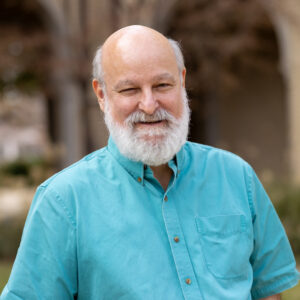
Dr. Bock has earned recognition as a Humboldt Scholar (Tübingen University in Germany), is the author or editor of over 45 books, including well-regarded commentaries on Luke and Acts and studies of the historical Jesus, and works in cultural engagement as host of the seminary’s Table Podcast. He was president of the Evangelical Theological Society (ETS) from 2000–2001, has served as a consulting editor for Christianity Today, and serves on the boards of Wheaton College, Chosen People Ministries, the Hope Center, Christians in Public Service, and the Institute for Global Engagement. His articles appear in leading publications, and he often is an expert for the media on NT issues. Dr. Bock has been a New York Times best-selling author in nonfiction; serves as a staff consultant for Bent Tree Fellowship Church in Carrollton, TX; and is elder emeritus at Trinity Fellowship Church in Dallas. When traveling overseas, he will tune into the current game involving his favorite teams from Houston—live—even in the wee hours of the morning. Married for 49 years to Sally, he is a proud father of two daughters and a son and is also a grandfather of five.

 Darrell L. Bock Kasey Olander Mikel Del Rosario