

The Church, Evangelicals, and Israel
Is Evangelical support for Israel declining among the next generation? Darrell Bock joins polling experts and Mitch Glaser to reveal surprising new survey data on how modern Christians truly view Israel, and the end times. Discover why biblical theology, rather than politics, continues to drive the Church’s worldview in this episode of The Table Podcast.

The Table is a weekly podcast on topics related to God, Christianity, and cultural engagement brought to you by The Hendricks Center at Dallas Theological Seminary. The show features a variety of expert guests and is hosted by Dr. Darrell Bock, Bill Hendricks, Dr. Kymberli Cook, Kasey Olander, and Milyce Pipkin.
Timecodes
- 00:00
- Introduction
- 02:08
- The 2025 Survey on Christian Attitudes Toward Israel
- 05:34
- Surprising Data
- 07:59
- The Theological Foundation: The Abrahamic Covenant
- 13:11
- The Generational Divide
- 17:17
- The Impact of Social Media & Echo Chambers
- 28:10
- Do Evangelicals Only Care About the End Times?
- 32:14
- Evangelical Support for the Palestinians
- 38:23
- Combating Misinformation
- 41:25
- Final Encouragement
Resources
Books:
Motti Imbari and Kirill Bumin, Christian Zionism in the Twenty-First Century
Transcript
Darrell Bock
Welcome to The Table Podcast where we discuss issues of God and culture to show the relevance of theology to everyday life. I'm Darrell Bock, one of the hosts on the show, and our topic today is about Israel and the perceptions of Israel in the world. And I am excited about this because there's a lot of noise out there, a lot of misinformation, if I can say it that way. We have three wonderful guests, all of whom are what I describe as veterans of foreign wars, which means they've done The Table Podcast before. Mitch Glaser, who is president of Chosen People Ministries coming to us live from New York City, actually Manhattan, in his office, I recognize that space. And then Kirill Bumin, who is Associate Dean of Metropolitan College in Boston University. Kirill, thanks for being a part. Just acknowledge this so that people can see your face, because when your voice comes, we activate the picture.
Kirill Bumin
Hello, everyone.
Darrell Bock
All right. And then finally, Motti Inbari, who is a professor of religion at the University of North Carolina in Pembroke. And what I love about the last two guests I identified is they do major polling work. They examine what people are thinking, and in some cases, what people are thinking is not what we think people are thinking, and that's the case with this topic, how is Israel perceived currently in our world? So I don't know, Motti, Kirill, I don't know who goes first on this question, but we did this poll recently about the perception of Israel in Christian circles, and it surprised us a little bit. Tell us about what was surprising.
Motti Inbari
Maybe we'll start with just telling a little bit about the survey.
Darrell Bock
Okay, that sounds like a great idea. Why don't you start there?
Motti Inbari
So we have been measuring Christian public opinion over Jews, Judaism, Israel, Israeli-Palestinian conflict, for already eight years, and we've conducted multiple surveys. And we specialized with the study of evangelical, we'd say Protestants mainly, but we also studied Catholics' public opinion in the past. And in December 2025, we conducted a large survey to measure evangelical and mainline Protestants' opinion toward Israel, Jews, and especially a war that just ended, the war in Gaza. We couldn't have foreseen that there would be another war, even greater war, just happening around the corner. So maybe in the future, we'll ask about a war with Iran, but we asked about the war that took place for two years in Gaza. We wanted to see to what extent public opinion has changed as a result of that war, and this time around, we did a relatively large sample, much larger than what we typically do, which enabled us to do some experiments and to focus on subgroups more intensively than in the past. So this time around, we wanted to focus on and study those who are what we call NAE, National Association of Evangelicals. Yes, so the NAE created a standard for surveys in order to identify evangelicals, and we use the same four questions of faith in order to identify those more committed Orthodox, hardcore evangelicals and to see and compare them with others who identify as evangelicals, but not necessarily follow all those four questions. So here we added an opportunity to test these two groups, they are more committed, less committed, and to compare them. And we also added mainline Protestants, about 1,000 of them. And we also wanted to concentrate on the younger age, which is 18 to 29-year-old Protestants. And also to try to understand this age group...
Darrell Bock
That's interesting in. The sample was about, what, twice the normal size of what you do, is that about right?
Motti Inbari
Yeah, it's almost 4,000 respondents, yeah.
Darrell Bock
Which is a big sample. I mean, normally you can work with less numbers than that, but I take it, when you have a larger sample size, that lowers the range of the results and makes it more precise, correct?
Motti Inbari
Yeah, that's correct.
Darrell Bock
So, Kirill, what happened?
Kirill Bumin
Well, as you said, we've discovered a couple of really interesting things. One of the things that we constantly hear in the conventional media is that Israel's conduct during the war was improper, you know, civilian damage, so on and so forth. And so a lot of pundits approach Christian views of Israel in a post-October 7 era with great skepticism and perception that support for Israel has fallen in that group, in part because of the way that the war has been presented. And so one of the most refreshing findings for us, we weren't terribly surprised, but I think some people will be, was the continuity and stability of people's attitudes towards Israel rather than change. Sure, some people have changed their opinions, but by and large, we see that support for Israel has remained robust. It has remained at relatively stable levels. And that's not only true for evangelical and born-again Christians, but also for the mainline. And so this remarkable stability in attitudes towards this really important foreign policy issue signals one really, really important thing about the basis of Christian support for Israel, and that is, they are not solely or even primarily political or social. They're theological, and that is the reason why support for Israel remains stable and durable over time, despite changes in the informational environment.
Darrell Bock
So as Motti noted, you guys have been doing this polling for over eight years. In fact, you've written a book that was published by Oxford University Press about an earlier poll that you did. So you're actually able to do comparisons between post-October 7 and pre-October 7. And so when you say it's stable, it's in relationship to that sequence of polling. Am I right about that?
Kirill Bumin
That is correct.
Darrell Bock
So, I take it. This is pretty significant. Mitch talk about what you see and why you think this result is so important.
Mitch Glaser
Well, number one, the result is biblical, and for those who are NAE evangelicals, who hold traditional evangelical beliefs with more passion and fervency, they are without a doubt more biblically based and biblically influenced than being influenced by social media or even mainstream media. And so the basis for why evangelicals are so supportive of Israel is, without a doubt, because of the Covenant. Now we understand it as the Abrahamic covenant, but not every Christian understands the differences between covenants. And so they kind of lump them all together. But they know what it says, and it's in the Bible, of course. So in Genesis 12 verses one through three, the Lord said to Abraham, leave your country, your relatives and your father's house, and go to the land I'll show you. So number one, it involves a land, and I'll make you a great nation. Bless you, make your name great, and you shall be a blessing. There is a role for Israel among the nations of being a blessing. And I'll bless those who bless you, the one who curses you, I will curse. And in you, all the families of the earth will be blessed again. So much of the blessings that God has given to the world has been through the Jewish people, Old Testament, New Testament, Jesus' first coming, it will be Jesus' second coming. And so the Abrahamic covenant promises a people and promises a land to the Jewish people. And no matter what denomination or what group a lot of evangelicals are part of, if they stand on the sure footing of the Bible, then they have this concept in mind that God continues to work through the Jewish people, that the covenant has not been blown apart by a war, but the covenant perseveres. And so the hope for Israel to remain intact in the face of incredible opposition, world anti-Semitism, wars with Lebanon, with Hezbollah and Hamas and the Houthis and now with Iran, Christians have a firm confidence that God's work in Israel and the Jewish people will survive it all because of the covenant. And so I love the fact, as a Jewish believer in Jesus, that Christians are taking the Bible so seriously, they're taking it to heart, and they're acting upon the Bible, using the Bible as a lens to look at what's happening today. And so Israel's survival is based on the Abrahamic covenant, and most evangelicals believe that.
Darrell Bock
So read verse three again as you read it, because I want to make sure I heard the verse correctly.
Mitch Glaser
I'll bless those who bless you, the one who curses you, I will curse and in you, all the families of the earth will be blessed. I know you're a New Testament guy, Darrell, but this predates...
Darrell Bock
I understand that. I did get my master's degree in Old Testament. So I'm a Bible guy. Anyway, the “in you” in verse three is a reference to the seed of Abraham, correct?
Mitch Glaser
Yes, Abraham, Isaac, Jacob and onward.
Darrell Bock
That's right. And in fact, the story of Genesis is about the emergence of that seed as a people. That's actually part of the story of the Pentateuch as well. And even though the New Testament talks about the seed in the singular, talking about Christ, actually, the Bible talks about seed in both levels. On the one hand, as a collective, as a corporate term for all of Israel, coming through the sequence of the patriarchs that you noted, as well as individualized in Jesus, because the Davidic Covenant specializes the fact that blessing is going to come through the line of David and through a messianic figure, which narrows the understanding of the seed, on the other hand. And the reason I'm raising this is it is the covenantal promises and commitments of God, something God has committed himself to in his character and his trustworthiness towards Israel as the original recipients, that is driving the stability of this promise. Am I right about that?
Mitch Glaser
I believe so; as stable, as stable as God is,
Darrell Bock
Yeah, in fact, in certain passages, it is more stable than the creation, which is pretty stable. So good. Let Motti, let's go back and talk about some of the details in this. And I don't know if you want to hand this off to Kirill or not, but I'll let you all decide how you handle this. But there are some interesting subgroup attitudes in the survey. What do you think are some of the more important findings of the subgroups? You already mentioned that you did a special focus on younger people, and I think that was done because there was a question as to how young people in particular are viewing these questions, as opposed to older people in the samples. Tell us about that dimension of the survey.
Motti Inbari
Yeah, so we have noticed this for a long time already, that there is some kind of disagreement, I would say, between the age cohorts. Well, to be honest with all Americans, it's not just with evangelicals, but we saw this among evangelicals, especially as something that is worth paying attention, especially where you clearly see that there is more support for the Palestinian side and more criticism toward Israel among this young age cohort. And what we were able to identify, because we had such a large sample this time, is that we were able to break it down according to every year of the life of these young people. So we typically look at this age group from 18 to 29 as one group, but this time around, with the work that Kirill was able to do, is to break it to 18, 19, 20, 21, and so on, and to look at it from a year-by-year perspective. And one of the interesting findings that we saw is that the most radical and the most rebellion phase in those young people's life tend to be between the ages of 18 to 23. Yes, so this is like the college period. When these kids are in college, this is where they are most radicalized, most averse to their parents. And then, as we are looking at them age and grow, and then they're getting maybe married, getting into a profession, starting a family, they're still in this age cohort. Yes. And under 29, we see some kind of a return, but not a full return, as a temporary return into the older positions that may be more typical for the evangelical community, which is to be more pro-Israel. So we were able to see that. One thing that we have concluded is that when these kids go to college, they already grow up under certain foundations. And when they come to college, this is their time to rebel. You know, I have kids in college, and I see it myself in their behavior. So I think one of the conclusions that we have reached is that there should be much, much deeper thinking among Christians in America, when they are growing, when they are raising children, to think about those things. Because once these kids go to college, there is a rebellion happening. And so if we build stronger foundations, maybe when they grow out of this rebellion, maybe they will be able to return to where the community wants them to be.
Darrell Bock
So Kirill, give us some detail on this, because this is another interesting find, I think, in in this younger group has always been something we've kind of focused on as in raising the question, sometimes with the expectation that the younger group isn't as tightly committed to Israel, as the older groups are, I find myself thinking as people are more distanced, historically, from the establishment of Israel and From its founding, and how amazing that was coming out of the 1940s and then the Six Day War in the 60s, et cetera, as people get more distance from that, there's less an appreciation for how unusual the existence of Israel in the land actually is. And so talk about, talk about that younger group and what you're seeing.
Kirill Bumin
Thanks. You raise a couple of really important points here to continue with Motti's description of what we see in the data. There's kind of a million-dollar question that has faced us, really, since we began doing this work in 2018, and that is, will these young people become more like their parents and grandparents and become more pro-Israel as they age? Or is there something peculiar about this current cohort of 18 to 29-year-olds that will make them forever more skeptical of Israel and forever less supportive of Israel? By an example, people that grew up during the time of the Great Depression, despite seeing different times subsequently, continued their preference for a strong social safety net and government welfare programs into their very, very old age, right? This is a generational cohort effect. You pick up certain ideas or certain thoughts, and they sort of retain and linger with you for the remainder of your life, or the life cycle effect where you grow older, you grow out of certain perspectives, and you change your mind. And so we are now at the precipice in terms of the number of years that we have studied evangelicals in particular, where we can begin to scratch at that question. We don't have a full answer yet, and I am very leery about delving too deep into this because our results are so tenuous at this point. But one of the fundamental differences that you also pointed out, Darrell, is how and what kind of information people consume when it comes to Israel. So folks that grew up during the Cold War grew up with a limited visual information structure, you know, relatively few pictures, very few videos. The informational environment was a Cold War environment. Therefore everything that happened in the global arena was construed within this notion of the bipolar Cold War rivalry. How that impacts global relations between the US and the Soviet Union, the evil empire, and so on.
Darrell Bock
We only had three networks functioning for a significant period of that time.
Kirill Bumin
Exactly, very controlled media environment, and one in which both the political and media elites really aligned in terms of their understanding of U.S. relations with Israel and Israel's role in American social life. Now, we are in a very different informational environment, one that is characterized by fragmentation. There are millions of different sources of information, and a lot of people go to these echo chambers, social media echo chambers—Facebook, Twitter or X, Instagram—where they get most of their information, or a lot of their information, by talking to people that already share their biases, their perspectives, right? So in this sense, sources of information are not so much sources of pure information...
Darrell Bock
They're siloed,
Kirill Bumin
They are confirmatory sources for the things that you already kind of believe...
Darrell Bock
right.
Kirill Bumin
And from that perspective, young people are different, but despite the fact that they consume social media at much, much higher rates than older people, the number one source of information on Israel and the Palestinians for them is still TV. Now it's around 38% or so that said that TV is their primary source of information about the conflict. And around 31% or 32% said that it was social media. So we see that the gap is narrowing. By the way, for 65-plus-year-old Christians, over 60% of them consider TV to be their primary source of information. So there are definitely different consumption patterns. But once we delve beyond kind of descriptive and surface-level differences between the young and the old, and we plug the social media consumption into a statistical model to see whether it has any independent effect—right, using social media for information about the Israeli-Palestinian conflict, whether this has any effect on support for Israel—once we take into account theology, ideology, and social interactions and so on, we find that social media consumption, in and of itself, is not a statistically significant predictor of support for Israel. And that actually makes perfect sense, right? You could go on social media and be in a pro-Israel echo chamber, or you can be on social media and be in a virulently anti-Semitic and anti-Zionist social media platform. So the source or the type of information medium, in and of itself, doesn't necessarily guarantee either support or criticism of Israel.
Darrell Bock
And so what you're saying is, is that we've got this group. They're fed information in a different kind of way. They're consuming information in a different kind of way. They have they're a little more, I'll say this, a little more open or uncertain about how to view the view the topic. And the question becomes, where are they going to end up? And you're saying it's too early to say?
Kirill Bumin
It is. What the data currently shows is when we look at all Protestants in our '25 survey, all of them—mainlines, self-identified mainline, self-identified evangelical and born-again Christians, as well as these more theologically grounded evangelicals that follow those NAE principles that Motti talked about. When we look at all of them together as a group, we see that the data shows that there is some growing out of those critical stances on Israel. The problem, however, is when we disaggregate that data and we look at evangelicals only, the data is much less clear that this is a life cycle effect. In other words, it's possible that evangelicals are not going to grow out of this, and that the ones that have adopted this stance will continue to be critical for the rest of their lives. Again, the data is exceptionally preliminary at this point. I would not want to delve too much on this point yet, but right now it seems that evangelicals are less likely to be persuaded to grow out of those critical stances than mainline Protestants.
Darrell Bock
So you're saying we're kind of in an open environment in which it could go either way, and rather than following the past pattern, which is, there might be a little rebellion in the college years, but then there's a coming back, now, we may have a rebellion that remains more permanent than what has been the cycle previously.
Kirill Bumin
It could. Be, you know, the problem with surveys is that there are snapshots in time, and samples are not populations. You know, we sampled 3800 people, but there are millions, 10s of millions, of evangelical and mainline Protestants, right? So there are always sampling effects that make our findings less precise than 100% right? Our findings are probabilistic.
Darrell Bock
You're the most humble pollster I've ever heard in my life about this. Go ahead.
Kirill Bumin
And so what gives me and Motti confidence in terms of our general spiel about evangelical support for Israel is the fact that we have observed repeated patterns over time, across multiple surveys, across multiple samples, right? That reassures us that our results are robust to change. They're robust to specific sampling effects, etc. Given that this '25 data point is the last one that we have and the first one that we use to really assess this generational cohort change, I want us to take a pause and collect some more data. We probably need to do another survey or two, maybe in '26 or '27, to confirm what the trend really is. It could be the December '25 survey is a complete outlier, right? And in two years time, we'll conclude something totally different. The likelihood of us being able to definitively answer the question about young people and what they will become as they grow older is really still about five to 10 years away. Intergenerational change is inherently a very long-term change, and oftentimes, changes in attitudes, whether it's dissatisfaction with foreign policy or perspective towards a particular country, change when parents communicate those changes in value to their children, and then the children grow up with less favorable attitudes, and then they pass on those changes. And so these slower moving processes take time to record, and same take time to manifest themselves in the data.
Darrell Bock
So obviously, one of the questions...
Kirill Bumin
In five years time, we're going to do this again, and I'll probably have a better answer for you.
Darrell Bock
Yeah. And of course, we obviously have a not insignificant intervening event that has come between the time of your survey and where we are now that's still playing itself out. We actually don't even know how that's going to resolve itself, and what that means for all of this. Mitch, let me go to you. You've kept, obviously, a very close eye on these surveys as they've been done, because you've expressed and have been interested in them from the beginning. I've hit a couple of themes that are important here. Are there any themes that I haven't raised that you think are worth raising, that are part of the study, that you have a question for either Motti or Kirill on?
Mitch Glaser
Well, let me tell you that I agree with Kirill and Motti on most things, but I also agree that there are a number of substories in the survey. And for example, one of the numbers that was interesting, and this is particularly good for a Dallas Seminary audience—if you're not a Dallas Seminary audience, well then it'll be interesting to you probably. We asked the question, “Are we currently living in or near the end times?” So this is a prophetic, eschatological question. And interestingly, the NAE evangelicals came in at a little over 60%, and then there was an “I don't know” of about 10%. And the non-evangelical Protestants came in at, let's see, I think it was like 16%. And so that was pretty low. And so most Christians probably, evangelical or not, believe we're probably sort of in the end times. But evangelicals are not unclear about it. They're very clear about it. They believe we're living in the end times, prophetically. That could be for a lot of reasons. And so the role that the Jewish people play in the age to come, in the eschatological drama presented in Scripture, and the story of Scripture is really important to us. And so we asked another question, which is seemingly a strange question, but it's a very important question, because I come from a strong Jewish background. I'm a believer in Jesus, and there's a lot of skepticism on the part of my mainstream Jewish friends and family who think that sometimes Christians are only interested in the Jewish people because they have a role to play in the end times. And so Jewish people in the nation of Israel are some kind of eschatological puzzle piece, and that's the only value that Jewish people have. And of course, it might be true in some instances, just the way people think about it, though they never think about it in that way. But sometimes it is the only time some Christians talk about Jewish people, when they're dealing with the end times. But interestingly, even though it was clear that those who believe in the Abrahamic covenant do not believe in the personal salvific benefit of the Abrahamic covenant—that one who believes in the Abrahamic covenant, that's the way you have your sins forgiven and you are saved—actually, evangelicals kind of toe the line that the way of salvation is through Yeshua, Jesus, the Messiah. But then there's the whole extra point as to whether or not Jewish people are then devalued by evangelicals or by Christians in general when they don't believe in Jesus. Which would include my whole family. So here's the statement we asked: “Christians should love and support Jewish people, whether or not they accept Jesus, the Messiah.” Now, I know that it seems like such a simple question, and maybe the answer is obvious, but it's not obvious, really, in the Jewish community. And I'm proud to say that that number came in at about 65% for NAE evangelicals, and 35% for those who are not. And so that is dramatic for me, and I think it was dramatic for Motti and Kirill also, because what we see here is that Jewish people are held in a favorable light. Including all of the wars and the anti-Semitic charges and everything that's going on, evangelicals would be friends or believe that Jewish people are favorable, and be favorable towards Jewish people and the nation of Israel, even politically, at a rate of 20 plus percentages over mainline or mainstream Protestants. And so for me, if I believe these surveys are a mirror for evangelicals to see how they believe corporately, which is the way I view this, I would say this is an attaboy, pat-on-the-back moment for evangelicals. Now, just to take that one step further, we asked the question, here it is: “Do you believe Christian support for Israel can be grounded in concern for the dignity and rights of all peoples in the Holy Land?” That's a little bit of a subsection of that other question. So yes, Jewish people are favorable because of the Abrahamic covenant. But also, even though evangelicals really are favorable towards Israel, they haven't tossed Palestinians or others who are not Jewish in the Middle East under the bus. And that number comes out at almost 58%. 58%, so more than half of evangelicals believe that God loves Palestinians and others who are not Jewish. So even though they believe in the Abrahamic covenant, they see a role for other people groups in the Middle East, and that's another attaboy to evangelicals. We want evangelicals to believe that God has a special plan for the Jewish people, but we do not want evangelicals to think harshly or poorly about other peoples in the Middle East, and that says something about the corporate character of evangelicals who say that they believe strongly in the Bible. So I think that these are two little stories in this survey that, for me, are just remarkable.
Darrell Bock
So Motti and Kirill, respond to that particular part of the survey. I find that also pretty fascinating and encouraging, that Jewish people are seen as having value as people, and not in terms of being a pawn in a larger story, not only in that way. Did you all find that surprising?
Motti Inbari
Yeah, I want to emphasize that these results kind of also surprised us. We were not expecting such high numbers in support of those statements. And I think this is a story that Jews need to hear, and it's very important that they would know what evangelicals really think, because there is a very strong misconception about, you know, who are the evangelicals? What is their motivation? What do they really think? And it's kind of mired in conspiracy. Yes, that evangelicals are saying things that they don't really mean. “No, it's all a facade. It's all a lie.” And I think we need to figure out a way for Jews to understand what really motivates evangelicals.
Darrell Bock
Kirill?
Kirill Bumin
The questions are, you know, really fascinating, and the results are even, even more fascinating, you know, so obviously, with a question of the sort that Mitch brought up, there is some positivity bias. Person is more likely to view that question and say, Sure, I agree that Jewish people are important all the time, not just in the end times, right? But the fact that we see double digit differences between mainline Protestants, self identified evangelicals and NAE evangelicals suggest that that positive positivity bias can't explain the whole story. There's something deeper, more fundamental, more meaningful here. And while self identified evangelicals are not at the same high level as NAE, these theologically grounded evangelicals, they're still far more supportive of the Jewish people, both in the now and in the future, than mainline Protestants. So there is definitely something about evangelical theology as currently practiced and as people really conceive, not only from the perspective of these NAE principles, but broadly speaking, from the way they sort of identify socially that imbues them with the sense of, you know, importance of the Jewish people, both in the now and the future, and that is really important.
Darrell Bock
So I've got this will be the last question that we have time to discuss. But I've got kind of this tension that I'm seeing and hearing, and yet I also see that there's a point in what we've been talking about here in the last few minutes, and that is, on the one hand, there's a lot of noise that says that Israel doesn't have the support that she used to have, and that, and that can be classified, on the basis of this study, as being being a lot of noise, that there's that there isn't as much to it as people are claiming on that, on the other hand, here's the tension. There's an there's an openness in the younger generation in terms of a movement that we can't pin down yet, that might exist, but it also is possible to reverse it, and we're kind of suspended in mid air on that question. We don't know which way that's going to go. That's an important thing for people to realize. That needs to be addressed. And then the third observation is Jews, who are hearing the noise, or who engage in the misconception about where Christians are, need to understand where Christians really are and not hear so much of the noise. Have I put those three things together, right?
Motti Inbari
Yeah. And I want to just say, recently I've been starting paying more attention to Tucker Carlson, who is making a lot of noise. And my concern with him is that he speaks about the theology, not just about the politics. He also speaks about the theology. And maybe this younger generation might a little bit fall into the theological arguments that he is making against the Jewish people's role in Christian eyes. And I think the people that stood up against him, like Mike Huckabee or Ted Cruz, were not so prepared for their conversation with him. And that's, I think, something that a better answer has to come to those who are making these arguments and use this data.
Darrell Bock
And the very fact that you point to this example takes us back to something that Kirill was saying earlier, which is, we're in a different information environment than we used to be in, and the fact that someone who's an influencer can project themselves into the conversation to the degree that that conversation has taken place, is not something to ignore, it's something to be aware of and something to engage with. Is that right, Kirill?
Kirill Bumin
Yeah, absolutely. And at the end of the day, you know, we're living in very combustible, difficult, unpredictable times. Young people, old people alike. Every person needs some rubric to interpret all of these events that are happening around us. And this is where I think the pro-Israel community can really come together and help provide that interpretive logic to kind of ground the information around us in an understanding that continues to advance the Christian-Jewish relationship, continues to advance the rapprochement that has happened over the last 50-plus years between the two communities, and to build that strong backing, not only for Israel, but for the support of the Jewish people, not only in Israel, but also in the United States and communities like Ireland and the United Kingdom, where we're increasingly hearing more and more troublesome news about their treatment of the Jewish people. I think that we have an opportunity to provide a corrective lens. How well that's going to be received is difficult to know, but without trying, we have conceded the message already.
Darrell Bock
Mitch, what do you see as the lesson in the in the polling that's been done here more recently?
Mitch Glaser
Number one, I think that evangelicals are doing a pretty good job of reading their Bible and applying it to their lives and their perspective. They just may not know they are because they never look at themselves corporately. Evangelicals look at who they are, who their pastor is, and so on. So I think that evangelicals need to know that most evangelicals are pro-Israel. Most evangelicals are against anti-Semitism. Most evangelicals love all peoples in the Middle East. And I think that that's an important message. You know, sometimes evangelicals beat themselves up all the time because of all of the attacks on evangelicals. You know, sometimes we believe our own attackers. And I think it's time for evangelicals to hold their heads a little higher, make sure that they're standing on the Word of God and believe the Bible and teach the Bible. And I think that there are plenty of people out there who are looking for a more stable rock to stand upon than Tucker Carlson.
Darrell Bock
Well, I want to thank you all for sharing with us the results of this survey. Every time you guys do this, I go, “Man, this is really, really fascinating and valuable information to have access to.” So thank you for giving us your time and being a part of The Table. You have cemented your status as veterans of Foreign Wars by going through this podcast with us. We really appreciate your willingness to be a part of this. So thank you to Motti, to Kirill and to Mitch, and then let me thank you for listening. If you like our show, please leave a rating, a review on your favorite podcast app. It's a great way to support the show and help people discover it, and join us next time we discuss issues of God and culture, to show the relevance of theology to everyday life. We're really pleased that you access The Table, and we hope you'll join us again soon.
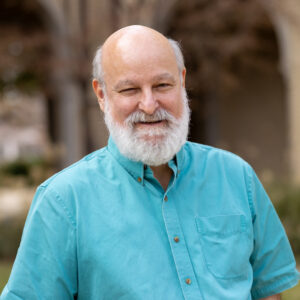
Dr. Bock has earned recognition as a Humboldt Scholar (Tübingen University in Germany), is the author or editor of over 45 books, including well-regarded commentaries on Luke and Acts and studies of the historical Jesus, and works in cultural engagement as host of the seminary’s Table Podcast. He was president of the Evangelical Theological Society (ETS) from 2000–2001, has served as a consulting editor for Christianity Today, and serves on the boards of Wheaton College, Chosen People Ministries, the Hope Center, Christians in Public Service, and the Institute for Global Engagement. His articles appear in leading publications, and he often is an expert for the media on NT issues. Dr. Bock has been a New York Times best-selling author in nonfiction; serves as a staff consultant for Bent Tree Fellowship Church in Carrollton, TX; and is elder emeritus at Trinity Fellowship Church in Dallas. When traveling overseas, he will tune into the current game involving his favorite teams from Houston—live—even in the wee hours of the morning. Married for 49 years to Sally, he is a proud father of two daughters and a son and is also a grandfather of five.

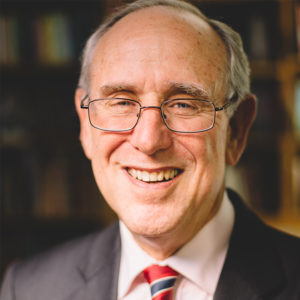
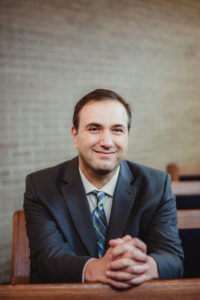 Darrell L. Bock Kirill Bumin Mitch Glaser Mordechai Inbari