

Progressive Dispensationalism, Kingdom Theology, and Historic Premillennialism (Part 2)
How does progressive dispensationalism resolve the tension between God’s enduring promises to ethnic Israel and the multinational reality of the Church, and where does it part ways with George Eldon Ladd’s historic premillennialism? In this second part of their discussion on eschatology and kingdom theology, Darrell Bock is joined by Craig Blaising (Senior Professor of Theology at Southwestern Baptist Theological Seminary) to evaluate early church chiliasm, critique the hermeneutics of replacement theology and re-signification, and respond to common covenantal objections regarding the land, national structures, and the timing of the rapture. Join them as they explore how the eschatological kingdom brings holistic redemption to both individuals and nations, celebrating the deep reconciliation and shalom inaugurated through Jesus Christ.

The Table is a weekly podcast on topics related to God, Christianity, and cultural engagement brought to you by The Hendricks Center at Dallas Theological Seminary. The show features a variety of expert guests and is hosted by Dr. Darrell Bock, Bill Hendricks, Dr. Kymberli Cook, Kasey Olander, and Milyce Pipkin.
Timecodes
- 00:00
- Welcome and Introduction
- 00:16
- Recap of Part 1 and Setting Up the Discussion
- 02:36
- The 1980s Eschatological Landscape
- 04:03
- George Eldon Ladd and the Formulation of Historic Premillennialism
- 05:56
- The Structural Divide: Pre-Tribulational Rapture vs. Post-Tribulational Premillennialism
- 07:52
- The Two Peoples Model in Traditional Dispensationalism
- 10:21
- Daniel’s 70 Weeks, the Prophetic Gap, and the Mystery
- 12:30
- Ladd’s Critique: The Kingdom of God as Continuous Biblical Thread
- 17:38
- Progressive Dispensationalism: Beyond the Two-Peoples Parenthesis
- 19:11
- An Extension of the Storyline: Why the Church Is Not Plan B
- 24:10
- A New Creation: Transversing Boundaries Without Erasing Corporate Identities
- 27:30
- Critiquing Ladd’s Replacement Hermeneutic
- 33:17
- The Integrity of God’s Covenants
- 34:42
- Prophetic Intertextuality: Isaiah 19, Zechariah 2, Amos 9, and Hosea in Romans 9
- 37:37
- Romans 11: Gentile Inclusion Does Not Mean Israelite Exclusion
- 40:29
- Historic Premillennialism Evaluated
- 45:58
- The Tribulation Saints
- 47:58
- The Complex Parousia
- 48:58
- Answering Objections: Has Israel Been Absorbed into the Church?
- 52:44
- Answering Objections: Divine Equality in Grace vs. Functional and Historical Uniqueness
- 55:29
- Answering Objections: Holistic Salvation and the Physical Reality of the Land
- 57:55
- The Restoration of Israel in the Prophets and Acts
Resources
Transcript
Darrell Bock
Welcome to The Table Podcast, where we discuss issues of God and culture to show the relevance of theology to everyday life. I’m Darrell Bock, one of the hosts of the show, and executive director for cultural engagement at the Hendricks Center. And this topic is a part two of a discussion we have on eschatology, and in particular, kind of the plan and program of God, the kingdom program of God, and how to think about it. My guest is—I guess I should refer to him as a cohort in crime.
Craig Blaising
We have been called that.
Darrell Bock
Craig Blaising. He and I have been working together in this area for well, let’s just put it this way: since we were young and have been engaged in the discussion of eschatology, not just internally within Dallas Seminary, but broadly across evangelicalism. And we wanted to do a podcast that focused on the relationship between what is sometimes called progressive dispensationalism, what we like to talk about today is kind of kingdom theology and historic premillennialism. We had a previous podcast in which that was supposed to be the topic, but by the time we worked through defining kind of what the area was, we just ran out of time. So we said we’re going to come back and do a part two. My understanding is that part one of what we’re discussing is going to be released here fairly shortly, and then the intent is to release this podcast not immediately after, but fairly shortly after the part one comes out. So there’ll be context for this podcast that normally is not a part of the podcast that we do. That’s a part of the conversation. So let’s go back and do a little bit of history work first, and start with let’s go back to the ‘80s, okay, when we were young, and talk about how the, I guess, lay of the land with regard to eschatology in the ‘80s and how progressive dispensational and historic premillennialism became conversation partners as a result.
Craig Blaising
Well, in the ‘80s, at the beginning of that decade, when people thought about dispensationalism, they thought about what today is referred to as traditional dispensationalism, and the alternative in most people’s minds at that time was a covenant theology expressed either in amillennial terms or in premillennial terms, and so the phrases covenant premillennialism and historical premillennialism were used somewhat interchangeably to talk about the alternative to a dispensational premillennialism,
Darrell Bock
And it came out of—it was in a context in which there had been what, three, four decades, maybe of give and take between the two parties that could be characterized as—how can I say this? Your blood pressure changed when you discussed these topics.
Craig Blaising
It certainly did for a lot of people at that time. Yeah, that’s true.
Darrell Bock
It was a very difficult discussion in some ways within evangelicalism about how to think about eschatology, which, by the way, is a is an attitude towards it that sometimes is not entirely lost today. You still have a little bit of that still going on, and so I think it’s important to actually, if you’re going to understand the game, you got to understand the players.
Craig Blaising
That’s true. And for historical premillennialism, that title really was developed by George Eldon Ladd. And you talked about the decades before the ‘80s. Ladd began writing in the 1950s, Professor of New Testament Exegesis and Theology at Fuller Seminary. Ladd was a premillennialist, and early on he was a dispensationalist, but for a variety of reasons in his work in New Testament theology and exegetical issues as a New Testament scholar, he came to a position in opposition to dispensationalism. He rejected dispensationalism and formulated what he argued was a more—he argued was a more traditional form of premillennialism. And he called it historical premillennialism. And the thing is, that title has now become the title of choice. You even—over 30 years ago was a covenant premillennial alternative. People today ask, “Are you a dispensational premillennialist or are you a historical premillennialist?” And so his nomenclature, his label has stuck, and a lot of the ways in which he expressed that historical premillennialism has survived somewhat, although it’s been modified by some people.
Darrell Bock
Okay, so let’s talk about—you said he moved from dispensationalism to historic premillennialism. Let’s talk about the difference between traditional dispensationalism and historic premillennialism as a setup for them. Then we’ll talk about progressive.
Craig Blaising
Yeah, the key difference—there’s different ways of looking at where the difference is. For Ladd, the difference was the pre-tribulational rapture. Dispensationalism affirmed a pre-tribulational rapture. Ladd affirmed a post-tribulational rapture, and so for a lot of people today, if they use the label historical premill, they mean that they’re post-tribulational, but the issue was not just a matter of when the rapture was. It was how it was worked into the system of eschatology. And dispensationalism, or what’s referred to as traditional dispensationalism today, worked with what I call a two-peoples parenthesis model of understanding the New Testament, understanding the narrative coming from the Old Testament through the New Testament, which is that God is dealing with two distinct peoples. They’re like two separate people groups. Like, if you are a Jew, you can’t be a Gentile. If you’re a Gentile, you can’t be a Jew. But in this case, the people group of the church, which was understood to be utterly distinct, from Israel. So you have Israel, you have Gentiles, you have church, and they read the storyline of the Bible in terms of a parenthesis. So you’re coming, reading the storyline of the Bible up to the ascension of Jesus, where the church begins, and at that point, dispensationalism saw a big parenthesis coming in the storyline—
Darrell Bock
in relationship to what God was doing with Israel.
Craig Blaising
That’s right.
Darrell Bock
Okay.
Craig Blaising
Yeah, the whole storyline out of the Old Testament and the promises, the plan of God revealed the prophecies regarding Israel, and to some extent the Gentiles, but they were particularly focused on Israel, and that hit a parenthetical wall. And so, in the New Testament epistles, God is describing a completely different people with a completely different future, with a completely different purpose, a completely different story.
Darrell Bock
So it’s a discontinuous storyline that says we’re proceeding with Israel up to the point where Christ comes. Israel isn’t responsive to what it is that Jesus offers. The church comes in, and the church now is that entity through which God is working. But there is, and this is true of historic premillennialism, I think as well. There is a place for Israel in the future, although it’s a little vague in historic premillennialism.
Craig Blaising
Yes, and there’s a reason for that. Okay, but I think the key is that on that that parenthesis of the church program and the church story? That parenthesis ends with the rapture, and so the pre-tribulational rapture was part of the two-peoples parenthesis construct that dispensationalism worked with, so the parenthesis ends with the church taken out of the storyline, as it were, into a heavenly abode, and then the story resumes where it left off.
Darrell Bock
With the tribulation period in the movement to Jesus coming to Earth.
Craig Blaising
and so He switched to Israel. The way God works with Israel, the whole covenant that He has with Israel now is back in play, and that’s why you saw the tribulation is primarily Jewish, the millennium is primarily Jewish, and so on. So that’s the way dispensationalism read the story. Ladd didn’t read it that way.
Darrell Bock
So let me go back to this because it’s important. So if I have a conversation with a traditional dispensationalist and they say, “Why in the world would you see the storyline that way?” I suspect that what they would say back to me is, “Well, all I’m doing is reflecting Daniel’s seventy weeks.”
Craig Blaising
They did. They saw that there was a—so the sixty-nine sevens of years that Daniel is given as a revelation ends with the destruction of Jerusalem and the Messiah is cut off, the crucifixion of the Messiah, and then there is a 70th seven, a seven-year period—
Darrell Bock
All by itself hanging out there.
Craig Blaising
That in that—with that seven-year period, the consummation is brought together. It’s a seven-year tribulation. Now people have been reading this for years, for centuries, and the question is, you know, what’s the relationship here? And so, dispensationalists saw that there was a gap of time. Without belaboring it, let’s just say Daniel was focused on Jeremiah’s prophecy of 70 years, and you know Daniel—I mean, and Jeremiah 29. The 70 years would come complete, and Jeremiah talked about the restoration. So there’s a gap between the 70 years coming to an end and the restoration. Jeremiah talked everywhere in his prophecy, the restoration of Israel. So you could say there was a gap there, but then Daniel is given revelation that, hey, you know, I can actually—you can see how that gap’s going to proceed, but then that gap ends with a gap. Okay, so but what dispensationalists did that Daniel doesn’t talk about is the gap is filled with a different people and a different program. You don’t get that from Daniel, but dispensationalists felt that that’s the way to understand the New Testament.
Darrell Bock
They put that under the heading of mystery. They said there’s a mystery that gets revealed in the New Testament that fills that gap in and says this is how it works. Yeah. Okay. So Ladd comes along and says, “Nah.”
Craig Blaising
Well, Ladd had been working in New Testament studies. The big issue in New Testament studies was the kingdom of God, and so he’s dealing with themes and the whole issue of the New Testament use of the Old Testament, which makes the parenthesis impossible because there are things happening in the New Testament that are connected in a continuous way with themes from the Old Testament,
Darrell Bock
And by themes in the New Testament, you mean things happening within the church period that are taking place, that are alluded to or described in the Old Testament. So it raises the question: there’s must be a connection here.
Craig Blaising
Must be a connection, and that’s what he was working on, and especially did a lot of work on the Kingdom of God theme, which is a continuous theme coming out of the Old Testament, running not only through the Gospels with the teaching of Jesus, preaching of Jesus, but also into the New Testament epistles, the very epistles that dispensationalists like to focus on, Ephesians, Colossians, and so on.
Darrell Bock
Okay, so before we go, let me let me I’m I’m put on my biblical theology hat for a second. When we talk about the kingdom in the Bible, we have to realize that the kingdom in the Bible is talked about in at least two ways that it’s important to keep your eye on because there is an extant kingdom in the Old Testament, particularly in the Psalms, etc. that says God reigns; His rule is over. You’re not looking for anything new or fresh. God’s rule is what it’s about. I like to say it’s God’s right to rule as a result of His being Creator. That that’s one way to think about it. Okay, but then there’s another kingdom conversation that’s about God fixing what has been broken, and that is God operating as Redeemer, and that has introduced the idea of a promised kingdom in the Old Testament that doesn’t exist yet that everybody’s looking for. That’s right, and that’s what that kingdom is. What we’re talking about in this conversation is that, right?
Craig Blaising
Yes, I refer to it as an eschatological kingdom.
Darrell Bock
Okay,
Craig Blaising
That you have then, especially in the prophecies of Israel’s restoration, there then begins projected a kingdom that’s God’s going to establish on the earth. The clearest, I think, is in Daniel, where in Daniel 2, it comes out of heaven, established us on the earth, and it never passes.
Darrell Bock
And it’s not made with hands. That’s one way it’s described, which is exactly the language you see in the New Testament epistles, which is interesting. And so you’ve got this kingdom that is offered, and you have a mix of things in it. You have the forgiveness of sins, you have the provision of the Spirit or the law written on the heart, depending on how you want to think about New Covenant language, you have the idea of total deliverance of shalom, etc. And you look at that list and you go, well, I think I see some things that are said to have happened, and I see other things that haven’t happened yet.
Craig Blaising
Yes, that’s right. So, in fact, you’re moving into a structure that’s revealed in the progress of Revelation in the New Testament, where this eschatological kingdom begins to appear in stages, and Ladd noticed that. He noticed that the way the New Testament speaks of it, that there are these stages progressing toward complete fulfillment of this eschatological kingdom, so the thing that progressive dispensationalism focuses on is that that kingdom is multinational. So, the hopes of Israel, the plan of God for Israel, are fulfilled in that kingdom. The plan of God for all peoples and all nations is fulfilled in that kingdom, and so it is a it it it develops the prophecies of the Old Testament. The plan of God for an everlasting kingdom is being fulfilled
Darrell Bock
and we’re moving toward we’re moving towards the consummation, and we’re moving towards the achieving of a full reconciliation that touches everything in the creation. So, if I were to put historic premillennialism and progressive dispensationalism next to one another, what I would say is that historic premillennialism said this story fundamentally is about there’s a heavy element of it that’s about continuity, and that we need to see the connections coming out of the Old Testament that are progressing as Revelation progresses, and are landing in places some of which the realities of some of which have already been realized, and the realities of other parts of it yet remain. Progressive dispensationalism came alongside that and said that’s part of what’s going on, but the way in which Israel is being handled in this story isn’t clear enough in relationship to the original set of promises that God gave to Israel. Is that a fair element of at least one of the contrast points?
Craig Blaising
Yeah, I think the question is, once you realize that let’s back up and say this, that what progressive dispensationalism is is a development of thinking, rethinking, and evaluating biblically the framework by which dispensationalism is working, and it came to the point where the two-peoples parenthesis theory was seen not to fit. All right, scripture that there were too many, there were too many problems. It accomplished things. It did accomplish seeing a clear future for Israel, and it did accomplish seeing the church as a new work of God that’s not to be confused with Israel. And it did that.
Darrell Bock
It also spoke to the fact that when we’re thinking about Israel in particular, in one sense have to underline that in one sense there’s a gap between where the program is headed for Israel and the consummation because the career of Jesus, which was presented as a package in the Old Testament, got, if I can say it this way, split into two parts. There was what God Jesus was doing now to redeem, and then there’s what Jesus would be doing in the future to bring consummation. And when you have a package, and you do this to it, look, I’ve got a gap in the middle.
Craig Blaising
Well, I think I would prefer to talk about an extension.
Darrell Bock
Okay.
Craig Blaising
So what we see is an extension of the storyline. It keeps going on, but in new things are brought into the storyline. It’s like a reading a novel, a narrative in which there’s a twist in the plot, and it doesn’t mean that you’ve gone to a different book, but you have a there’s been a change of direction. Things are taking longer. New things are coming in. That’s happening here. But the idea that you have something completely novel taking place between those two advents, between the ascension and the return. That’s what doesn’t work. Yeah, that just doesn’t work like that.
Darrell Bock
So—so, and just to underscore your point in saying, look, it was anticipated. When I get into these discussions with fellow dispensationalists, I say, “Look, this can’t be a plan B, and this can’t be something else because the Old Testament itself said His own would reject Him.” You know, we know that when He initially showed up and there was a response, the Old Testament was saying, guess what? They’re not going to accept the initial effort that this represents, and so it was—if I can use a metaphor, it was baked in. It was baked into the plan.
Craig Blaising
It was baked into the plan, and you know, when people talked about the gap, what I think they really meant was that there was a gap of time before the consummation hit, in which all the blessings on Israel and the nations and all that would be fulfilled. So there—you know, people thought of the gap in terms of the blessings of the covenant that it’s been delayed, you know, in some respects, in some major ways that the prophets were speaking, but—and when I talked about, you know, something that’s happening here that’s not completely novel, it is new. You know, the work of the church is new, but it’s not a completely different story. All right, so it’s actually a way in which the promises made in the Old Testament are being fulfilled because they all promised a multinational kingdom.
Darrell Bock
And so we pour ourselves into the elements of the movement of that story. And what we see is some of those elements are already in place, and some of those elements are yet to come. What is sometimes called the already-not-yet, or the now-not-yet view of the kingdom. Let’s talk about one other, perhaps, difference. I don’t know whether this is a difference with historic premillennialism per se, but it certainly is what kingdom theology, what progressive dispensationalism, is trying to say. The church is not a people. Let’s talk about that.
Craig Blaising
Right, that is probably one of the most eye-opening observations that one can make about all this and understanding the movement of the storyline of the Bible, because both replacement theology and traditional dispensationalism saw the church as a people group-like people, and they’ve been seeing it that way. Traditional theology had been seeing it that way since, you know, since the Jewish wars in the second century ended, and supersessionism came in.
Darrell Bock
So it’s a third race, right?
Craig Blaising
Yeah, it’s—you know, it’s the idea of a third race. For a while, it was just the Gentile people, and then it was, you know, a third race between pagans, Jews, and Christians. At any rate, over centuries, there’s been centuries of thinking like this that the church is, and that’s why the Jews—there’s this long-standing contrast between the church and Christians and Jews, between the church and Israel, and that’s when Israel was defining itself in the second century and so on and into the third and into the fourth century as a Judaism without Yeshua. Okay, and that becomes the definition of it. So these things are coming into place, and the church was thought of as a people. So replacement theology: the church replaces Israel. The only way you can do that is if it’s a people that replace a people. For dispensationalism, they said, “No, we got to maintain God’s plan for Israel. So we’ll keep Israel as a people, and we’ll see the church as a different people that coexist with them, also interrupting them in the timeline, the storyline of the Bible.”
Darrell Bock
That’s the parenthesis.
Craig Blaising
Yeah. So, but when you come to realize that the New Testament never, never presents the church as a people in contrast to Israel. The contrast in the New Testament is always Israel and Gentiles. Israel and Gentiles. It’s never church and Israel. The church is always composed of Jews and Gentiles, and the kingdom idea from the prophecies, really going back to the covenants in the Pentateuch through the prophecies of the prophets from Isaiah, you know, onward, all the way to the book of Revelation and the way it sees the consummation. There are nations, plural there; there’s Israel, and there are Gentiles. So then the question is, what is going on with the church? And I think the best way to explain that, and Paul talks about this in various places, and that is that it is a communion that’s in Christ, created by the Holy Spirit; that’s what the body of Christ is. And you may be Jewish, you may be Gentile, may be one of multiple different kinds of Gentiles. But in Christ, there is a resetting at the basic humanity level of all the peoples, without erasing their personal identity or their corporate national identities or ethnic identities, but it resets them anthropologically as a new creation.
Darrell Bock
And it transcends any particular nation by incorporating many nations simultaneously.
Craig Blaising
It does. It—I like to use the word transverses. This is something that transverses all the distinctions—personal, national, corporate—all the distinctions that we as humans have, because at the base level of our common humanity, there is a new creation, and in Christ. And so that work of the Spirit transverses all of those boundary lines and resets the whole thing, which allows you to talk about an Israel that’s in Christ. You can talk about Gentiles that are in Christ, and you can talk about the everlasting kingdom come to consummation with Israel and the Gentiles, in which everything, everyone who makes up all of those entities is directly united in Christ and sanctified by the Holy Spirit.
Darrell Bock
So, in the end, the picture is you’ve got a what I’ll call a depth reconciliation, a deep reconciliation that leads into shalom. In fact, you can’t get to shalom between warring tribes without a reconciliation that takes you to shalom.
Craig Blaising
That’s Ephesians 2. He made peace by removing hostility.
Darrell Bock
So, which has massive implications for how the church should see itself in a very divisive and tribal world.
Craig Blaising
Yes, and you raised a question a little early on about Ladd and how he saw this, and particularly with Israel. And I wanted to comment, if I may.
Craig Blaising
Ladd was writing in the 1950s, and after Israel became a nation, and there were a number of publications in the ‘50s, talking about whoa, you know, we had written Israel out of our theological consciousness, and this work of God in history asks us to reconsider that. And so there were a number of publications saying, well, you know, we’ve been supersessionist and all of that, but you know, there’s some place for Israel. Ladd read all of that; he was very aware of it, and he tried to, along with the others, work that out, but not as a dispensationalist. And so that led to an inconsistency in his dealing with Israel in the Scripture, because he accepted a replacement theology hermeneutic. He talked about the church as the new Israel, the spiritual Israel, the true Israel, and he defended replacement theology hermeneutics. That the promises have been re-signified. He will use that terminology. It’s been re-signified to mean the church. But coming to Romans 11, and like many others in his field, recognized that there’s got to be a place for ethnic Israel, and so it led him to the position of talking about a spiritual Israel, which he called the true Israel, and then another true Israel coming into existence within the true Israel, which, when you think about it, is incoherent, because the reason why the true Israel is the true Israel is because the promises are directed to it. Okay, that’s why it’s true. Yeah, and if the promises have been all re-signified, there’s nothing for a literal true Israel to come into existence and tap into those promises. They’ve all been re-signified, so he did not handle that very well. The problem would be in the problem of a Jewish believer, for example; a Jewish believer. You know what would Ladd do with him? Well, he’s part of the true Israel. Which true Israel is he part of? Well, he’s part of the spiritual Israel. Well, if he’s part of the spiritual Israel, then how is he? Is he not part of the literal Israel? And and how do you how do you get a true and a true? You know, it just and he had real problems handling that, and I think the reason why is because he didn’t have a holistic view of the kingdom that allowed for this multiparticularity in the kingdom of God.
Darrell Bock
In other words, there’s more to salvation than just your ethnicity. There’s also national structures, etc.
Craig Blaising
He yes, he saw the already-not-yet; he saw that he saw that it was related to the new creation that it consummated there, but he didn’t understand the multiparticularity of it how Gentiles can fit in it without Israel being resignified but progressive dispensationalism kingdom theology sees both Israel and the nations coming literally into the fulfillment of that kingdom. There’s no re-signification.
Darrell Bock
So I mean, this is one of the most important differences, and this is actually why we’re doing the podcast is to make clear, at least to a degree, where the differences lie. I’m going to reproduce a conversation I had with Daniel Fuller about all this. This was back, I think, and I want to say in the ‘90s, and he was very fascinated by what we were doing with progressive dispensationalism, as you know, and was a colleague of Ladd at Fuller. And the conversation we had because I was in the midst of visiting all these covenant seminaries and speaking to them, to which their reaction is kind of condescendingly, “Oh, Darrell, if you just keep going, you’ll eventually join us and be a part of covenant theology.” To which my response was—and we had dispensational people who were saying the same thing, and my response was, “You don’t get the critique that is a part of what we are saying, which is that there was a lack of clarity in Ladd, which you’ve just articulated, about the future of Jewish people who respond to Christ.” He recognized, and I hear this from covenant historic premillennialists all the time, “I agree, there’s a hope for individual Jews in the future. I agree that there is going to be an awakening among people of Israel in the future. But why do we need a nation and why do we need a land?” To which my response to Fuller was, Ladd was vague on how Israel fit into the original promises, and we have a response that says you don’t need to be that vague. You can be specific. There is a role of redemption not just for individual Jews, but there’s also a role at the national level in how Israel relates to the nations. And his response to me on the phone was, “You’re right, and I think you’re right.” And so this is one of the major points of difference. And of course, what’s underneath that is the idea of God made certain commitments to Israel as a people, as original recipients of His promise.
Craig Blaising
That not only did He make specific commitments to them, which have to be fulfilled, because here we bring performative language into literal interpretation, and that is, He swore with an oath that He could do it. He put it in a covenant structure. He then prophesied that I’m really going to do this
Darrell Bock
And He did so after disobedience, not just in a mode of obedience.
Craig Blaising
Exactly, and so many ways of stating that it will be done that it becomes a matter of the integrity of God. Does God lie or does God tell the truth? And so He speaks truthfully and will fulfill it. But what people weren’t noticing is that that kingdom that was promised and in which Israel would find her promises being fulfilled always had Gentiles in it from the very beginning, all the way through the prophecies and the prophets. They’re always there.
Darrell Bock
Isaiah 19 perhaps being the most vivid example where Egypt, Assyria—not exactly friends of Israel when Isaiah was writing—and Israel are all said to be part of a highway that they will share in, as they all share identifications that identify them as the people of God. It’s interesting that they’re all called the people of God distinctly on the one hand, and yet they’re all part of the one people of God on the other.
Craig Blaising
Well, this is the interesting thing because that Isaiah 19 fits with a set of prophecies in which “my people” is used. Gentiles, we’ve got Zechariah 2, where the many nations come, and they will be my people. We’ve got James in Acts 15 quoting from Amos 9, where he says, you know, God is taking a people for Himself from the Gentiles. So we’ve got several texts that are using that language, which, if I may not get off too much on a tangent, when he comes back to on this issue to hermeneutics with Ladd, because Ladd spends some time on Romans 9, a quotation from Hosea 1 and 2, where he says, “Not my people, you’re not my people,” and then he says, “In Hosea, I will take not my people, and they will be my people.” Okay, and then Paul quotes it in Romans 9, and he says, and this is true even of us Gentiles, and because I take not my people and make my people. So Ladd looks at that, and he says, see, that’s re-signification. That right there is changing the meaning of the original prophecy, because Ladd says you can look in Hosea, and there’s nowhere in the context of Hosea is there a reference to Gentiles. It is to Israel that he’s saying this. Okay, the problem with that is that when you’re doing contextual interpretation, it’s not just that specific limited context, but the context of prophecy. The prophets are intertextual. The prophets interconnect with one another. Prophecies that are made are taken up and reiterated in maybe slightly different ways, but they connect with one another, and so when you put Hosea in the context with Isaiah, here’s Isaiah 19. You know, “my people.” He’s saying to Egypt. You put it with Zechariah 2, “my people.” He says of the Gentiles. You put this with Amos, where you’ve got, you know, “and the Gentiles who be called by my name,” and so is it implausible that there is some kind of irony going on here in Hosea that Israel acting like Gentiles are “not my people” become “my people,” and by the way, there is a plan, even in the greater context, to take the Gentiles who actually are “not my people” and make them “my people”? So that what Paul is saying doesn’t require re-signification; it requires broadening the prophetic context.
Darrell Bock
Well, not only that, but you might be able to make the case for re-signification if you didn’t have Romans 11. Romans 11 comes along and says, “Look, if God can take unnatural branches and put them into the tree of promise, okay, then certainly He can take the natural branches and regraft them back in,” and that’s exactly what Paul foresees. And the topic of the natural branches being grafted in has not left the topic that he introduced in the beginning of chapter 9, which is, “My heart is for my people. I wish that I could be a curse so that those who don’t believe would come to faith.” I mean, he’s never left that as part of his topic. So even as you include Gentiles into the broader sweep—my line has always been: Gentile inclusion does not mean Israelite exclusion. And so as you broaden the promise and show the breadth of the promise, that doesn’t mean you remove the original recipients.
Craig Blaising
And that shows the problem of interpretation. It’s a problem of what is technically called a pre-understanding, or might be called a confirmation bias. It’s the function of tradition that people don’t recognize how powerful replacement theology is in the theological mind. It’s there so that when it’s looking at it, it thinks replacement, but the very texts that you’re pointing out speak very clearly against it. In fact, that’s not the way you need to think of it. So when you pull back and say, well, how are we to think of this? And that’s where you’ve got to see the broader picture of the kingdom of God, a multi-particular fulfillment. God has a plan for all peoples. He has a plan for Israel. Israel is always a particular nation. It hasn’t become the whole. It hasn’t been replaced by the whole. It has a place, as God told David, “I have a place for my people, Israel,” and then He has a place of blessing for the Gentiles. You got to see that in order to see the consummation of God’s plan of salvation.
Darrell Bock
And you have to be able to understand that Scripture says not just individual salvation at the level of individuals, but there also is corporate salvation that it’s at the level of the entities and structures that exist at a corporate level in the creation. That also will be redeemed, and I think when I think about what the pushback by progressive dispensationalism on historic premillennialism where it lies, it lies in that space.
Craig Blaising
Yes, it does. Now you mentioned historical premillennialism. Shall we talk about premillennialism?
Darrell Bock
Yeah, we can. I also want to—
Craig Blaising
This is the structure. You know, if you don’t deal with Israel, you can’t talk about this.
Darrell Bock
So we can do that, and then I want to deal with objections. So let’s talk about premillennialism.
Craig Blaising
Well, the thing is that Ladd argued, and this is a lot of people, you know, who take that position to say, “Well, I want to be premill, but I don’t want—” A lot of them saying they don’t hold to the pre-trib rapture because they’ve been told that there is this premillennialism that doesn’t hold to that; it holds to a post-tribulation rapture. So there were several things to Ladd’s historical premillennialism that I think we need to point out. And you just tell me if we keep going. But he argued several points. He argued that the reason for the label is, you know, dispensationalists had made reference to the early Christian chiliasm, the early Christian premillennialism, in the second century, and so on, first century, second century. The second-century writers, especially in early third, where you’ll see references to millennialism, and they argued that they found a commonality there. Mainly, their argument was that these people believed in imminency, so they must have held to the pre-tribulation rapture. Ladd argued that they didn’t hold to the pre-tribulational rapture. He reviews them, and he says that these people held to a post-tribulational rapture, and that argument, which has convinced so many people that actually Ladd’s view is the more historic, it’s the early, earliest Christian view, has been accepted uncritically by a lot of people. Michael Svigel, who’s a professor here at Dallas Seminary, has published a book just recently here on the The Fathers on the Future, in which he goes over several passages of Scripture, not only the passages from the early Christian writings, not only those Ladd mentions, but several that he doesn’t mention. Tim Weber, who published an article in Craig Blomberg’s book A Case for Historic Premillennialism, also does a brief historical review, and both come to the same conclusion that it’s not real clear what they all meant back then. There are various forms of premillennialism, and the rapture is mentioned a few times, but exactly what they’re doing with it is not very clear. And Ladd didn’t cover some passages that could arguably be construed as a pre-tribulational rapture. So all that’s been published. Weber had an excellent comment when he said, “Look, we need to look at Ladd historically. Where does historical premillennialism fit in the history of premillennialism?” And he said, “Actually, what you have to see is Ladd was a futurist.” I have to be careful all these terms because the audience wants to know what does this mean, you know? So in the early 19th century, the division among premillennialists were historicists who saw the tribulation unfolding in our time and our history versus futurists who saw the tribulation as wholly future. There were two kinds of futurists. There were the dispensationalists that followed Darby, and there were futurists who weren’t dispensational. They believed that there would be a post-tribulational rapture at the end of a tribulation that was wholly future. The point Weber makes is that Ladd really dates back to that wing, that other wing of futurism. It’s just as historical as dispensationalism is, because the earlier form of premillennialism, there were all kinds of ways of understanding the tribulation. Dr. Walvoord wrote a book dealing with this called The Blessed Hope and the Tribulation, saying there’s multiple forms of post-tribulationism, and one has to know which one one is talking about to understand how it deals with the rapture. So all of that to say there was this historical thing, okay, and the conclusion to that is there’s nothing more historical about Ladd’s premillennialism than there is about dispensational premillennialism. But other than that, and then you tell me how we go from here, but he listed several things that get repeated today. For example, he said you look at the tribulation prophecies in the New Testament, and the church seems to be in it. And so, to him, that meant post-tribulational rapture, progressive dispensationalism that does not see the church as a people group, and consequently does not see the rapture as the removal of the people group in order for another people group story to continue.
Darrell Bock
Right.
Craig Blaising
Doesn’t see the rapture as eliminating the formation of the body of Christ. The rapture removes all Christians at that time, but what the Book of Revelation tells us, what Jesus’s comments on tribulation tell us, is that the reality of salvation reforms, and salvation is only in Christ. And as it reforms, that relationship to Christ reforms with it, and those people are parts of His body.
Darrell Bock
You’re talking about tribulation saints?
Craig Blaising
The tribulation saints, and when we move in the millennium, and the people who come to faith, who are mortals that come to faith are part of that body. What the church is is part of the formation of the kingdom people, the people of the everlasting kingdom. So, at any rate, the fact that there are believers appearing in the tribulation does not count against a pre-tribulational rapture, as Ladd thought it did. He had other things too on that. He said, you know, the blessed hope is not the rapture; it’s not being rescued from the tribulation, and that’s the way pre-tribulationists were arguing it. And he said it’s the second coming. That’s Titus 2. The blessed hope, the appearing of our great God and Savior Jesus Christ, who gave Himself to redeem us from all iniquity. That’s what we’re looking forward to. On that, he’s right, and not all dispensationalists viewed the rapture coming as a solitary single event, like Ladd was viewing the second coming, the return as a solitary event. Ladd recognized and wrote about this that actually the coming is a complex event, and the parousia is a complex event. But he didn’t develop that.
Darrell Bock
It’s part of a larger sequence, the whole of which represents—
Craig Blaising
The whole of which is the coming.
Darrell Bock
Yeah, yeah.
Craig Blaising
The coming. Michael Whitlock has written on this that the coming, and there were dispensationalists like Strombeck and so on that talked this way. That the whole tribulation is like a theophanic appearance with respect to the creation that causes the trouble and so on. God is coming, and so the whole thing is the coming. So pre-tribulationists can see the second coming as the focus of the blessed hope. So there were things that Ladd was objecting to that actually get worked out when you view things from a different perspective than most traditional dispensationalists are viewing them.
Darrell Bock
Okay, so that’s the historic premill part. Let’s—me close by having us deal with some objections that get brought up when people talk about eschatology, and I’m thinking about the objections that a historic premillennialist or a covenantalist will raise about the dispensational position. And now I’m having trouble getting my notes in front of me, so give me one second while I do that, because my machine shut down. And let’s see here. So I have four of them. First one is: Israel is no longer just Israel. So—and we’ve kind of already talked about this when we talked about Romans 9 to 11 and the Hosea passage and the way Ladd saw that, but the whole point of response I think is that ethnic Israel or Israel as a distinct people hasn’t gone away. From Scripture, it’s still there, and it’s still there in eschatological passages like Romans 9 to 11, especially Romans 11.
Craig Blaising
A lot of people making that objection wanted to go to the olive tree in Romans 11 and say, “See, the Gentiles are added to Israel, so this is the new Israel. It’s got all the Gentiles in it and believers and so on.” And actually, the way to understand what Paul is talking about there, and the adding of the Gentiles and the olive tree, there’s some things he was accomplishing by that illustration, and some things are not real clear. But you have to go to Romans 15 because Romans 15 pulls it all together. It’s a kingdom, and he quotes from several of these passages. At the end of Deuteronomy, he quotes from Isaiah 11. He quotes from several passages where the Gentiles, together with Israel, are His multinational kingdom. That’s what’s driving him. So using the olive tree to illustrate the connection, but he’s not saying that Israel has been re-signified.
Darrell Bock
So, and just to add the point with another text in Ephesians 2, when we get to the discussion in Ephesians 2, and Israel is near and Gentiles are far, the picture isn’t that Gentiles are brought into Israel. The picture is that Israel and the Gentiles are put into a new man.
Craig Blaising
They’re called co-heirs. They’re fellow members. Their fellow members are co-heirs. The syn- compounds, which in the book that we edited on dispensationalism in the church, Carl Hoch wrote an excellent essay there, and he called the syn- compounds the ‘with’ compounds. They’re with them together. Okay, as Christ has remade the humanity of both into a new creation.
Darrell Bock
So it’s a reframing into a new entity, and that new entity is made up of this multinational dimension that we’ve talked about—
Craig Blaising
The New humanity,
Darrell Bock
And I can’t get to a reconciliation between Israel and nations if Israel isn’t there,
Craig Blaising
Right, or if all the Gentiles have become Jews.
Darrell Bock
Exactly right. Yeah. So okay, so that’s objection number one. Objection number two is: God no longer favors one ethnic group over another, Christ has made us all equal, and I’m going to go ahead and frame an initial direction of response to let you fill it in. That’s true, but that doesn’t mean that Israelite exclusion has taken place, nor does it mean that we’re talking about a kind of Israelite nationalism, where the focus is only on Israel in the consummation.
Craig Blaising
Right. So you know the question is, what does favor mean? And I think—I mean the question sounds like salvation, you know? And so there’s an equality of salvation, and Ephesians 2 talks about that we’re like stones that are put together in equal relationship to the Lord, and we’re made a temple. He indwells us all.
Darrell Bock
Galatians 3 has the picture we all have equal access to the Father.
Craig Blaising
Because we’re all in the one Christ, which Paul develops in Corinthians. He’s the man, and we’re like the—you know, we’re like the seed here that come from Him because He gives us His Spirit, so that unifies them. But it doesn’t take away the ethnic, national, corporate structures, and in those structures, there’s a history, and in that history, in the fulfillment of the kingdom, there’s a recognition. “Wow, God did that for you. You know, look what He took. He’s going to rule from Jerusalem.” I mean, a lot of us Gentiles would say, you know, we weren’t even in the story. He saved us out of His mercy, and Israel’s got a testimony: “I totally blew it, and then He, out of His mercy...” And so, what you have in celebration in the prophets when they see the Gentiles celebrating with Israel and her and the favor of God upon her is a co-celebration of God’s mercy. There’s not pride. There’s not arrogance. There’s not envy going on there in the kingdom, and you know it’s kind of like the prodigal when the prodigal comes home, and there is a great celebration. The older brother is not happy because, “Hey, what about me? Why are you favoring him?” And the answer is, “He was dead. He’s alive.” You know, this is what we need to rejoice in. So he’s invited to come to the party. He does. We don’t know whether he finally did or not, but he’s supposed to.
Darrell Bock
Yeah, that’s right.
Craig Blaising
And so when he does, there’s no thought that, “Oh, but they’re privileged,” because actually, at the bottom line, we’re all sinners. So the very fact that we’re blessed in any way, wherever, whatever position or place in the kingdom He gives us, it’s all of mercy.
Darrell Bock
Mercy is supposed to—how can I say?—beget humility.
Craig Blaising
Yeah.
Darrell Bock
So here’s the one that I think I hear more than any other: the promise is for the world, so the land no longer matters.
Craig Blaising
So does the world not have any land in it?
Darrell Bock
Yeah. Does salvation not entail all structures?
Craig Blaising
Yes, exactly. So this is holistic salvation. It’s holistic. The plan or the new creation is a renewal of the whole, and that includes material, spiritual. It includes the corporate. It includes the personal, and includes land. And our identities that we have are in relationship to place. There’s been a lot of writing on this. That’s part of our identities. Israel was given a place, and so when the prophets talk about the granting of that place and the blessing of it, they talk about that along with the renewal of all creation. “I create new heavens and a new earth,” so the peoples of the new creation of His kingdom—this is in Acts where he says He created from one man all the nations on the earth, and He appointed habitations for them. The habitations, the particular places, are all renewed. So the idea that somehow land drops out, what you’ve done is just gone docetic. You’ve gone into a place where there’s no territoriality in the new creation. No, all of that is redeemed, and with it, it’s redeemed in all its particularities, including particular pieces that have promises associated to them.
Darrell Bock
So these last two objections share something that I like to talk about, which is that the problem isn’t what covenant theologians are affirming about what the Bible takes, but it’s what they leave out. They’re leaving out certain things that are also part of the picture, which, for lack of a better description, dispensationalists are reminding them, “Oh, that’s in there too.” Yes. Yeah. So okay, let’s do the last one. The last one is: the promise is for individual Jewish renewal, but not for the nations. Again, we’ve sort of already dealt with this all the way through, but I think it’s worth saying again. To which my response comes in three levels here: What do you do with Acts 3, where Peter says, “You want to know what’s going to happen when Jesus comes back, just read your prophets,” and Israel’s all over that story. The picture of that Israel being all over the story is the Isaiah 19 that we’ve talked about, and the picture of Israel being all over that story is the Romans 11 that we’ve talked about.
Craig Blaising
Yes, and I would add this: that when Peter in Acts 3 speaks of the restoration, you have to hear Jeremiah because if there’s any prophet that has restoration as a theme, it’s the shuv shevut. “I will restore your fortunes.” It’s translated that way. “I will turn back to your fortunes,” and the land is mentioned over and over in there, restoration. So when Peter says that, the very term is intertextually connecting to a multitude of prophecy regarding Israel as a nation and the land and the place in the land. And one other thing, I’m throwing just on the land, I don’t think we can forget Acts 13. This is where Paul says almost as an aside, but he’s kind of rehearsing the history, and he says, you know, and they were brought in here, and he says, and He gave them—and He gave them as an inheritance the land. But that language “gave as an inheritance” intertextually pulls in not only prophets but psalms, where in the psalm it says He gave it to them as an everlasting inheritance. And so people say, well, it doesn’t mention land in the New Testament. It did there, and that’s the same Paul who says in Romans 11 the gifts are irrevocable.
Darrell Bock
In Romans 11,
Craig Blaising
yes, Romans 11. Sorry, Romans 11. The gifts are irrevocable.
Darrell Bock
So—so, and just to add to this, when I go through the promises that are made to Abraham, I make a point of saying land is repeated again and again and again and again. It was said to Abraham. It was said to Isaac. It was said to Jacob. It was said to the sons of Joseph. It was said to Moses. It was said after Israel has been disobedient. It was said in Jeremiah. It was said in Ezekiel. The land never disappears. Now, okay, we may believe in a rapture, but we don’t believe in a rapture for the land. Okay, and so—so,
Craig Blaising
And then after a rapture, we’re coming back.
Darrell Bock
So, anyway, I know maybe that’s the note to end on. But anyway, Craig, I want to thank you for coming in and helping us think through the relationship of historic premillennialism to dispensationalism, both traditional and progressive, and I think what I hope our conversation reflects is as all Christians reflect on eschatology with all the elements that are in play, it is a very complex kind of discussion that requires attention to a variety of things simultaneously, and it’s just—it’s challenging.
Craig Blaising
Yes, it is. Yes, it is. Thank you, Darrell. I appreciate being here, and we’ve enjoyed fellowship for a long time. And once again, thank you for this interaction.
Darrell Bock
You’re very, very welcome, and I thank you for listening and being a part of The Table. If you like our show, please leave a rating or review on your favorite podcast app. It’s a great way to show support and help other people discover it. And join us next time when again we at The Table will discuss issues with God and culture to show the relevance of theology to everyday life. And we wish you all of God’s richest blessings.

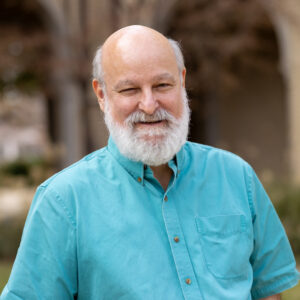
Dr. Bock has earned recognition as a Humboldt Scholar (Tübingen University in Germany), is the author or editor of over 45 books, including well-regarded commentaries on Luke and Acts and studies of the historical Jesus, and works in cultural engagement as host of the seminary’s Table Podcast. He was president of the Evangelical Theological Society (ETS) from 2000–2001, has served as a consulting editor for Christianity Today, and serves on the boards of Wheaton College, Chosen People Ministries, the Hope Center, Christians in Public Service, and the Institute for Global Engagement. His articles appear in leading publications, and he often is an expert for the media on NT issues. Dr. Bock has been a New York Times best-selling author in nonfiction; serves as a staff consultant for Bent Tree Fellowship Church in Carrollton, TX; and is elder emeritus at Trinity Fellowship Church in Dallas. When traveling overseas, he will tune into the current game involving his favorite teams from Houston—live—even in the wee hours of the morning. Married for 49 years to Sally, he is a proud father of two daughters and a son and is also a grandfather of five.
Craig A. Blaising Darrell L. Bock