

Aging from a Christian Perspective
In a youth-obsessed culture driven by anti-aging industries and a desire to move death offscreen, how can Christians embrace getting older as a sacred gift, privilege, and call to deeper spiritual maturity? In her final hosted episode, Kasey Olander is joined by Jen Wilkin alongside Bill Hendricks to explore a biblical theology of aging, the physical and emotional realities of decline, and the impending end-of-life care crisis facing the church. Join them as they discuss why all of life is caregiving, how numbering our days cultivates a heart of wisdom, and what it looks like to age with purpose and hope in Christ.
As we reflect on the passage of time, we are also celebrating Kasey’s time with us as she brings her signature warmth to the mic one last time. There will always be a seat for her at The Table, and we are so grateful for the profound conversations she has guided before she heads off to her next season.

The Table is a weekly podcast on topics related to God, Christianity, and cultural engagement brought to you by The Hendricks Center at Dallas Theological Seminary. The show features a variety of expert guests and is hosted by Dr. Darrell Bock, Bill Hendricks, Dr. Kymberli Cook, Kasey Olander, and Milyce Pipkin.
Timecodes
- 00:00
- Welcome and Introduction
- 01:03
- Why Talk About Aging?
- 03:06
- Reflecting Theologically on Aging
- 06:57
- The Reality of Mortality and Personal Loss
- 10:57
- Eternal Perspective vs. Desiring to Live Forever
- 13:33
- The Anti-Aging Industry and Moving Death Offscreen
- 18:57
- Affluence, Modern Culture, and the False Story of Anti-Aging
- 21:37
- Psalm 90: Numbering Our Days for Wisdom
- 25:27
- Generational Wealth of Wisdom and the Fifth Commandment
- 28:56
- The Graying of America and the Coming Care Crisis
- 32:07
- The Church’s Historical Witness to the Sick and Dying
- 35:54
- Reframing Caregiving
- 42:25
- Living with Fewer Sunrises
- 45:29
- The Clarity of Mortality
Resources
Transcript
Kasey Olander
Welcome to The Table Podcast, where we discuss issues of God and culture to show the relevance of theology to everyday life. I’m Kasey Olander, one of the hosts on the show, and we thank you for being here today. Today, our topic is an interesting one because we’re going to talk about the idea of aging, the process of aging. Getting older is something that happens to all of us. So we’re joined by Jen Wilkin. She’s an author and Bible teacher, and she’s been on the show several times. So Jen, thank you so much for being back with us today.
Jen Wilkin
Thanks for having me back on.
Kasey Olander
Always good to see you. And then also, our other guest is Bill Hendricks. He’s the executive director of Christian Leadership here at the Hendricks Center at DTS. And you may remember that he’s one of the hosts on the show. So, Bill, it’s also good to see you as well.
Bill Hendricks
Well, it’s great to be a part of The Table as always, but especially to come as a guest, so thanks for hosting us today.
Kasey Olander
Yeah, yeah, we’re grateful that both of you are here, and hope that you can enjoy the guest side of the table for a change. So, why are we talking about aging? For most of us, we spend our childhoods eagerly waiting to grow up, and then we spend our adulthoods missing our bygone youth, and other than that, it’s not really something that a lot of us want to think very much about. And yet, it’s something that happens to all of us as part of being human. And so, as you’re wondering that, maybe you’re also wondering why is a thirty-something hosting an episode about aging? And that’s a fair question. One, I’m not in the expert seat here, but two, it could be argued that once you kind of hit your 30s, is maybe the first time that you start being forced to think about aging. Okay, maybe my metabolism’s not what it used to be, and maybe I can’t pull an all-nighter like I used to 10 years ago, and so that’s maybe one of the thresholds of adulthood, where you start thinking about it, but it also is fun that we have kind of a diversity of ages represented here in this conversation. So that, among other reasons, is one of the reasons I’m excited for it. So I do want to mention that at The Table Podcast we had a different episode that was called Playing to the Strengths of Our Senior Saints. It was originally released in April of 2026, and our own Bill Hendricks hosted that. That was more of an episode that was about the church’s ministry and sort of some practicalities around how do we minister to our senior saints. And so I would commend that to you, encourage you to check out that episode. Then I’ll also make a distinction that this conversation is meant to be more about our own personal reflections on the fact that we are aging. What do we do with our own mortality, and how do we think theologically as believers about aging, and how is that distinct or similar to the way that the world thinks about it as well? So, Jen, I’ll start with you for our first question, but how did you start reflecting theologically on the idea of aging? Seems like a courageous move.
Jen Wilkin
Well, it’s a combination of things. I have served in the women’s ministry space now for gosh, I guess about 30 years; I’m 57, and my experience there was that talking about this was not allowed. And not only that, I was aware that if I felt that as a leader in the women’s ministry space, how much harder was it for a pastor preaching on a Sunday morning to a mixed room to say, “Hey, ladies, here’s how you should think about your, you know, your sagging jowls.” And then on top of that, the aging conversation was so often reduced to simply physical decline. Like that was the whole conversation and what to do about it, and there was a lot of confusion around: well, I mean, if aging is something that happened as a result of the fall, then maybe we should do every single thing that we can to push back against it. And so I still am seeing a lot of that echoing around out there. But the real catalyst for me was the death of my mother in 2022. I have had a charmed existence in the sense that she was the first person close to me that I lost, and so, you know, I was in my 50s by the time I had a personal loss like that. And my mother had a short illness that ended in death. Other than that, she had been, you know, just kind of rolling along, and she died right after her 80th birthday. She was in the hospital for her 80th birthday, and she came home to my house for hospice care. So she actually died in our home, and that was the beginning of a lot of reflections. But being with her during those final weeks, I began to notice that there was a congruence between end of life and beginning of life, which I think is actually pretty obvious, or it has been obvious to a lot of people. For me, again, as I said, I had a charmed existence. I had never really meditated on it, but the hospice nurse told us, you know, about three or four days into providing all of the kind of care that is provided for an infant only for an adult. She was unconscious. She said, “You know, you can actually coach her through this. You can tell her she’s doing great and it’s okay.” And I’m hearing her labored breathing, which I know many listening to this will be familiar with if they’ve held a vigil at the bedside of a loved one who was going to pass. And then she told us, you know, today is going to be the day. Like she was so acquainted with the signs of death that she knew, “Your mom’s going to pass today.” And then after a long labor, my mother had a giant exhale, and there was a crashing silence. And in the weeks that followed, it began to emerge for me how, when my own children were born, and when I myself was born, and when my mother had been born 80 years earlier, that the beginning of life started with a labor that was followed by a giant inhale and a piercing wail. And I began to wonder if there were more correspondences and if they might be given to us by a kind God, so that we can navigate life and aging with some wisdom that we might not otherwise have.
Kasey Olander
Wow, that—I am already so encouraged and fascinated because these are the kind of stories that people don’t normally share in as forthcoming a manner. And yeah, the kinds of things that a lot of us have been insulated from, like you’re talking about. And so yeah, appreciate you sharing that, Jen. And Bill, what would you add about how you kind of started reflecting on this theologically, the idea of aging?
Bill Hendricks
Well, I would start by saying that I think, like most younger people, I never reflected on it in my younger years. You know, aging is kind of like the spare tire in the back of your car. It’s not why you buy the car; it just comes with the car, right? And then one day you go out to the car and the tire’s flat, and you’re like, “Now what do I do? Oh yeah, there’s that spare in the back. It’s a big hassle, but I guess I’ve got to change it.” And so you start to kind of wake up to this reality that things don’t stay the same forever. That was accelerated for me when—it’s a very similar story, I suppose, to Jen’s. My first wife Nancy developed breast cancer in 1993, and then seven years later passed away in 2000. And that was—I’m listening to Jen tell that story, and so many memories come flooding back because she’s absolutely correct on kind of how that goes down, at least in those circumstances. And 23 years before that, I had stood at an altar and, of course, made my vows, and it ended with the phrase “’Til death do us part,” and death did do us part. And suddenly this idea of aging was vastly accelerated. And then my father retired from the seminary in 2011 and went home to the Lord in 2013. And watching him go from this iconic professor who was like Mr. Communication, very eloquent in his language, you know, very energetic and alive in a classroom—and I’d always said that’s where he really gains his energy, and the day he retires is the day he’ll start to go home. Over the next 18 months, I watched, and literally week by week, I watched a man go from, you know, really lion-like still, even at the last, to—I don’t want to say a shell of himself; he never was that, but he kind of was a sweet old man by the end who didn’t talk that much. It was a sea change. And I had by that time had plenty of time to think about aging, but it was a very, very immediate sort of testimonial as to what aging, certainly at the end, starts to look like. And of course, once he passed—and my mom is now 99. So I mean, over the last 20, 25 years, I’ve—and now my own aging. You know, it was a good comment you made: we’re all going to get old. All I say is we’re all going to get old; we just don’t know what it’s going to look like ’til we get there. And I don’t know if I’ll be like my mom, and at 99 my mind’s all there and I’m wondering why I’m still here, you know, and my body’s not able to kind of get me around the way it used to, or if I’m more like Dad, where I’m just kind of looking around and everything’s fine and people feed me, or you know, there’s a thousand other ways that people grow old.
Kasey Olander
So I’m grateful that each of you shared. It sounds like you’ve had the practicum portion of the course on aging. Is there then merit to someone desiring to think more about aging? Like, do you recommend that people start processing it before they’re confronted with this reality that either moves into their home or comes to their life? Like, why should we start thinking about aging before we’re forced to? You know, like, I don’t know, it might be a little unpleasant. Should I really try?
Bill Hendricks
Well, there’s a counterintuitive way to think about it, Kasey. See, I think in most cultures, and certainly our culture of all cultures, which is so given over to the young, and this idea that by rights we should somehow live forever, right? There’s actually something about that desire, though, that we ought to pay attention to. We actually do have the desire to live forever. Why? Well, because that’s actually what God made us to do and to be. He actually created us to live forever, and we’re going to spend eternity somewhere. C. S. Lewis makes that point among many other authors that from the moment we’re born, we’re from then on eternal creatures. And the real question is, well, where are you going to spend that eternity? And Dallas Willard puts a finer point on it: What sort of person are you going to be for eternity? That’s what you’re going to spend your life choosing, and in a sense designing. And so that puts a different perspective on aging—that it’s not just, you know, the curse out of Genesis 3. That’s about death. I have no idea whether humans would never have aged if Adam and Eve hadn’t eaten the fruit, but I do know that at some point we are going to go, certainly as believers, to be with our heavenly Father. But this aging process is really an opportunity to prepare ourselves for that. Our body’s going to wear out in a fallen world. We’re going to get a resurrected body in eternity. But I regard this life as not the main event, but simply, as it were from an athletic metaphor, the practice field. We’re getting ready for the real game. Or for performers, they spend time in the green room before they go out on the stage. This world is the green room. It’s like we’re kind of getting ready; we’re getting up for what really we will spend eternity in. But this matters, and so we need to—you’ve heard the term “age gracefully.” Well, spiritually speaking, that’s exactly what we need to do. We need to import the grace of God into our lives, that we would, you know, as Scripture says, grow in the knowledge of our Lord Jesus Christ.
Jen Wilkin
Yeah. I would just add, like, for most of human history, people could not have ignored dying. People died in plain sight. They were not off in a hospital somewhere or in a facility somewhere. And typically, when a family member died, the body was prepared and laid out in the home, oftentimes on your kitchen table, where daily life had happened before and would continue to happen after that point. And I do think that we live in a very different setting than that. Many of us can go for decades without ever actually seeing a dead person, much less a dying person. But I’m concerned that in a culture that has successfully moved death offscreen, we are now becoming a culture that is successfully moving aging offscreen as well. And so, if you think about the messaging that’s out there—and I mean, it’s particularly forceful with women, but it is not limited to women. We live in an anti-aging world. The sheer number of solutions that my algorithm is suggesting to me for the disfigurement of aging, which is the way that I think it would be characterized by the people who are offering these things—like aging is not seen in any way as natural. There’s no such thing as a natural, beautiful 65-year-old, or in my case, 57-year-old face. I am supposed to make my face look as though it is not aging at all. And we see that for women in their—this grieves me so much—women in their 20s, the amount of preventive Botox that’s being sold to them has gone up exponentially, because now in the only decade where no one used to think about aging at all, we’re supposed to be obsessed with anticipating and staving it off. And we’re talking about just the physical manifestations of it. And I worry that behind all of this messaging is the oldest message of all, all the way back to Genesis chapter 3, which is “You will not surely die.” And I wonder what happens if we don’t see the visible signs of aging either in ourselves or in others. I wonder if our mirror liturgies—our daily looking in the mirror when we brush our teeth or when we put our makeup on—I wonder if they don’t tell us the truth how that might be forming us. But I think it’s telling that the highest compliment that you can pay to a woman of approximately my age is, “Wow, you don’t look that old,” as though looking your age is kind of the worst thing that could happen to you. And you know, I think for women, again in particular, physical beauty is a form of informal power for women that is just granted; it’s not earned. And the loss of that can be so jarring to women in a world where other forms of informal power, like money or just force of personality, are more easily granted to men than they are to women. So I do think we can feel the weight of physical aging with greater acuteness and in a different sense than men do. But I think men have a hard time with it too, because for men they grow into adulthood and they lose vulnerability. Like they forget what it was to be vulnerable as a child. Women actually don’t outgrow vulnerability. We actually have biologically hardwired seasons of vulnerability even into female adulthood. So, for example, Kasey, you’re expecting a child. If you were a black belt karate expert at nine months pregnant, you’re still vulnerable in a way that, you know, a man isn’t. And so, for men, as aging progresses, they have to re-encounter vulnerability with a greater shock than women might feel who have really never truly left it behind physically. But I worry that these conversations are not even being had. We just think about the second half of life as like, “I’ll figure that out when I get there,” or “I’ll just become obsolete and it won’t really matter.”
Kasey Olander
Right. And why would I dare to confront that kind of thought? You know, like it’s a little morbid, you know, like if I had to, maybe I would, but you make a good point about like this being such a luxury that people didn’t used to have, like being able to not confront our mortality or not have, you know, dead bodies of family members in our homes, or even like, yeah, so many churches don’t have cemeteries the way that they used to. And so it’s a new reality that we can face. So how should we as Christians, like, differ from the rest of the world? Because we’re living in—Jen, you’re talking about like all the different marketing and the products and this kind of consumer culture. What are either questions that we as Christians should be asking, or truths that we should be telling in order to combat the lies of, you know, like, “Oh, aging is terrible inherently, and here’s what you should be buying to prevent it”?
Jen Wilkin
Well, I think first we need to be honest about how much money is being spent. I mean, this is a multi-billion-dollar industry, multi-billion-dollar. And so, you know, there’s been some really good critique of like children’s sports in the last 20 years or so, and linking that whole phenomenon to suburban affluence, and how children are doing all of these activities, and this multi-billion-dollar industry exists because people have money to throw at it that they didn’t have before. And so I think that’s a component of this conversation—it is just affluence. This is not a conversation that’s happening in the same way or to the same degree in a third-world country. It’s the classic first-world problem. So there’s that piece of it, but I think before you can appreciate the true story of aging, you have to quantify the false story of anti-aging. You have to ask what are the messages that we’re being hit with, and why? Why do they sound so good? And then how is the true story of aging that’s given to us in the Scripture not just the true one, but the more beautiful story to live into? So you know, when you hear things like—I would say one of the mentalities I would point out is that aging is a disease, but the Bible gives us a picture of aging as a gift and an opportunity and a privilege. And now obviously there’s the question of the way I’ve often talked about it: bodies decline and people develop. So you have a body that goes into decline as you age, but your interior life is arcing up and to the right. You’re growing ever deeper by the work of the Spirit—the believer is. I think even in unbelievers, there’s some of that. There is a wisdom of aging that can be found even among those who don’t acknowledge God, simply because there’s a form of wisdom that’s only attainable by seeing the same patterns repeat year after year after year. But what the world is telling us is that wisdom is found among the young. I mean, you look at the average age of influencers on TikTok, it’s 18 to 24, which means people are seeking wisdom from their peers or people who are younger than them. And it doesn’t mean there’s no wisdom to be found there; it just means that the quality of that wisdom is going to be distinctly different from the kind that the Bible regularly commends to us can only be found with the passage of time and the work of the Spirit.
Kasey Olander
Right. I seem to remember a Bible passage where a king is asking old people and young people what to do, and he’s like, “I like the young people’s advice a lot better. I’m going to go with that.” And it does not do well for him. It didn’t turn out so good. It goes not great. Yeah. Well,
Bill Hendricks
This conversation, Jen, brings us to the passage in Psalm 90, which of course is all about aging. Moses is alleged to have written it, and think about that: you know, for like 40 years, Moses watched people die every day because that whole generation had to pass before the Israelites could go into the Promised Land, so they had a lot of burials. And you know, he finally reflects on the aging, and it’s sobering. But his sort of conclusion—and you ask what question should we be asking, Kasey—he says, “Well, when you see this, consider your days. Let us ponder our days, and apply our hearts to wisdom.” And I think that as we contemplate aging, yes, our bodies grow old. But you know, the other passage that comes to mind, Jen, from what you said is our outer person is decaying, but our inner person is being renewed day by day. And that really is the message that I think Scripture holds out to us: it’s the inner person of the heart. And my dad used to have a sermon title about spiritual growth, you know, and it was “Don’t grow old, grow up.” And I think of how many older people have never—they’ve grown old, but they’ve never grown up. They’re still essentially children inside in terms of the attitudes, the patterns, the habits, the outlook on life that they have—very childish, very selfish, very immature. And we have, again, according to Psalm 90, on average we get 70 years, and if we live in a culture with a good health plan and good food and so forth, we might make it to 80 on average, actuarially speaking. But basically, the way I look at that is every day over 70 is a grace.
Kasey Olander
Yeah, even all the days before that were grace as well.
Bill Hendricks
Well, they were. Every breath is a grace. Yeah, but after 70, it’s sort of—I mean, you know, people start dying, and in numbers. I go to more and more funerals of friends and so forth now, and so every day I wake up and I have to be thinking: okay, I’m given this day. What’s my purpose? Am I finding and following it? And am I devoting this day to a little bit more of becoming the person that God wants me to be, doing what He’s put me here in the world to do.
Kasey Olander
Yeah. I hear both of you kind of articulating, one, that there is a kind of wisdom that can be attained only by aging, but at the same time that every elderly person is not inherently wise. But I think, Jen, you used the word “opportunity” earlier and “privilege” to talk about aging, which again, like you said, is pretty countercultural, as opposed to something that happens to you or a woe that befalls you. Thinking of aging as an opportunity and a privilege is definitely a paradigm shift. So along these lines—we’ve talked about Psalm 90, we talked about Genesis 3 and other lies—what else would you guys say comes to mind with what else the Bible says about aging?
Jen Wilkin
Well, I’m particularly interested in how Psalm 90 ends, in addition to that really vital verse in verse 12, where he says—actually, I have an affinity for the NIV 1984; I can’t let it go—and that verse, Psalm 90 verse 12 in the NIV 1984, is worded, “Teach us to number our days aright, that we may gain a heart of wisdom.” That, in other words, there’s a right way to number your days, and there’s a wrong way. I would argue in the case of our culture, that wrong way is just to not do the work, to just act as though there will always be more time, to presume upon the Lord’s graciousness with just continuing to give us time. But the end of the psalm is significant too because he says twice: “Establish the work of our hands.” In other words, God is able to yield eternal results from time-bound efforts, and that’s amazing. And I worry that when people do talk about aging as like, “Oh, you’ll finally find out who you really are,” and all this self-discovery, and that is part of it, but it’s more than just sort of the ultimate self-fulfillment trip or self-realization trip. It is also about contribution through all of life. There is good work to be done that establishes the work of our hands. In other words, there is a generational wealth aspect to the wisdom of age. We think about how generational wealth can be handed down in financial terms, but I truly believe that when the fifth commandment is given to honor father and mother, that Israel’s days would be long in the land—why would Israel’s reward be long days in the land? Because that generational wealth of wisdom—all of the “Remember who God is, the God who brought you out of Egypt, the God of Abraham, Isaac, and Jacob”—all of that collective wisdom of that older generation was being given down to one generation telling the next the wonderful works of the Lord. And so, when we think about aging as being an internal transformation process, it is that, but it is more than that, because it’s what we continue to give out of as we reach extreme age, even when our bodies are no longer doing the things that we might have in earlier years defined contribution in terms of. There is still so much that the elderly contribute if we have ears to hear.
Kasey Olander
Yeah. Bill, what would you add to that?
Bill Hendricks
You know, Jen, I love the intergenerational impact of what you’re talking about, because you pointed out that our culture kind of relegates the elderly to irrelevance, and so younger people just often never meet older people. And that’s a tragedy because older folks, as you say, have seen a lot of life and they have a lot of wisdom to offer. And unless—this is where if churches really are proactive in getting generations to work and build relationships across the generations, we’re being countercultural at that point. It’s exactly what we need to be.
Jen Wilkin
And it’s one of the easiest ways to be countercultural. And I think it’s going to be increasingly important that we do so because if you look just at the population statistics, we are about to enter into an unprecedented age distribution in the history of our culture and potentially in the history of all cultures. Because as life expectancy has increased—and just for the record, it’s gone from 43 in 1900 to right at 80 in our current day and age—the predictions are, this is called “the graying of America,” that by 2035 there will be more people over the age of 65 than under the age of 18. It’s called the rectangularization of the population. So instead of a pyramid with only a few elderly people at the top, now we will have a critical mass of elderly people at the top. I personally believe that the church in the next 10 years will be called to step up to address a full-blown end-of-life orphan care crisis that we’re not even, as far as I can see, we’re not even talking about.
Kasey Olander
And that’s a great way to put it. You think about the commands to care for orphans and widows, but when you think about it as orphan care and something that we haven’t seen coming really, and that we would be remiss if we didn’t start thinking about or addressing if it’s coming that quickly, then that would be something that obviously, like you said, is a great opportunity for us to contemplate our own aging and mortality, but also just in general for how we as believers are going to address this when—it’s not just our loved ones, but it’s the people in our churches. Not that we don’t love the people in our churches, that sounded weird, but—
Jen Wilkin
But like people who live at distance from their own family of origin, elderly people. And you know, this is a generation that came into old age with the over-messaging of: “If my children have to care for me in any regard in my old age, I have failed. I’m a failure, and I’m a burden to them.” And we can see this burden idea playing out right now just north of us in Canada, where the statistics on medically assisted suicide are going through the roof. And the surveys that they do of people who are requesting medically assisted suicide, over 30% report that the fear of being a burden to their families is a major factor in their decision. So, you know, we’ve talked a lot in evangelicalism about our commitment to a pro-life ethic, and I believe that the next few decades are going to test our whole-life pro-life ethic in a way that it has not yet been.
Kasey Olander
Right.
Bill Hendricks
Well, and that’s how the first Christians really distinguished themselves.
Jen Wilkin
Yes.
Bill Hendricks
The Roman culture, the Greco-Roman culture, was shocked that Christians, a, would take care of sick people, and poor people particularly. But then beyond that, they would take care of the dying,
Jen Wilkin
Yeah.
Bill Hendricks
and then go get the abandoned babies. And what you’re talking about is applying that to the other end of life.
Jen Wilkin
Yeah.
Bill Hendricks
And people need that. One of the things that haunts me from my wife’s final days in the hospital the last couple weeks—she was in the hospital, and she had a lot of visitors. Our room was on a floor where they send people who are basically terminal, but she had family, and she had friends, and people were coming, and flowers. But I’m holding vigil there, and lots of times she’s kind of sleeping away, and so I need to take a walk. And I’d go down these corridors, and they were very quiet, and the vast majority of people were older,
Jen Wilkin
Alone, yeah.
Bill Hendricks
and they were all alone.
Jen Wilkin
Alone, yeah.
Bill Hendricks
And I thought to myself, “Oh my gosh, to come to the end of your life, and you’re alone in a hospital room.” And some of them, sadly, yeah, they’d probably torched the relationships that they had had with children and other loved ones. You know, it’s a sad commentary. And the only people who visited them were, of course, the medical personnel and then the chaplains. And I had a whole new appreciation for hospital chaplains at that point. But you talk about a ministry staring the church in the face: these people are wondering what’s going to happen next. I’d say that’s a person who might be open to some company from somebody who claims to have a connection with the Creator, and they might have some questions that are really important, like, “What’s going to happen when I die? And is there a God? And you know, I feel so terrible about the life I’ve lived, but I don’t want to end up in a bad place.” However they say it, to be there to walk with them through that final journey, and by God’s grace, introduce them to the Savior. My father’s father came to faith in the hospital just literally weeks, if not months, before he passed away, because a pastor befriended him.
Jen Wilkin
Wow!
Bill Hendricks
And his whole life he had resisted the gospel, and yet at the last, the Lord used somebody to bring him home.
Kasey Olander
Yeah.
Jen Wilkin
Well, and I think the beautiful piece of it is that whether someone is saved or not, it’s still the right thing to do.
Bill Hendricks
It’s the human thing. It’s the human thing to do because of the imago Dei. That’s exactly—
Jen Wilkin
Right. And so there’s nothing lost by erring on the side of spending more time in a space like that. I think that it’s hard for us to wrap our heads around, because when we think about the beginning of life, the person at the beginning of life—say that we’re talking about helping with pregnancy centers or adopting children who are born into an untenable situation—those are all filled with potential: “Who will this child become? What might this child contribute?” All of these potential questions that still haven’t been answered. But for end-of-life care, the potentiality piece has come to a conclusion, and we can mistake the lack of a potential outcome for something that’s not worth spending our time on. I don’t think we would say it out loud, but I think in our heads—I mean, even think about like how many churches do you know who are actively investing in their student ministry, but haven’t thought at all about senior adult ministry?
Bill Hendricks
Correct.
Jen Wilkin
Or the senior adult ministry is just a place where people just sort of hang. It’s like the Florida of the church, you know. It’s like where people just hang out until they’re ready to go be with the Lord. And discipleship is for all of life, but also the care that we give to people is for all of life, and we don’t give it only based on someone’s potential. In fact, you could argue that the most Christlike form of giving mercy or grace to someone is when we expect nothing in return from them. And that to me is why caregiving upward for the elderly is such a sacred task, because it’s a true test of motive.
Kasey Olander
I think that’s what I was going to ask about the task of caregiving: how do we reframe in our minds if we have, probably implicitly and not explicitly, come to this like, “I’m investing in the future,” you know, like when I care for young people and it’s the next generation? And—well, and I’m—
Jen Wilkin
Not saying don’t have a student ministry. Of course, I mean, I would love for us to do that.
Kasey Olander
Duly noted.
Bill Hendricks
Well, Kasey, I think unfortunately—and it’s a cultural influence—but I think we often treat ministry through somewhat of a transactional lens. In other words, if we do certain things, we will get a certain outcome. You know, if we have a great youth program, these kids have a better shot at turning into contributing citizens, church members, Jesus followers, and we want that. I mean, it kind of makes sense, but that mindset, in light of what Jen was talking about there, to look at somebody and go, “You know, this isn’t going to go anywhere”—well, it’s going to go somewhere, but it’s going to be a grim ending. This is ending in death, so there’s no potential, there’s no future. “I could do something, but I’m not going to cause something.” That’s not transactional. We resist that, but I love the thought that the last person a person might interact with as they’re in their final days and hours is someone who wears the face of Jesus.
Jen Wilkin
Yes, absolutely.
Bill Hendricks
And I do think that’s what we’re called to all the time. When I go to the supermarket, when I drive, when I go to a party, I mean, I would love to think that somebody somehow—Paul says it’s an aroma. It’s like fresh bread or perfume or something: they smell life, which is actually Jesus on us. There’s something about that: God is present.
Jen Wilkin
Well, and I think this potentiality question—it’s a good discussion to have about how the church is thinking about ministry. And you’re right, Bill. People expect, for lack of a better phrase—this is too crass of a way to say it, but like a return on investment for care downward that they don’t see in care upward. And this is true also in our own families and communities because even the elderly feel that, and they think of their caregiving needs as an interruption to the real business of life, which is caregiving downward, where there’s a hope for future potentiality. Often, people in my stage of life are surprised when caregiving upward starts to become a part of our lives. Because even though I anticipated becoming a mother and what that would mean in terms of caregiving and my time and effort and all of that, I did not anticipate caregiving for my parents’ generation with the same certainty and the same forethought that I did caregiving downward for my children. And that’s part of what I’ve hoped to bring to light in this aging conversation: it should be every bit as expected. But because of cultural assumptions, we think that old people should manage their own problems, so to speak, and that makes us a statistical anomaly among world cultures in the current moment and across time. We are in the culture of rugged individualism, expressive individualism, and most cultures across human history have been collectivist—collectivist because of a recognition that if we aren’t all in this together, we don’t make it. And so, in our culture in particular, we are shocked about caregiving upward in a way that other cultures just assume that it’s a part of life. And I think one of the things that I’ve come away with as I’ve spent more time thinking about aging is I had this weird assumption that I would have caregiving years in my young adult years, and then I would move out of those, and I’d become an empty nester or I’d retire, whatever, and it would just be all about kind of where I wanted to spend my time. And what I would say now is: all of life is caregiving. All of it. It’s just a question of whether we walk toward it and embrace it, or whether we see it as someone else’s problem. And I do want to be really clear that what I’m not saying is I personally need to provide every single piece of care for everyone who I’m connected to. There is room in this conversation for healthcare professionals, all of that. And I also am not saying that I don’t have a recognition of how difficult grown child and an aging parent relationships can be. I think that’s a big part of this conversation, and one that I’m acquainted with as well as the next person, just for what it’s worth.
Kasey Olander
Yeah, yeah, I appreciate that. And as our time has flown by, as we seek to land the plane a little bit, this will be my penultimate question that I never get to ask people, so pardon me if it’s a little much: what does it feel like, as we’re thinking about processing our own aging and mortality, what does it feel like to know that there are likely fewer years ahead of you than behind you?
Jen Wilkin
Bill, I’ll let you go first because I think you might be older than me.
Bill Hendricks
I am, Jen. I’m 71 at the moment. Well, I was actually, Kasey, believe it or not, earlier today penning an email to somebody and talking about this very point, realizing that there are far fewer sunrises ahead of me now than there were. And of course, you don’t know how many—we could be down to two or three, we could be a while. But I go back to—I believe in Acts 13 Paul’s addressing a group of Jewish leaders and he’s recounting their history, and he gets to King David and talks about King David, but then he concludes that section by saying, “And David, when he had served the purpose of God in his own generation, fell asleep.” And I take from that that every day we’re here, we have a purpose. Now we may not always know what that purpose is; we need to seek to find it prayerfully, but we’re here until God says, “My purpose for you here is complete. Now come home.” And so every day, like I said earlier, I take it a day at a time: okay, I get this day. I don’t know how many more there are going to be, so I need to be intentional about making this day what God wants me to make it. And some of that can be in terms of activity and plans and stuff like that, but as Jen pointed out, some of it is those holy interruptions—it’s the non-transactional stuff. It’s just being there with someone, for someone, as someone, trusting that God’s in that moment, and I give it to Him. And then at the end of the day, I say my prayers and I go to bed, and if He chooses to wake me up the next morning, then we’ll do it again. I must say, one of the great graces of losing a wife at age 47 is that I’ve never thought about death the same way again. And it actually began to prepare me, I think, for my own passing, and so I don’t lose sleep over, “Oh my gosh, I’m going to die.”
Kasey Olander
Yeah.
Bill Hendricks
No, no. We grieve, but not as those who have no hope. The grief is real, but the hope is just as real.
Kasey Olander
Yeah.
Bill Hendricks
And I know where the Lord’s taking me.
Kasey Olander
I hear you saying that there’s always purpose to be sought in every season.
Bill Hendricks
Absolutely. Yeah.
Jen Wilkin
Yeah, I would say so. I’m 57, and that means I’ve lived roughly 21,000 days. And if I live to 70, I have about 4,500 left. So that’s kind of jarring. It’s a fraction that’s getting worse and not better in terms of how much time I have left. But I’m sure Bill can attest to this: anyone who has had a brush with their mortality, anyone who has had a terminal illness diagnosis, or even a very serious illness, knows that you experience what’s called the narrowing of your priorities. It’s very clarifying. It shows you what matters most very quickly. Like Ben Sasse, as we’re recording this, he’s dealing with a serious diagnosis and his death may be fast upon him, and you can hear in the words that he is speaking that he has absolute clarity about what matters most. So I had a brush with my mortality in my 20s, and I had a lot of clarity. And then a lot of years went by, and I didn’t die, and that clarity fell to the wayside, and I began to cease counting my days as each one being precious. But at 57, I don’t want to be like that. We are all, in some sense, given a terminal diagnosis, right? And I want to be mindful of that with increasing mindfulness, because I don’t want to wait until I have potentially 10 years left or five years left to suddenly realize what matters the most. And so, for me, I try to keep a practice of things like: well, okay, my grandson Henry, he is about to turn five, and if I live until, you know, I’m 70 years old, that means I will only know him into his 20s. That’s it. I won’t see him go into his 30s. And so, how am I going to spend my time with him, recognizing that I don’t get to see his whole life play out? Things like that, sort of marking and thinking: okay, well, if I live to be 70, that will be 2039. And then I sort of think: oh, how old will my children be at that date? How old will my grandchildren be that I currently have? And it really throws into perspective for you: how am I going to spend this time? This time matters, and what do I want them to remember about me? What do I want them to know about the world because they knew me? And it’s just been really sharpening for me.
Kasey Olander
Yeah. Well, I just want to thank both of you so much. You guys have shared, so I’ll just mention that I’m 32, and so this has been so helpful and so clarifying to hear each of your perspectives on aging well and thinking about that. This is one of the ways I think that the Lord might give me and people my age a heart of wisdom: by having these conversations and thinking in advance of being confronted with life forcing us to think about our mortality, but being able to have conversations like this. I have heard you guys talk about that the Lord has purpose for all of us, that we can trust Him in whatever season of life He may have us, and not to take for granted the time that He’s given us, as all of it is grace. And yeah, that it can be countercultural in a way that Christians have always been meant to be countercultural: to move towards the vulnerable, whether that’s the elderly or the young or whoever it may be that’s in our paths. To move towards the vulnerable, and to do that out of a motive not for potential ROI or only for potentiality, great as that may be, but to do it as a means of service to God and as an acknowledgement of the image of God in the people around us, no matter what age they are. So, I’m super grateful that you guys have been on the show. I feel like there’s a reverence and a gravity to this conversation that I just really relish. So, Jen and Bill, thank you guys so much for being here today.
Jen Wilkin
Thanks so much for the conversation.
Bill Hendricks
It’s great to be a guest. Thank you, Kasey.
Kasey Olander
Yeah, and I also—I would be remiss if I didn’t mention that Jen has written a book called Dust to Dust. It’s more of her perspective on aging. So, Jen, where can we get that, and how can we hear more from you if we want to?
Jen Wilkin
You can find it on Amazon or through Crossway, wherever books are sold. And if you want to know more about what I’m doing, you can find me podcasting with the Knowing Faith crew, and also at jenwilkin.net.
Kasey Olander
Awesome. And you can find Bill Hendricks on The Table Podcast from the Hendricks Center at Hendricks.dts. But we also want to thank you for listening as well. If you like our show, go ahead and leave us a rating or review on your favorite podcast app. It really is a great way to support the show and help other people to discover it. And we hope that you join us next time when we discuss issues of God and culture to show the relevance of theology to everyday life.
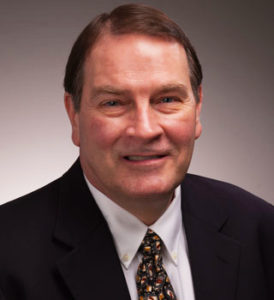

 Bill Hendricks Jen Wilkin Kasey Olander