

Where Technology Is Taking Us
Where is artificial intelligence taking our culture, and how can Christians navigate its rapid rise in healthcare, work, and daily life? Join Bill Hendricks as he sits down with palliative care physician and researcher Dr. Andre Cipta to explore how he integrates whole-person care, spirituality, and AI-enhanced extended reality into medical practice and physician training. Discover how believers can approach emerging technologies with biblical discernment, moving past fear to use AI as a redemptive tool that fosters genuine empathy and loves others well.

The Table is a weekly podcast on topics related to God, Christianity, and cultural engagement brought to you by The Hendricks Center at Dallas Theological Seminary. The show features a variety of expert guests and is hosted by Dr. Darrell Bock, Bill Hendricks, Dr. Kymberli Cook, Kasey Olander, and Milyce Pipkin.
Timecodes
- 00:00
- Where Is Technology Taking Us?
- 03:32
- Dr. Andre Cipta’s Journey into Palliative Medicine
- 06:16
- Whole-Person Care: Integrating Spirituality & Health
- 09:05
- Evidence-Based Research on Physician-Patient Prayer
- 12:44
- Faith and Work Integration in Healthcare
- 15:12
- Overcoming Physician Burnout & Restoring Empathy
- 19:23
- Using Extended Reality to Walk in Patient Shoes
- 25:23
- Perspective Learning & Human-Centered Care
- 28:27
- A Christian Perspective on Artificial Intelligence
- 29:28
- The Race to AGI: Ethics, Big Tech & Corporate Incentives
- 33:05
- Redemptive Technology: Applying AI for Human Flourishing
- 36:19
- Practical AI in Healthcare: Medical Scribes & Precision Triage
- 40:22
- Using AI for Bible Study
- 42:44
- Parenting & Teaching Children in the Age of AI
- 47:25
- Navigating AI Risks: Protecting Minds, Emotions & Faith
- 52:01
- Final Thoughts
Transcript
Bill Hendricks
Well, welcome to The Table Podcast, where we discuss issues of God and culture. My name is Bill Hendricks. I am the executive director for Christian Leadership at the Hendricks Center, and we’ve been discussing issues of God and culture here on the podcast now for some 13 or more years, and that’s increasingly challenging because our culture changes with an accelerating pace, and maybe nowhere has that been seen more than in the realm of technology itself. I mean, 13 or 14 years ago when we started, I don’t think most people in our culture had ever heard of such a thing as artificial intelligence, say, and yet within a matter of not just a decade, but of years and even months, we’re now being told that AI is going to change life as we know it. Some say it will be for the better. Others say it will be the ruin of us all. And then there’s such a wide spectrum of views and counterviews in between. So in today’s podcast, we want to go to work on sort of a core question, which is: where is technology taking us? And rather than find a software engineer to talk about the technology itself, in a sense, we actually have asked a practitioner who’s using technology in his work. Welcome Dr. Andre Cipta, who’s a physician specializing in hospice and palliative medicine at the Kaiser Permanente West Los Angeles Medical Center. He’s also an educator, associate professor in clinical studies at the Kaiser Permanente Bernard J. Tyson School of Medicine. He’s an innovator as well, and an inventor, a clinical researcher, an author. I could go on and on about all the different hats that he wears, but increasingly, his scholarly and educational efforts have centered on the relationship between spirituality and health, and the use of AI-enhanced extended reality to support his approach to medicine, which I would point out is sourced in a philosophy of empathetic, whole person-centered care. And I will add that he and his wife Yoon Jin are raising three super duper awesome children on the West Coast. Dr. Cipta, welcome to The Table Podcast.
Andre Cipta
Thank you, Dr. Hendricks. It’s an honor and a pleasure.
Bill Hendricks
Well, it is an honor and a pleasure from this end as well, and just for the benefit of you, the viewer, I want to point out that Dr. Cipta is speaking from his own professional and personal experience and opinions, and he’s not speaking formally on behalf of Kaiser or any other organization or group. So, Andre, maybe the place to start here: we always like to find out how did somebody get into the line of work that you’re in? I mean, did you come from a family of doctors, or how did that come about?
Andre Cipta
My parents are physicians. They graduated medical school in Indonesia and came here, and so they definitely inspired me to become a physician. I really enjoyed learning and teaching, and so that’s how I got involved in medical education.
Bill Hendricks
Yeah,
Andre Cipta
And then, you know, I’ve always had a creative, innovative mind trying to explore uncharted territories, and that’s what led me into clinical, medical, and educational innovation.
Bill Hendricks
Interesting. Well, and I know that you specialize in hospice and palliative medicine—that sounds like a very interesting and niche specialization. Tell us what led you into that particular domain.
Andre Cipta
I always wanted to develop deep connections with people in general—family, friends, as well as with my patients. In the field of serious illness and end-of-life settings is where I found the deepest connections with my patients and their loved ones. So that’s when I decided to pursue fellowship training in hospice and palliative medicine. I’ve been working in this field for about 11 years, and I just find a lot of joy in helping my patients and their loved ones go through a very difficult and vulnerable time in their lives. I’m thankful that the Lord has trained me to be able to relieve very severe symptoms so I could help them in a very immediate way. But even more than that, I’m thankful to be able to engage with my patients in a personal way. They welcome me into their lives, and they share a lot of their fears and hopes with me, which often leads into spiritual discussions, such as: What is the meaning of life? What is the purpose of my life now that I’m unable to do a lot of things because of my illness? So I really find it meaningful and thankful to be able to practice in a way that feels like a calling for me.
Bill Hendricks
Is that what sort of brought together the integration of spirituality and health for you?
Andre Cipta
Yes, that’s right. So, for my patient population, many of them come from religious backgrounds, and so they have a desire to talk to me about spiritual things, and they often appreciate it when I pray with them. On average, I probably pray with a patient once a week, and I’m very careful. If I don’t think it’s helpful to them in my role as a physician, I don’t. Research demonstrates that many patients do indeed want to talk about spirituality with their physicians. And so that led me into doing research in spirituality and medicine. I’m thankful for my mentor at Duke, Dr. Harold Koenig, who really was at the frontier in the 70s and 80s on spirituality and health research when it wasn’t a popular topic. Through that work, I’ve learned that good medicine adopts a whole person approach—mind, body, spirit, and the social aspect. If we care for our patients holistically in that way, research shows that it leads to better health outcomes.
Bill Hendricks
And hence this concept of whole person-centered care. I love that phrase.
Andre Cipta
Yes, absolutely. Even JCAHO guidelines (The Joint Commission), which evaluate hospital systems linked to Medicare funding, hold health systems accountable to providing whole person care, because that has been shown to lead to longer survival, better quality of life, better patient satisfaction, and better quality of care. From a Christian, Biblical perspective, it makes sense because we are not just body; we are mind, spirit, and body. We are embodied spirits, so it makes sense that we would be healthier if we supported both our spirit and our body together.
Bill Hendricks
And I would point out that Dr. Cipta has an evidence-based practice here. He actually participated in a national study on physician and patient prayer, and you’ve published a lot of that research, I guess.
Andre Cipta
Yeah. So I was the principal investigator for a study evaluating physician and patient prayer. Specifically, we looked at barriers to physicians praying with their patients, because there is a gap in research in that area. We want to make sure that it’s patient-centered, and we want to do research that helps guide best practices, because spirituality can be a very sensitive topic for patients. There is a hierarchy—the physician is seen in a position of authority—so there’s that sacred physician-patient relationship that we need to be very mindful of when we talk about spirituality. Unfortunately, many people have been hurt by religious institutions and communities, and some patients don’t want to talk about spirituality or pray with their doctors. They may feel uncomfortable saying no to their physician just because of that authority structure. So a lot of research is still needed to guide best practices so that we can talk about spirituality and pray with our patients in a helpful way. So for my work, we looked at the physician’s perspective when it comes to praying with their patients—specifically, what are the barriers preventing physicians from offering prayer to their patients. A lot of research shows that there is a percentage of patients who want their doctors to not only know about their spiritual beliefs but also pray with them,
Bill Hendricks
Right
Andre Cipta
Especially as they approach the end of their life. Research also suggests that physicians with strong spiritual or religious practices do want to pray with their patients. Both sides want it—at least a segment of them—however, research shows that it’s not happening. So I was curious to explore: if there are Christian physicians who want to pray with their patients, but offer to pray a lot less than they desire, what are the barriers preventing them?
Bill Hendricks
Especially if that would be medically beneficial.
Andre Cipta
Yes, especially if withholding that impacts holistic care. So we did a study exploring the barriers to physicians praying with their patients, and we published the quantitative paper in the Journal of Religion and Health last year. We’re currently working on the qualitative analysis to hopefully publish that this year.
Bill Hendricks
That’s wonderful. And if you’ve been listening to The Table Podcast for any length of time, you know that we cover a lot of topics related to the integration of faith and work. What you’re talking about, Andre, fits so well within that. It’s a model of a professional and his colleagues thinking meaningfully and deeply about: “If I come as a follower of Christ to this line of work, what are the implications for how I do that work?” Which is a great encouragement to all of us.
Andre Cipta
Yeah, I completely agree. That’s why I feel so strongly about education, because many pre-medical students, medical students, residents, and fellows come to me struggling to know how to integrate their spiritual beliefs into their practice as physicians or clinicians. So I’m thankful to share what I’ve learned with them, and speaking with them keeps me sharp and holds me accountable.
Bill Hendricks
Okay, well now we’re going to play three-dimensional chess, because on one side you’re practicing whole person-centered care and bringing your faith into play, but now we have this whole new thing called AI and technology, and you’ve done work integrating AI into that. How did you get interested in that technology piece?
Andre Cipta
I don’t have a formal tech background—I’m not a software engineer—and I only got deeper into emerging technology in the past few years through my clinical practice merged with my spirituality research and curriculum development work in medical school. Before that, in graduate medical education with our fellows, I focused on empathy, because empathy is a gap in medical practice. Studies indicate that empathy goes down across medical training for physicians, especially around the clinical years (third year).
Bill Hendricks
It’s kind of a professional case of familiarity breeds contempt.
Andre Cipta
Yeah, perhaps. High rates of burnout among physicians make it hard to be empathetic, along with moral injury and compassion—
Bill Hendricks
fatigue fits in there too.
Andre Cipta
Exactly. Compassion fatigue, especially in palliative and hospice care, where Monday morning means another patient at the end of life whose loved ones are brokenhearted. But I wanted to focus on empathy because empathy can help mitigate burnout. Empathy is a behavior that can be trained. Empathy among physicians is linked to better quality of care, higher patient satisfaction, lower risk of malpractice suits, and better health outcomes. So I tried to integrate empathy into curriculum development for medical students and fellows, working in the simulation-based learning center—a replica of clinical settings (clinic, OR, ICU) with a control center where we observe students practicing clinical skills on care actors playing patients. I wanted to flip the roles so the medical student plays the role of the patient, and care actors play the clinicians. The best way to increase empathy is to actually walk in someone else’s shoes and experience what they experience.
Bill Hendricks
Right.
Andre Cipta
Unless you’ve experienced grief, you don’t really understand what that feels like. That led me into emerging technology—specifically spatial computing and extended reality (VR, AR, MR)—where we can recreate pansensory experiences (visual, hearing) to put the user in the shoes of the patient. That work naturally led me into artificial intelligence, which is a catalyst for all emerging technology (simulation, spatial computing, wearables, etc.).
Bill Hendricks
So in that simulated setting, you’re developing the capacity of the physician-to-be—having an effect on the soul of the physician.
Andre Cipta
Yes. In medical literature, one consensus definition of spirituality is the way we find meaning, purpose, and connections. So we’re building empathetic connections by putting physicians into the shoes of their patients—wearing patient gowns, sitting on a patient bed, playing the role of the patient.
Bill Hendricks
Right.
Andre Cipta
This is based on real-life patient narratives—stories of what patients wish their physicians had known or what they wish they had experienced in their healthcare journey. We recreate those high-fidelity scenarios so clinicians walk in their patients’ shoes to provide more empathetic care.
Bill Hendricks
Well, I can think of so many lines of work where this simulated setting could be brought to bear—pastoral work, management, customer service, sales. You’re actually in deep waters here because you’re trying to humanize the practice of medicine. People bring all of who they are to healthcare, work, or church. Likewise, the doctor brings their training, technology, and personhood.
Andre Cipta
Yes.
Bill Hendricks
So you’ve got two humans meeting together, practicing clinical medicine in a human framework.
Andre Cipta
That’s right, exactly—human-centered care. Empathy and human connection are essential. The broader category is perspective learning or perspective acquisition. If two individuals want to better understand each other’s perspective, this is a prime use case. It can bring emerging pastors into the shoes of experienced pastors, or help leaders understand their direct reports, or help sales teams understand consumer demographics. The use cases are broad, and could be used for good or evil.
Bill Hendricks
Yeah, even creators of advanced AI models admit they don’t fully understand how these things work. What is your own posture toward AI?
Andre Cipta
I’m not scared, because I believe in the Bible, and I believe our God—
Bill Hendricks
—is sovereign.
Andre Cipta
Is sovereign, and He will accomplish His will in our lives and in this world. But Christians especially need to understand the current landscape because concerning things are emerging and advancing at a rapid pace—like the industrial revolution on steroids.
Bill Hendricks
Yes, happening within our lifetime.
Andre Cipta
Underlying all this is an incentive structure that is not human-centered or grounded in Biblical objectives: power, influence, and money. The CEOs of major companies—OpenAI, Google DeepMind, Anthropic, xAI, and DeepSeek—are clear that their goal is to be the first to reach AGI (artificial general intelligence). It’s an arms race.
Bill Hendricks
And around the world, you’ve got other actors like DeepSeek in China, hardware compute with Nvidia, and TSMC in Taiwan.
Andre Cipta
Exactly. The incentive structure is not grounded in Biblical or human-centered objectives. That’s why Christians should be engaged in the discussion, prayerfully considering our role.
Bill Hendricks
It sounds like that’s what’s driving your work: applying technology to train physicians in a human-centered, redemptive way that brings flourishing to the world, even at the end of life (Genesis 1:28).
Andre Cipta
Yes, absolutely. Everyone is living until that final breath, and as a palliative care clinician, we do not give up on our patients. For the believer, we want to finish the race well, as Paul says. We need to make sure we’re leveraging AI in a responsible, thoughtful way that helps us love God better and love others better.
Bill Hendricks
So members of the body of Christ should not be passive or scared, but discerning, wise, and creative in applying technology redemptively.
Andre Cipta
Absolutely.
Bill Hendricks
Can this technology show us as humans how to do a better job of caring for one another, even without technology?
Andre Cipta
Yes. AI can enhance the believability of immersive experiences and enable precision education/medicine—micro-customizing learning to individual styles. On the care side, AI scribing agents allow physicians to look at their patients instead of typing, and AI-enhanced triage models (like those at Kaiser Permanente) connect patients to appropriate care faster and safer.
Bill Hendricks
Absolutely.
Andre Cipta
Last Sunday at church, my pastor was teaching through 1 Samuel. There’s a lot of geography and military strategy (like why God told Saul to go to Gilgal and wait for Samuel). I ran it through an AI agent, and in 30 seconds it generated a custom map tailored to that passage in 1 Samuel. It helped me understand why they were at a strategic military advantage and why the Israelites were scared. You can leverage AI to better understand God’s word.
Bill Hendricks
How are you and your wife preparing your three children for an AI future?
Andre Cipta
We’re exposing them to AI chatbots and catering it to their age level. For my oldest in high school, I share current events, key industry players, Anthropic’s model previews, and safety concerns. For my six-year-old, I supervise him as he asks questions, like “What do turtles eat?”, demonstrating prompt engineering with large language models so he learns how to engage emerging technologies thoughtfully.
Bill Hendricks
Walking with your children through that technology creates a strong relational foundation.
Andre Cipta
Yes. Al Mohler did an episode titled Does AI Have a Soul? responding to Anthropic’s summit with religious leaders. He noted: “Whether or not you are going for AI, AI is coming for you, your family, and your church.” This is a fight for influence over our minds, emotions, and behaviors. Algorithms are designed to keep users on screens. We must treat AI like a sharp knife in a kitchen: understand its dangers to avoid harm, and learn how to use it as a tool to love God and love others better.
Bill Hendricks
Thank you, Dr. Andre Cipta, for helping us navigate where technology is taking us. I look forward to having you back for future episodes.
Andre Cipta
Thank you, Bill. It’s been an honor, and I’d be happy to return.
Bill Hendricks
We invite our listeners to subscribe to The Table Podcast at dts.edu/hendricks and dts.edu/table. Join us next time on The Table Podcast where we discuss issues of God and culture to show the relevance of theology to everyday life.
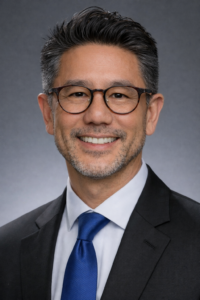
Dr. Andre M. Cipta, MD, FAAHPM, is a dual board-certified physician in Hospice and Palliative Medicine and Family Medicine at Kaiser Permanente in Southern California and an Associate Professor of Clinical Science at the Kaiser Permanente Bernard J. Tyson School of Medicine. As a physician, leader, educator, and innovator, his work centers on serious illness care, spirituality and health, and the thoughtful use of emerging technologies to cultivate empathy and deepen human connection. Dr. Cipta has published and presented nationally and internationally and received the Hastings Center Cunniff-Dixon Physician Award for exemplary end-of-life care. He and his wife are raising three super-duper awesome children.
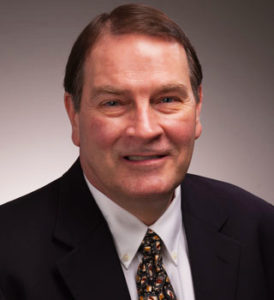 Andre Cipta Bill Hendricks