

How Should Christians Use AI?
As artificial intelligence rapidly transforms education, the workplace, and daily life, how can believers engage digital tools with discernment, integrity, and biblical wisdom? Kymberli Cook sits down with John Dyer, Christopher Watkin, and Mary Stimson to explore a practical ethical framework for evaluating AI technologies. Join them as they discuss how Christians can extend human capabilities, preserve authentic community, and bear faithful witness to Christ in an increasingly automated world.

The Table is a weekly podcast on topics related to God, Christianity, and cultural engagement brought to you by The Hendricks Center at Dallas Theological Seminary. The show features a variety of expert guests and is hosted by Dr. Darrell Bock, Bill Hendricks, Dr. Kymberli Cook, Kasey Olander, and Milyce Pipkin.
Timecodes
- 00:00
- How Should Christians Use AI?
- 03:31
- Why We Need a Practical Christian Framework for AI
- 07:52
- Identity and the Gospel of AI
- 13:55
- How Should the Church Respond to AI
- 17:30
- A Framework for AI in Academia
- 20:55
- Trust as the Fuel of Society
- 25:17
- The Positives of AI and Extending Human Capabilities
- 34:23
- Where to Think Carefully about AI
- 43:33
- Redeeming Saved Time
- 46:08
- Encouragement for Christians: Human Worth Beyond Productivity
Resources
Transcript
Kymberli Cook
Welcome to The Table Podcast, where we discuss issues of God and culture to show the relevance of theology to everyday life. I’m Kymberli Cook, one of the hosts of the show, and I am so thrilled that you’re here with us today, when we’re going to talk about how Christians should and shouldn’t use AI. And we are joined—I am so excited by who we’re joined by—we’re joined by three guests who are uniquely prepared to talk about this intersection of theology and technology and the Christian faith. So we have Dr. John Dyer right over here. We have Mary Stimson over with me on my right, and then we’re also joined by Dr. Christopher Watkin from a very long way away, and it’s very early for him right now. So thank you all so much for taking time to sit with us at the table today. We’re thrilled to have you here. So I actually am going to let each one of you introduce yourselves a little bit more, and if you can just tell us not just who you are, but how you became interested in this intersection of technology and theology and the Christian faith, particularly artificial intelligence, and maybe where you’re currently using that, or at least give us as much information as you can about where you’re currently using that information and that thought. John, Dr. Dyer, we can start with you.
John Dyer
Sure. Yeah. When I came to DTS, I came here to be a student on one hand and learn theology, but on the other hand, I came to be a programmer, so I worked here in the basement and just made stuff. And so I’ve always loved making things, and I’ve always loved learning theology. But it wasn’t until I was in a class where someone said one of the most dangerous things you can do is to believe that technology is neutral, and I thought, “That’s exactly what I believe. This professor is wrong.” And so it took me a while to start putting those two things together. And since I’ve started to think about that and realize that he was right—that technology, I don’t think it’s useful to talk about it in a neutral way—but it still kept my love of making things. So, as you know, the internet and phones and apps, and now AI has come out. I enjoy making things with it, but I’m still interested in how it’s forming and shaping us
Kymberli Cook
Fascinating. Dr. Watkin.
Christopher Watkin
Well, it’s lovely to meet you all. Hello from Melbourne, Australia. I teach in higher education, working at a university over here, and really, I wasn’t particularly interested in AI until it came for me. So it’s very hard in higher education at the moment to go through a working day without having at least one conversation about AI with somebody—it’s all over higher education, and I figured out that, look, unless I try and get my head around this as a Christian, it’s just going to eat me alive because it’s taking over higher ed. So here I am.
Kymberli Cook
And then Mary.
Mary Stimson
Yes, hi. So I have the privilege of being a student here at Dallas Seminary, and also an intern at the Hendricks Center, which is so wonderful. And then in my sort of day job life, I work in the corporate field in AI and technology. And so over the last few years, that looked like bringing human-centered design to data science projects. And then over time, design kind of got taken over a little bit by AI. We have tools that can do that for us, and so now I get to speak a lot more to the human-centered side of that. What does it mean to be a human in this kind of workplace?
Kymberli Cook
So, as you can hear, all of them have a lot to offer us as we’re talking about this at the table. So, we actually on this podcast, we’ve talked about kind of the technicalities and the higher level conversations about what AI is, should it be, the philosophy behind it, all of those kinds of things. We’ve addressed a lot of that, and in two specific podcasts—and actually there’s one coming out that we haven’t launched yet, so I can’t tell you the name of it yet—but you definitely want to be sure to check out: Dr. Dyer is actually a guest on Discovering a Theology of Technology. We talk about some of this there, and then we also talk about it in the podcast very originally labeled Artificial Intelligence. So, if you have just overarching questions, go there. Our goal today is to be super practical—is to really sit at least where we are now and say, okay, so artificial intelligence is a reality. It is not something that is going to go away. It’s not something that is going to diminish in our society. Everything is saying it’s only going to become bigger. So then the question is, how do we as Christians engage or abstain from, or how do we engage AI in a way that is biblically responsible and responsible with regard to Christian history and, you know, historic Christian orthodoxy as a whole? How do we do that well and thoughtfully? So that’s what we’re trying to really tackle together as a group today. So first, I think we need to start with all of the feels that people have about artificial intelligence, because it’s a lot. This particular topic is—it’s almost a joke in our—at the Hendricks Center, because it’ll come up in a—you know, we have conversations each week that we talk about cultural engagement issues, and when artificial intelligence comes up, people have such strong visceral reactions to this topic that we almost can’t talk about it anymore because everybody just has such strong feels. So I’m curious for you all, in, you know, with everything you’ve thought of, and you guys have obviously spent a lot of time in this space and you’ve experienced, I’m guessing, people with those feels: Why do you think that is? What reactions do you often see, and what do you think is behind those reactions? So let’s start there, Mary. Why don’t you start us off?
Mary Stimson
Sure, it’s a great question, and I’ve been thinking about this a lot because I haven’t gotten to experience a lot of technological innovations over the course of my career. But what I’ve observed just studying history is it doesn’t look like this shift in technology is very similar to some of the ones we’ve seen more recently in terms of the feels. Did people have this kind of reaction to the internet coming about or the dot-com bubble? And someone at the Hendricks Center recently compared it to Y2K, and that does seem kind of how the headlines around AI tend to be—that this is this big existential, maybe even eschatological, whether they use that term or not, shift. And so I wonder if people are seeing those kind of headlines that are so intense and so emotionally charged that it’s hard not to go into kind of a fight-or-flight response.
Kymberli Cook
Dr. Dyer, how would you—what feels have you encountered as you dealt with many people talking to you about it?
John Dyer
Well, I wonder if the last few things all had a sense of optimism that the internet will give us information, and if we all have the right information, that we’ll magically make the right decisions. And then we thought social media: if we’re just more social, we’ll actually become closer. And it turns out that neither of those two things were particularly—at least as good as we thought they would be. And so I think there’s more of a sense that all of the promises may not quite deliver, and so the threat is much more apparent to our daily lives, to thinking about our jobs, especially because of all the discussion about white-collar jobs changing. That’s different than, you know, the Industrial Revolution with blue-collar jobs, but then all the previous digital things were all pitched in terms of optimism, and then they turned out to be somewhat negative.
Kymberli Cook
Dr. Watkin, you said that this is all over the place in higher ed, and that’s even what brought you in. What are some of the reactions that you’ve seen, and your thoughts on them?
Christopher Watkin
I’ve seen very much what Mary and John have been talking about—that people’s understanding and reaction to AI is disproportionate. The feelings are very deep and they’re very visceral. And whenever that’s the case, I think it’s a good question to ask what religion is in play here.People have very deep feelings about religion, and I think a good starting point for trying to get our heads around the way that AI is received in society at the moment is to treat it as comparative religion. There is a gospel of AI. The AI world, by virtue of the way that it functions, thinks that there are certain things wrong with the world and it proposes certain solutions to them, and that’s a gospel.
Kymberli Cook
Hmm. Interesting. So how, then, does that play out when we interact with it? Like you said, if we interact with it as a comparative religion, can you take us another step down that logical train?
Christopher Watkin
I think it’s the incredibly helpful point that John made a moment ago that this is not neutral, that it is, as we use it, forming us into a particular way of understanding what are the sorts of problems in the world that we can deal with, and what are the sorts of solutions that we can offer. So often the idea is that what’s wrong with the world is inefficiency and limits, and the way to solve it is by throwing data and compute at it. And if that’s the world that we live in, you know, 8 to 10 hours a day, that’s going to shape the way that we see the world as well, and that’s going to conform us to that particular religious outlook on the world.
Kymberli Cook
So I really love that you’re bringing up the value of efficiency, essentially, and productivity. I think that I agree with you; I think that that’s very much guiding what you call the gospel of AI. What values do you all think the reactions are exhibiting? So, if we look at how people are responding to this, what values do those responses reveal? Because I think that that can be helpful for us as believers in meeting people where they are, you know, because we can say, “Oh, well, if you’re coming at it this strong in this direction, then that tells me this about what it is that you really value and what might be guiding you.” Anybody can jump in.
John Dyer
I think, at a most basic level, people value their own life and how it currently works, and so anything that threatens to change that in a significant way—so, if my identity is that I write really good emails, and now there’s a robot that can do that, then I think my personal identity, and then at this deeper level, what it maybe means to be human, and then if I have to change my job or change what I do, those are all pretty scary things. So if I don’t know what the future is going to be like, and I don’t know who I am, I don’t feel like I’m in a good place.
Kymberli Cook
So maybe like the status quo or comfort.
John Dyer
Yeah, yeah, I think comfort, and then I think, yeah, the status quo of my job. But then I think at the bottom line, it’s: Who am I and why am I here?
Kymberli Cook
Identity, yeah, and art. Okay, Mary, what would you add? Do you have anything to add?
Mary Stimson
Just wondering if, yeah, fear is really at the root of the self-preservation, but it may also be that root when people want to be at the forefront of this thing, and it’s really exciting, and even the positive affect that comes with AI sometimes may also be motivated by a fear to be the one who gets ahead with it and not be left behind. And so I think, you know, I can definitely look at the self-preservation and protecting my own role as a fear-motivated thing. But I wonder, too, if that race to the top is also motivated by some fear of missing out. That term in pop culture right now—it’s something-maxing: life-maxing, beauty-maxing. All of that maximization seems to be really driven by fear.
Kymberli Cook
Hmm. Dr. Watkin, would you add anything?
Christopher Watkin
I think we have two really fundamental needs, and they’re really hard to both meet at the same time, and AI looks as though it meets them, although I don’t think it does really: that we want to be known, and we want to be loved. And that’s really hard because the more people know us, the more they know our ugly side, and the harder it is to love us. And AI gives us the impression—large language models, as we interact with them, give us the impression that they know us. They can remember things that we’ve said in the past, they can remember how we write, the sort of things that we like, and they’re beguilingly accepting of us. You know, they’re engineered to be nice to us, to be sycophantic, and that is incredibly—it’s like catnip to us because that’s what we want. I want someone who knows me and who still loves me, knowing all the darkness in me. And of course, the Christian gospel is that God, knowing all of us, still loves us, still dies for us. And that’s one of the reasons why AI is a gospel: it’s mimicking that divine combination of someone who knows us completely and yet still loves us.
Kymberli Cook
So therefore, hopefully, as you’re listening, you can appreciate how important it is for the church to be a part of this conversation and not necessarily just stand throwing rocks at it or stand throwing money at it to make it continue to happen. But it’s a necessary conversation surrounding all of this because, Dr. Watkin, as you’re saying, it’s offering its own gospel; it’s offering its own kind of salvation potentially, like one of the narratives around it is offering that. Why else do you all see that this is an important conversation for the church to be involved in?
Mary Stimson
I think, for one, because we have a gospel to offer. We have something wonderful to offer people if they’re filled with fear or they’re trying to optimize in one direction. Goodness, what hope and love do we have to offer people? And that’s so exciting! But I also think, in terms of, you know, sitting here, why should we be talking about AI? It’s because it’s here, and we have to decide how we interact with it and how we use it in our daily lives or not. The train is off from the station at this point.
Kymberli Cook
Dr. Dyer seems to think that you have something to say, Dr. Watkin.
Christopher Watkin
Look, I’d just chip in with the thought that: How have Christians traditionally been different in society? So you know, I think early Christians in the Roman Empire: there’s a bunch of stuff they do that the Romans also did, but one distinctive is that Christians have always been those who look out for the neglected and forgotten, for the orphans, the fatherless. And I think there’s a lot of forgotten and erased people in the AI world—the people who tag data for very little money in places like Venezuela and Nairobi; people in whose neighborhoods data centers are built and have non-disclosure agreements about the amount of water they’re using; people whose creative work is used to train models who are not compensated for that. And so I think the particular place of Christians in the debate is to seek to acknowledge and to be aware of and to bring into the conversation those—you know, the least of us—who are often just airbrushed out of this whole debate.
Kymberli Cook
That’s good. Yeah, I think, you know, obviously it’s a broad conversation with a massive amount of implications, and that means that we as the church want to be a part of it, and want to be thinking through it. And I think Mary and I talked about this a long time ago, which, you know, Christians should be a part of it at every level that we possibly can, because they can also be a part of forming this massive, immense technological breakthrough that’s happening, and they could ideally at least have their hands in it and try to be a part of it. But we also, you know, like we said at the very beginning, want to be practical and think through: Okay, so we want to be involved, we want to be a part of this conversation, but we also have to think through—you know, we’ve surfaced several somewhat sinister-sounding things where it’s like, “Ah, okay, then should I not be on ChatGPT?” I’m not sure. You know, and it gets down to really like harsh practicalities, rubber-meets-the-road kind of situations. Dr. Dyer, you have been kind of at the front of an effort here at the seminary to think through the role of AI on the campus here at DTS and how to utilize it more or less in an academic type of environment. And thinking through that, you and a team behind you, alongside you, have kind of come up with a framework for thinking through that. Can you introduce us a little bit to that framework, and then we’ll kind of riff on it as we get broader into society?
John Dyer
Well, I think there’s a couple areas. I mean, one, on the job side of things, there’s a lot of things in the background where different workers are trying to serve students better by using AI tools. So that’s sort of one thing that we can put aside. On the other side of it, I think when it comes to students, because we’re not a full-fledged undergraduate trying to teach business majors and science majors, we’re really in the liberal arts. And what we would say, you know, if you just want to come to seminary to get information to learn theology, you probably shouldn’t come. Even though my job is to sell you as many hours as possible, I would say that’s probably not the reason why you should come to seminary. Hopefully, what seminary is trying to do is to form you into a particular kind of person. So the way we would talk about assignments is that we’re not asking you to make a chart of Leviticus because you’re going to make the best chart of Leviticus. There are better ones online, and there are better ones that a tool can generate for you. We are trying to make you into the kind of person who has absorbed and walked through Leviticus. So, for that reason, we would say to avoid, in general, using generative AI tools for assignments unless, one, the professor has said to do it, and two, you cite it correctly. So that’s kind of the basic part. So, in fall 2022, when ChatGPT came out, our initial policy was: please don’t use this for assignments; this is essentially plagiarism. But then, as we started to work on it, we said, well, there’s already a lot of AI tools built into things: spell check and grammar check and all that. And so the framework that we came up with was just a really simple red, yellow, green. So the green is: here’s the things that are totally great to do that you’re probably already doing. The red is the absolutely no-go: we’re not going to take an assignment prompt and just stick it in and then turn that in as our own. But it turns out that there’s a lot more yellows than we might think of things that you could do, but you might be short-circuiting what it is that you’re here to do. So some of the research things might be like that. And I think the area that we’re struggling with right now, and we can talk about this more, is really the role of editing, and to what degree should you use the AI tools for editing? And so we’re continuing to rework the policy, but trying to give students a sense of: here are really, really good things; here are things that are definitely against a policy and aren’t fair to other students or fair to you. And the yellow ones would probably be maybe more not fair just to you in terms of your formation and development and who you want to become at the end. So it’s not just what you’re producing, but who you’re becoming.
Kymberli Cook
So what are some of the—like, what are the questions surrounding editing?
John Dyer
Yeah. So I think maybe a couple of years ago, for example—I’m going to pick on a company, but not for them in particular—but it’s Grammarly. So a couple of years ago, Grammarly really was a very high-powered editor that could help you with verb and noun mismatches and all that kind of stuff beyond just what Microsoft Word can do. Today, it has a lot of generative tools. But what can sometimes happen is that a student, for example, could write a pretty poorly written two-page paper and then highlight the whole thing and say, “Please rewrite this to be better,” and it ends up being like one big giant prompt, all happening within Word. And so what comes out has that sort of AI feel to it, you know, that it’s not this, but that; a lot of em dashes; all the sort of hallmarks of AI writing. And at some point, there’s this fuzzy line when it ceases to be the student’s work, and maybe ceases to allow the student to develop that skill of thinking through how to communicate clearly, because they won’t always have Grammarly when they’re in the hospital.
Kymberli Cook
Dr. Watkin, how have you all been walking through this in your university setting?
Christopher Watkin
For us, AI isn’t really about the tools; it’s about trust. And I think trust is low in society to begin with, but also trust is the fuel that society runs on, especially democracies. You need a level of trust among people, and part of that is: Can I trust that what a person is saying is actually what they think? Just regardless of AI, that’s a really important social glue. And I think what generative AI risks doing is breaking the link between my words and my witness. So I stand behind my words; I vouch for them. That’s what human words are. And if, as John’s saying, if something else has written my words, then they’re no longer my witness. They’re no longer really my words. And, you know, that has implications for student essays, but it has much deeper implications for the sort of society that is able to sustain democracy and freedom. So sorry for getting so big and philosophical. But huge stakes—like, trust is in play as we use AI to write things, and if we lose trust, we lose the sort of society that we’re living in.
Kymberli Cook
Mary and Dr. Dyer, how would you respond to the idea of kind of digging in a little bit to this idea of trust and our words representing—and our words essentially being our witness—and its relationship with especially generative AI? I think is what we’re talking about right now.
Mary Stimson
I mean, amen. I think that just about hits it on the head. I think one of those thoughts that comes to mind is, of course, the outcome: the words that you’re representing as your own, that there’s a trust in that. But also, when I read something that someone else has produced or I take in their product, I also have a certain amount of trust in the work that they’ve done, the strategic thought work that they’ve put in behind that. And I worry if we lose—if we break down some of that—what happens to the muscles that we’re using for the kind of strategic thought that builds those product outcomes? Because not only are the words we’re representing or whatever that creative outcome may be—not only does that matter to the fabric of society, but so does the type of people who create that and the muscles that they’re using to engage and activate as they think through those problems. And maybe I think through that especially as a student because, as you said, often we are the product of our studies, but I think that’s true really at any level of professional or personal development as well.
Kymberli Cook
Dr. Dyer, anything to add?
John Dyer
Well, on the other side, you know, it’s one thing to talk about what students can and can’t do; there’s also a good thing of what professors can and can’t do. And so there’s the joke that in education right now, students are turning in AI-generated papers for faculty to use AI-generated graders. You know, it’s just this war between the bots. But on a more practical level, one of the things that we’ve always done here at the school has had multilingual classes. So we’ve taken our English classes and then created captions below for our students who are studying other languages. And so in the last year or so, we’ve been experimenting with some of the AI-translated lip-sync tools, where it would take someone’s voice and regenerate it in another language. And, you know, what we’re telling our students is: to build trust, you should never present yourself as doing something that you’re not able to do, which is to use AI as the output of something that you can’t produce yourself. But then we’re having professors speak languages that they can’t actually speak. And so in that, working through a lot with our students of: How do we properly disclose this really well, and then get good feedback from the faculty of that language group, also the students of that language group? Are we short-circuiting development of non-English-speaking faculty by doing that? Are we preventing the students from learning how to use the tools well themselves? Trying to take a very careful approach to this. My point in mentioning that is just that it’s not all about the students, but also what we’re doing in our own ministries, particularly at the seminary. But you, as a listener, in whatever ministry that you’re in, you might be thinking through: How am I presenting myself in a way that is authentic and true in the tool sets that I’m using?
Kymberli Cook
Okay, so you just did what I’m wanting to do next, which is taking this kind of general framework of red, yellow, green, or green, yellow, red, and saying: Okay, so then stepping outside of just the student, professor, academic life, how do we think through different areas of Christian orthopraxy—like how it is we are Christians in this world? How do we think through that in kind of red, yellow, green terms? So let’s start with green. What do you all think? You know, you look at AI and whatever—you all know so much more than I do. I’m like, I don’t know if it’s the language learning models, the generative models—I don’t know if those are the same things; it’s just all AI, I’m not sure. But with whatever elements of that technology, what do you all see that it is currently doing that you would encourage other Christians to say, “Hey, yeah, this is just kind of a grace of the Lord, and it’s something that is potentially offering good or offering some kind of common grace,” or something along those lines where you would say, “This is a really positive thing; overall, I don’t really see any problems, and I think that it could be positive, if not good”? If “good” is a scary word for you because we are in somewhat ethical territory, it could be positive; it could be doing something positive in God’s world. Whoever wants to start can roll out.
Mary Stimson
I think there’s so many in the green category, and it’s hard to narrow them down. And what I love about the green category with AI is getting to observe people who maybe they are very tech-savvy, maybe they can barely open their browser, but at some point they open one of these tools and they try something they didn’t think they could do before. And there’s a moment of kind of childlike delight of using a tool that enables you to do something that you had no idea could be possible. So, for example, I have a friend. The two of us, we speak totally different languages. We can barely speak just a tiny bit of each other’s language, and we can sit down and have a whole dinner and talk over an AI translator that’s helping us communicate in ways that we never could have before. And what a delightful picture of the kingdom that is! And so I want to celebrate that green category. That’s just one small example; I think there’s lots of others. But what a great way to help us connect! And I think in as much as AI can help us connect with one another, help us do things that represent our humanity, we should be joyful and free-willing to engage.
John Dyer
I’d like to hear from Dr. Watkin.
Kymberli Cook
I know. Dr. Watkin, go ahead.
Christopher Watkin
I guess any answer to the question needs to not lose from view the least of these who are still there, even when AI is helping us—you know, the people tagging the data and so forth. I think any use of AI—and this was a brilliant term that John used in the conversation a moment ago, and that I’ve heard him use in the past, that I think is just so helpful: any use of AI that helps me to be the sort of person who—that shapes me—is a great use of it. So it’s the difference between uses that extend my capabilities and uses that replace my capabilities. And anything that extends what I’m able to do in the world, providing that what I’m doing is good, not evil, is a great use of AI. But anything that replaces what I do and therefore diminishes my ability to become the sort of person who—I think is really dangerous. But that wasn’t the question you were asking. So let’s focus on: extend my abilities in the world.
Kymberli Cook
Okay. So can you tell me a little bit more about what you mean by extend? What that might look like with somebody, you know, on a Tuesday afternoon?
Christopher Watkin
Yeah. So Mary’s example, I think, was a fantastic one. I have a friend; there’s a language barrier. I want to love my friend, and the way that AI is able to translate between us allows me to love my friend in a way that I might not have been able to do otherwise, and to enter into my friend’s world and help my friend. Bible translation is an example that’s often used as well, isn’t it? That the pressing need to get the Bible into languages that people understand and speak can be accelerated greatly by AI. And those are things that we would have wanted to do anyway, and things that AI can speed up, rather than necessarily me just outsourcing my capabilities to a machine that does them for me.
John Dyer
Yeah, I think a lot of the job systems that are out there, you know, Microsoft will do this; a lot of these companies will put out—like Accenture—they’ll take jobs and they’ll try to break them down into a series of tasks. Like, let’s say you take your job and you break it down into ten things you tend to do: you maybe do email, you write these different letters. And they would say: What tasks can be fully automated? What tasks could you completely turn over to some type of agent or whatever we’re calling it now? And then what things could be more augmented or extended or accelerated or something like that? And then what things do you really need to guard or preserve? And it recalls to me the language of Genesis of the people who are supposed to take care of the garden are supposed to, you know, cultivate but also guard or keep. There’s sort of this balancing act of making the new but also preserving something. And so I think you can look through your job and you can think through what tasks maybe I could turn over. But I think another double-sided heuristic you might be able to say is that you should use AI for anything you never want to be able to do again.
Kymberli Cook
Okay, talk to me more about that. Yeah, yeah.
John Dyer
So it could be positive or negative, but I think about: I live in the Dallas–Fort Worth area, and my sister lives over on the Fort Worth side of town, and I go over there every now and again. And it’s probably about eight turns, and I cannot get there by myself because I’ve decided to use this technology of GPS, and I will never be able to do that again. So I’m a little sad about that, but I’m generally okay with that. But I think about other things, like I was downloading a bunch of data from our school provider, Association of Theological Schools. They provide all the data in PDFs, so that data can’t be then reused, and it takes a long time to copy and paste every single one. But if I throw that in a folder with Claude, with CoWork, and I just say, “Can you pull all this data for me and put it in a spreadsheet?”—certainly, I need to validate it, but that’s a task I never want to be able to do again. I do not want to copy and paste out of PDFs. If there’s other kinds of graphs and data that I might get online, those are the things I do want to turn over to a machine. But I know that that’s not something that I really value as part of the core of my identity. And so I’m thinking about that with other tasks around, say for example, our seminary of, you know, when a student needs access to something and they need to email somebody and it takes a person to answer that email: if we could automate some of that and redeploy that person to a more one-on-one interaction so we don’t have a person where all they do is answer email. I think those sort of things where the work moves into a kind of toil that isn’t a positively forming work. Whereas I’m currently trying to put my toe into Karl Barth, and that’s not something I can do with summaries. It’s just Karl Barth is not a summary kind of guy. You have to just sort of live in Barth’s world, and so that’s something I don’t want to cede over to a machine because I want to be able to do that again. And so I’m not going to summarize that.
Kymberli Cook
Okay, so I hear us inching our way into the yellow category: the things we don’t want to turn over, and the things that replace us, like you were saying, Dr. Watkin, instead of extend us. So, are there any other greens before we get fully into the yellows? Anything else?
John Dyer
I tend to think of things that have larger scales where I sort of know what I want to do, but it would take me a long time to do it by myself. So if I’m reworking a code base and I know that Microsoft has released this new da-da-da, and I just need—I don’t want to write every single line of code; it’s something I don’t want to be able to do again. It’s amazing for that. I was editing a large-scale document that I had built, and I knew I introduced a lot of typos into it, and I knew that the type of data format that it’s in, you know, Word and that kind of thing, can’t help me with that. And so I needed something more like Claude to be able to do that type of work. So I tend to find that the bigger the project, and where I’m sort of just limited in scope, that can be incredibly helpful. And I think this is extending what we were doing with Logos Bible Software, other types of things, where we’re seeing something that I can’t reword, I can’t rewrite, reread all 400,000 words at once. But a machine can do that really well, and I know the types of questions I want to ask and how I want to have it direct me to what I want to fix, but I’m not currently having it do the fixes for me.
Kymberli Cook
All right. So the yellow: we talked about anything that is replacing the work. We’ve also talked about the spiritual formative elements. So talk to me more about those things—what that looks like on the ground, and where you would say, I mean, it’s not a full-on red light, but it’s maybe something that you would want to think carefully about. You would want to just, yeah, just tread lightly as you’re considering using it in that way. Or have we already covered all those?
John Dyer
This may not be so much in my job as an academic, but I think that what you’re seeing is a lot of people are using AI chatbots for spiritual conversation, advice, relationship. Some of the data that had come out from, say, Harvard was that, you know, people were using this for ideas and creativity, and over the last year or two, it’s shifted a lot into more life advice and relationship advice. And I think there’s probably some help to that. I mean, we’ve all probably been Googling relationship advice to some degree. But I think that feeling that I’m talking to a someone and not a something—that shift to the chat interface really feels like there’s someone on the other end. And it does seem like people are talking a lot about suicide, about really deep topics, and I would say there’s some caution there. Most of the data seems to be indicating that as a short-term help when someone is in the middle of suicidal ideation, that going to a chatbot really does pull that back a little bit. But it does seem like there may be some long-term effects to that—that it’s not reformulating the kinds of relationships that would keep you stable in the long run. So I would be much more cautious about that level of advice.
Kymberli Cook
Okay, but it wouldn’t necessarily be a red light. That’s interesting to me.
John Dyer
Yeah.
Kymberli Cook
Would you all agree with that? Sorry, you can—and what would your thoughts be? Not necessarily, but I’m just curious because that, to me at least, as I’ve kind of read and looked, my gut has been: Oh, goodness, no, we wouldn’t go in that direction. But I’m hearing you say that you do see some potential there.
John Dyer
Okay, maybe very amber color.
Kymberli Cook
Not trying to corner you! What are y’all’s thoughts on it?
Christopher Watkin
I think we’ve got to go into that sort of situation with our eyes open, haven’t we? We’ve got to realize that we’re not talking with a human being who has their own life to live and has experience like mine. We’re talking to a model that was engineered not with my best interests at heart, but essentially with turning a profit for the corporation that engineers it. You know, a lot of these big companies are sort of going for IPOs; they need to make money, or they don’t exist. And confiding my deepest secrets and trusting my most fundamental life advice to a platform that is engineered to turn a profit for a corporation just feels very amber—like, very, very yellow, verging on red to me, doesn’t it? Like, if you put it that way, who would want to do that as their primary way of guiding their life?
Kymberli Cook
But that being said, we actually—in one of our articles, I told you we’ve been talking about AI a lot in our center. One of our articles was about a project that essentially gives these type of chatbots, but they also have a little bit of—they have like a half of a robot head; it’s kind of like a bust—but they give them to elderly people who are in really isolated type of situations where their family is as involved as they can be, but, you know, like it or not, they’re just going to be sitting by themselves in their homes. And so they’ve introduced these, and they’ve seen pretty amazing results, or at least strong results of those elderly people actually doing a lot better and not being as depressed and not being, you know... And so to your point about it being potential, where it’s like: Well, no, but there are times and places where, though it might not be ideal, this isn’t an ideal world, and if it helps mitigate at least some sin, death, and evil, there really might be something to it.
Christopher Watkin
Look, I’m sure that’s true. And as well, I think there’s a counter-argument to that, and it’s resisting the—if you like—the Thanos picture of AI. You remember in Endgame, Thanos says, “I am inevitable.” And there’s this sense that’s often used by proponents of AI that this will happen anyway: old people will die in their houses alone anyway, so let’s give them AI platforms. And without wanting to completely deny that, I think part of the response as Christians should be to say: Well, is that really inevitable? What would need to be the case for that not to be inevitable?
Kymberli Cook
That’s fair. That’s fair. Either yellow situations or amber, whichever you want to go with.
Mary Stimson
Both. And I think these areas where it gets really interpersonal or spiritual, or just those things that feel like the core of what a person is, is where AI really gets into the yellow and maybe even red territory for me. And I think of it sometimes: the heuristic might be if this is supplemental to you, it’s something that you may turn to—kind of like Googling, “What do I do in this relationship?” has long been a part of the coming-of-age story, I think, for people. But when you start to find yourself drawing away from your human connections, or pursuing this thing as your chief advisor, or the first thing that you go to as a confidant, that’s when it turns a little more into the red territory for me. And I think certainly, as Dr. Watkin pointed out, we can’t consider these things as being value-neutral because they’re made to be profitable; they’re made, in some sense at least, to be somewhat addictive. And so we would want people to look at them, as you said, with eyes wide open to know: Okay, maybe this is a tool that can be useful, but I just want to be aware of all the facets of its interactions that may not be super visible just from the user interface.
Kymberli Cook
All right, I have a really practical scenario. So let’s say somebody organizes some kind of events or gatherings and get-togethers, and there’s a pretty standard set of details that need to be communicated to people for each of those types of events. But it takes a long time to sit down and write all of that out customized for each particular event. Would it be green, yellow, or red for somebody to put the details of the event in there and say, “Can you write up this email?” And then that’s the email generally that they would send, because it’s generative; it’s not their voice necessarily. It’s not, you know, like you were saying, your words are your witness, and so they’re not the ones coming up with it. But at the same time, it’s extending what they’re able to do because it’s dealing with kind of minor details that nobody really takes all that seriously anyway, because I think most people only read half of the emails that they get anyway. So what are your thoughts on that kind of scenario?
John Dyer
I was going to say that I think—oh, go ahead, Dr. Watkin.
Christopher Watkin
No, no, please, please, after you.
John Dyer
Some of the scenario you mentioned, all I was going to say was that a lot of event platforms, that’s how they work. You pre-write all the—you know, the one week out and the three days out—and whether you had them generated or not, they’re all set up ahead of time so no one’s pressing the button at that time exactly.And then I think even with our—say, our graduate teaching assistants that work on our online classes—we have them write out all 15 weeks of their emails ahead of time so they’re ready and they can send that and reuse it, maybe change the details a little bit. So I think some pre-planning and automating is really good for us. But there is some fuzzy line where it starts to come out—something that you’re describing seems to be coming outside of our own voice.
Kymberli Cook
I know right. That’s what—and so the idea of it not being your own voice, your own words, that’s part of where we should feel uncomfortable, if I’m kind of gleaning from everything that I’m hearing you all say. Dr. Watkin is definitely nodding his head.
Christopher Watkin
I’m reminded of that verse: People look on the outward appearance, but God looks on the heart. And I wonder if a lot of these questions—it’s really hard to say this particular use of AI is always green, and this particular use is always yellow, and this particular use is always red, because what often matters to God is not what we’re doing, but what we’re loving as we’re doing it. And so if I’m writing all my emails, you know, in an AI-aided way because I really don’t care about my students, and I want to spend as little time on that as possible and get on to watching Netflix or something, then that’s probably not a great reason to do that, and that would be: don’t do that. But if I’m doing it because I want to free up time to love God and love my neighbor, and perhaps even love my students by spending more time actually engaging with them, then that might be a great thing to do. So it’s not the thing itself as an action that’s green or yellow or red; it’s what we’re loving as we do that.
Kymberli Cook
So what we’re loving and what is guiding us—perhaps even why we’re doing it.
Mary Stimson
Yes.
Kymberli Cook
Yeah, what are y’all’s responses to that?
Mary Stimson
Amen. I think that’s right on. And I think one thing that comes to mind when I think about communications with AI is disclosure. Often that is what helps us communicate where our heart is with it, especially if I heard from a professor: “I’m using AI to write this email so that I can have more office hours to spend with you.” I would love hearing that! That would be a great thing to hear, that their intention was there. The other thing that I want to point out, because I think communications is oftentimes where AI is kind of pushed the most, is there is one little drawback here that I think is worth calling out, which is that miscommunication is a beautiful part of the human experience. And I think it’s worthy of paying attention to where we lack polish that may become our greatest asset as people. And so definitely, I think this example is actually a pretty good one where we could free up people’s time to go do high-value work that they enjoy, but I also wouldn’t want us to over-polish everything and over-automate everything so that we miss out on the messiness of communicating between people.
Kymberli Cook
All right, so lest we end on the red light, what are some general encouragements that you would have for Christians as they are thinking through their engagement with AI?
Christopher Watkin
If I could start with two: I think the fact that many people in society today think AI is coming for their jobs and challenging what it means to be human is just a huge opportunity for Christians, because we have a sense of human worth and dignity that doesn’t depend on what I can produce or my efficiency. And so the gospel is a real sanctuary for people today who are scared that, you know, if I am my productivity and AI is more productive than me, then where does that leave me? And so I think we should be out there in the public square as Christians, showing people that they are not their productivity, and that God doesn’t think that, and, you know, come into the sanctuary and join us. I think that’s a great way in which AI is a huge generational opportunity for Christians.
Kymberli Cook
And piggybacking off of that, I also think it could be encouraging to have an omnipotent God for those who are more doomsdayers and are terrified of the eschatological implications of artificial intelligence, and to just say: You know what? No. As Christians, we believe that our God has this all in hand, and none of this is surprising Him. Now, it may not be pretty, and we recognize all that, but we do recognize that it is in His hands, and we are going to rest in that and have faith in it. And so I will not fear this in the same way that I see others having just existential terror, and I can’t because if I do, then I’m not actually trusting in my God and in the goodness of my God. What other final encouragements would you all add?
Mary Stimson
I would say, as with anything in technology, maybe this is just my enthusiasm for this topic coming out, but I would say: Have fun. Make things that you might not have been able to make before. Go make that website for the business you’ve been thinking about running. Go, you know, speak that language or translate that language with someone you wouldn’t have gotten to connect with. We are kind of standing at this really special moment in history for humanity. As much as it may seem kind of doomsday or even overly sensationalized in a positive way, I do think there are new opportunities here that we as Christians can demonstrate what it looks like to celebrate the creativity that brought this forth, even as we hold all things in tension.
John Dyer
Those are both so good. Maybe I would add to it just to think about: If you can find some way that AI will save you time, then before you do that, to think about how you’ll use that time. So for the last 100 or so years, we’ve been talking about time-saving, but we often change things around. So we get dishwashers, and then we don’t save time; we actually get a bigger house and that sort of thing. So what will you do with that time? And the thing I would encourage you to do with that time is the most countercultural thing I think you can learn to do right now is to be as good of a listener as an AI chatbot is. So if you could use that time to sit in front of a person and not be thinking about what you’re going to say, and not be thinking about the thing buzzing in your pocket, but really listen to that person with the kind of openness and awareness that maybe Jesus would have had when Nicodemus comes to Him in the middle of the night, or He meets a woman at the well in the middle of the day. That if we can be those kinds of people, I think we could really change the world, and we could embody the value of who God actually is—not just giving answers, but giving presence.
Kymberli Cook
Wonderful. Okay, so our time is up. Thank you, Drs. Dyer and Watkin and Mary. Thank you so much for joining us today. We really appreciate it, and we appreciate all of the time that you all have put into thinking through this on behalf of the church. It really is a service and a ministry, so thank you.
John Dyer
Absolutely.
Kymberli Cook
And thank you for listening. If you like our show, leave a rating or review on your podcast app. It’s a great way to support the show and help other people discover it. And we ask that you join us next time when we discuss issues of God and culture to show the relevance of theology to everyday life.

Dr Christopher Watkin is Associate Professor of European Languages at Monash University in Melbourne, Australia. His books include Biblical Critical Theory: How the Bible’s Unfolding Story Makes Sense of Modern Life and Culture (2022), Thinking Through Creation: Genesis 1 and 2 as Tools of Cultural Critique and, more recently, The State of Nature and the Shaping of Modernity: Tracing the Roots of Colonialism, Secularity, and Ecology (2025). A Fellow of The Keller Center for Cultural Apologetics, Chris writes and speaks at the intersection of theology, philosophy, culture, and public life. His most recent work engages questions of artificial intelligence, the common good, and Christian cultural witness.

Channeling Eric Liddell, Dr. Dyer likes to say, "When I code, I can feel God's pleasure." This desire to glorify God by showing how our creativity is an important aspect of our role as image bearers drives Dr. Dyer's work and teaching. A former youth pastor, he enjoys working with students to see how the biblical story brings insight and clarity to the ideas found in science, sociology, and culture. Dr. Dyer is married to Amber, a literature and philosophy professor, and has two lovely children.
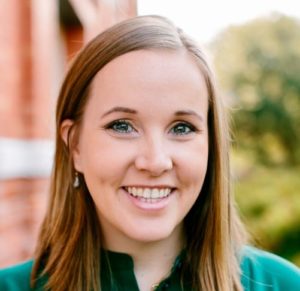

Mary is a ThM student, technologist, and Hendricks Center intern* from Dallas, Texas. From her studies at Dallas Theological Seminary and her work in the corporate artificial intelligence space, Mary finds herself captivated by the Venn diagram of biblical anthropology and human innovation. When she is not studying for classes or testing the newest AI models, Mary enjoys spending time with her friends and family, including her three dear nieces and nephews.
Christopher Watkin John C. Dyer Kymberli M. Cook Mary Stimson