

Discerning God's Will for Your Life
Are you waiting for a sign from God before making your next big move? Join Kasey Olander as she sits down with Bill Hendricks and Jen Wilkin to explore the important topic of how to discern God’s will for your life. Discover how trusting God’s slow process of sanctification can finally relieve the pressure of perfect decision-making.

The Table is a weekly podcast on topics related to God, Christianity, and cultural engagement brought to you by The Hendricks Center at Dallas Theological Seminary. The show features a variety of expert guests and is hosted by Dr. Darrell Bock, Bill Hendricks, Dr. Kymberli Cook, Kasey Olander, and Milyce Pipkin.
Timecodes
- 00:00
- Introduction: Discerning God’s Will
- 07:44
- Common Myths About God’s Will for Your Life
- 13:52
- Godly Decision-Making
- 16:48
- Magical Discernment vs. Biblical Wisdom
- 20:23
- Finding God’s Will in a Culture of Endless Options
- 22:33
- How Crisis & Aging Reveal Who is in Control
- 27:05
- Obedience, Sanctification, & The Narrow Path
- 30:13
- The Romans 7 Tension of the Christian Life
- 33:13
- The Peace Meter Myth
- 38:15
- Finding Hope in Aging and Brokenness
- 42:15
- True Character Transformation in Christ
- 47:15
- The Slowness of Sanctification
Resources
Jen Wilkin: Dust To Dust
Transcript
Kasey Olander:
Welcome to The Table Podcast, where we discuss issues of God and culture to show the relevance of theology to everyday life. I'm Kasey Olander. I'm one of the hosts on the show, and thanks for joining us today. Today's topic is intriguing, because it's about discerning God's will for your life. If that sounds daunting or exciting, even I'm excited that you're going to stick with us today. But we're joined by two very esteemed guests to talk about this topic. The first one is Jen Wilkin. She's a widely acclaimed author and Bible teacher. She's co-founder of Training the Church, and she's also co-host of the Knowing Faith podcast. So, Jen, thanks so much for being here today.
Jen Wilkin:
Thanks for having me on, Kasey.
Kasey Olander:
Great to have you back.
Bill Hendricks:
It's also great to have you back.
Kasey Olander:
Great to have you back. Bill, it's also great to have you back. If you're a listener to The Table Podcast regularly, then you'll probably recognize this voice, because he's also one of the hosts, and he's also my boss's boss as Executive Director for Christian Leadership here at the Hendricks Center at DTS. So, Bill, thanks for being a guest today.
Bill Hendricks:
It's great to be a guest, and particularly to be with Jen as a guest today, I’m excited.
Kasey Olander:
Yeah, I'm really looking forward to this conversation, and to each of y'all's expertise on this topic. A lot of times we think of it as something maybe for young people, you know, people are graduating high school or graduating college, or kind of entering a next season or transition in life, that people are asking, "What is God's will for my life?" But I actually think that a lot of people are considering this topic, and it's a great question. I love that people who want to follow Jesus well are like, "Okay, I'm not just honoring God on Sunday mornings, I'm not just, you know, doing the occasional thing here and there, but I want to make choices, and you know, I want to discover what God's will for my life is." And so I think it's a good desire, and I'm glad that people are asking the question. But I also want to take the time to bust some myths, maybe about what is God's will, how do we find it, and essentially what does godly decision-making look like. So, Jen, I'll start with you, but I'll have each of you answer, like why and how did you become passionate about godly discernment and decision making? What is this interest like for you?
Jen Wilkin:
Well, I wish I could tell you that it just popped out of nowhere when I was in college, and had a lot of decisions in front of me, but my reality is that I grew up in a home where the Word of Faith movement had a big impact on the way that we lived, and my mom got deep into the Word of Faith movement. So any conversation about discernment is always going to be colored for me by that upbringing. I also, as we were having that impulse sort of find its way into the home, my mom was a single woman in the church, and so she was moving from church to church, looking for a place where she fit, because as a single woman it can be really tough. That's one of my soft spots is for single women in the church. So by the time I was in my 20s, I had been in about seven different denominations, and I was very concerned that there was always someone standing behind a pulpit holding the same book, but they weren't all saying the same thing. And so when it comes to questions of discernment, I would say that's very true. I would imagine that our listeners have heard different takes on this. Are you just supposed to feel your way forward? Is the Lord going to give you, can you lay out a fleece, all of these kinds of things. And so I decided to devote some time to thinking about how should I personally think about it, and then how did I want my loved ones to think about it, my own kids and grandkids, and then what did I want the women in my church who I had influence over to know about the topic.
Kasey Olander:
Yeah, yeah, so this is both personal, and then you're like shepherding people, and like, yeah, it's really a matter of passion, and so we'll get to those. I like that you're highlighting feelings and fleeces, and maybe we'll come up with another term for alliteration. But Bill, what about you? How did you get interested in discernment and decision making?
Bill Hendricks:
Well, it actually started quite early in my life, and I should mention that I came to faith at about age four and a half, obviously with the four and a half year old's understanding, but it was for real. It was actually through a set of, I don't know, if you, at your age, you're familiar with LPs, but we had these things called records, which were vinyl discs of recordings that we now have, you know, in digital form. But my mom would play a set of these recordings during the Passion Week, during Easter week, with the voice of Charlton Heston, you know, the voice of God, reading the Passion story. I just remember one night, as this was on, we were getting down to the trial and the crucifixion, and I was very disturbed trying to fall asleep. I'm hearing this in the background, and I'm like, "Wait a minute, they can't kill this guy, he's such a good man." And I was really worked up over it. I went to my mom and crawled onto her bed and said, "Well, why did they do this?" And she explained to me, you know, that Jesus came to die for our sins. And believe it or not, at age four and a half, nobody had to explain to me what sin is. I knew from the earliest age what that was, and whatever he did on that cross took Christ in, and I thought, "Well, duh, of course I'm in, I'll buy that, I'll believe that," again with a four and a half year old's understanding. But it took, and that began a very sincere, honest attempt to what we would say, follow Jesus from that point going forward. I've not done it perfectly in my life, but the point is I've never been one of these people that kind of wandered away. I say all that to say that I was very intent from an early age to figure out, "Well, what does God want me to do with my life?" It was really a question of vocation, and the answer is the answer that we've had for more than a century: read your Bible, pray, seek godly counsel. Well, I did that. I mean, I did that like nobody's business, and I get all the way to age 30, and I've now got two master's degrees on top of my college degree, and I still don't know what to do with my life. It was at that point that somebody introduced me to somebody who introduced me to what I now work with, in terms of giftedness. I don't want to get this off into giftedness, but my point is that that was the first sort of shaft of light that gave me some theological depth to begin to realize that this thing we call God's call on our lives—God calls us into existence, calls us to Himself in Christ to follow Jesus, and implicit in that call, He's got a purpose, a will for us. There's a reason we're here, and I didn't understand that all at age 30 immediately, but that's really where this, what has become an even deeper desire to know God's will and help others know God's will for me.
Kasey Olander: Yeah, and I love that, because this is like I said, it's personal experience that's, you know, making each of us interested in this. I think that that's me as well, and I think that's all of us, that on some level, like I said, we're wanting to know what is God's will for my life, and how do I do it? So I wonder if each of you guys could highlight maybe what are some common misconceptions that you hear a lot about God's will. You know, sometimes there are these undercurrents, these maybe underlying presuppositions, but what are some of the assumptions that people usually make about God's will?
Jen Wilkin: Well, I think one of the underlying assumptions that we make is that every single decision that we face has some moral component to it. So, "If I choose this major over this major, then the Lord will bless me, but I have to figure out, you know, which of the two choices is the one that's morally correct." I mean, I guess there could be a moral component to that decision, but more often than not, it's a morally neutral choice, and so a lot of times we're seeking God's will in a morally neutral space. Or candidly, sometimes we're seeking God's will in a morally clear space. I would use Gideon as an example of this, our famous fleece layer. His decision was morally and practically clear. The Lord had told him exactly what He wanted him to do, but Gideon is still laying out a fleece, and he receives no comfort from doing so, because he's still trying to place himself in the seat of God with decreeing signs. Or it may be that there's something that is morally clear that is a negative moral choice, but we are self-justifying in some way, because we just want to do it. So I think it's really important for us to be aware of human nature that's underlying all of this, the desire to do what I want to do in the name of the Lord, which is classic Israel, right? It's not that they stop doing things in the name of the Lord, they just add in their own desires on top of it, in the name of idolatry. And I think also there can be in an individualistic therapeutic age, we can overemphasize God's will for me over God's will for us. I see that so often in the Bible study space, is "I need to know what I am supposed to do right now with this verse or with this situation that I am in." We are slow to recognize that a personal relationship with Jesus Christ is one note in our salvation, but it's actually, I would even argue, not a major note, that the major note is what we will do together as the church. So often these questions of doing God's will have to do with for me and for now, and not for us and for always. What has this verse meant, or what has this kind of a moment meant for the church as a whole? So, it could be a couple things, but I'd be curious to hear what Bill says.
Bill Hendricks:
Well, Jen, I want to go back to your illustration of the college student trying to figure out their major, and if I pick the right major, God will bless me, and if I pick the wrong major, He won't. Inherent in that is very common, though, is a subtle prosperity gospel.
Jen Wilkin:
Yep.
Bill Hendricks:
This whole idea that, "Man, I got to get this right, because if I get it wrong, I'm going to miss out on God's blessing," which means that somehow I do something that now God owes me. "Hey, Lord, I picked this major, I didn't want to pick it, I didn't want to do it. I thought it was your will, so now you're obligated to quote, 'bless me,'" whatever that means. Which in our culture tends to mean, "Oh, I got this wonderful job and I got a lot of money and I'm happy all the time," and it's like, well, where does the Bible promise that? It doesn't. Okay, so we have to be careful of prosperity gospel, and then another very common misconception that's somewhat related, and this really is not original with me. It was highlighted by a guy named Gary Friesen in a book years ago called Decision Making and the Will of God. It's not like I buy everything in that book, but this was a very important point, because he pointed out that then, as now, many Christians have this idea that sort of God has this will, and it's like a circle, but I want to be in the center of God's will. Like I just don't want to be in God's will, I want to be like right in the target zone of the best of God's will, so there's a dot in the middle, and if I miss that dot, it's the same thing, man. I've missed out on so much blessing, and what God could have done, and it drives you to distraction, basically. Yeah, because you're neurotic about, "Well, I think I might miss it," and it's as if we're thinking that God, you know, gives us four or five, six options, or two options, or whatever, and it's a shell game. "Why don't you pray and see if you can pick which one my will is under," and if you pick up the wrong one, it's not there. He's like, "Ah, see, I caught you, it's over." God doesn't work that way.
Kasey Olander: Yeah, yeah.
Jen Wilkin: It's such a slight against God's character. Even to paint him in that light is to say that he's toying with us. I always like to remind people you are not accountable for information you cannot possibly know. It's this idea that, "Oh, if I had just had the special mojo to hear from the Lord better than I would have, but there was some sin in my life that kept me from hearing." You know, the Lord is a better parent than our earthly parents. Imagine if you had an earthly parent who did that to you, the "read my mind" parent. I would imagine a lot of people actually have that parent, and there's a term for that kind of a parent, the one who is like, "Oh, you couldn't guess what I was thinking? Well, now I'm going to punish you." The Lord is our much better father. He's not the equivalent of our earthly parents, and he does not toy with us. He doesn't play cat and mouse. So I think once you get to that realization, then you can exhale, because it's not just the Word of Faith movement, "If you guess correctly, then the Lord blesses you. If you guess incorrectly, then the Lord does you harm." That's Christian karma. It is just washed-up Christian karma, and when you succeed, you get all the praise, and when you fail, you carry all the blame, and that's not how the Lord operates.
Kasey Olander: Right. It's like thinking of him as some kind of genie, where your wish got twisted because you didn't say it right, or thinking of him as some kind of, like, yeah.
Bill Hendricks: Well, that introduces one other very common sort of mindset that's out there among believers. I think in general terms, I'd call it "worm theology," the idea that I'm a worm, like I'm a sinful, fallen, broken human being, and within that, all of my desires are therefore inherently corrupt. And I can give you scriptures. I would go to Psalm 14, and God says they are all morally corrupt, none of them does what is right. See, so I can't even decide properly. I've got to find God's will. But that's not really how God presents either the what we call the anthropology, the nature of humans, and certainly not His children. We become redeemed in Christ, but in Philippians 2, it's very clear that we're working together with God. "Work out your salvation with fear" (that is all respect and trembling), "because it is God who is at work within you, both the desire and the effort." He's giving you desires. When God makes a human being, he gives them a will. He doesn't give them a will to not use that will. He gives them the will to do what humans do in His image, which is to make choices. And therefore, we pray for wisdom, but we make choices. We exercise that will, and we trust on the basis of Philippians 2 and other passages that God's at work with us, he's sort of behind the scenes, nudging, wooing, bringing facts to bear, bringing circumstances to bear, and gently guiding us. But even then, I mean, there are many categories where we have what I'd call God's will told to us, particularly in the New Testament, but we got to figure out in this specific circumstances. I mean, like Colossians 3: be kind to one another, tenderhearted, forgiving one another. Great. Okay, now you're in this situation at work with this person, how are you going to be kind to that person?
Kasey Olander: Is it kind to correct someone or kind to overlook it exactly?
Bill Hendricks: And what Romans 12 goes on to say is go ahead and pray, and even talk with other believers, because that might help to get some more wisdom, and you kind of come up with a strategy. "I want to be kind to this person, because I know God wants me to be kind. I think I ought to do this." "Well, that's a good idea. Let's try it." We try it, and we see, and sometimes it works out great, and sometimes it didn't work out so great. We go, "Well, that didn't work," but it's what Romans 12 calls proving out, testing out the will of God. Let's see if we can find, as it were, discover what really God has for us and other people in this situation.
Jen Wilkin: And what you're getting into is the category of wisdom, which is something that a lot of Christians don't understand. They read wisdom literature, they read Proverbs as promises instead of as principles, and so they get into that, "If I do x then y will happen" scenario. But wisdom doesn't promise outcomes other than the outcome of growth of character. It doesn't promise that something will go the way that you want it to, simply because you abided by a godly wisdom principle. And we know that because we can look at the life of Christ, who is perfectly obedient and perfectly wise, and by all measures had a failed ministry in human terms, because he was killed for it. So if you look at the wisdom idea as it relates to decision making, what we think is God is just going to magically impart wisdom to me that will deliver an outcome. Instead, what wisdom is, is it is a growth over years into living God's way in God's world, and some of it is learning from a decision that didn't pan out the way that you wanted to. Like I always remind people, you've made good decisions that didn't actually make you more holy, they made you more prideful, because you were like, "Look, what a great decision I made." And you've made wrong decisions that actually made you more holy, because the Lord still used it to sanctify you. So, we boil everything down to the decision point, and the Lord is always more interested in the decision maker than He is in the decision itself, and there's such a safety in that. But wisdom is also something that is a product of time, and we are again instant gratification, individualistic. We want wisdom to work right now the way it's going to work for all of life. Well, I'm 57 right now, and yeah, I'm wiser than I was when I was 25 because praise God, He has trained me through both my successes and my failures. So I can anticipate things better than I could when I was 25 years old. But I think when we talk about discernment, I actually prefer the word wisdom, because discernment sounds magical, like I'm supposed to have spidey sense. Wisdom is something that is a product of being a good student of what's happened in the past, anticipating what's going to come all within the framework of the scriptures and the Lord speaking to us through them. But what we do is—like I imagine going to help with my grandkids and Olivia, she's three. Imagine if I show up and say, "Olivia, there's something I want you to do for me right now, but I'm not going to tell you what it is. I want you to guess what Sugar wants, and if you guess wrong, you have to go to timeout, and if you guess right, then I'm going to give you a treat." And this is the way we cast the Lord in that role now. We do mature. Olivia will be 15 one day, and she won't have to say, "Should I do this or that?" She won't. She will have an internal mechanism for good decision making that's born out of experience. I don't expect her to have that when she's three. I do expect her to have it when she's 15. And so, some of this has to do with Christian maturity as well.
Kasey Olander: Hmm. And I love what you said earlier, about not being accountable for information. There's no way we could have had that, that is kind of like a relief, because somehow you know, we have this expectation that—I don't know where I got this pressure that I need to guess what I'm supposed to be doing. And when you paint that picture, you and your grandchild, you're like, "Oh, that doesn't sound right," but we easily do that with God all the time.
Bill Hendricks: Well, I would just point out here that this conversation that we're having is, in a way, I don't want to say an outlier, but it's certainly not the conversation that the majority of the world's people would have, or historically would have had, precisely because we live with infinite numbers of options about our jobs, about what we buy, about how we spend our time, on and on and on, right. And the reality is that humanity, for most of its existence, has really not had very many options. I think of the billions of people around the world today, they had no option on what occupation they have. Somebody else decided that for them, or circumstances decided that for them. And I look at that, and I go, and nonetheless, from the beginning of humanity, there in Genesis 1, God has a will for every person, even if their options are highly constrained. So their choices may be constrained, but God still has a will. And Jen, one of the things I've loved about your teaching, and what you emphasize, is that at the end of it all, what is the big will of God? What is it that, no matter what your circumstances, many options, no options, some options... What does he want? He wants us to be conformed to the image of His Son. He wants us to become like Christ. He wants us to become the word in the New Testament, in Scripture, in general, is holy, which we don't have a very robust understanding of anymore, but it means the way he intended us in the first place, without sin. We're moving toward that, and ultimately we'll be like Christ in that way. So it has to do with the people we are, which then lapses into the things we do, our behaviors, but it's all stemming from this call of God to be holy, "for I am holy."
Jen Wilkin: And I think you know, in a day of so many choices, first of all, we forget how many of those choices are related to wealth. We have so much wealth, and so a lot of the choices that we face are a direct result of that. But on top of that, this is why the Lord is kind to allow our circumstances to remind us that we're totally reliant on him. Because when you are in a crisis, what typifies a crisis? It's that a lot of your choices have been taken out of your hands, and so it's a reminder moment of exactly who's in control. And when everything feels out of your control, then you realize, "Oh, what can I control? I can control my reaction to things, I can control my state of mind," and this is with the help of the Holy Spirit, obviously. But I think about people who have suffered a lot are way better at this conversation than people who haven't encountered suffering, because they're not under the illusion that their life is controlled by the quality of their choices. They've endured seasons where those choices were removed. And I've just written a book on aging, and it's not out yet, but one of the things that I explore in that is that what aging does, if the Lord grants you length of years, is it returns you to a state of helplessness where others are making every decision for you. And in that stage, does the Christian no longer seek God's will? No, of course we do. We just recognize that it wasn't about decision making all along, it was about the internal life of the person who was going to be making those decisions. There will still be the decision—if I live to be 84 and someone else dresses me and chooses where I go or what I do, I will still have to decide every morning whether I'm going to bring glory to God or not.
Bill Hendricks: Well, Jen, you put your finger there on at least one decision that, in my view, supersedes all of them. Because sooner or later Jesus is going to come to every person. We can debate how this works, and the theology of it. I'm just making the point, but he does come to each person and says, "Follow me." And you're going to make a decision, and for those who are in Christ or believers, they say, "Well, I've made a decision to follow Christ," or "I'm a cradle Christian, you know, I grew up in the church, and I've always followed Jesus." My real point here is a lordship issue, not getting into lordship salvation, that whole discussion. I'm just saying, at some point you're going to have to decide, is it God's will that's going to be done, or is it my will that's going to be done? Who's in charge here? And I've certainly discovered in my own life, and was told this years ago by a mentor, man, until you make that decision, you're going to wander because you're constantly going to be—your aspiration is, "Oh, I want to do the good thing," and then, "Yeah, but this opportunity looks really juicy," and I retreat from that. You're double-minded, and at some point you've got to decide who are you going to follow? Who are you going to answer to? God really does have a will, which is your sanctification, but are you going to follow that? Are you going to get in on that?
Kasey Olander: Yeah, but then to go back to the point that you made earlier, Bill, you're talking about God's will and my will, and how they're not necessarily antithetical to each other, always. We can still affirm total depravity and stuff, and talk about our fallenness, while at the same time not being like, well, it's one or the other, and if I desire it, it must be evil.
Bill Hendricks: Well, and I guess what I'm arguing against is lapsing into a cultural Christianity that just, you know, like Romans 12 said, I pretty much live the way the rest of the world does. "Yeah, I follow Jesus, I go to church every Sunday, that's my weekend hobby, but on Monday morning, when I go to work, I leave God at home, I'm a practicing secularist, as if God didn't exist." And I'm like, well, then you're not following Jesus.
Jen Wilkin: I do think it's good to keep the question of "in God's will, out of God's will" in frame, because I do think you know it. You can be disobedient to the Lord, as Bill's pointing out. And what is the impact on us? Does it mean we're outside of God's will? I mean, there's a sense in which you might understand it to be that, but if we look at Jesus' words in the Sermon on the Mount, he talks about a broad way and a wide gate, and he talks about a narrow way and a small gate, and Christians have passed through the small gate of Jesus Christ and are on the narrow way. Period. You can't wander back onto the broad way. You might act like you're on the broad way, but you can't physically get to it. You have passed through the gate of salvation. And so that means that obeying God or disobeying God doesn't put you on the broad path, it merely slows your progress on the narrow path. And so I want to be sanctified. 1 Thessalonians 4:3 says this is the will of God, your sanctification. I want to be sanctified. The Lord is going to gift me a certain number of years. I want to number those days rightly to gain a heart of wisdom. I can either go more quickly on that path and look more like Christ when I go to be with the Lord, or I can move more slowly and look less like Christ when my time on earth is done. So when we think about these decisions that we're making, what they don't do is tear you off the path. Jesus says he won't lose any that are in his hand, but what they can do is slow your sanctification. And then here's where I like to point us back to the collective idea of Christianity. All disobedience has collateral harm for fellow humans, and all obedience has collateral blessing. If you want a karma idea, it's not karma, but if you want an idea to embrace around reward and penalty, think about how the personal sin that you think only impacts you actually impacts everybody who you're connected to. Think about how your obedience can actually result in blessing for them, and never more so than when we're talking about matters of character. When your character is being conformed to the image of Christ, everyone around you receives some form of blessing from that, because it's as though they are with Christ. You're this tiny outpost of shalom. And so I think when we think about obeying God, we see it as burdensome, or why is He laying this on us? But actually what we're saying is you're on the narrow path, and God's will is that you be holy. And for you to be holy is not to take on a nature that is foreign to you. It's to embrace the nature that was originally intended for you. And so when God says here's how to be holy, He's handing you the owner's manual for being human. He's not asking you to do something that is anti-human. It's actually, "Here's what you're made for."
Kasey Olander: Yeah, which is so interesting, because I'm like thinking about the—I don't know if tension is the right word, but like holding the things at the same time that you guys are...
Bill Hendricks: Tension's the perfect word. I mean, that's what Romans 7 basically gives us when we come into the faith. We enter that tension that Paul talks about in Romans 7, with Paul I aspire to all these fruits of the spirit and the virtues and this Christ-likeness, and then I look at my own heart and my behavior, and I'm like, ooh. But the second half, if you will, of Romans 7 is over in Philippians 3, where Paul says, "Look, I haven't gotten there yet, but I kind of leave behind what happened back there, thanks to the grace of Christ. There's no condemnation for those who are in Christ Jesus, and I press on toward that which lies ahead for the upward call of Christ and God." And so there's always this aspiration to the holiness that we aspire to, and that's important because it gives us hope and a direction. But we never get to where we just forget about our sin. It's like the, as the Puritans put it, with the mortification of sin, we're putting to death the things that are not of God and not His will, in order to embrace that which is. And that gets into the habits, and I think a lot of discerning God's will boils down to, am I in the habit of trying to discern God's will? Not just, "Oh, I got an opportunity for a promotion today. I haven't really prayed in months, years, but boy, that sounds important. Maybe I ought to figure out what God's will is for that." No, it's like every morning I wake up and go, "Lord, what's your will for me today? I got to do this, I got to do that, I think I'd like to do this, but I pray for wisdom and leading, and I want to follow you throughout the day," and it's an ongoing conversation.
Kasey Olander: Well, then here's a question for y'all, as we're talking about this pursuit of holiness, the fact that we're being sanctified more and more in the image of Christ, is there, like, should there be, then, this expectation? Because I hear people all the time when they talk about choices, either that they've already made, or that they're about to make, like, "I have peace about it," or "I really like, I did that, and I had a lot of peace about it." And sometimes I make fun of them, sometimes I don't, but I'm asking genuinely, as we're pursuing holiness, is that something that I'm supposed to be feeling? Because I'm gonna be honest with you guys, I almost never have peace about stuff, and it's not because I feel like I'm actively being disobedient, or I'm walking in willful sin. I just am like, okay, I'm trying to make a decision, and then after the fact, I see how, of course, it was perfect that I went to that college or married my husband, or whatever. You know, it just is like, for whatever reason, I never have this peace sense that other people seem to talk about. And so, Jen, how do you respond to that?
Jen Wilkin: My mom used to always say, "Check your peace meter," and it was very well intended. I understand what she was wanting to say, but I have often thought, I thank God that Jesus didn't check his peace meter in Gethsemane. He made his peace with what he knew was next for him. And I think there's a way to understand "I feel peace about this" that is, "I've really thought through everything I can, and now I am trusting the Lord," like I'm just submitting myself to the Lord in this, and we'll see what happens. But not "I feel peace about this, because I've nailed down that this is the right decision." I think life is about ambiguity. The Christian life is about ambiguity, and in many more ways than we want to admit. We have peddled Christianity as certainty around things that it doesn't grant certainty about. One of those is the future. The future belongs to the secret counsel of the Lord. But when we say I have peace about something because I believe I know what the future holds for me, we've entered into an anti-Christian space. The future is the Lord's, and the way that we know this is because if the Lord did grant us certainty about the future—and I don't mean certainty of salvation, I'm not talking about existential questions, I'm talking about like literally I make this decision and then this will happen in the future, so circumstances—if God did that, then the Bible would say that blessed are those who walk by sight and not by faith. But it doesn't say that. And if you have certainty, then you don't need faith with regard to your circumstances. And so I think, and you know, another related thing to this, I will often hear young Christians say, "Well, I think that the Lord wants me to do this completely counterintuitive thing, to just take a risk."
Kasey Olander: Yeah.
Jen Wilkin: Right, like He wants me to risk big for the kingdom. And so, for example, like maybe you have a degree in electrical engineering, and you have this well-paying job, you're contributing to the kingdom through your income that's coming in, and you're like, "You know what, I think the Lord wants me to quit this job and be a summer camp counselor, because you know that's going to honor Him." And I'm not saying that the Lord never puts an opportunity like that in front of someone, but I think that often is an over-identification with characters in the scriptures that we're not supposed to necessarily identify with. I also think about how further down in 1 Thessalonians 4:11 it says this is right after he says, you know, this is the will of God, your sanctification, he says aspire to live quietly and to mind your own affairs and to work with your hands as we instructed you, so that you may walk properly before outsiders and be dependent on no one. Like a well-ordered life is often the greatest indicator that the Lord is at work in your life. God is a God of order, not of chaos, and so when we glorify the chaotic or counterintuitive decision as being more likely to be from the Lord than the well-ordered one, I always have a red flag that goes up.
Kasey Olander: Yeah, and that's a really good myth to bust, too, because somehow I don't know how, but it comes across as more holy sometimes, you know, like we're elevating this, like, you know, it was out of nowhere, and it made no sense. It must be the Lord, right? As opposed to different personalities, or what have you.
Jen Wilkin: Well, there's not a sense that God might be using everything that's come before in your life to prepare you for what's coming next. It's like, "Nope, I have to have this complete..." And you know, I think about the Apostle Paul, he's a good example of this. He's raised as a Pharisee of Pharisees, says that himself, and when he is saved on the road to Damascus, what follows is not a complete rejection of everything that came before. He takes all of that knowledge of the scripture and turns it toward his ministry. And so it wasn't that everything that happened in his life as a pagan had no bearing on what was coming next. Actually, all of it was going to be used. So anytime I hear someone saying I'm going to totally abandon this morally neutral thing, my degree and my profession, I always want to ask follow-up questions and say, "Why does that feel more like God's will than that He would build on a basis that you've already had and sanctify what you've already been doing for the last 10 or 20 years?"
Kasey Olander: Paul is always a pretty good example.
Jen Wilkin: Yeah, he's pretty much a Bible jukebox for the New Testament. You're welcome, everyone. Solved everything for you.
Kasey Olander: Bill. How do you respond to those? Either like the feeling of having peace about it, or God's will is always counterintuitive, those kinds of things.
Bill Hendricks: Well, one thought that occurs to me, Jen, you said you're going to be finishing up a book on aging, and when I hear earlier you said you're 57 I'm thinking, "How could she write a book on aging?" I'm teasing, I'm teasing. That's, you know, I should be starting to think about books like that, but my point here is, I hope that book includes something about the fact that it's my personal experience, but also the experience of many, many saints that I've known and read. It's like the older you get and you start to hear the first echoes of heaven, you become more conscious of your sin, and you feel less peace because you're so conscious of that gap between what I aspire to and where I actually am. And I'm like, "Lord, after all these years, how come I'm not further along?" Okay, I mean, think about that. I've known Jesus since age four and a half, so I'm now what, 60 some years into this thing, and all I can do is keep going back to Paul's assurance to us, the Holy Spirit's assurance to us in Romans 8 that God does cause all things to work together. The bigger picture of what He's trying to do with us and in us, He causes it to work together for good, which is our highest good, not just what we think is good. What does it say to those who love Him and are called to his purpose? And all I can say is, "Lord, I love you, because I know that's true, but not as much as I want to. And I know I'm called to your purpose, and I don't always follow that purpose, but at least I know I'm called, and I'm trying to follow it. I'm doing what I can." And I think in His tender mercy God says, "I know, Bill. That's why I'm causing everything to work together, ultimately for good, your highest good. It's all going to work out. I'm with you, I'm not against you. I called you into existence. I've been with you all the way along, and when it's time to go home, I'll be with you, and you will kind of be with me." And that gives a lot of hope, and that starts to bring more peace. It's like, "Okay, it's gonna work out. I'm not doomed."
Kasey Olander: Yeah, and working out isn't always me being the most comfortable I can possibly be.
Bill Hendricks: Well, I mean, I just look at most—remember, I've been going to church since nine months before I was born, so I've known thousands, probably tens of thousands of believers in my life. And because I've also been going to Dallas Seminary since nine months before I was born, many of them have been people we would look up to as, "Oh my gosh, there's a saint, there's a really committed believer," all that kind of stuff. And I look at their lives after 70, 80 years, 90 years, whatever, and I look at, "Wow, what a wonderful person, how much pain, how much suffering, how much brokenness they've experienced," either in their own life, their family's life, their church, their friends. It's like, man, this is a broken, fallen world. And if you ask them, "Well, how much peace do you have?" they'd give that same answer. It's like, "Well, you know, I know God's working it out. I do have a lot of sadness about things I see in myself and things around me, but I just keep coming back to the grace of God," because I think that's really our only hope in salvation.
Jen Wilkin: I have the privilege of now being related to a youngest of seven child, he married my daughter, Claire, and his father passed away of cancer about five weeks after my daughter and son-in-law were married. And at Mike Hagan's funeral, all seven of his children stood up and eulogized him, and they said, "We are here today to tell you that the man that you hoped he was is indeed the man that he was." And I thought, "Wow, that's amazing." And so then I'd say a couple months later they're going through his belongings, and they find his prayer journals, and I say this as a setup for one of the ways I think you can tell how actively you're seeking God's will is by the kinds of things that get recorded in your prayer journal. And in the case of Mike Hagan, they didn't even know he kept these journals, and they find them, and his prayers were always about his—for himself were for his character, for others it was for their circumstances, and he prayed for his own circumstances as well. But the focus of his prayer journal was, "Lord, I'm impatient, help me to be more patient. Lord, I want to be more present with my family." That had to do with the kind of person he was in any circumstance, instead of with any particular circumstance. And on top of that, he was praying for over 75 people by name. Wow, and I thought, "What if someone found my prayer journal, what would it say about how serious I am about character transformation?" Mike was a person who no one had to ask if he was a man of character. Everybody knew it when they met him, and I think it had to do with his rich internal life and his relationship to the Lord. He understood that he couldn't make peace with all of his circumstances, but he could have peace with the Lord through an ongoing pattern of repenting and believing, believing again the good news of the gospel, and the rest of it was going to sort out. He didn't know how, he didn't know when, and so I think about that often, and aspirationally, that I want to be like Mike. Oh, there you go. I could be like Mike. And I think we should know more stories like that. We should know living or recently living heroes of the faith, who we look to and go, "Oh, I can actually do that. I know that I could do that, because I saw Mike do it." So, I think when you're thinking about God's will for your life, zoom out, don't zoom in so much. Have a long horizon. Trust the Lord that all the circumstances will resolve and be the right person in that circumstance, insofar as you've submitted yourself to the power of the spirit to work through you to grow righteousness in you, regardless of what life throws at you tomorrow.
Kasey Olander: Yeah, I think that was a beautiful place to land the plane. That story is like convicting and encouraging, because I mean, the people that you're around in close proximity to especially family, would be the ones who would know your inner life. And then especially in seeing, getting to see someone's relationship with the Lord in that way after they pass is such a testimony to what you guys are talking about, sanctification over time. So I'm gonna weave together things that you guys have talked about so much, I think this conversation has been so rich. It's interesting to me, one of the things that you guys kept reiterating is the slowness of the process. Asking for wisdom and receiving wisdom from God, and being sanctified take a long time, and we're in a microwave culture where we want things to be fast and easy. And so at the same time we are able to not slow down our sanctification by pursuing holiness, by pursuing the Lord and trusting in Christ. And there's been so much freedom too, and what you guys have highlighted over and over is that we're secure in Christ. God is not this monster who's out to get us if we maybe make a wrong turn or something like that, but He's a loving and kind Father who has made it clear that His will for us in Christ is our sanctification. So you guys have highlighted a lot of seeking wise counsel from believers, and being steeped in scripture has been this theme that's woven throughout our conversation, so I'm grateful for that. And I want to give you guys just a brief chance to give any closing thoughts, if you want to, that our listener can take away.
Bill Hendricks: I think you just raised a very important point, sanctification is slow because life for most of us is long. It also turns out there's a Japanese theologian who talks about the Three Mile an Hour God and what he means by that is humans walk at three miles an hour roughly on average, and that's about the speed that we come to know God. In other words, we've got a—if we're going 650 miles an hour all the time, like jet planes do, it's very hard to kind of slow down and let life unfold. And so most of the decisions we make are really not the great giant, "Who we're going to marry, what's my career going to be," life and death, existential issues. They're daily, they're momentarily, "How am I going to respond to this person? What am I going to do in this situation? 'Mommy, you know, can I go over to so and so's house?'" I mean, they're just tiny little choices, but as C.S. Lewis points out, every one of those choices, in the aggregate, they start to lead us in directions. And what we want is that our choices are more and more leading us in a direction of what the Bible calls life, the way that God once intended us to be. And so we train ourselves to, as Augustine said, that our affections, our desires—want and desire, if they're not synonyms, they live in the same house. So, when I say what I want is, well, that's what I desire. And God's shaped our hearts and put desire in there, but you know, we train our desires to get in alignment with this way that God has shown us is the way toward life, and so we more and more choose in accordance with that through wisdom.
Kasey Olander: Jen, closing thought.
Jen Wilkin: Yeah, I would say this will be the most predictable thing for anybody who knows my ministry, but you will not walk in wisdom if you don't know the scriptures. And so often we are acting more like the pagans than we are like Christians by seeking an omen outside of the scriptures versus submitting ourselves to the long-term ministry of the scriptures. Or even worse, we're using the scriptures to deliver that omen. We're flipping to a page and pointing and asking it to tell us something that it's not designed to do. And so, knowing your Bible is not a silver bullet answer to developing wisdom, but it is a basis for it, a very important basis that most of us don't have. And so what the scriptures show us is a vision of God high and lifted up, and that is always the beginning of wisdom, the fear of the Lord. So, if you want wisdom in your life, don't forget to begin with transcendence. The quickest way to get bogged down and overly concerned with our own individual moment is to turn downward and look at only that, so to be reminded daily of the transcendence of God. And also, that's what happens in crisis, right? Is all of a sudden you realize all you have is the Lord. So don't wait for the moment, don't wait for the crisis point, don't wait for the decision point, the big decision point. Instead, seek out your daily dose of awe with the Lord, so that you have muscle memory around remembering in any given moment, no matter what the outcome of this particular decision is. The Lord is enthroned between the cherubim, and it's going to be okay.
Kasey Olander: Amen. I love that. I love that you said it explicitly, one, that sounds just like you, but also because that's been the undercurrent, you know, like that's the underlying presupposition of our conversation today is we're alluding to scripture, we're talking about scripture, we're assuming this elevating of scripture, and that that's the way towards wisdom, that's our knowing God, and that's our being able to discern His will for our lives. You highlighted 1 Thessalonians 4:3 and Psalm 90. So, Jen, Bill, thank you guys so much for being here today. I've enjoyed this conversation so much.
Bill Hendricks: It's mutual.
Jen Wilkin: Thanks for the great discussion.
Kasey Olander: We also want to point you to, like we said earlier, Jen is a host on the Knowing Faith podcast, and you can find her basically all over the internet. But I also want to thank you for listening today. If you like our show, go ahead and leave us a rating or review on your favorite podcast app. It's a great way to support the show and help other people to discover us, and we hope that you join us next time when we discuss issues of God and culture to show the relevance of theology to everyday life.
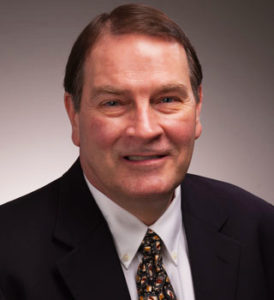

 Bill Hendricks Jen Wilkin Kasey Olander