

Digging Deeper into Biblical Archaeology
How can material remains uncovered from the ancient world illuminate the biblical text and affirm the historical reliability of Scripture? Milyce Pipkin and Darrell L. Bock are joined by professor Paul D. Weaver and archaeologist Titus Kennedy to discuss key archaeological discoveries—from the Tel Dan Stele and the Nabonidus Cylinder to ancient inscriptions in Egypt and Cyprus—and explore how digging into the dirt bridges the gap between material culture and biblical studies. Join them as they examine the distinction between proving and affirming faith, unpack the meticulous process of archaeological excavation, and discover how material finds enrich our understanding of the Bible’s cultural world.

The Table is a weekly podcast on topics related to God, Christianity, and cultural engagement brought to you by The Hendricks Center at Dallas Theological Seminary. The show features a variety of expert guests and is hosted by Dr. Darrell Bock, Bill Hendricks, Dr. Kymberli Cook, Kasey Olander, and Milyce Pipkin.
Timecodes
- 00:00
- Welcome and Introduction
- 02:47
- Defining Archaeology and Biblical Archaeology
- 07:31
- Bridging the Divide Between Archaeology and Biblical Studies
- 10:38
- What Archaeology Can and Cannot Prove
- 16:02
- Corroborating Evidence: The Fall of Jericho
- 18:57
- Inscriptions and Textual Finds: Tel Dan Stele
- 21:01
- Khirbet Qeiyafa and the Reign of David
- 21:42
- The Nabonidus Cylinder and Belshazzar in Daniel 5
- 24:50
- Luke’s Historical Accuracy in Acts
- 27:38
- The Soleb Temple and the Oldest Yahweh Inscription
- 30:23
- The Cumulative Impact of Archaeological Finds
- 31:47
- How Archaeologists Locate and Survey Excavation Sites
- 37:58
- Excavating Ancient Corinth
- 38:30
- How Archaeology Changes the Way We Read the Bible
- 42:29
- Understanding Cultural Scripts and Biblical Context
- 45:12
- Upcoming Projects: Zoar and Archaeology of the Exodus
- 46:01
- Recommended Resources and Final Reflections
Resources
Books:
- Paul D. Weaver: Faith-Affirming Findings: 50 Archaeological Discoveries That Validate the Historicity and Reliability of Scripture
- Titus Kennedy: Unearthing the Bible: 101 Archaeological Discoveries That Bring the Bible to Life
- Walter C. Kaiser Jr. and Duane Garrett: NIV Archaeological Study Bible: An Illustrated Walk Through Biblical History and Cultur
Podcasts / Episodes:
Transcript
Milyce Pipkin
Welcome to The Table Podcast, where we discuss issues of God and culture to show the relevance of theology to everyday life. Hi, I’m Milyce Pipkin. I’m a fellow at the Hendricks Center and one of the hosts of The Table Podcast, and I’m glad you’re here with us. We are going to be discussing the topic of digging deeper into biblical archaeology, and it’s an exciting topic for you, and you’re going to really enjoy it. I’ve got a co-host here who is wearing several hats. One of them is he’s my boss at the Hendricks Center, Dr. Darrell Bock. He is the executive director of the cultural engagement area of the Hendricks Center, and he’s also a senior research professor of New Testament studies here at Dallas Theological Seminary. It’s always a pleasure, Darrell, whenever we get a chance to sit next to each other, and particularly for this subject matter, because we get to talk about biblical scholarship and archaeology, how the two meet in the middle, and that’s a subject we can all dig on.
Darrell Bock
Yeah, exactly right. And whenever I get referred to as senior, that just means I’ve been around a long time, and with research, it means I read a lot of pages. And we have the pleasure of having two guests today. One is the author of this book, Faith-Affirming Findings: 50 Archaeological Discoveries That Validate the Historicity and Reliability of Scripture. So we’ll be talking about particular finds related to the Bible, both Old and New Testament, that Paul has drawn attention to. And Paul is an associate professor of Bible exposition at Dallas Theological Seminary. I want to be sure we didn’t either promote or demote you appropriately, and so you’re in that associate slot. And then Titus Kennedy, who also is—I guess I would refer to him as our resident archaeologist at the seminary. Titus, welcome. Even though you’re online, welcome to The Table. We’re glad to have you, and Paul, we’re glad to have you as well.
Milyce Pipkin
Absolutely.
Paul Weaver
It’s great to be here. Thanks for the invitation.
Titus Kennedy
Yeah, thank you so much.
Darrell Bock
So let’s start off at the beginning, which is, let’s define archaeology and biblical archaeology in particular. And I guess, Titus, since you’re the resident archaeologist in the group, I’ll let you define those two categories for us, and then I’ll be asking Paul why this book. So:
Titus Kennedy
Yeah, absolutely. So archaeology, if we’re just to translate it from the Greek words it’s composed from, means study of the ancient. But of course, the modern discipline of archaeology goes a little bit beyond that into specifics, and we can say something like it’s the study of human cultures and history through the recovery, documentation, and analysis of material remains. So we’re looking at physical remains of things. This can be artifacts, which are objects. This can be architecture, buildings; could be manuscripts; can be bones and other biological remains like plant remains and so forth. So we get that data from going out and excavating at these ancient sites. So a little bit different than paleontology, which sometimes people confuse with this—paleontology also excavates, but we’re talking about ancient animal remains in paleontology. So, just a little distinction there. As far as biblical archaeology, it’s going to follow all those same things, except there’s just a specific emphasis on where we’re looking and when we’re looking for those archaeological remains. So it would be anything connected to the lands and times of the Bible—that overlap of both chronology and geography. So we’ve got lots of different categories of archaeology. For example, Mesoamerican archaeology. So that would have a particular geographic, chronological focus, and biblical archaeology is the same kind of thing.
Darrell Bock
Okay, so I tell people if you want to sound important, use a foreign language, and if it’s a dead foreign language, that’s even better. So we’re talking about realia, right? The real stuff that we dig up that comes in a variety of shapes and forms. And I know that in the work that I’ve done in relationship to helping films deal with this period, I often get asked questions that my wife would translate as, “How do they know that building looked like that?” You know, when you get partial remains. And we once did a tour of great sites, and my wife called it “the Dead Rocks Tour,” and I corrected her and said, “No, it’s great Dead Rocks that we’re talking about here.” So as we’re thinking about that—and of course it’s the reality, it’s the fact that you dig up many remains of these kinds of things like theaters and that kind of thing, and you know what the design of these theaters are because of what it is that’s been preserved. In the case of theaters, you don’t have to dig them up; they’re still standing there staring you in the face. But that’s what the archaeologist deals with, correct?
Titus Kennedy
Yeah, yeah, absolutely. We have limited remains often, so we’re thinking about buildings now. In the Greek and Roman periods in classical archaeology, you have much better preservation of architecture typically. And one reason for that is that the materials were much better, and two is that they’re closer in time to the present. But if we’re talking about the Old Testament, and let’s say we’re talking about Israelite architecture—well, the Israelites didn’t just build with pure stone. In fact, the average building was going to be a stone foundation with mud brick for the primary structure, the walls, and some wooden beams. And so the mud brick, the wooden beams, and the roof made out of biological material, thatch—all that is going to go away. So this is a lot different than, say, Roman temples or Egyptian temples, and that is why many people, like your wife’s comment: “I’m looking at a bunch of rocks again. Oh, here are some more rocks,” because in certain regions and periods you’re looking at stone foundations. And so if we’re talking about reconstructions, in some places we’re only able to do that if we have some ancient textual descriptions, some ancient artwork depicting things, and then we’re able to project that onto it. But yeah, sometimes we have speculation.
Darrell Bock
Okay, well that helps us, and allows me to transition to Paul. So you’ve got this book, Faith-Affirming Findings. Tell us a little bit about—it’s my normal question I ask when someone’s on The Table the first time, which is: What’s a good guy like you getting into a gig like this? What puts you in this position?
Paul Weaver
Well, my first interest in biblical archaeology was my time here at Dallas Seminary under Eugene Merrill in Old Testament backgrounds and his interest in archaeology. But then in my Ph.D. work, my Ph.D. was in biblical studies, but in my dissertation, I did have courses on archaeology. But in my dissertation, I wanted to do an interdisciplinary task. The challenge, I think, is we have archaeologists that are good archaeologists, and we have biblical scholars who are good biblical scholars. But not all biblical scholars are archaeologists, and most archaeologists aren’t biblical scholars—and Titus is an exception there, who’s very well versed in biblical studies. But I was seeing a big divide between archaeology and biblical studies. For example, there are 23 volumes on Corinth, ancient Corinth. Well, we need to take that archaeological data there and translate it for the average pastor, teacher, Bible study leader. And that’s what I did with my dissertation on the archaeology of Corinth, to help us take the most important details from Corinth, the archaeological record, and how that relates to the biblical record. And so that was a good process, and I enjoyed that. And in the process of that, I realized we need to do that more. And what we have here in my book is taking what I believe are the 50 most important discoveries from the field of biblical archaeology, and make it usable and accessible to the average pastor, teacher, Bible study leader. And so that’s what I did. I describe the discovery—there are many fascinating discoveries, some of them because of an accident, many of them because of accidents: septic systems being fixed, or a swimming pool being made, and we have various incredible discoveries. But so I share the discoveries, the significance of them, the biblical events surrounding them, then the one, two, sometimes five, six, seven, eight ways that this particular discovery affirms a real person, real place, real event. And so I hope pastors and teachers will be able to utilize this to bring those details out into their preaching and teaching to affirm the people in their congregation and in their Bible studies that the Bible is historically reliable about all that it discusses.
Darrell Bock
So, Titus, a question for you, and I’ll ask Paul to chime in after I ask you. And that is, sometimes when we read books written by archaeologists, they’ll make the point, or at least some of them will, that archaeology can’t prove very much. It just shows kind of what’s there, and then you still have the challenge of reconstructing—you’ve already alluded to this—reconstructing what it is that you’ve dug up and how it fits. Talk to us a little bit about that, about kind of that connection between what you find and what you say about what you find.
Milyce Pipkin
That’s good. That’s good.
Titus Kennedy
Yeah, that’s a great question. So, this is going to vary from site to site or period to period. Sometimes we can say a lot. Sometimes we have enough data and enough details that we can get very specific. And sometimes what we’re seeing archaeologically is just broad trends, like, “Yes, this site was occupied during this 200-year period.” And so it’s going to depend on things like which archaeological finds are at the site, and also what kind of ancient texts that we may have that correlate with that site, that may talk about it, that may talk about that specific period. So, if we’re looking at the Bible, for example, and the Bible is describing that a certain city was occupied in the time of the judges, and it was attacked and destroyed, and then it was repopulated by new people—so, like the city of Dan, for example, follows this pattern. Then, archaeologically, we can look for certain things in that. We can see: Is there evidence of a destruction? Is there evidence of rebuilding? Is there evidence that the people who rebuilt are different than the people that lived there prior? And in the case of Dan, we can say yes to all those things. But there are certainly situations where things are much more ambiguous, where we may not even be able to say this is exactly this date, or this is even exactly from this century, especially as we go back farther in time. So it’s just dependent on factors of data, both archaeological and from ancient written sources.
Darrell Bock
Okay, so Paul, when Titus mentions this, you like to make a distinction between proving and affirming. Why don’t you talk a little bit about that? Because I think that’s an important kind of follow-up to what Titus is telling us.
Paul Weaver
Yeah. So I did choose the language of “faith-affirming” rather than “proving,” because there are certainly things that the archaeological record validates or affirms: real people, real places, real events. If we believe the Bible is true, and we do, then we’d expect the archaeological record to affirm it, and it does. And so, real people, real places at the right times in the right location. And so, I am thankful for the plethora of archaeological remains that we have access to in our generation, but not all Christians had access to in the years before. I love the words of William Albright, famous archaeologist in the 1900s and mid-1900s. He said, “The excessive skepticism shown towards the Bible has been progressively discredited. Discovery after discovery has established the accuracy of innumerable details and has brought increased recognition to the value of the Bible as a source of history.” And so there is definitely an interpretive aspect to all of these discoveries. But there are certain things that, you know, skeptics denied, like the existence of David—a historical David—that virtually all scholars agree now that David does exist, and we have the House of David discovery that changed that in 1993. Right? So same thing with Belshazzar. Right, there are scholars, minimalists, who do not regard the Bible as historically reliable; only what is affirmed outside of the Bible is to be regarded as true. They’re often called minimalists, and some people don’t like that term. Others use it, like Ronny Reich will affirm that he is a minimalist. But these minimalists have a skepticism towards the Bible. And again, Belshazzar, right—a figure that was believed not to exist, just to be a fictional character in the minds of the Jewish people. That’s been discredited as well with the discovery of the Nabonidus Chronicle and the Nabonidus Cylinder. So, some things are much more definitive, much more clear—almost to the point of proving. But there’s certainly an interpretive aspect to archaeology.
Darrell Bock
So it’d be fair to say that some finds are what I might call context-affirming. They affirm the general context. They remove the idea that someone is a myth and totally made up. We can prove something at that level, but when we get down to specifics of certain things happening at certain times in certain particular ways—Titus already alluded to this to say we might know at a particular period what was going on in a 200-year window, but we don’t necessarily know what happened on a particular day at a particular time. So the context might be affirming about, well, it’s clear that Israelites were here for one reason or another, but it’s not necessarily clear that something specific happened. How do we distinguish the amount of specificity that we’re able to gain from the archaeological finds that we have, Titus?
Titus Kennedy
Well, we really have to, again, have more data. So, if we’re excavating a site, let’s take Jericho as an example. And if we’re only looking at patterns, like, okay, the city existed, it was destroyed, and it was abandoned for a long time—you could say that pattern fits the biblical record, but it’s very general. So we need more information. We need things like: During what part of the year was it destroyed? In approximately what year was it destroyed? Does that fit with the biblical record, or is it from a different time? So, in the case of Jericho, if we want to get more specific, because pottery really only gets us to about a 100-year window, we have at Jericho a series of Egyptian royal scarabs with the names of the pharaohs on them, so we can see who was in power while that city of Jericho was in existence. And it terminates during one particular pharaoh, Amenhotep III. We look at his reign dates, and he bridged 1400 BC, a little before and a little after. So that gets more specific than pottery. We look at some of the other data from the excavations, and we see that the city was burned completely. But within that burning, there were all these large storage jars full of grain. But it wasn’t just any grain; it was barley. And the barley harvest happened in spring, right around the time of Passover. And in the book of Joshua, it says they attacked Jericho after Passover. So, we have the convergence of some specificity here, and enough really to say that Jericho was destroyed at the time that the Bible records, and in the manner that the Bible records. And so, this is what we might say is corroborating evidence, or as Paul would say, affirming type of evidence. But typically, I’m using something like historical or archaeological corroboration.
Darrell Bock
Okay, that’s very, very helpful and shows what we are sometimes capable of seeing, Paul. You had 50 here. My personality is wrestling with, “I wonder what was 51st?” But anyway, having said that, which of the discoveries do you find of the 50—name two or three that you find perhaps the most fascinating, or what you think someone listening might be most interested in knowing about? I realize that all of these are important in one degree or another, but there are certain ones that certainly stand out. What in your mind might those be?
Paul Weaver
So just to add on to what Titus was saying: when we find a text, right, something etched in stone or written into clay and hardened in a fire, right, those are things that are really helpful beyond stones, right? There’s less of an interpretive aspect to those, right, when something’s written in a—
Darrell Bock
Something inscribed, something that might give a date or a scene or a time in which, well, we know we’re at least to a period when this happened, right. We may not know whether there’s anything that follows it, but we know we’ve at least come this far in the timeline.
Paul Weaver
Yeah. And so the way I chose the 50, by the way: I reached out to about 20 or 25 different Bible scholars and biblical archaeologists, and asked them what are their top 50.
Darrell Bock
Interesting.
Paul Weaver
And so, I’d say the top 40 were very similar. But based upon your interest—if you’re into New Testament textual criticism, you’re going to focus on the manuscript evidence versus a New Testament scholar or Old Testament scholar, you know—so those last 10 were more subjective to people’s particular interests. But you know, everybody had the House of David Stele on there, sure, because again, it mentions the House of David. And if there’s a dynasty of David, and it mentions kings that came from that dynasty, and it mentions this enemy king that’s attacking them, so it affirms multiple people at the right place at the right time. And of course, if there’s a dynasty of David, there’s got to be a David.
Darrell Bock
And of course, there have been recent finds that talk about the extent of the reach of Israelite power during that time and in the time just after under Solomon that also are a part of the environment. Once you get a stele like this that says this person existed and it’s in this timeframe, now all of a sudden you can step back and say, “What else do we know from around it that helps to fill out the picture?” Correct?
Paul Weaver
Yeah, yeah. And so now the minimalists are saying, “Well, he was just a small chieftain, right? Not the king of the Bible that the Bible describes.” But then we’ve found Khirbet Qeiyafa that shows a city that was established in the time of David because it was abandoned, right? So it’s one civilization. It’s not layers of civilizations; you don’t have to dig under a layer and try to figure out which civilization it’s referring to. So with two gates and no pig bones, right, so no idols, all pointing not to Canaanites, not to Philistines, but to Israelites. So that’s another corroborating discovery related to David, that he’s more than just a chieftain of a small tribe, a small group of people. I love the Nabonidus Cylinder that I mentioned and the Nabonidus Chronicle, both which mention that Belshazzar is the son of Nabonidus. And there are four of these cylinders discovered at an ancient temple on each corner of the temple, and it mentions this prayer by Nabonidus. He’s praying to the godhead and asking for favor for him, and then for his son Belshazzar, and so that affirms the real individual named Belshazzar. Related to that, the chronicle: I love the chronicle that then tells us that Nabonidus was down in Arabia, and Belshazzar was placed in charge of the empire in Babylonia, in Babylon. And so this explains a detail in Daniel 5, right? Why were the wise men—the so-called wise men of Belshazzar—why were they offered third place in power? Not first, not second, but third. Well, then Daniel, when they could not interpret the words, the handwriting on the wall, then Daniel is asked and offered third place in power. And then, when he actually does interpret those words and says your empire is going to fall at the hands of Darius, then he is given third in power. So, the Nabonidus Chronicle explains not the what—the biblical text tells us the what, that he was offered and given third in power—but the chronicle tells us the why, right? Because Nabonidus was down in Arabia, and Belshazzar was put in charge. So he’s not given first because Nabonidus is first, Belshazzar is co-regent second, and Daniel is given third place in power. So those are three exciting finds. Of course, you’ve got New Testament ones—
Milyce Pipkin
I was just about to jump in because Dr. Bock Iipassionate, obviously, about this subject matter. But I wanted to turn this now back to Titus as we’re talking about finds and that kind of thing, because I know that you’ve had an opportunity to examine artifacts, go to sites, things like that, wherein you’ve got several books that you’ve authored, one of which you’re talking about 101 finds in particular that can kind of be faith-affirming. Can you talk about maybe your top two or three finds that you think would help someone listening in right now to just say, “Wow, wow, wow! Our God is a wow God”?
Titus Kennedy
For me, it’s very hard to pick top finds because I see it as a collective argument. However, there are certain artifacts that have made an impact in academia and then to the general public. So, Paul mentioned the Tel Dan Stele; that is a great example because prior to that discovery, the predominant view within academia was that David was mythological. And then when it was found, and people evaluated it, it changed opinions very drastically and very rapidly. So obviously, David is extremely important to the story of the Bible and theologically, so that’s a major one. But I would say, you know, his discussion about Belshazzar, that’s a similar situation. It was longer ago, but if we’re going into the New Testament, we have a lot of details in the Gospels and Acts, and occasionally in the Epistles, that are also corroborated. One of my favorites relates to Sergius Paulus. He was the governor of Cyprus when Paul went there on his first missionary journey. And in the text of Acts, it says that they landed first at Salamis, which is on the east coast of the island, and then it says they went to the other side of the island. So they went to the west coast, to Paphos, and Paphos was the Roman capital, we know. And then he meets the proconsul Sergius Paulus. Well, there are multiple inscriptions that not only demonstrate the existence of Sergius Paulus, but that he held the position of proconsul of Cyprus at that time, which is, I would say, in the mid-to-late 40s. Okay, you know, we can dispute over the exact year with Paul’s chronology, but around at the right time, you know, within a few years there. And that he also then had a connection to Pisidian Antioch, where Paul and Barnabas went next, which is never explained in the text of Acts. But my inclination is that they went there because Sergius Paulus may have said, “Hey, can you bring this message to my family, to my hometown?” Because he and his family were from an area outside of Pisidian Antioch. And then we see evidence for Sergius Paulus in Rome soon after that. So after he fulfilled his provincial governorship, he went to Rome. So that one’s really important, I think, for the Book of Acts and just demonstrating how reliable of a historian Luke is. He gets all these details right: people are in the right place at the right time, the right position, the right title. There’s even some reading in between the lines that we get from archaeological finds occasionally. That’s something I find very, very fascinating. But if we were to go to another—excuse me, Old Testament find that Paul didn’t mention that I really like, that would be the oldest Yahweh inscription that’s ever been discovered, and that is from the Soleb Temple of Amenhotep III. And on this, there’s a wall list, and then there’s these lists that are on columns. And so the Pharaoh—it was very typical—what they’re doing is they’re claiming that all these people have been subjugated by him. And sometimes it’s because of military campaigns; sometimes it’s just because they are making the claim that these regions are under the authority of the Egyptian king. But there’s one section that talks about different groups of nomads, and these nomads have an association with a particular name, and the names appear all to be deities. So you have one that’s Baal, and you have one that’s Anat, which is a goddess, a Canaanite goddess—it’s referenced in the Book of Judges. And then one of them is Yahweh, the nomads of Yahweh. And this is right around the time that the Israelites were finishing the wandering period, right before they started conquering places in Canaan. So we have lots of biblical connections here: the wandering Israelites, we have the Egyptians being aware of them and the name Yahweh, and then we have the name Yahweh showing up, which, of course, that was revealed to Moses in Exodus 3 at the burning bush. He brings that back to Egypt, he talks to the Pharaoh, tells the Pharaoh the name Yahweh. So there’s multiple narratives in the biblical text which this provides some corroboration for. And it’s a find that’s not very well known. It was, I would say, barely known at all 20 years ago. Now I think more people are learning about it; there have been some more publications. But it’s quite important in terms of earlier Old Testament material. And you know, these kinds of things where it just almost comes out of nowhere—there’s an excavation, something’s found, and all of a sudden you have a lot of specificity that connects and corroborates the biblical text. I think that’s really helpful in people seeing that, oh, there’s another discussion, and it is corroborating the Bible, and another one, and another one, and this—it’s a pattern. I think the pattern really is reinforcing the viewpoint that the Bible is true. And as time goes on, we’re going to find more and more of these things, because we’ve probably only excavated 5% or less of what’s actually in the ground.
Darrell Bock
You just made a point I was going to just ask about, which is that—and this you’re emphasizing here—the collective value of what we’re talking about. All the finds put next to one another, dealing with different periods and filling in gaps as they come. And the point that I was going to ask about that you just made is, when we deal with these remains, we’re dealing with a very small percentage of what actually existed at one time and what we potentially could have had access to had it all been preserved. We happen to—if I can say this—we happen to stumble upon what we find, in one sense, and it’s a very small percentage of what’s out there, which is why you keep digging. Which raises this question—and I was going to open actually the podcast with this, but we didn’t go here to start off with—and that is: How do you determine where to dig, and what do you do when you dig? What does that actually look like? I mean, what does the process of doing archaeology actually look like for someone? I think most people have no clue how—how can I say this?—meticulous you have to be in order to do the kind of work and sift through the dirt versus the stuff that remains in order to discover what the findings are.
Titus Kennedy
Yeah, here’s the process. Where we decide to dig would be dependent on what your initial research goals are. So one archaeologist might just say, “Hey, I want to dig at this site because it’s never been excavated, and I’m interested in this region.” Another archaeologist might say, “I want to dig at a specific, historically attested site, and so I’m going to look for that, and then hope that I’m at the right site and excavate that.” So let’s go with a historically attested site. Let’s talk about a site in the Bible, because almost universally scholars agree that the Bible is a useful geographic resource, that the geography is accurate, even if they dispute historical claims. So we can look for a site based on criteria that’s in the Bible and other texts. So the Bible might describe a river that’s near it, it might describe a city that’s to its west, a mountain that’s to its north, things like that. So we can start to narrow down to a smaller area, and then what we would do next is we would do a survey. So in a survey, we’re not digging. We are methodologically going over the area. Today we would use things like satellite, drone photography, LiDAR, and still the old-school way of just a team walking over in grid fashion. And then you are looking for artifacts on the surface, usually pottery that you would pick up, so you can see what periods are represented, and looking for any signs of building remains that are on the surface. You’d asked about Colossae earlier, and so, for example, at Colossae, if you went there before any excavation started, there was a lot of pottery on the surface. So a lot of it is Roman period pottery, so we could say it was occupied at least during that period. You can see some architectural fragments—there are actually some really fancy ones that were found in the past there—and you can see things like the outline of certain buildings, like the theater, is very obvious. At least the smaller theater there was very, very obvious near the acropolis. So you locate a site, and you see what periods are represented, and it fits the historical text, the ancient text. And so then the next step would either be doing a full excavation or a probe trench. So if you did a probe, you dig down in a small area just to see: here are the different layers, and the different time periods that are represented. But we start excavating, and you can see if what’s found in the ground matches what we read on the page in terms of what happened there, and maybe specific buildings that are mentioned, fire destructions, the time periods in which people lived there. And sometimes—more often than people might think—there are inscriptions found during excavations that actually name the city. An early example of this is Gezer. They found boundary stones, and they’ve continued to find more with the name Gezer on it, and so, 100% it was Gezer. In other cities, we might not have that data, but we may have name preservation through ancient villages in Arabic. So a lot of cities are actually found by that method as well as doing the survey. And so that’s kind of generally the process.
Darrell Bock
But you aren’t just digging. You aren’t just digging with a shovel, right? I mean, you aren’t just digging in and digging down and going as fast as you can. You literally are going layer by layer, sifting through—I don’t know how to call it—sifting instruments that allow the dirt to drop out and the remains to stay in the instrument, so you can see what it is you’re finding, right? I mean, you know, you aren’t going in with a bulldozer and getting to the bottom as fast as you can.
Titus Kennedy
Right. Yeah, we’re peeling back the layers centimeters at a time and sifting everything. Now, not all archaeologists do that. There’s different schools of thought and so forth, but I sift everything in my digs, and others do as well. So yeah, we’re going very slowly methodologically, so that we aren’t losing or missing information, because excavation is a destructive process, and you don’t want to accidentally dig through a floor or break some really important artifact. You’ve got to do it just layer by layer: keep it clean, keep it visible, record everything, and that’s how we get the most data that we can from the site.
Milyce Pipkin
That’s kind of how I got a chance to see it at a local museum, where you get to see the brushing off. It’s very tedious work, as Dr. Bock is alluding to, to just watch an archaeologist or specialist there doing that kind of work. It could take hours and hours, days and days, forever, I imagine, to get to the bottom of something the way you have to do it to be meticulous. I
Darrell Bock
It’s kind of an interesting combination. On the one hand, it’s like searching for oil to get your site, right? I mean, you’re going to dig and you hope you strike something on the basis of the surveying that you’ve done, and yet on the other end you have to be so meticulous. That’s like surgery, you know: you’re looking for a particular part of the body, and you know you have to work on it, and you have to find it, and then pick it apart. So it’s an interesting mix of skills that are required to be an archaeologist. I find that fascinating. So, Paul, I understand you’ve got more in the pipeline. Is that right?
Paul Weaver
More books in the pipeline, yeah, yeah.
Darrell Bock
Of this kind of sort, right? Am I right about that?
Paul Weaver
Well, there’s interest. Kregel has already asked me if I have any other books I’d like to write. I’d like to get my dissertation on the archaeology of Corinth published, which will be a handbook—
Darrell Bock
That’s a podcast by itself. That city is so fascinating.
Paul Weaver
It’s only about 10% of that has been excavated, right? Yeah.
Milyce Pipkin
Interesting.
Paul Weaver
Yeah, so I’d love to have a handbook on archaeology that relates to Corinth. Would love to do that.
Milyce Pipkin
What I’d like to do is have all three of you just kind of chime in on this: How has what you found and what you’ve researched changed the way you read the Bible? There may be a particular thing that might change the way you look at that scripture, but for someone who doesn’t know a lot about the subject matter but finds it interesting that we can actually dig and have faith-affirming findings, what does that look like for you now that you’re reading the Bible, and what can that look like for them in changing the way they read the Bible today or tomorrow, Titus?
Titus Kennedy
For me, the first thing is that it allows me to visualize when I’m reading what everything actually looked like, and so it gives the sense of its physical reality. It’s not just a book about spiritual or theological principles, but all these things happened in real time and real space. And that has an effect on just confirming the authenticity, the relevance, and the reality of Scripture for me. But the other thing that I see is that it’s just like digging deeper in the text of the Bible as well, because you’re learning more and more about the ancient context. And sometimes the light bulb comes on when you’re reading a text or when you’re digging and you see something that relates to the text. And that’s really fascinating, and I think just enriches our reading of the Bible as well. And then finally, it would be just affirming our faith, as Paul has said and uses in the title of his book, that the Scriptures are true and they continue to be affirmed by numerous discoveries. And it’s just encouraging. I think it’s encouraging for any Christian to continually see all this evidence that’s been left behind. And even though we only have a small fraction of it, it’s almost like God has intentionally left some of these things behind for us to discover, to bolster our faith and our confidence in Scripture.
Milyce Pipkin
I love it a lot. Paul, what about you and your dissertation on 1 Corinthians and all the other work that you’ve done in your research?
Paul Weaver
Yeah, I’d say I have two passions, if I could boil it down to passions. One is to get people excited about studying the Bible, and the other is the historical reliability, inspiration, and inerrancy of Scripture. And I think archaeology does both of those things, right? It helps us to have a better understanding of the cultural milieu. It brings the Bible to life in 5K, 3D—whatever illustration you want to use. And so I love getting people excited about studying the Bible, and I think archaeology does that. I’ve been to most of the lands of the Bible except for Nineveh and Babylon, which is in Iraq, so maybe one day I’ll make it there as well. But not everybody can go to all the lands of the Bible, but work like this can help them to get a sense of that cultural milieu. So then, as was mentioned, I do love the apologetic value of archaeology. I am a maximalist. I take the maximal amount of what’s in the Bible to be true. But I love the fact that it’s corroborated by—you know, it’s not blind faith, right? Salvation is by grace through faith. Belief that Jesus is God requires a belief in a theological concept, not an archaeological discovery.
Milyce Pipkin
True.
Paul Weaver
But we would expect the archaeological record to affirm history, you know, that’s recorded in the Bible, and so it does affirm our faith in many, many, many ways.
Milyce Pipkin
Can you, Dr. Bock?
Darrell Bock
For me, I’m going to flip it. And when you put all this together and you think about how do we know what the Bible actually says and means, you have to have the cultural backdrop of knowing how words were used, how people lived—all those kinds of questions. And archaeology helps us to get our hands around that. If you took away all the texts that went around the Bible, and you look and you open up a lexicon to just find out what words mean, you find out what words mean in part because there are other texts around it that tell us how words were used in everyday speech and what they actually meant and what they were used to convey. And so for me, what this is: I’m deeply committed to understanding what’s going on in the Bible. I talk about the Bible having cultural scripts, and if you understand the cultural script, it’s like getting better pixelation on what the text is doing. You get more specific, you get more detail. You actually, in some cases, may even get the point of the text in a way that you wouldn’t get if you didn’t know the cultural script. And the text ends up usually, often in those cases, saying much more than what you thought by just a surface reading. A lot of Christology in the New Testament works this way. Well, we wouldn’t have a lot of that knowledge and understanding if there hadn’t been people preserving texts, preserving inscriptions, preserving other kinds of finds, knowing what everyday life is like—that kind of thing. A simple example is it talks about the Lord’s Supper, that they reclined. Okay, and I’m sitting here going, “Oh, I thought they were sitting.” I think of Da Vinci’s picture of the Last Supper: “Oh, they’re sitting at a table, you know, on chairs,” and it’s a little more like the way—no, no, no. They were reclined. They were stretched out around a U-shape on the floor and that kind of thing. I mean, the visualizing is part of what that is. So all that, when you put the aggregate of all that together, that’s why I like the collective picture Titus mentioned originally. You get this huge sense of what is—I call it over, under, around, and through the Bible. It’s good in terms of the way it’s communicating its content, and it just enriches your understanding of what the text is doing. And so it’s a really valuable, often underappreciated, but a really valuable part of what it means to know what the Bible is teaching us.
Milyce Pipkin
That’s beautiful. Dr. Kennedy, just want to give you a chance to tell us what’s next on your list of possible sites or some of the projects that you’re working on now, as an archaeologist and a biblical scholar.
Titus Kennedy
Yeah, I’ve got two sites that have continuing projects and hope to get back there soon, possibly even later this year, but we’ll see. One site in Jordan at Zoar, most likely next year. So kind of working on the time of the patriarchs, but we have material there even from the early church. So it really spans a long, long time. As far as research projects, I am writing another book. This one is on the archaeology of the Exodus, and so that’s going to take up quite a bit of time, but gives me the opportunity to do some more work in Egypt as well.
Milyce Pipkin
Good. All right. Closing comments. Paul, we’ll start with you.
Paul Weaver
I just would affirm Titus Kennedy’s books. He’s a great writer, great author, and so yeah, you want to make sure you’re reading archaeologists who are coming from a high view of Scripture—maximalists, if you will, that believe the Bible is historically reliable. And so get a couple good resources and dig in.
Milyce Pipkin
Oh, I love it a lot. Titus, closing comment.
Titus Kennedy
Yeah, I would say it is something that can motivate people to study their Bible more because they’re learning all these new things that directly and indirectly relate to the text of the Bible. So, yeah, go out there, learn about the historical context, the manuscripts, the archaeology, and I think that’ll really excite people to get back into their Bibles and again just affirm the truth of the Scriptures.
Milyce Pipkin
Darrell?
Darrell Bock
Yeah, I’ll recommend one resource. I think Zondervan, who has published an Archaeological Study Bible that highlights many of these finds and does so in a pretty packaged way that gives you quick access, not just to what’s been found, but in some cases points you in the direction if you want to find out more. That can be a very, very valuable resource to put alongside your study of the Bible that I think would open up just a whole other angle on reading the text that probably most people don’t even think about, but that can prove to be very, very enlightening for understanding what’s going on in the text.
Milyce Pipkin
Thank you for that resource information, and thank you, Dr. Paul Weaver, for joining us, as well as Dr. Titus Kennedy, Dr. Darrell Bock, co-host of the show and our biblical expert as well from the New Testament area of Dallas Theological Seminary, and my boss—I had to say all that, y’all. Yeah, right. Well, at any rate, thank you for joining us. As always, we want to ask you now to leave us a rating. Just kind of let us know if you enjoy some of the things that we do here on the podcast or The Table Podcast on your favorite podcast app. It’s a great way that you can show us your support and your love, and help other people discover us as well. So until next time, I’m Milyce Pipkin, along with the Hendricks Center, bringing this to you from the campus of Dallas Theological Seminary. And we just want you to know that this is what we do here on The Table Podcast: it’s where we discuss issues of God and culture to bring the relevance of theology to everyday life right here on The Table Podcast to you. Until next time, be blessed.
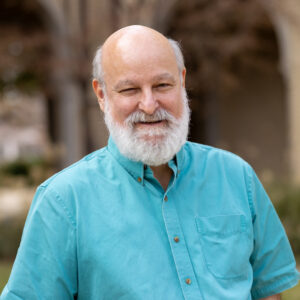
Dr. Bock has earned recognition as a Humboldt Scholar (Tübingen University in Germany), is the author or editor of over 45 books, including well-regarded commentaries on Luke and Acts and studies of the historical Jesus, and works in cultural engagement as host of the seminary’s Table Podcast. He was president of the Evangelical Theological Society (ETS) from 2000–2001, has served as a consulting editor for Christianity Today, and serves on the boards of Wheaton College, Chosen People Ministries, the Hope Center, Christians in Public Service, and the Institute for Global Engagement. His articles appear in leading publications, and he often is an expert for the media on NT issues. Dr. Bock has been a New York Times best-selling author in nonfiction; serves as a staff consultant for Bent Tree Fellowship Church in Carrollton, TX; and is elder emeritus at Trinity Fellowship Church in Dallas. When traveling overseas, he will tune into the current game involving his favorite teams from Houston—live—even in the wee hours of the morning. Married for 49 years to Sally, he is a proud father of two daughters and a son and is also a grandfather of five.


Prior to teaching at DTS, Dr. Weaver taught for eighteen years at the Word of Life Global Bible Institute. Thirteen of those years were on the Hungary campus and five years on the New York campus. In addition to his professorial responsibilities, Dr. Weaver also served in administrative roles (Academic Dean and Executive Dean). Dr. Weaver is passionate about teaching the Bible and training leaders for the church worldwide. He is also the host of the Bible and Theology Matters audio podcast and faith Affirming Findings video podcast. He is married to Jill, and they have a son and daughter
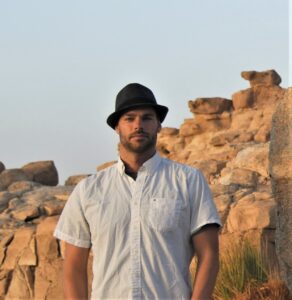
Dr. Titus Kennedy is an archaeologist who has been involved in projects at 18 sites spanning 6 countries and has also conducted artifact research at museums and collections around the world. He earned his doctorate from the University of South Africa in Biblical Archaeology, MA degrees from the University of Toronto and the University of South Africa, and a BA from Biola University. He is a research fellow at Discovery Institute, a professor (Dallas Theological Seminary, Shepherds Institute of Archaeology, and Biola University), editor of the Near East Archaeological Society bulletin, a consultant and guide for documentaries and curricula, and he has published numerous articles and books about biblical archaeology.
Darrell L. Bock Milyce Pipkin Paul D. Weaver Titus Kennedy