

Winsomeness and Empathy for Our Age
In an increasingly polarized and outrage-driven culture, how can Christians practice genuine empathy, active listening, and perspective-taking without compromising biblical truth and moral conviction? Darrell Bock sits down with Tim Muehlhoff and Sean McDowell to address the current debate surrounding empathy, polarization, and the vital role of communication theory in Christian engagement. Join them as they explore how overcoming agenda anxiety, empathy, and leading with Christlike grace and hope can build meaningful and relational bridges in a divided world.

The Table is a weekly podcast on topics related to God, Christianity, and cultural engagement brought to you by The Hendricks Center at Dallas Theological Seminary. The show features a variety of expert guests and is hosted by Dr. Darrell Bock, Bill Hendricks, Dr. Kymberli Cook, Kasey Olander, and Milyce Pipkin.
Timecodes
- 00:00
- Welcome and Introduction
- 01:18
- Addressing Polarization
- 04:10
- The Missional Dimension of Representing Christ in Public Spaces
- 10:30
- Defining Perspective-Taking: Cognitive and Emotional Understanding
- 13:03
- Understanding Social Location
- 16:05
- Emotional Connection, Gen Z, and the Principle of Reciprocity
- 18:38
- Relational Connection vs. Star Wars Theology
- 19:43
- Hope as the Heart of the Gospel
- 21:24
- Affective Polarization and the Contempt Problem
- 24:15
- Untethered Empathy vs. True Compassion
- 26:44
- When to Debate and When to Listen
- 28:05
- Compassion Manipulation and Cultural Hard-Heartedness
- 29:46
- Distinguishing Understanding from Assessment
- 32:26
- The National Empathy Deficit and Evangelical Reputation
- 35:49
- Biblical Literacy, Scriptural Authority, and Gracious Witness
- 37:26
- Why Listening and Understanding Do Not Equal Moral Affirmation
- 38:54
- Reuel Howe, Agenda Anxiety, and Proverbs 18:13
- 41:20
- Balancing Empathy, Mercy, and Truth
- 44:58
- Sitting with Pain: An Atheist’s Prayer, Migraines, and the Problem of Evil
Resources
Books:
- Allie Beth Stuckey: Toxic Empathy: How Progressives Exploit Christian Compassion
- Joe Rigney: Leadership and The Sin of Empathy: Compassion and Its Counterfeits
- Philip Yancey: What’s So Amazing About Grace?
- Reuel L. Howe: The Miracle of Dialogue
- Sean McDowell and Tim Muehlhoff: End the Stalemate: Move Past Cancel Culture to Meaningful Conversations
Websites / Ministries:
Transcript
Darrell Bock
Welcome to The Table Podcast, where we discuss issues of God and culture to show the relevance of theology to everyday life. I’m Darrell Bock, one of the hosts on the podcast, and today I have two guests coming to me from the West Coast, from California: Sean McDowell and Tim Muehlhoff, who both teach at Talbot and Biola. I’m going to let them talk about what specifically they do there, and our topic today is empathy, compassion, and forgiveness as values in the Christian life, and even in the way we engage with those around us, which has become a source of controversy. Many of you may be aware of this; some of you may not, but it’s an important conversation. So I’ve invited my two cohorts in cultural engagement and sometimes in apologetics to join me. And so, Sean and Tim, welcome to The Table.
Tim Muehlhoff
Thanks for having us. Yeah, appreciate it. Thank you, Darrell.
Darrell Bock
So, Tim, tell us what you do there. I understand you’re on the Biola side of the Talbot/Biola combination. So tell us what you do there at Biola.
Tim Muehlhoff
So I have two roles. I’m a communication professor, specializing in conflict resolution, but more between groups than individuals. But I’m also the senior director of Biola’s Winsome Conviction Project, that tries to open up dialogue rather than close it within the church and outside the church, between us and our non-Christian neighbors, and then obviously within the church. So I’ve been doing that for six years here at Biola.
Darrell Bock
So do you win some? I mean, is that the result of what happens?
Tim Muehlhoff
I don’t know. It’s 50-50. It’s a tough climate today. Yeah.
Darrell Bock
Conflict. I tell people: people don’t realize they think people are the problem, but actually, I’m going to say it this way: although it does come from people, polarization is our problem. It does things to us that actually get in the way of relationships if we’re not careful. That’s why we’re talking about this. Sean, talk about what you do there, and I understand you’re a switch hitter, which means you both connect to Talbot and Biola. So tell us what you do out there in California land. I feel great talking to you as a Texan to someone from California. That just makes me feel good. So, well—
Sean McDowell
I was born in Dallas, Texas, just for the record! So I have Texas in my blood and am proud of my roots, but love living in California, for the record. But what I do is I’m at Talbot in our Master’s in Apologetics program full time. So I teach classes on the resurrection, problem of evil, and then I do an undergrad class as well that has a lot to do with what we’re talking about today: it’s apologetics, thorny cultural issues, and then evangelism and spiritual conversations. And by the way, I co-host our podcast, which was spurred—the idea came from your friend Scott Rae, my co-host, who said, “If Darrell Bock can head up a podcast, we can too.” So you get some credit for our Think Biblically podcast track.
I was born in Dallas, Texas, just for the record! So I have Texas in my blood and am proud of my roots, but love living in California, for the record. But what I do is I’m at Talbot in our Master’s in Apologetics program full time. So I teach classes on the resurrection, problem of evil, and then I do an undergrad class as well that has a lot to do with what we’re talking about today: it’s apologetics, thorny cultural issues, and then evangelism and spiritual conversations. And by the way, I co-host our podcast, which was spurred—the idea came from your friend Scott Rae, my co-host, who said, “If Darrell Bock can head up a podcast, we can too.” So you get some credit for our Think Biblically podcast track.
Darrell Bock
I’m responsible for a whole lot of shrapnel, I just want you to know. So it’s very, very true. No, we’re so glad that you do the Think Biblically podcast, and we, you know, we’re connected at the hip in terms of what we’re trying to do. I’m also involved in our Master’s of Apologetics program; I helped design it. And we engage—I’m teaching a class right now with the resurrection at the center of what we do in relationship to New Testament studies and New Testament criticism.
So, Sean, we’re well connected in terms of trying to occupy the same space and asking questions: How do you represent Christ well in public space? That’s part of what I see us as about, and I think it’s important in framing the conversation that we’re about to have that it’s important to think through the missional dimensions of what that kind of ministry involves. That when you’re in public space trying to interact with objections that people have to the Christian faith, or you’re interacting with people who don’t believe, that having a sense of the missional commitment that that represents, and that we all theologically started off in the same boat—everyone needs what God offers—is an important starting point for even thinking about the conversations we’re getting ready to have.
So I often ask this question to open a topic: what are two nice guys like you doing in a gig like this? So, Tim, I’ll let you start. How did you get into this conversation?
Tim Muehlhoff
Well, all my education comes from secular universities. I went to Eastern Michigan University, and then I went to UNC-Chapel Hill to do my master’s and PhD. And I could have been alienated in a heartbeat long before we were Biola professors. I was on staff with Cru (Campus Crusade for Christ), so I carried that with me into my education, that not only do I want to get a good education, but I want to make an influence. I want to introduce people to Christ. But when you’re in super progressive spaces, you get alienated in a heartbeat.
So, how could I build bridges that people would actually consider what I have to say? And I happen to be doing a PhD in communication theory, so everything I’m learning is augmenting what the book of Proverbs says, and you know, Paul. So I felt like I was learning and then applying these communication skills to being a good witness to Jesus in my department, be it undergrad or in my grad classes; that always captured my attention. And then after I graduated my PhD, I wanted to train up a new generation, and that’s why Sean and I wrote the book End the Stalemate from Tyndale, because we feel like we’re getting in stalemates everywhere, and we’re not progressing the gospel in ways that I think we could build some bridges and do.
Darrell Bock
Okay, I may come back to your communication theory in the New Testament because I actually think that one of the skills that’s missing right now from Christians in the midst of this sense of conflict, which tends to put them on the defensive, is the ability to be a good listener and then to understand out of the background of listening how actually to engage in the conversations that I find myself in, where there is such a built-in different perspective that the conversation itself is pretty challenging.
So I’ve got a cache—my brain comes with a cache, and so that’s going back in the cache. I’m going to come back to this because I think it may be a good place for us to start our conversation. Sean, okay, so you’re a good guy, and you’re in a gig like this. How did you get there?
Sean McDowell
Well, there’s a lot of layers to this, but a lot of it would trace back to the influence of my father, whom both of you know; many of your listeners will know. My father, 86 years old, Josh McDowell, has been an apologist and evangelist, and he’s a debater and he’s a world changer.
Darrell Bock
He’s been a sorry guy for a long time. Go ahead. There you go, there you go.
Sean McDowell
There’s always been just such a kindness and a love about my dad and a curiosity I was raised with. I mean, one story that comes to mind is we grew up in Southern California. We’d go to Laguna Beach and stay once or twice a year on the beach just to get away. And there was a young man there—his name was Jade. He was gay, and we’d go see him every time, just talk with him. My dad would bring him a pie from Julian now and then.
I remember sitting there one time. My dad goes, “Jade, you know we’re Christians. Would you explain to my family what it’s like to be gay in America today?” Probably 1985 or something like that, if I remember. I remember just sitting there going, “Wow, how interesting!” And so I have an example of somebody who defended the faith, wanted to be gracious and kind in how he did it.
And so I didn’t plan on being an apologist. Really, I got interested my senior year when I took a class with J.P. Moreland on apologetics. I took it and thought, “Well, this will be easy. I know apologetics growing up.” And all of a sudden, I’m learning philosophy of mind and intelligent design, and I was like hooked. And so, I was just planning on going into high school and teaching, coaching basketball, and then opportunities kind of just grew into speaking. Writing opportunities came, but I would say before we get further into this, nobody has shaped my thinking about communication more kindly than Tim has.
I went to a communication seminar that Cru put on, and Tim was there in the late ’90s, maybe ’97 or so, and right away it was like not only can this guy communicate, he’s moderately funny—I’ll give him that one. Just kidding! One of the funniest people I know, and really talked about how to communicate in a way that’s kind, that’s gracious, that’s well received from people. And through books and his relationships, I’ve tried to model that in my private conversations, on YouTube, at events that I’m at. And so when Tim came to me, he’s like, “Let’s write this book together,” it was a pretty easy yes. I was like, “That makes perfect sense. Let’s do it.”
Darrell Bock
Well, that’s interesting. Part of the story and the way your dad opened up that conversation is, I think, a wonderful example of trying to listen to where someone is coming from as a way of setting the table for knowing how to even approach having a conversation about Christ.
So, Tim, I’m going to pull out the cache because this is a good place to open up. I wasn’t thinking about opening up here, but it’s a good place to go. What about communication theory helps us to think about the times that we’re in?
Tim Muehlhoff
Well, I really do think perspective taking is central to all relationships, be it marriage, evangelism, family, ministry, and we’re just losing the ability to do it today. We’re not even valuing the ability to do it.
So one of the cool chapters in the book End the Stalemate is we did a whole chapter on perspective taking, and even gave a biblical survey of how we feel like perspective taking is seen throughout the Scriptures. I mean, go back to the book of Ecclesiastes, where the writer is saying, “I want you to imagine life both under the sun and above the sun.”
Darrell Bock
Okay, so define perspective taking for us, in case we don’t know what the term is suggesting.
Tim Muehlhoff
So I meet you, and you come from a different political perspective, you come from a different upbringing. I temporarily try to step into your perspective to understand it from your view. And so, what was your upbringing like? Who are the people that are really influencing your thinking? Why do you believe like you believe?
And then the emotional part of it is not only do I just do that in a stoic way, but I try to imagine what it would be like to come from a broken family. Or Sean, exactly what you said with your dad: What would it be like to be gay in America during that time period?
And the passage to me that’s brilliant is Hebrews chapter 13, where the writer says, “Look, I want you to pray for those in prison, but I also want you to imagine that you yourself were in prison and that the pain that they feel, you feel.” And I can’t think of a better definition of perspective taking. I imagine what it’s like for you, and I try to imagine what that would be like for me, both cognitively, intellectually, and emotionally. And again, that’s not condoning. I’m not condoning your perspective as I try to feel it and understand it.
So psychologists would say perspective taking is perhaps the most basic communication skill, and from that outflows empathy. Sympathy is my attempt to do those things. So yeah, Darrell, I think perspective taking today is the way to end the stalemate, open up lines of communication, as I step into your perspective—not to judge it initially, but to understand it, and then I can critique it if I need to down the road.
Darrell Bock
Yeah, I think what you’ve just defined is not only perspective taking, but I’m going to give a couple of other labels for it: it’s getting familiar with someone’s social location that’s different than your own.
Tim Muehlhoff
Yeah.
Darrell Bock
And so we come from different social locations, and then I say we all have lenses that we see the world with. Lenses do two things simultaneously: we’re quite aware of one and probably oblivious to the other. The one thing they do is they cause us to focus on certain things. We see the world in a certain way, but because we see the world in a certain way, that means there are other things we are not paying attention to.
Okay, so the backside of seeing the world in a certain way is there are certain things I’m not paying as much attention to as the things I’m focused on. Sometimes someone from a different social location is paying attention to things that I’m not paying attention to and that I need to be aware of. And so, in that sense, this perspective taking—which I also think has a beautiful picture of sometimes an event or a problem or an issue needs to be looked at at various angles—helps us to get a 360 around something as opposed to the particular angle that I’m seeing it at. That also can be helpful. So that’s the first observation.
The second observation I’ll make is that when we’re thinking about perspective taking or social location, when we’re in this space, I tell people: put your doctrinal meter on mute. Okay? You’re not interested initially in whether the person is right or wrong. You are interested initially in what makes them tick. And if I understand what makes them tick, then I’m in a better position by understanding who they are and where they’re coming from to then know how do I step into where they are? I call it getting a “spiritual GPS reading” on someone. I’m trying to figure out where they are on the map, and initially I don’t care whether they’re right or wrong. I just want to know where they’re located, and what’s driving them—what the whys and wherefores are that cause them to see the world the way that they do.
And there are two benefits of doing that. One is I actually begin to understand who I’m talking with and what the conversation actually is that we’re having because I understand where they’re coming from. And the second is if I let them tell their story and let them lay it out, I’ve set a wonderful table for when it becomes my turn, because I’ve set the parameters for how that conversation can advance as a result of what it is that we’re doing.
So I think you’re right to suggest that the communication theory—and both of you have said this—the communication theory and the way in which I even approach a conversation, no matter what the topic is, is as important as the topic I’m going to pursue. And most of us today are not having what I call this “meta conversation” about how do I even walk into such spaces, much less this particular issue. Sean, what do you think?
Sean McDowell
So, a couple thoughts. I agree with everything both of you just said. I think the one downside of the term perspective taking is it tends to make us think that this is an intellectual worldview posture that we take. So somebody’s perspective is how they see the world, how they think about the world, their beliefs, and that’s a part of it. But where Tim has pushed me, and I think he’s right, is to say this isn’t just how somebody sees the world; it’s how they feel about the world.
And the reality is, especially in this generation, if you listen to a lot of Gen Z and now Gen Alpha, like even my students at Biola, regularly they’ll say, “Well, I feel this and I feel that.” And I’ll say, “You know what? I care about what you feel; I want to know what you think.” And the point being is, they’re conditioned to see the world through their feelings: “Follow your heart if you feel that it’s true for you.” So especially with this generation—and in some ways it’s true for all of us—what we think is really downstream from how we feel. So if I’m having a conversation with, say, a Muslim, for example, it’s not just what I think about Islam, but how I feel about Muslims.
Tim Muehlhoff
Yeah.
Sean McDowell
Maybe that comes from an experience that I’ve had, a movie that I’ve seen, whatever. And so perspective taking is going to take a level of emotionally being able to enter into how somebody feels the world as best as we can. That’s important.
The other thing you said, Darrell: when we lay it out, it’s like we’re setting the table for somebody to ask us back towards them. I think the term for this is the principle of reciprocity, or the rule of reciprocity: we have built inside of us this sense of like, if I give you a gift, you feel obligated to give something back to me. That’s human nature. But there’s a gift of listening. There’s a gift of showing empathy. There’s a gift of showing kindness.
And I think this is in part what Peter’s getting at in 1 Peter 3:15 when he says, “Sanctify Christ as Lord in your heart, always be ready with an answer when somebody asks.” Well, there’s a bit of a good chance somebody’s going to ask if you’ve already asked them and shown care and love and concern. Then when they’re asking you, you’re in such a better position to communicate and share with them.
Darrell Bock
Okay. Well, you’ve just said so much, I don’t know where to go next! So let me just go through the laundry list and first say, I think that what you’ve raised here is not just about feeling; it’s about relational connection. You’re actually engaged in attempting to make a relational connection with the person that is not rooted in a defensiveness where either you or they have put the other on the defensive because you know there’s a difference in the room, but you’re actually trying to connect as you talk about these differences. And that becomes a different conversation than if I say something that causes you to engage in what I call Star Wars theology—I see the Batman thing in the background, so I’ve got to make a metaphor that works—Star Wars theology, which causes phaser shields to go up, you know? And now I’ve got to penetrate the phaser shield before we can really have a meaningful, understandable conversation. That’s the first observation.
Second observation I want to make is how important James 1:19–20 is to this conversation.
Sean McDowell
Amen.
Darrell Bock
When James says we’re supposed to be quick to hear, slow to speak, and slow to anger because the anger of man does not achieve the righteousness of God. And then I think about how the world is functioning in our polarized environment, which is the exact opposite. Okay? I’m supposed to be slow to hear, quick to speak, and quick to anger because my anger lets you know where I really stand! Two very different positions in terms of what’s going on around us, and that’s what polarization does. Polarization tends to put me in that second space rather than in that former space that James is asking me to occupy as I engage.
Third observation: 1 Peter 3. Peter manages to summarize our faith in one word: that word is the word hope. I find that fascinating because if I were to ask someone to summarize the Christian faith in one word, I think I’d get lots of answers, and I’m not sure hope would be in the top five. I’d get Christ, the cross, forgiveness, love, grace—I can think about all kinds of other things that might come first. And yet this is the word that Peter says we’re supposed to give a defense for. And I think there’s a reason, and that is because in the end, the gospel is not about pulling people down; it’s about giving them hope. It’s about taking them somewhere positive. And so, when I ask the question, when I listen to the church speak to the world today, how much is the note of hope what I’m hearing versus something else? When I put it up to that test, I don’t think we do very well as a church today, and we need to do better.
Tim Muehlhoff
Yep. Can I make one quick comment, Darrell, on polarization?
Darrell Bock
Yes.
Tim Muehlhoff
So I’m the co-host of the Winsome Conviction podcast, and we had on Arthur Brooks, and he said something I’ll never forget. He said, “America doesn’t have an anger problem; we have a contempt problem,” which introduces affective polarization, which means not only do I think you’re wrong, you are despicable.
Darrell Bock
Right. And I don’t have any reason to listen to you. That’s the outcome of it.
Tim Muehlhoff
There’s no reason to do perspective taking, yeah, because your position is beyond the pale, and this church would be better off without you, this family would be better off without you, this country would be better off without you. That’s affective polarization. I think it’s taken polarization and put it into the emotional level, and it’s just killing our country, I think.
Darrell Bock
Yeah, because what it does is it basically says: I can’t trust you. I don’t need to hear you. I don’t need to listen to you. It makes the other person not count, invisible, not worthy of reflection as someone made in the image of God. I can think of all kinds of implications that come with it.
And the way I say what you’ve said is we are now in an environment where if someone is thinking differently than I am, I can’t trust them, I shouldn’t trust them, and I don’t have any interest in trusting them because they are in the wrong place, period. And we create this raw binary: I’ve got this all right, you’ve got this all wrong. And the moment I do that, I have shut off any possibility of engaging in a conversation that’s going to take us anywhere mutually.
Tim Muehlhoff
Yeah, yeah.
Darrell Bock
So, well, that took care of it!
Tim Muehlhoff
Welcome to End the Stalemate!
Darrell Bock
Stalemate is the result. Well, I mean, look at our government. Our government can’t govern because we can’t get people together to sit down and ask the question: how do we take our different set of concerns and put them into some kind of a package that can function? No one’s having that conversation.
So let’s talk about empathy. Let me talk about what I’m going to say are the three bugaboos that polarization produces. Okay: one is we have a debate around empathy; we actually have a debate around forgiveness, which amazes me; and we have a debate about negative history. Those three things, it seems to me, are symptoms of where we are—that we are debating about whether we should have empathy or not for someone coming from a different space.
Which my observation here is: if it wasn’t for empathy, compassion, and mercy, I wouldn’t be saved. Those seem to me to be three values that are at the core of what Jesus is about. Now I know the people who are raising this are saying they’re talking about untethered empathy—it’s empathy without a moral concern. I know that’s being said. Here’s the problem that I have: for every one time they say untethered empathy, nine times they will say empathy. The book that I’m pushing back on is not titled The Sin of Untethered Empathy; it’s entitled The Sin of Empathy. And so they fog the conversation by the way they’ve communicated it. And so I don’t know whether I’m talking about empathy or untethered empathy, even though they say they’re talking about untethered empathy, because they’re not making that distinction clearly enough for me to appreciate what they’re really fighting against—which is a concern I might share—versus the impact of the way they’re talking about it. Talk to me about that, Tim.
Tim Muehlhoff
Okay, real quick comment, and then I’ll go over to Sean. Sean, remember I played around with this joke when I was on your podcast—and Darrell, I went on Sean’s YouTube channel, which is phenomenal, by the way, exhibiting a lot of things we’re talking about in positive ways; Sean does a great job. I said, “Hey, I just signed a new book contract,” and Sean goes, “Oh, what?” I go, “Yeah, it’s called The Sin of Listening,” and he was like, “What?” I said, “Yeah, The Sin of Listening.”
Now, is there a form of listening that could morph into if all I do is listen, never critique, never offer truth, then that’s a form of untethered listening? But what gets me today within evangelical circles is empathy, not being qualified, is being attacked in some ways, and I think we come across as the people who are against empathy. Now again, untethered empathy, toxic empathy—to use another book—yes, of course, there could be toxic listening; of course, toxic perspective taking, where I so enter your perspective I become changed, and now there’s no difference between the both of us. Sure, but we need to protect concepts like perspective taking, listening, and empathy.
Darrell Bock
Sean.
Sean McDowell
So Tim and I in that video had a friendly debate, I think you could call it. And before I come back to that, it’s important for viewers and listeners to realize we’re not saying perspective taking is the only means of communication that Christians should adopt today. There are other kinds of communication: there’s writing, there’s preaching—which is not perspective taking; maybe you could incorporate that into it, but it’s one-way communication. There’s a time and place for debate. So we’re not saying that everybody has to do perspective taking in every conversation.
I’ve had conversations on my channel with progressive Christians, atheists, agnostics. I’ve done perspective taking. I had Bart Ehrman on recently, and I didn’t do perspective taking; it was more of a friendly debate, and that was the purpose of it. But what concerns us in the book is that we’re more inclined to marshal into debate mode, we’re more inclined not to listen well, and probably need less coaching there. Although we still don’t debate well as a whole, we need a lot of encouragement to do perspective taking better. It doesn’t come naturally to us in our outrage culture on YouTube.
When I started my YouTube channel, I was kind of told by some big YouTubers: this perspective-taking, kind, gracious approach will not get clicks and will not get views. Now, if I wanted to blow it up more, I could become more provocative and call people out and attack people. I’d get more money, I would get more views, I would get all the things that our culture is built on, but I think we’d lose something distinctive about communicating in a Christian-type fashion. And empathy is one important thing.
Now, what Tim and I debated—which I think the title The Sin of Empathy, I don’t know how much the publisher chose that just to be provocative and sell books, because in the book he does actually make more of a careful distinction. But nonetheless, it’s on the title and it lends to confusion. The debate that Tim and I had is: which is the bigger problem? Are we lacking empathy towards people in the world as Christians, or are we more likely to be manipulated because Christians are compassionate people by appealing to our empathy to hold positions that Christians shouldn’t hold?
Tim, you are far more—and correct me if I’m wrong—far more like: we are lacking empathy; that is the heart of the problem. I’m a little bit more in the middle: I think we are lacking empathy, hence we wrote the book to do it better; but I also think we have to guard our hearts and guard our minds because we live in an age where people are manipulating and advancing ideas through story and through empathy, and we’ve got to go back to Scripture and make sure it’s biblical. But I think that was the heart of the friendly debate that we had.
Darrell Bock
That’s a wonderful conversation because the difference between untethered empathy and empathy is the difference between having a moral perspective to what it is that you’re talking about and being concerned about where the conversation actually lands, as opposed to just simply engaging in trying to understand.
I tell people that there’s a difference between understanding and assessment. And what we often do is we leap to assessment when we’re talking with someone, and sometimes we’ll attribute motives for why they’re reacting the way that they do, which is an example of leaping to assessment versus making an effort to understand. And I think you put yourself actually in a better position to do your assessment if you’ve actually made a good-hearted effort to understand what you’re actually talking about.
So I call this “slow thinking.” We need to slow down the train, and first make sure we’re talking about the same thing in the same or in different ways, and then be able to identify what the nature of those differences are before we leap in and assess. And so this is part of this overall picture of what we’re talking about as we wrestle with the concept of empathy.
And I think you’re right, Sean: the danger on the other end is you so make the effort to connect to the person, you’re not willing to stand up and engage in the challenging or the advocacy. If I can make a contrast to perspective taking: sometimes you’re in the mode of advocating. You have a position that you’re putting forward, and you’re in a mode of advocacy for what it is that you believe, and you’re trying to tell your story about why you think taking that position may be more beneficial, not just to yourself but to the person you’re talking to, than the position they’re taking. And if you can do that relatively calmly, with the sense of “I’m offering you an invitation into something” as opposed to “I’m in your face,” I think you prevent the Star Wars reaction, and you have a chance of getting there, or at least changing the nature of the conversation.
I tell people I’m oftentimes less interested in debate than I am a conversation, and the reason for that is that I don’t want the emotional level to get so high that all of a sudden all the psychological factors of what a high emotional level does to a conversation kick in, and you lose your ability to have that conversation.
Tim Muehlhoff
Let me just mention one thing about empathy. I quoted on Sean’s YouTube channel a historian who writes about the history of empathy. She concluded in her book that we are at the greatest empathy deficit in the country that she’s ever seen. So we need to ask the question as Christians: what do people most think about the evangelical community? (A) We’re so empathetic that we often lose ourselves—right? We’re untethered empathy—or that we’re not empathetic towards the LGBTQ community? I would say, in my opinion, hands down, we’re seen as being not empathetic.
So my point with Sean was: I think we need to work on empathy first and be known as caring, loving, empathetic people, and then maybe if we’re going too far, we course correct. But I don’t think people are looking at evangelicals saying, “Oh my gosh, they’re so empathetic; they just lose themselves in their empathy.” I don’t think that’s how people view the evangelicals.
Darrell Bock
Here’s the challenge of that illustration, as I see it, and I think I’m going to get an amen from Sean on this: the challenge is that the concern that I have is for someone who’s, I’ll say, hard-nosed about this. The challenge is not my hesitation to show empathy to the person who’s around me, but the other Christians who have become so empathetic that they don’t push back against the moral stance that someone has taken. And so the multidimensional nature of these conversations is not only what’s happening between me and the person I’m talking to, but there’s how I think that impacts the wider culture communities that I’m a part of, that also become a part of the conversation—maybe not expressed, but present and accounted for.
And so, in that sense, there is this tightrope that you walk between trying to reach out to the person who’s in a particular position and the reaction. I have an illustration that I use that probably says this: a mother walks into a pastor’s office and says, “My child has just come out as gay. What do I do?” And I say that pastor immediately has five constituencies he has to consider as he’s dealing with this: the child in the church, the parents, the way the church sees the parents, the way the community sees the church, and the way Scripture and God deal with the topic.
Now that’s five dynamically interacting constituencies that are all impacted by how I respond to her question and the way in which I present it. That’s the challenge of the space pastorally for someone who’s in the midst of these difficult conversations, no matter what the issue is. Each constituency has different needs; each constituency demands different kinds of responses to what’s going on, and that’s where the challenge comes in the engagement. Sean, step in. What do you think?
Sean McDowell
I think in principle, I agree with what you said, Tim: that when people think about the Christian community—and you mentioned the example that’s been floated around here is the LGBTQ community—it’s not that we are too kind and we’re too gracious. I think going back to the ’90s, Philip Yancey’s book What’s So Amazing About Grace?, he asked people for words to describe Christians, and the word was not grace. And so in our angry, divisive culture, grace, hope, forgiveness are such powerful means of witness that draw people to the faith. We can’t lose that, and we need to correct that.
The only thing I would give an amen to what you said, Darrell, is not only do we—it’s not just that people don’t push back on different narratives, but so much within the church, progressive theology about LGBTQ relationships has been through story and through appealing to emotion and appealing to empathy, and so many Christians don’t (A) know how to think, (B) have real commitment to biblical authority, and (C) have biblical literacy. So I want to get more gracious and kind, but I have to balance that with saying we’ve got to go back to Scripture, we’ve got to have the authority, we’ve got to know what is true.
Darrell Bock
Yeah, you can’t do it in an untethered way.
Sean McDowell
Exactly, that’s the point. And so that was the dialogue/debate Tim and I had.
There’s one other point that I want to make. Something you said earlier, Darrell, I think is important: you’re making a distinction between understanding and assessment. I think one of the reasons we don’t listen to understand well is, yes, we’re listening to assess rather than understand, but we also think listening and understanding equals affirmation.
Darrell Bock
Yes, yeah.
Sean McDowell
So if I don’t correct you, and if I just listen and understand, that means I’m affirming. And I want to say it’s not just understand; we don’t have to have the need to always tell somebody why they’re wrong. If we get rid of that idea, I think we can actually listen and understand better.
Darrell Bock
So let me put another element in the equation here, and that is this: not only that, but when I’m in that mode, the danger may be that something that I need to hear I will miss because I’m interested in being sure the person understands where I’m coming from. And so I am so in control of my own agenda that it actually produces its own subtle phaser shield. It isn’t that I’m resistant to you, but I am so focused on what it is that I want to say to you that something that you say to me that may be worth my hearing, I will miss.
Tim Muehlhoff
Yeah, Reuel Howe, early Christian communication theorist in the ’60s, had this wonderful phrase: “agenda anxiety.” That as I’m listening to you, I’ve got to get my points across, and I’m starting to get a little anxious that this conversation is moving along, and I’m not getting my points out there.
Remember Proverbs 18:13: “If one gives an answer before he hears, it is his folly and shame.” I think the folly part is interesting because I don’t even know your argument, and I’m speaking against it; but second, the shame part is really interesting—that it is shameful for me to speak before I fully understand your perspective.
So I think we lead with love; I think we lead with give a reason for the hope that is in you with all gentleness and reverence. And I think it’s both of those. And yeah, if we’re getting rid of the hope part and just having gentleness and reverence, that’s problematic. Again, Sean, I love you mentioning Yancey. We could go to Barna and his research asking non-Christians to describe us: I promise, overly empathetic is not making the list of how they’re viewing the evangelical! That is not on their list.
Darrell Bock
Well, let me make an observation about where we are, because I had two other things on the list to discuss: they were going to be forgiveness and negative history, and we’re not even going to get there! So I’m exercising empathy right now and saying there’s no chance we can get to where we’re going, which means I’m going to have to have you guys back to discuss the other two.
So let’s stay in the empathy safe space for a second and say: what should we be doing? How do we balance empathy, compassion, mercy in such a way that on the one hand we communicate what Scripture holds out as this is the most healthy way for human people to live, given the way they’re made—those kinds of sets of concerns—with the understanding that maybe someone has been impacted so negatively by the way they’ve been treated that that also needs to be recognized? How do I balance that tension that almost inevitably walks into some of these spaces? Sean, I’ll let you go first.
Sean McDowell
Sure, I’ll jump in here. Part of me says my best answer to that is if we’re not living in that tension, we’re erring on one side too far versus the other. I’m consistently asking myself: Was I too harsh on that one? Was I not strong enough? How do I navigate this truthfully so it’s heard? How do I navigate this in a way that is kind? And different situations require different kinds of wisdom. So I don’t always know where to draw that line; this is where I think wisdom comes in. But that’s where we have to have both the grace and the love to do it well.
And partly, something you said earlier, Tim: now it’s going to be in my mind, this phrase “agenda anxiety, agenda anxiety.” I want to revisit this with you when you get a chance! But it made me think: when I go into different conversations, I have different agendas. So again, bringing Bart Ehrman on: it was an interview; it turned into a kind of debate. Fine, that was appropriate given our differences and the nature of that conversation. That’s very different when I had a girl in my office this past week who says, “I’m not sure that I still am really following the Lord, and I feel like I’m deconstructing my faith.” Very different agenda there.
And so I think going into a conversation trying to have a biblical sense of what we’re trying to accomplish—and many times that’s just simply understanding, showing compassion, listening, showing empathy, even if that person doesn’t ask me back for my opinion, like we stated earlier—that might be a win for that conversation.
And we have a whole section on this, Tim, talking about how you prepare for a conversation ahead of time. People ask me all the time, “How do you stay calm in this conversation?” And partly, I’ve thought through what my agenda is before I get into this conversation, entered into it prayerfully, I know what I’m trying to accomplish. And I think if we’d approach conversations and relationships more thoughtfully with appropriate biblical goals, it’d help us better balance that tension that you’re talking about, Darrell.
Darrell Bock
And I sometimes think that when we get in these conversations, because we feel maybe we’re in the agenda anxiety mode, we feel like “I’ve got to respond to what I’ve just heard that I think is wrong.” This is what it means to put your doctrinal meter on mute. I’m not responding out of “I think you’re wrong, so I need to correct you.” My first move is: let me ask a question so I can see if I really understand where you’re coming from and why. So it has to do with which path I take in the conversation. Am I interested in correcting them as quickly as I can and as thoroughly as I can—which usually doesn’t go well—or am I interested in really saying “I want to try and understand why a person like you would think like you are; I want to understand what makes you tick. Why is that?” And then I leave the assessment for down the road, once I’ve built this relational connection. Because asking questions is a form of respect, and so I communicate this respect first, lay that groundwork, let them tell their story, hear it out, and then I turn around and say, “All right, now let’s talk about where we find ourselves as a result.” Tim.
Tim Muehlhoff
Darrell, I totally agree. Sean, when you were talking, I thought of this story. Rick and I had on our podcast—not Bart Ehrman; I mean, come on, that was amazing that you and Bart had such a great respectful conversation. We had on a YouTube atheist, Darrell, who really hammers Christians on the problem of evil. Rick has a PhD in philosophy, right? And I was on the debate team in college. So he comes on our show, and we are ready to go with the problem of evil—you know, Augustine’s free will defense.
Here’s how we started it that blew us away: he said, “You know, I was a kid struggling with depression. I didn’t really have words for it, but it was depression. My mom was kind of religious, and she said to me, ‘Well, pray that God would take away your depression.’ So here I am, eight years old, getting on my knees night after night after night after night, saying, ‘God, this really scares me. Take away my depression.’ And nothing happened.”
That was the opening to the interview. And Rick and I—and I’m so thankful for Rick—Rick just said, “Hey, that’s got to be really scary as an eight-year-old. Like, that’s got to be really hard. And that was not an unreasonable prayer.”
Darrell Bock
And a totally empathetic move.
Tim Muehlhoff
Totally. Now we could have launched right into Augustine’s free will defense and saying, “Listen, blah blah blah.” But I thought that was such a powerful response: let’s just sit there for a second and think about the effect that would have on him now as an adult, when it’s like, “I prayed a childlike faith prayer to God, and I got nothing.”
So you know what I did? And again, I’m not trying to toot my own horn; this was off. I said, “Well, Tom, can I tell you? I’ve struggled with migraines ever since grad school. I have migraines, and I’ve had elders pray over me, I’ve had holy oil put on my forehead, and guess what? I still get migraines.” I said, “I’m not comparing that to depression of an eight-year-old, but you know, sometimes I ask the very question you’re asking, Tom. That’s not unreasonable for God to get rid of my migraines.”
See what I mean? How now we eventually got to have a debate about the problem of evil proper, but it would have been so insensitive of us to let that moment just go by and not sit with him in his emotions. And I think that’s perspective-taking empathy.
Darrell Bock
Interesting. Well, I want to thank you guys for helping us get to this topic and do an initial dive into it. I can tell you, it’s gone by so fast, and we didn’t even get to some of the other things that I wanted to discuss. It shows that we’re on a good topic and walking a good highway.
So I want to thank you guys for taking the time to be with us and help us think through both empathy and the way in which empathy can be shown in the conversation and engagements that we have, and how that might help us be winsome, and as a result, we may win some in the process. And so, thank you all for being with us.
Tim Muehlhoff
Absolutely, thank you for what you’re doing, Darrell. We appreciate that.
Darrell Bock
You’re very welcome. Thank you all for listening. If you like our show, please leave a rating or review on your favorite podcast app. It’s a great way to show support for us and to help other people discover it. And join us next time when we discuss issues of God and culture to show the relevance of theology to everyday life. We thank you for being a part of The Table, and we hope you’ll take a seat with us again soon.
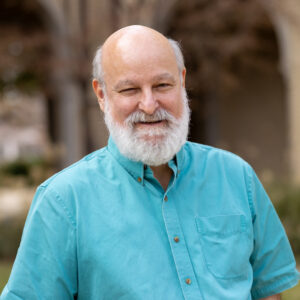
Dr. Bock has earned recognition as a Humboldt Scholar (Tübingen University in Germany), is the author or editor of over 45 books, including well-regarded commentaries on Luke and Acts and studies of the historical Jesus, and works in cultural engagement as host of the seminary’s Table Podcast. He was president of the Evangelical Theological Society (ETS) from 2000–2001, has served as a consulting editor for Christianity Today, and serves on the boards of Wheaton College, Chosen People Ministries, the Hope Center, Christians in Public Service, and the Institute for Global Engagement. His articles appear in leading publications, and he often is an expert for the media on NT issues. Dr. Bock has been a New York Times best-selling author in nonfiction; serves as a staff consultant for Bent Tree Fellowship Church in Carrollton, TX; and is elder emeritus at Trinity Fellowship Church in Dallas. When traveling overseas, he will tune into the current game involving his favorite teams from Houston—live—even in the wee hours of the morning. Married for 49 years to Sally, he is a proud father of two daughters and a son and is also a grandfather of five.


Tim Muehlhoff (Ph.D. Univ of North Carolina at Chapel Hill) is a professor of communication where he teaches classes in conflict resolution, rhetoric, gender, engaging diverse perspectives, and apologetics.
He is the Senior Director of Biola’s Winsome Conviction Academy—which seeks to reintroduce civility into our public disagreements—and is co-host of the Winsome Conviction Podcast. He has written extensively on conflict resolution with his latest book, End the Stalemate: Moving from Cancel Culture to Meaningful Conversations (co-written with Sean McDowell). In addition, Tim teaches verbal and physical self-defense at local domestic violence shelters in Orange County, CA. He’s married to his wife, Noreen and is the proud father of three adult sons and father-in-law to one amazing daughter-in-law.
Darrell L. Bock Sean McDowell Tim Muehlhoff