

Succeeding at Succession: When Churches and Ministries Change Leaders
How can churches, ministries, and nonprofits successfully navigate leadership transitions without falling victim to ego, mission drift, or organizational failure? Bill Hendricks is joined by Steve Woodworth (founder of Masterworks) and Peter Greer (CEO of HOPE International) to discuss why nearly half of successions stumble and how intentional planning can protect an organization’s mission. Join them as they examine the importance of building an internal leadership pipeline and the essential posture of humility required to pass the baton well.

The Table is a weekly podcast on topics related to God, Christianity, and cultural engagement brought to you by The Hendricks Center at Dallas Theological Seminary. The show features a variety of expert guests and is hosted by Dr. Darrell Bock, Bill Hendricks, Dr. Kymberli Cook, Kasey Olander, and Milyce Pipkin.
Timecodes
- 00:00
- Why Succession Matters for Every Organization and Leader
- 03:52
- Why Half of Transitions Fail
- 05:45
- The True Appraisal of Leadership and Preventing Mission Drift
- 07:35
- Passing the Baton: Why the Handoff Determines the Race
- 10:00
- The Ego Challenge: Letting Go of Identity and Control
- 13:08
- Internal Promotions vs. External Hires and the Role of the Board
- 15:22
- Overcoming Our Own Self-Importance
- 18:27
- Humility and the Heart of a Leader
- 20:18
- Developing a Leadership Pipeline and Multiple Successors
- 24:03
- Founder Transitions and Passing on the God Story
- 28:47
- Board Governance and the Carver Model in Transitions
- 31:10
- Creating a Stakeholder Map and Emergency Plans
- 34:21
- Case Study: Internal Promotion and Culture Fit at World Vision
- 36:46
- Navigating Organizational Seasons and Evolving Leadership Needs
- 42:15
- Evaluating Culture, Mission Commitment, and External Hires
- 49:39
- Cheering for Successors: The Generational Nature of God’s Work
Resources
Books:
- Alec Hill: Living in Bonus Time: Surviving Cancer, Finding New Purpose
- Dallas Willard: The Great Omission: Reclaiming Jesus’s Essential Teachings on Discipleship
- Peter Greer and Chris Horst: Mission Drift: The Unspoken Crisis Facing Leaders, Charities, and Churches
- Peter Greer and Chris Horst: Rooting for Rivals: How Collaboration Multiplies Your Impact
- Peter Greer and Doug Fagerstrom: Succession: Seven Practices to Navigate Mission-Critical Leadership Transitions
- Peter Greer, Ryan Skoog, and Cameron Doolittle: Lead with Prayer: The Spiritual Habits of World-Changing Leaders
- Steve Woodworth: Lost in Transition: Lessons from the Most Disastrous and Successful Ministry Successions
Websites / Ministries:
Transcript
Bill Hendricks
Well, hello. I’m Bill Hendricks, Executive Director for Christian Leadership at the Hendricks Center, and I want to welcome you to The Table Podcast, where, as we’ve said, we discuss issues of God and culture to show the relevance of theology to everyday life. Today, our topic is succession, and that is simply defined as when an organization transitions from one leader to the next leader. And if you think about it, that’s going to apply just to every single business, every church, every school, every nonprofit, every government, even to families and communities. In all these institutions, change is going to come, and there’s a passing of the baton.
And so, if you’re a leader—and that could be most especially the top leader, the CEO, the president, a senior pastor, a head of school, or maybe you’re a leader of a division or a team or a department, or some area, or district, or even a family—or maybe you’re a key resource to one of those leaders. You’re a board member. You’re the chair of the board. You’re a key shareholder, a chief of staff, a trusted advisor, or just you’re a member of the leader’s team. And let’s also think: perhaps you’re a potential candidate in some kind of a succession plan, or you may someday be a candidate, or you have a vote as a member or a citizen in this whole enterprise, or frankly, you’re just the spouse—not just, but you are the spouse of one of the people I just mentioned.
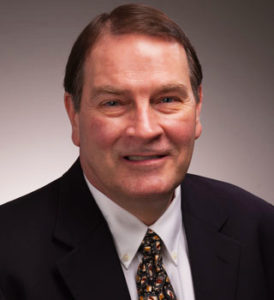
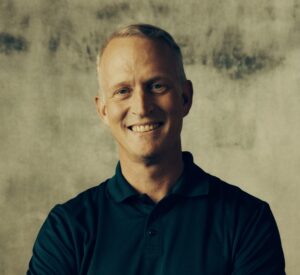
In short, if you have any kind of stake in any organizational structure—and in our culture, who doesn’t?—succession is something you have a vested interest in paying attention to. And so, I couldn’t be more thrilled to have the two guests that have joined me. It didn’t take me but a nanosecond to know who I wanted to speak into this issue because of my awareness of all that they bring, and I want to introduce first of all online Steve Woodworth, who worked at the highest levels of the international Christian relief agency World Vision, and later founded Masterworks, a consulting firm that works with Christian nonprofits on strategic issues. Steve, welcome to The Table Podcast.
Steve Woodworth
Thank you, Bill. Glad to be here.
Bill Hendricks
Well, we’re delighted to have you here. And as if that’s not enough, I also want to introduce Peter Greer, also online, who is the CEO of HOPE International, which serves poor people around the world, especially through a very sophisticated and successful model of Christ-centered micro-lending. Peter, thank you for joining us on The Table.
Peter Greer
Thanks, Bill.
Bill Hendricks
Now I just want to point out that neither of you gentlemen went to a university to get a degree in succession planning. Instead, if I’m accurate, both of you sort of backed into, maybe I should say, plunged into this area through what might be called the school of hard knocks. And so, Steve, let me start with you. How did that work for you to get into succession as something that you would focus on?
Steve Woodworth
Well, I probably have witnessed 150 successions in my 45 years of ministry, mostly in large to medium-sized organizations, and it just pained me, Bill, to see how many of them go badly. And I estimated probably about half of them. As I began to think about this book, I started to talk to other people who I thought might have an opinion on that, and everybody guessed about half go badly. And then, while we were researching for the book, we found a McKinsey study that showed that 47% of corporate transitions go badly in the corporate world. So we’re pretty much right on track, and it kind of pained me.
One of my colleagues and I were talking at an airport one time. I was starting to form ideas of what I’d seen that had caused them to go badly, and he said, “You should write a book about this.” And I said, “I don’t have time to do that, and I just can’t imagine that I would ever write a book about it.” When I got back to the office, he had a designer in our company mock up a book cover on succession with a baton being handed off. I had that on my desk literally for about five years, and then I finally just decided one day, “I am going to write a book on this. And if I can help one organization go well that would have gone badly, it’ll be worth it.”
Bill Hendricks
And so the book that Steve is referencing is called Lost in Transition: Lessons from the Most Disastrous and Successful Ministry Successions, which came out this past year, and thank you for writing this book, Steve. Peter, I think you may have actually started out in academia, if I’m correct, at Messiah College in Grantham, Pennsylvania. Tell us a little bit about your journey in this succession area.
Peter Greer
Yeah, so I’ve been doing this job with HOPE International for over two decades, and I care deeply about the team. I care deeply about the mission, and I think the most important performance appraisal that I’m ever going to receive is going to be two years after I’ve left this role. Not what happened while I’m here, but what happened then: was that one of those 50% that Steve talked about, or is it a transition where I hope I’m missed a little bit, but there’s enthusiasm, there’s alignment, there’s excitement about the next season for HOPE International?
And I think it really was doing the research on mission drift that helped me recognize how easy it is for organizations to lose their way. And part of the contributing factor is that it’s not passed on. That mission is not passed on from one generation to the next. So, both from a personal standpoint as well as from a research standpoint, this is too important to get wrong. Most of the time, we only think about succession planning when the change is imminent, and I’m thoroughly convinced that’s the wrong time. We want to be thinking about this far in advance, and we want to have a culture of succession planning so that when that time comes, it is not haphazard. It is not a surprise. It is not an urgent scramble, but rather it is thoughtful, prayerful, and planned. And I think for most of us, we need to think about succession planning far earlier than just the time when we know the date when that transition is going to happen. So that was the personal interest, and I am so grateful I got to work on that book with Doug Fagerstrom, who went through his own transition shortly after we wrote that book, and learned so much from him, as well as so many leaders that graciously shared: here’s what went well, and here’s what I wish we had done differently.
Bill Hendricks
And the book that Peter mentioned is Succession: Seven Practices to Navigate Mission-Critical Leadership Transitions, and both of these books are chock-full of illustrations from real-world organizations that you would recognize, and all kinds of findings out of that. I should add, Peter, you mentioned mission drift. Peter has written a number of other books: The Board and the CEO, Mission Drift, Rooting for Rivals, Lead with Prayer, How Leaders Lose Their Way. In reading back through those, Peter, I started thinking, “Man, if I’m on Peter’s board, I’m like: Peter, who’s running HOPE because you’ve got so many books coming out? I think all you must do is write!” And I’m of course teasing you, but I just would point out Peter is a practitioner who’s running an actual organization, doing great work, and these books are like the burn-off of somebody who’s in harness, leaving behind cookie crumbs for the rest of us who are following, and I just want to thank you for that work.
I think both of you mentioned this idea of a baton. There’s a baton passing. I was with a friend last week who was telling me about running track in high school, and he said, “I was on the relay team, and I wasn’t the fastest on the team. I was fast enough, I think, to be third.” But this is a direct quote. He said, “You know, you’ve got to have the speed. Everybody’s got to have the speed. But you win or lose the race in the handoff.” I thought, “Wow, that sounds like succession.” And so they would just practice a hundred times, handing the baton again and again and again, to get really, really good at it and not drop the baton. Well, obviously, an organization is not going to practice succession again and again and again. If they did, they’d never have a leader; they’d have too many leaders, too many successions. But it’s a good point: this idea that the race is won or lost ultimately on that handoff. And Steve, I’ll start with you on this question: what makes handoffs so challenging for organizational leaders?
Steve Woodworth
Well, I’m going through my own right now. I picked the successor six years ago or so. Worked with him closely. Made him COO three years ago, President two years ago, CEO almost a year ago, and I’m now Executive Chair, so I’m staying involved. And I think the single biggest thing, Bill, is just ego. It’s really hard. If I hadn’t written the book while I was going through it, I don’t know if I would have done it so well. I have more sympathy now for people who have hung on too much, stayed around too long, interfered too much, because it’s just really hard to let go. I totally agree with Peter. I believe that my ultimate success will be how well this company is doing after I’m gone, and I hope it’s far better than anything that ever happened while I was there. But it’s still been hard.
It’s one of the hardest transitions for a person to go through, especially if you’re a founder. To let go is hard because it’s part of your identity, and it’s painful to let go of that identity and to move on to something else. If I were to start another company and do something completely different, maybe I’d be totally distracted. But because we work with only Christian organizations, it’s something I still want to be involved in. I want to use my gifts. Brian wants me around. He sees that I have a lot of connections, network, relationships, and goodwill out there that is going to take him a lifetime to build. So he wants that support, and so far it’s an ideal situation. But I can see how easily it would go badly just if I could not let go because of ego.
Bill Hendricks
Well, Steve, you mentioned the word identity. I thought that was fascinating because I can see it sets up a bit of a catch-22 for a senior leader. You want this person to identify with the organization. You don’t want it to be just a job. We want it to be like, “This is my child. This is a member of my family. This is something I’m passionately devoted to, and I give everything to see this thing succeed.” And the pitfall in that is, when it’s time to put that thing in somebody else’s hands, letting go becomes very, very difficult.
Steve Woodworth
Yeah. In my case, I’m blessed that Brian does still want me involved, and so I haven’t had to make a complete clean break. And I think that’s ideal. I think having ministry leaders be in an emeritus role and still bring the goodwill that they have with donors and other key constituents to bear for the organization, transitioning that over time, is so valuable. It takes time to transition that. I’m with Peter too in terms of believing that this should take place over many years. Ideally, you find your own successor; you don’t leave it up to the board. That’s another thing that goes wrong. Often boards don’t know enough. They don’t know what the CEO’s job really is, and they think they should. So they plow forward with an executive recruiter, leave the current CEO out of it, and just go hire somebody that comes from the outside, who has a shiny resume but doesn’t fit the culture and doesn’t know the organization. When you promote from within, I believe your success rate is probably 70 or 80%, because you already know their strengths and weaknesses, you know that they’re a culture fit, and they have the support of most of the staff.
So, yeah, it’s a difficult thing, but we’re all mortal. That’s a big theme in Peter’s book: we’re all interim leaders, and we think over decades that this is just never going to end. But it does come to an end. Our energy starts to dwindle. I’m at that point. I don’t have the same energy I had 20 years ago, so I can’t really be the best leader of the organization, and I have to face that. Even the greatest leaders in the Bible—David, Moses—they had their time. We think of them as timeless, but they had their time, and then God was done with them and moved on to the next leader. And He will do that with every one of us.
Bill Hendricks
Peter, do you want to add anything about the challenges that this succession project throws at leaders and those making decisions here?
Peter Greer
I think Steve covered it so well. Just maybe one personal reflection: we have to untangle or address some of the myths that actually derail the succession planning process. One piece you heard from Steve, but I experienced it personally, is this idea of: “Well, I do it this way, and someone else won’t do it quite as much, or someone else won’t care quite as much, or someone won’t do it in quite the same way.” I think we need to get over the myth of our own self-importance in a way that is upstream from a healthy succession planning process. For me, the moment that I’ll never forget is a moment when I had the biggest fundraising events of the year, and I was ready to go. I was playing soccer the day before I was supposed to get on this flight, and I collided with a goalie and wrecked my ankle. I was out. I was in the emergency room, and I was thinking, “How do I get on the plane tomorrow?” In my mind, I had to. If I wasn’t there, these big fundraising events that are so important were not going to go well.
The next day, the doctor very clearly made me understand I was going nowhere anytime soon. The first event went on, and I’m sitting there thinking, “I wonder what’s happening at this event.” I got a text right as soon as the event was over from a friend who was there, who was a major donor, and he said, “Peter, I heard what happened. I’m so sorry. It would have been great to see you, but Peter, that was the best event that I’ve ever been to for HOPE International.” And I remember thinking, “What? The best? But I wasn’t there!” And I think for all of us, we’ve got to have almost a playful posture. We want to do our job with excellence, but we do not want to falsely believe that we are essential for the work of the kingdom to continue. Charles de Gaulle said the graveyards are full of indispensable people, and I think he’s totally right. Getting over the myth of our own self-importance means realizing, not with a sense of “woe is me,” but in excitement, that someone else is going to do this job. I am interim, and I want to celebrate and pour into them. I want to do my job well, but I want to do everything I can to set up the organization and future leaders to thrive and to do things better than the current way they’re being done—to let go, to give stretch assignments, and to celebrate when I see others have strengths that are really important for the organization. If we do not get over the myth of our own self-importance, we’re always going to be clawing back, overstepping, or not letting go.
Bill Hendricks
Well, I can certainly see that when the star quarterback with the big contract is sitting on a bench watching the second-string quarterback out winning the game, that’s got to be a bit of a comeuppance. But it suggests that the leader really has their character to contend with here, and the humility of their own heart. Am I really committed to the success of another leader, or is this about me? And that’s something every key leader every day really has to come to the Lord and do business with. In both cases, there are kind of two issues that come together. One is founder succession—when it’s time for that founder to be replaced, that creates a lot of dynamics. And often with that is the fundraising aspect that you mentioned, Peter. People love and adore the person that leads the organization, and if they tell people we need money for this, they get out their checkbook and the money appears. People think, “Well, we’re never going to find anybody who can raise money like so-and-so.” How do you recommend an organization deal with either of those? Let’s start with the founder syndrome. Peter, why don’t you go first on that?
Peter Greer
Yeah, and Bill, I’m actually not the founder of HOPE International. Jeff Rutt is our founder and board chair, and I have so much respect for him. One of the things that he is doing is actively thinking about his own succession, not only in the company that he runs, but also thinking about future generations of leaders and future generations of board members. I’ve had a front-row seat to watch how he has handled that. We’re talking primarily about leadership transitions, but in your opening, Bill, I think every person should think about succession. Every board member should think about the future generation of the board, because every generation is only one generation away from mission drift. We’ve always got to think about who comes next: the know-who, the know-how, and the core passion for the organization. So I’ll let Steve talk about the founder, but one of the principles that I so regularly believe in is active planning and preparation. One of the concrete ways that we put this into practice at HOPE is that every January—this habit started about 15 years ago—I give the board five names of people that I believe would do an excellent job in this role. We don’t feel threatened by that. And then we discuss the plan: what are we doing to invest and provide more opportunities? We don’t have just one potential candidate; we build multiple great options so that when that time comes, whether it’s planned or unexpected (because we’re not guaranteed tomorrow), we are set up to succeed for the next leader.
Bill Hendricks
So there you’re addressing the issue of developing what is called a leadership pipeline, where you are grooming, developing, and training up successors—in the sense that a leadership team is forming.
Peter Greer
Yeah, and that same practice is at every level of HOPE. Every level of HOPE has succession planning as part of it: what are you doing in the short term and long term? If something happened to you today, who’s the person ready and willing to step in? That creates a healthier organization. This is the great irony: succession planning is not just about the transition of leadership; it’s about the leadership pipeline and the health of the organization. It creates more attentiveness to who is ready for more, more delegation, and less vulnerability if one key leader transitions. I wish we had called our book Succession and Staff Development, because those two come together in a beautiful way.
Bill Hendricks
Well, I want to come back to the board issue, particularly. But Steve, on the founder issue, you know that one by heart experientially. Give us some of your thoughts on both the challenges and the opportunities of succession with a founder.
Steve Woodworth
Yeah. I came across a Dallas Willard book called The Great Omission. In the middle of that book, he has a chapter about why organizations drift from their mission, similar to the work Peter has done. He talks about the fact that when a founder has been used by God—and I would say there’s no way to explain what happened with Masterworks from a handful of people when I came to 140 people and over 200 clients apart from God—it is vital to pass that on. When I started out, I worked for some for-profit and secular nonprofit organizations, and I felt personally called that God wanted me to spend my life for the kingdom. So I refocused all my time on Christian organizations. I felt like the Lord used me in ways that were unmistakable and very much tied to humility, prayer, and personal spiritual disciplines.
Willard says that when a founder leads an organization, it’s really important that they pass on to the leadership team how God showed up and what was unique about what God did, because it’s likely that God is going to continue to use that organization in similar ways. Being open about that and repeating that is something Brian and I and our leadership team did over and over again for years—talking about the “God story” of how He led us at certain points. Willard says people tend to surround a founder because they’re successful, but you want them to feel what he calls the “fire of God” and to be drawn to that more than the success. A founder also has to be uniquely aware of the sense of self-importance. I literally had the founder of a large, over $100 million Christian organization say, “Well, I think maybe when my time is up, God will be done with this organization and maybe want to shut it down.” There was no good reason; the need was huge. But there was a sense that this was a unique thing God did only through him. That led to a very rocky transition because he couldn’t let go, and multiple successors came and left. When he finally departed, the organization lost a lot of donors and suffered serious damage. In founder-led organizations, having years of overlap where you invest in potential successors is ideal. When that happens, those are the healthiest and best successions.
Steve Woodworth
And those people, because they’re brought along by the CEO, tend to want the CEO to stay involved, have an emeritus role, or be on the board. Your founder at HOPE is on the board, Peter—that’s wonderful, and he has carried the goodwill of all the constituents that love him. You’ve got an ideal situation and a great model.
Bill Hendricks
Well, we talked a little bit about the board, and I would be curious about your thoughts here. I myself am a bit old school when it comes to boards. In my ideal world, the custodian of the mission is the board. The mission is the purpose of the organization: why are we here, and what are we here to accomplish? That doesn’t really change quickly. The custodians of that mission are the board, and they effectively hire an executive to represent them and act on that mission. Those who know governance know about the Carver model, and I tend to subscribe to that. But in many organizations, when it comes to succession, the board immediately says, “Well, we need to find somebody who’s got vision,” as if they’ve abandoned responsibility for where this thing heads and invested it all in a presumed leader. In succession, it seems to me the board is actually more important than the departing leader. What do you think, Peter?
Peter Greer
Yeah, I think you’ve got to have a “both/and” approach, Bill. There are plenty of stories where the board didn’t understand what they were looking for and it went off the rails, and other times where a leader couldn’t let go and it went off the rails. You have to have the board, the incoming leader, the exiting leader, and the team. If the team doesn’t accept the new leader, that’s going to cause all kinds of problems. It really helps to do a stakeholder map and say: all of these groups need to be engaged. How are they engaged? If the conversation is only internal, the board feels sidelined; if you don’t engage the broader team and communicate, they won’t embrace the decision. That’s why you don’t want to be desperate or urgent. I encourage most organizations to have both a short-term and a long-term plan. The short-term plan is an emergency plan: if something happens to me today, Jesse Casler is appointed as interim leader. Everyone knows internally and on the board that Jesse steps into that role. That relieves the pressure to rush. The long-term plan is to invest and do a mapping of all stakeholder groups. As Wess Stafford said, as much as a decade of work, emphasis, and focus can be lost in a fumbled transition of leadership. The very mission itself might be at risk when we get the transition wrong.
Steve Woodworth
Totally agree. I call the short-term one a “hit by the bus” plan. It’s also helpful for the CEO to define what that person needs to pay attention to in the first 90 to 100 days as a roadmap. On the longer term, the best successions are ones where the board asks the outgoing CEO and key staff to help write the job description and interview final candidates. I watched this happen with World Vision some years ago. The first draft job description was all wrong. The board let the CEO and head of HR participate in interviewing the final candidates. Because it was a billion-dollar organization, the candidates were senior executives from major corporations. The CEO got nervous that none of them knew the culture of a Christian nonprofit, and he worried they could “burn up on entry” and blow up the organization. So he began to advocate for the COO, Edgar Sandoval, whom he had brought in five years earlier and who had done a great job running internal operations. He asked for a year to mentor Edgar in external leadership. The board listened, they hired Edgar Sandoval internally, and the organization has grown 40% in Edgar’s first five years.
Bill Hendricks
You both mentioned long-term. Organizations are living organisms; they are dynamic and change over time. That brings in the idea of organizational seasons. An organization is in a very different place at the end of a founder’s tenure than when they started. At that point, it needs to turn into a mature organization with infrastructure, which requires a very different kind of leader than the startup founder. How do you help an organization and its board think through what kind of leader is needed now, looking ahead to the next ten years?
Steve Woodworth
Organizations definitely go through phases. I led Masterworks for 30 years before handing off. Brian, my successor, is far more of a team builder, and he comes from a technology background, which is far more important today than in the early days. The person in the CEO role often knows best what’s needed. The board needs to pick the CEO’s brain and consult senior staff who think about the organization 365 days a year, rather than just five or six days a year like board members.
Peter Greer
There are different seasons for an organization, and boards can sometimes overcompensate. If the previous leader didn’t work out, they overcompensate by looking for someone completely opposite; or if the leader was effective, they try to clone them. Instead, ask: “Where are we now? What do we need now? What do we want to preserve?” There is a wide variety of personalities and skill sets that can thrive. We need to be flexible with personality types, but inflexible when it comes to commitment to the mission, integrity, and character. Furthermore, if the organization is healthy, an internal promotion is often ideal; if the culture needs significant change, an external hire may be necessary. Having that conversation beforehand about what season you are in is crucial.
Steve Woodworth
We see that with our rescue mission clients. There are two types of rescue mission leaders: the passionate homeless advocate who walks the streets, and the executive who focuses on finances and team building. Boards often swing from one extreme to the other when a transition happens, rather than finding the right balance for their city’s current needs.
Bill Hendricks
As our time draws near, could each of you share a brief anecdote or story of a succession that was a textbook case of how it ought to be done? Steve, why don’t you start us off?
Steve Woodworth
I’ve seen several cases where an existing CEO realized they had five to eight years left, identified a successor, and actively mentored them. They connected them with board members and gradually gave them more responsibility. Recently, an outgoing CEO mentored an incoming leader in an organization that had never had a female CEO. He asked the board to let her present her vision, and she knocked it out of the park. The board chair, who was an executive coach, coached her into the role. They decided not to do a nationwide search, gave her the job, and she has been thriving for several years.
Bill Hendricks
Peter, what is your succession success story?
Peter Greer
One that stands out is Alec Hill at InterVarsity. He recognized that his leadership team shared a similar demographic, so they started the succession process early with cohorts, mentoring, and building a culture of succession planning. Later, Alec received a sudden cancer diagnosis—as recounted in his book Living in Bonus Time—and had to step down abruptly. Because of the preparation already in place, InterVarsity was ready, and Tom Lin stepped in as president and continues to lead a vibrant ministry. We don’t know how long we have in our roles. I would rather be over-prepared than under-prepared, and build a culture of succession planning rather than a culture of control. When Peter leaves HOPE International, it will be just fine because of the amazing leaders across the organization. We should do the hard work so that when that moment comes, we can sit back, celebrate, and be the biggest fans of the next generation of leaders.
Bill Hendricks
As you write, Peter, we go from Rooting for Rivals to cheering for successors!
Peter Greer
That’s good.
Bill Hendricks
When people ask what happens when Peter is gone, Peter says, “It’s going to be better than ever; our best days lie ahead.” Gentlemen, thank you so much for being with us on The Table. This time has flown by. You’ve shared great wisdom that will benefit many leaders. Steve, Peter, thank you very much.
Steve Woodworth
Thank you, Bill.
Bill Hendricks
It’s a very important issue, and it comes back to the image of passing the baton. Too many leaders are focused only on their own performance while in harness, rather than taking the long view. What good does it do to turn in a top-notch performance during your leg of the race if you fumble the baton at the handoff, forcing the team to forfeit? God’s work is ultimately generational. While we must run our leg as well as we can, we need to give attention to what happens when we’re gone, especially to the person God has in mind to carry on.
Thank you for listening to today’s podcast. Please subscribe and leave a rating for The Table Podcast on your favorite platform. We look forward to seeing you next time on The Table Podcast, where we discuss issues of God and culture to show the relevance of theology to everyday life.
 Bill Hendricks Peter Greer Steve Woodworth